



Shifting Finance for Positive Impact: The Ki-Star Real Estate Initiative
Promoting Positive Impact Finance through Collaboration
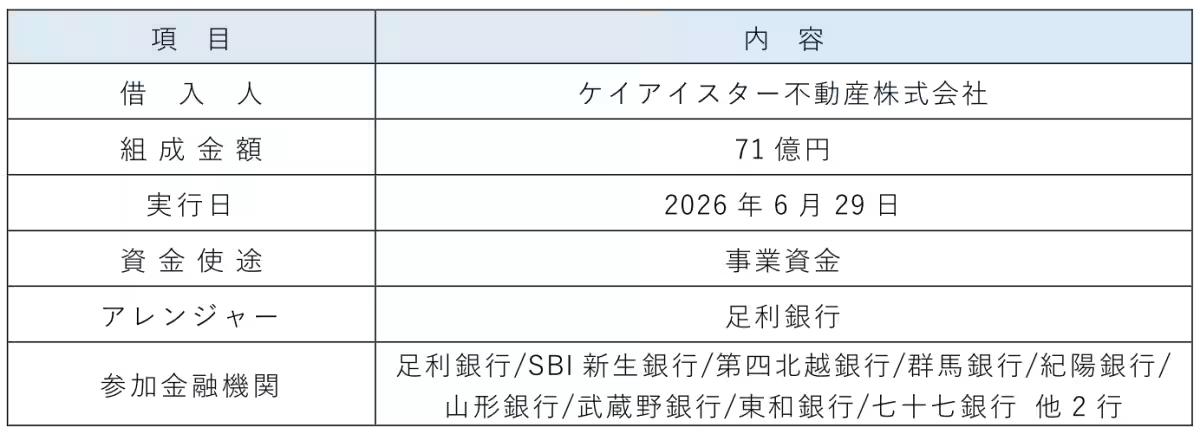
In a significant step towards sustainable development, Ki-Star Real Estate Co., Ltd. has announced the successful execution of a Positive Impact Finance (PIF) initiative through a syndicate loan arranged by Ashikaga Bank. This venture is aimed at addressing the environmental, social, and economic impacts of corporate activities. The collaboration highlights the growing trend of integrating financial practices with sustainability goals, aligning perfectly with the United Nations' Sustainable Development Goals (SDGs).
What is Positive Impact Finance (PIF)?
PIF represents a transformative approach in financing, where financial institutions comprehensively analyze and evaluate the impact of corporate activities on the environment and society. The goal is not only to project positive influences but also to minimize negative effects. Ashikaga Bank has aligned its practices with the Positive Impact Finance Principles promoted by the United Nations Environment Programme's Finance Initiative (UNEP FI), ensuring that the financing models meet specific and credible impact assessments validated by third-party evaluation agencies, like the Japan Credit Rating Agency.
Ki-Star Real Estate's Commitment to Sustainability
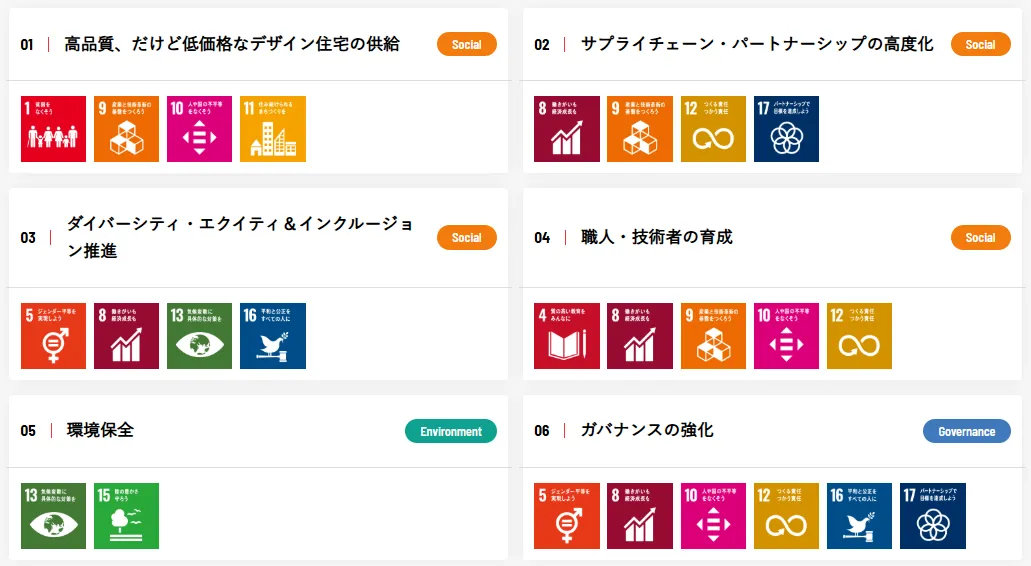
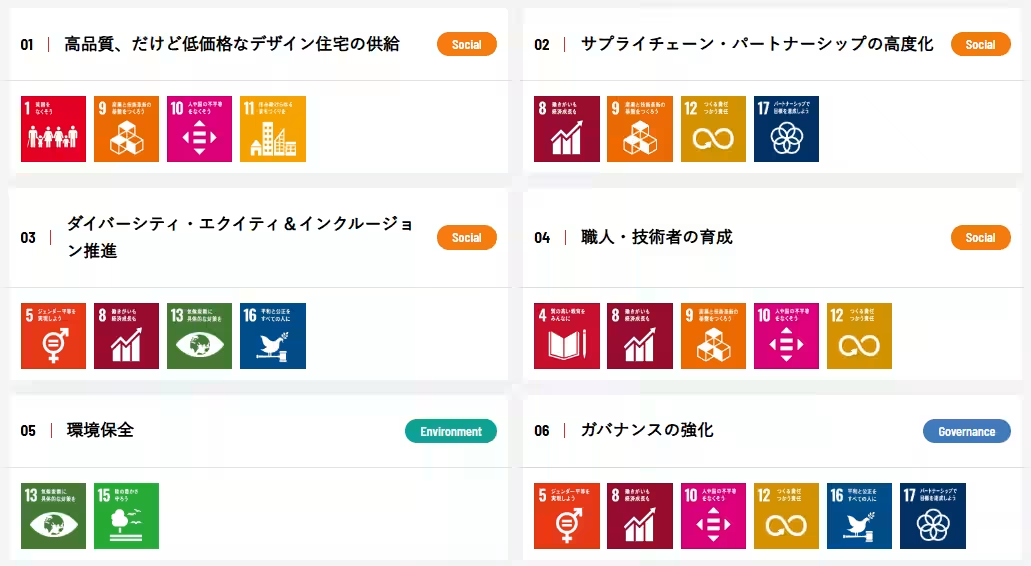
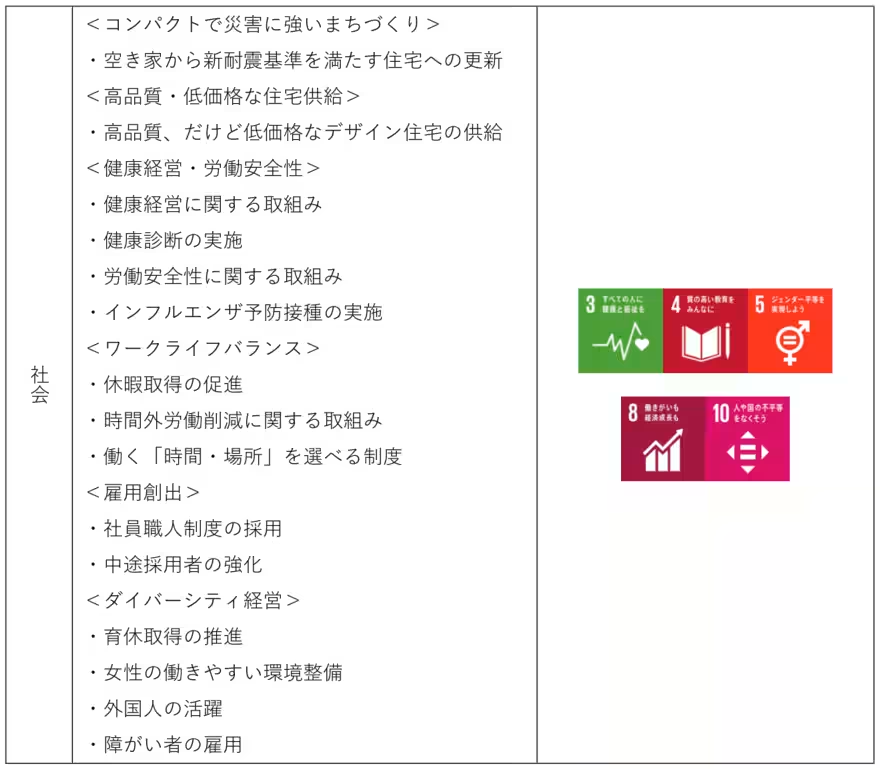
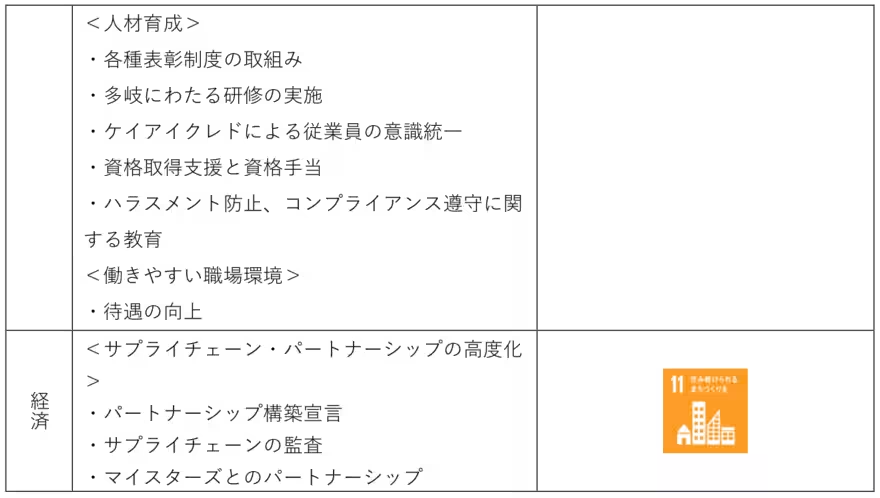
Ki-Star Real Estate, based in Honjo, Saitama, is dedicated to creating a richer society through various initiatives under its sustainability framework. These initiatives revolve around six key themes: providing high-quality yet affordable design housing, enhancing supply chain partnerships, promoting diversity, equity, and inclusion, fostering the development of skilled workers and artisans, environmental conservation, and strengthening governance. The recent formation of PIF considers the impact of the company's activities in relation to these sustainability themes, leading to a thorough and quantitative assessment of its operations.
Overview of the Syndicate Loan
The syndicate loan formed by Ashikaga Bank forms an integral part of this positive impact financing. It supports sustainable projects that significantly contribute to positive social and environmental outcomes. The loan structure is designed not simply for economic gain, but to instigate measurable changes in communities and ecosystems.
Detailed Evaluation of Impacts
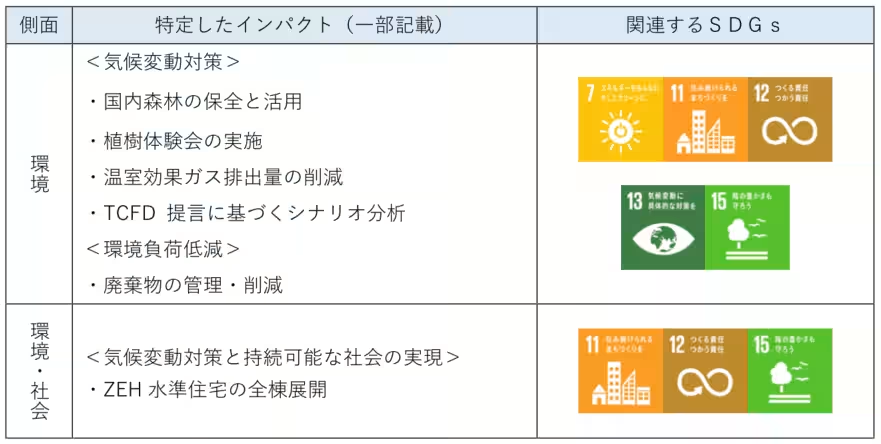
A comprehensive evaluation of Ki-Star's corporate activities has been conducted, focusing on identifying both positive and negative impacts associated with their business operations. These include the construction of affordable homes, the efficient utilization of resources, and the overall commitment to sustainability that reflects positively in urban development and community building.
About Ki-Star Real Estate
Founded in November 1990, Ki-Star Real Estate operates under the guiding principle of “Creating a rich, enjoyable, and comfortable living” with a vision to provide housing for everyone. The company specializes in delivering high-quality yet affordable design houses, facilitated by its unique business model that integrates operations from procurement to sales under the “KEIAI platform.” With a strong presence across the Kanto region and beyond, Ki-Star aims to expand its market share in the housing sector. For the fiscal year ending March 2026, the company reported sales of approximately ¥393.9 billion, coming from the sale of 9,489 properties, including land.
Company Overview
- - Company Name: Ki-Star Real Estate Co., Ltd. (Stock Code: 3465, Tokyo Prime Market)
- - CEO: Keiichi Hanasan
- - Location: 762-1 Nishitomidada, Honjo, Saitama 367-0035
- - Capital: ¥4,818 million (as of March 31, 2025)
- - Founded: November 1990
- - Employees: 2,664 (consolidated, as of March 31, 2025)
- - URL: Ki-Star Group
- - Business Activities: Residential sales, renovation of used houses, custom housing, stock business, apartment business, income-generating business, condominium sales, franchise business, and overseas operations.
Ki-Star Real Estate continues to demonstrate its commitment to sustainable practices while enhancing the overall quality of life for communities it serves. Collaborations like these mark a new frontier in how finance can drive positive change, emphasizing the role of businesses in addressing global challenges.

Topics Business Technology)
【About Using Articles】
You can freely use the title and article content by linking to the page where the article is posted.
※ Images cannot be used.
【About Links】
Links are free to use.