



GoAERO Global Emergency Response Flyer Competition Announces Prototype Winners
GoAERO Global Emergency Response Flyer Competition
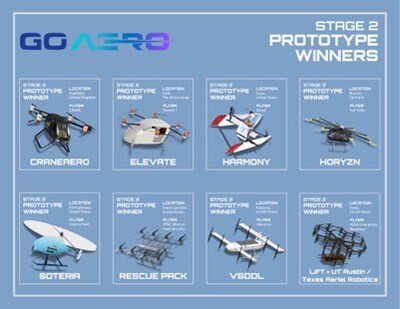
On December 4, 2025, the GoAERO Prize announced the winners of its prototype competition aimed at developing innovative emergency flying vehicles. This competition, which boasts a prize pool of over $2 million, aims to address urgent needs in disaster response and crisis management through cutting-edge aerial solutions. Eight exemplary teams were awarded a total of $320,000 to support the advancement of their prototypes, which are designed to navigate and operate in various emergency scenarios, including natural disasters, humanitarian crises, and medical emergencies.
The winners include talents from around the world, each representing a uniquely potential development in the realm of emergency aviation:
- - CraneAERO from Cranfield, UK
- - Elevate from Delft, Netherlands
- - Harmony from Texas, USA
- - HORYZN from Munich, Germany
- - LIFT + UT Austin / Texas Aerial Robotics from Texas, USA
- - Rescue Pack from North Carolina, USA
- - Soteria from Pennsylvania, USA
- - VSDDL from Alabama, USA
These teams have leveraged the support of notable partnerships, including NASA, RTX, and Honeywell, among others. Their prototypes will face rigorous testing at the Final Fly Off taking place at the NASA Ames Research Center in the San Francisco Bay Area. As Gwen Lighter, the founder and CEO of GoAERO, stated, “The GoAERO aircraft are needed now more than ever.” This statement resonates especially in light of challenging disasters faced globally over the past year. From deadly floods in Central Texas to wildfires in California, and one of the strongest hurricanes to hit Jamaica, the importance of rapid and effective emergency response solutions is clearer than ever.
The competition comes at a time when funding for disaster response agencies like FEMA has been slashed, exacerbating traffic congestion and slowing response times, which have remained inadequate in both urban and rural areas across America. The GoAERO initiative seeks to introduce transformative aviation technologies that will bridge this demand gap, effectively saving lives during critical moments.
GoAERO has expanded to encompass 201 teams from 85 countries, all working on their emergency flight solutions. Importantly, teams do not need to have previously won a prize to advance to the next round of the competition, enabling new participants to join at any stage. The final event will consist of three distinct missions that will rigorously test the skills and abilities relevant to public welfare operations. The top teams will additionally vie for a prize of $1.65 million in total.
As it embarks on this journey, GoAERO not only seeks to innovate in aerial technology for emergency response but also to cultivate a collaborative network bridging industry, government, and first responder organizations. This collaboration is essential to ensure the safe and effective deployment of the emergency flying solutions of the future.
If you want to learn more about GoAERO or perhaps even join this ambitious endeavor, visit GoAEROprize.com. Their transformative approach could redefine emergency response as we know it, ultimately saving countless lives in emergencies.
Topics Other)
【About Using Articles】
You can freely use the title and article content by linking to the page where the article is posted.
※ Images cannot be used.
【About Links】
Links are free to use.