




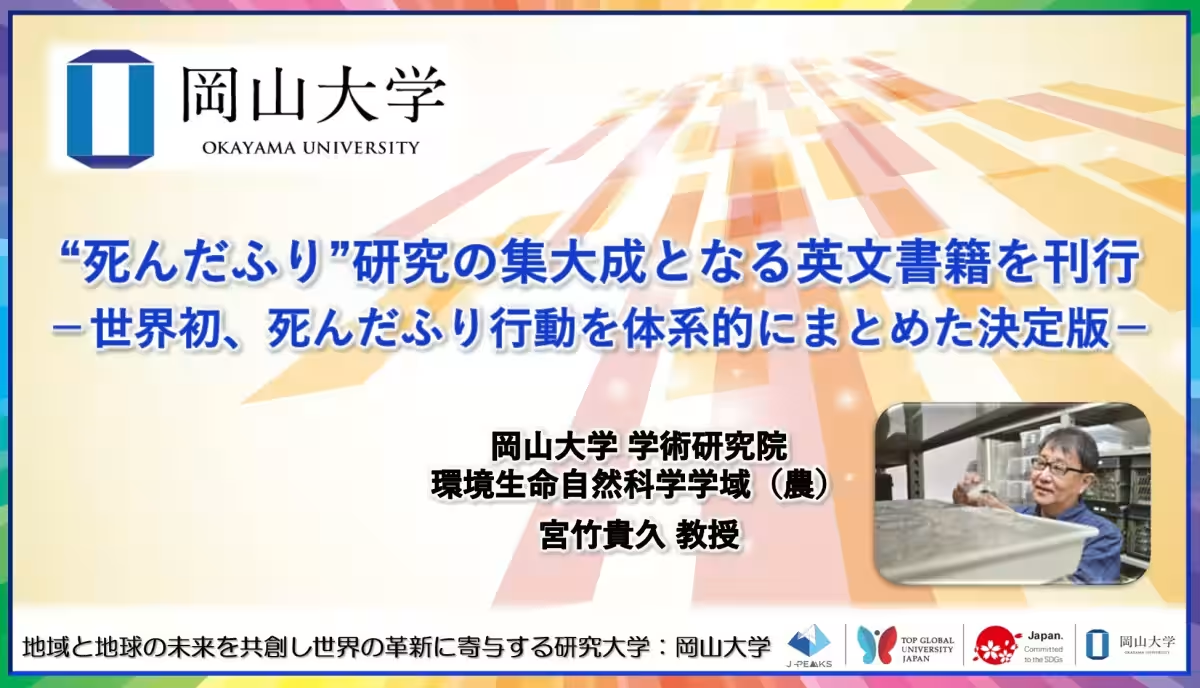
Okayama University Publishes Comprehensive Book on Death Feigning Behavior in Animals
A Comprehensive Exploration of Death Feigning Behavior
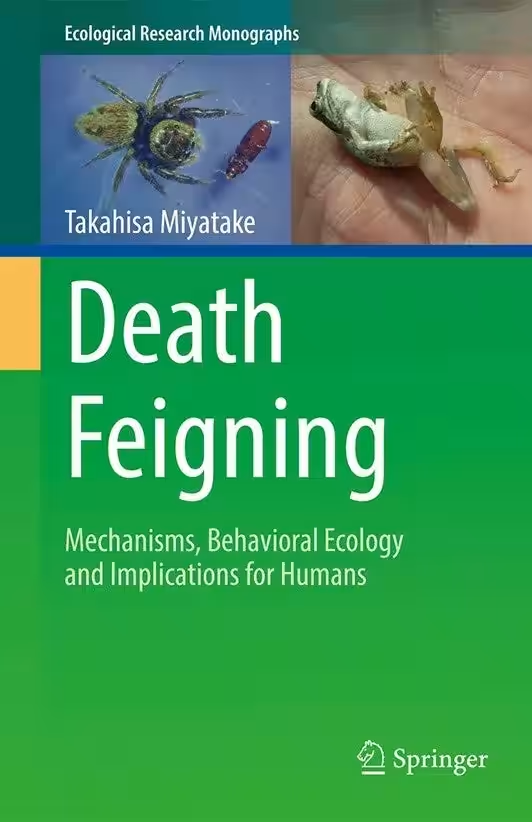
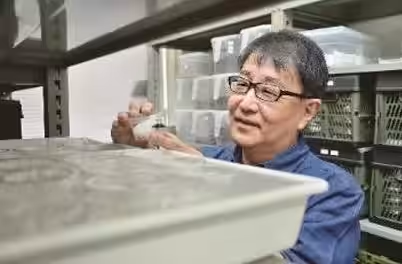
In a fascinating turn of events, Okayama University has made significant strides in understanding animal behavior with the publication of a groundbreaking English book titled Death Feigning: Mechanisms, Behavioral Ecology and Implications for Humans. This publication marks the first comprehensive examination of the phenomenon of death feigning, a behavior exhibited by various species as a strategy for avoiding predation. Professor Takahisa Miyatake, who has dedicated over 25 years to researching this subject, serves as a pivotal figure in this exploration.
The Scientific Interest in Death Feigning
Death feigning, or tonic immobility, is a behavior where an animal becomes motionless in the presence of a threat. It has intrigued naturalists for centuries, yet systematic scientific studies on this survival tactic have only emerged in recent years. Prominent figures like Darwin and Fabre expressed interest in understanding whether this behavior genuinely aids in survival. Surprisingly, before the work of Professor Miyatake, no one had empirically validated these ideas.
Since the late 1990s, Miyatake has championed research in this area, and his numerous publications since 2001 have highlighted the evolutionary significance and biological mechanisms behind death feigning behavior. This book synthesizes existing knowledge on the subject, combining insights from behavioral science, physiology, and molecular biology, as well as information from engineering and medical fields.
The Structure of the Book
Published by Springer Nature Link on January 3, 2026, this book offers an extensive overview of death feigning behavior. It delves into various aspects, including evolutionary significance, its universality across different organisms, and the physiological and genetic mechanisms involved. The book particularly focuses on experimental studies conducted on beetles, showcasing robust data and findings that contribute new insights into animal behavior.
Miyatake's research not only highlights the parallels between animal death feigning and human conditions, such as PTSD and Parkinson's disease, but also opens avenues for understanding the relationship between trauma and immobilization reactions in humans. These findings underscore the interdisciplinary nature of his work, providing a bridge between animal behavior studies and human psychological phenomena.
A Personal Journey
In reflecting on his journey, Professor Miyatake expressed his passion for the research that began with a simple observation in 1997. As an early researcher intrigued by the behavior of beetles, he embarked on a quest to explore a phenomenon that remained largely unexplained. His dedication to this study culminated into a detailed exploration that not only informs but inspires future researchers and students alike.
Miyatake encourages students to cherish their curiosity, stating, “Find what fascinates you, and let that guide your research journey.” His work exemplifies the profound impact of pursuing one’s interests in scientific discovery.
Conclusion
Death Feigning: Mechanisms, Behavioral Ecology and Implications for Humans is more than just a scientific text; it represents years of research, dedication, and an ongoing quest to understand one of nature's intriguing behaviors. As this research receives the spotlight, it highlights the importance of interdisciplinary collaboration in addressing complex biological phenomena and fosters a further understanding of the connections between all living organisms and their survival strategies. As a significant contribution to the fields of biology and psychology, Miyatake’s work promises to pave the way for new research on death feigning behaviors, not just in animals, but in understanding human responses to threats as well.
For those interested in exploring more about this fascinating field, the book is now accessible online through Springer Nature.



Topics Other)
【About Using Articles】
You can freely use the title and article content by linking to the page where the article is posted.
※ Images cannot be used.
【About Links】
Links are free to use.