



Mental Health-Related Absences Lead to Severe Workforce Shortages: A Deep Dive
The Emergence of a Third Workforce Shortage
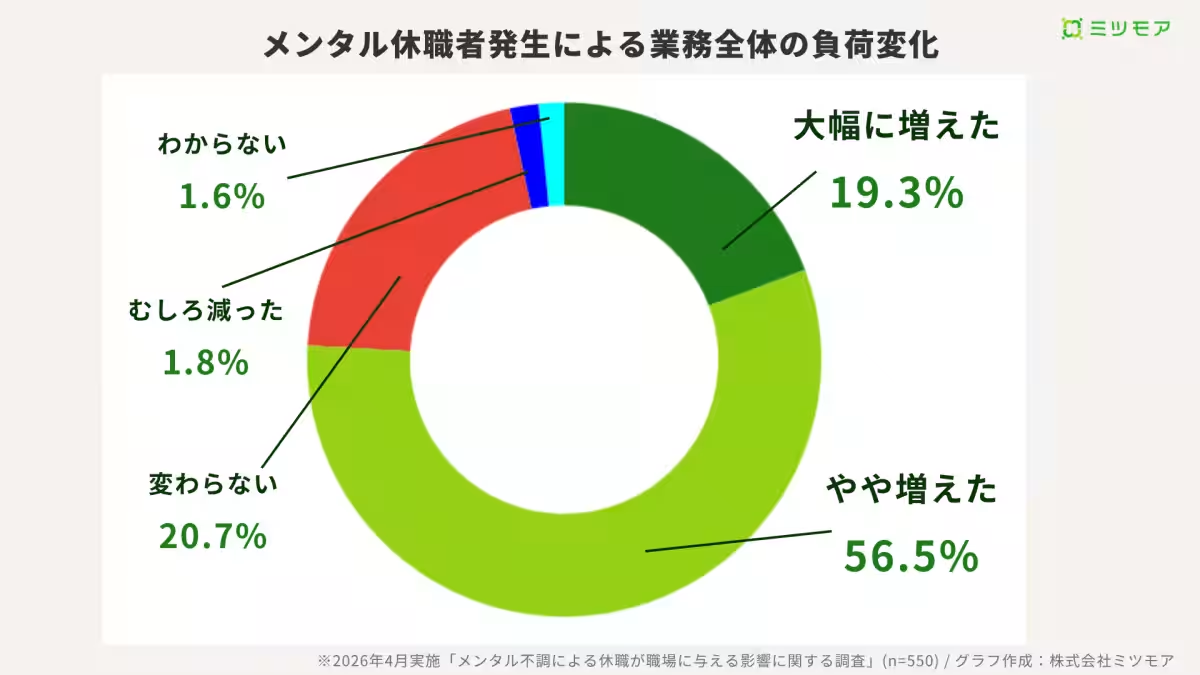
As companies increasingly grapple with mental health-related employee absences, new research from Mitsumore, a Tokyo-based online business service comparison platform, has unveiled alarming insights. Approximately 80% of companies that have experienced employee absences due to mental health issues reported significant disruptions to their operations. Moreover, nearly one in six employees covering for absent colleagues also fell victim to similar mental health struggles, creating a cascading effect on workforce availability.
The Impact of Mental Health on Business Operations
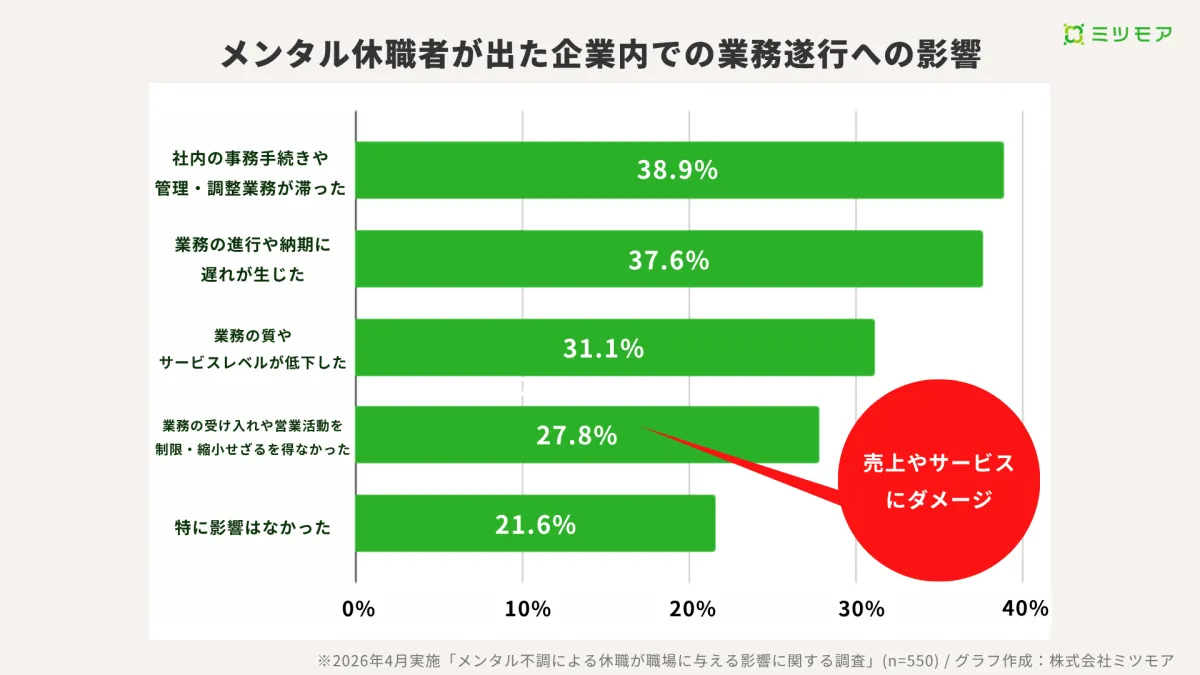
According to the survey conducted by Mitsumore, which included data from 550 companies that had employees absent due to mental health issues in the past three years, a staggering 77% reported that business operations faced challenges. The consequences are dire; 27.8% of companies indicated they had to limit or scale back on accepting new business due to the lack of personnel.
This situation presents a pattern akin to traditional workforce shortages, where the absence of healthy employees prevents work from being done, affecting sales and service delivery.
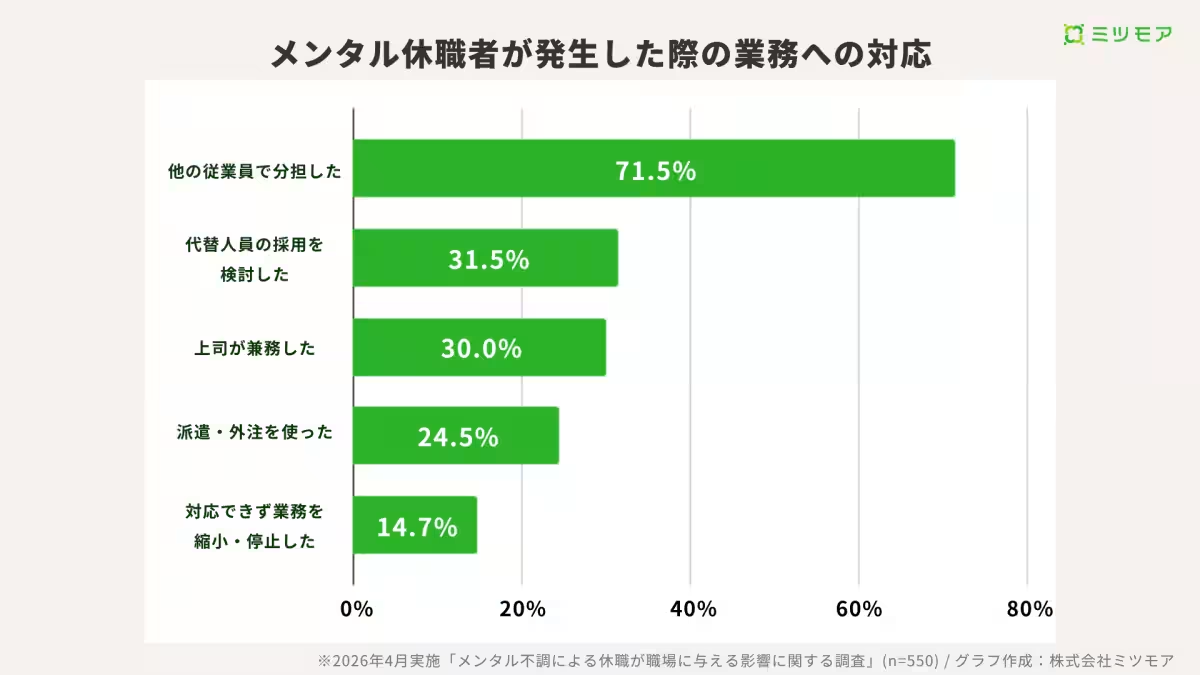
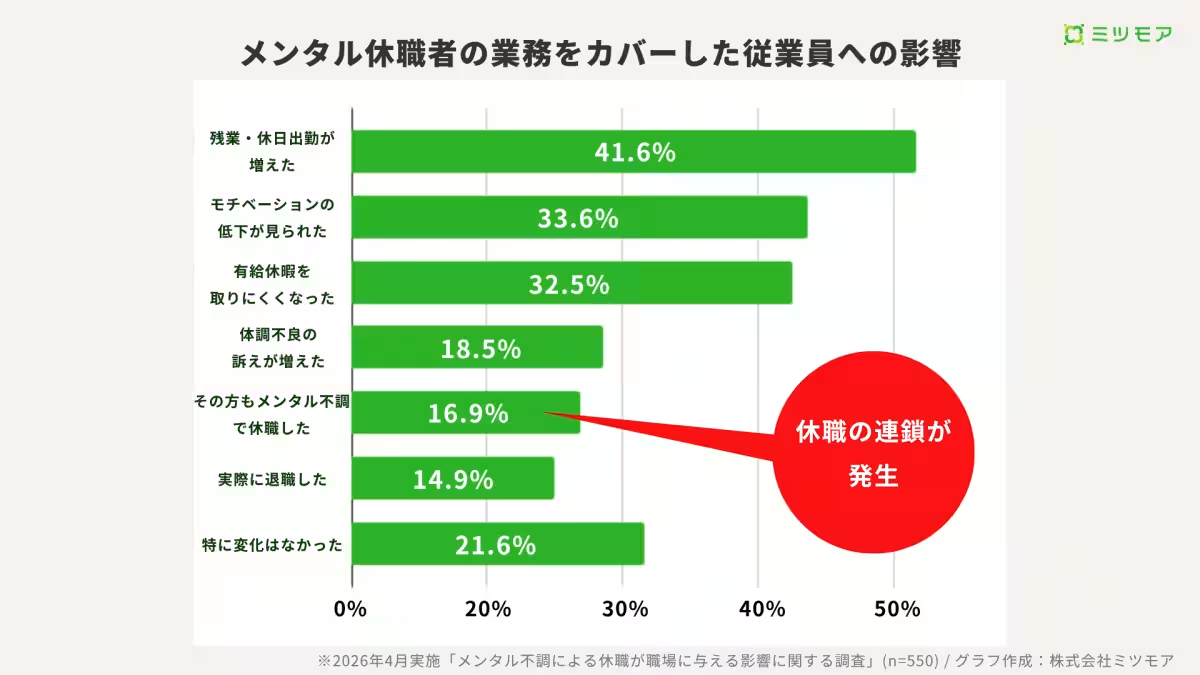
71.5% of the companies managed the workload by redistributing the responsibilities among other employees, and particularly concerning is the statistic that 41.6% of employees taking on extra duties reported an increase in overtime and weekend work. The cycle leads to 16.9% of these cover employees ourselves taking time off due to mental health issues. These statistics emphasize the precarious situation within organizations, where one employee’s absence creates a domino effect of shortages.
The Rising Financial Burden
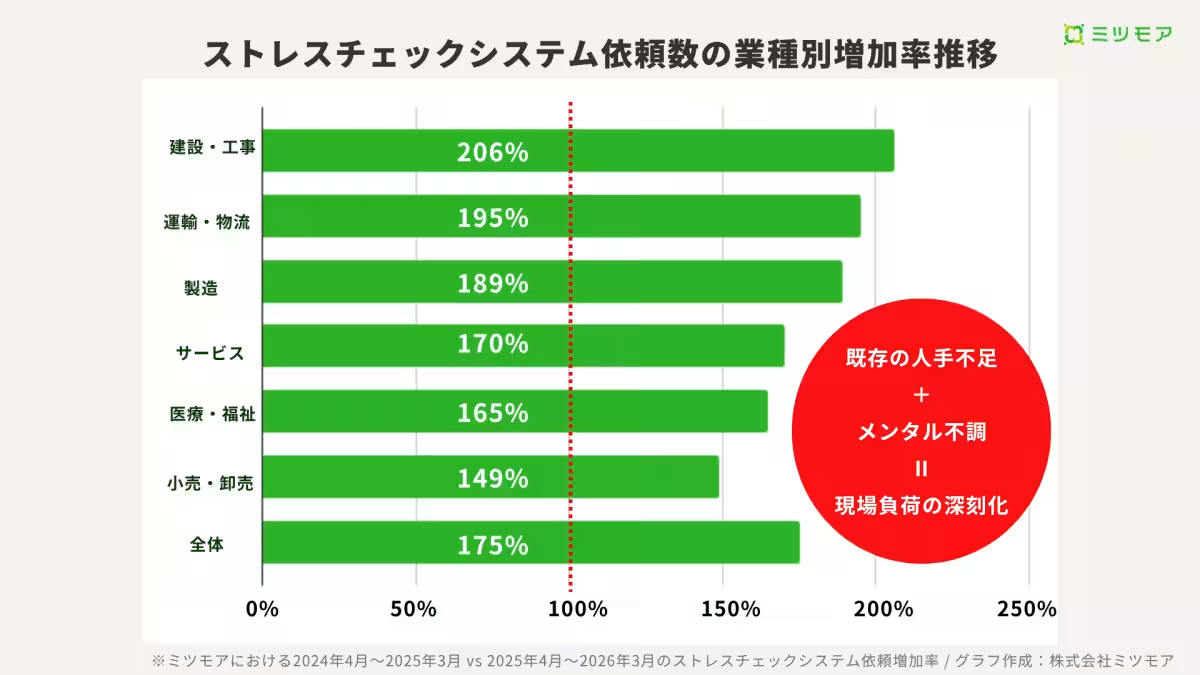
The financial repercussions of these mental health-related absences are becoming increasingly apparent. Research indicates that sick leave payouts due to mental health issues have escalated to 1.6 times the previous amount over the last five years, constituting 39% of all sick leave claims. The spring months of April and May, known for heightened levels of workplace stress and transitions, see these issues come to the fore more sharply.
The phenomenon has led Mitsumore to term this systemic issue as a **

Topics Other)
【About Using Articles】
You can freely use the title and article content by linking to the page where the article is posted.
※ Images cannot be used.
【About Links】
Links are free to use.