



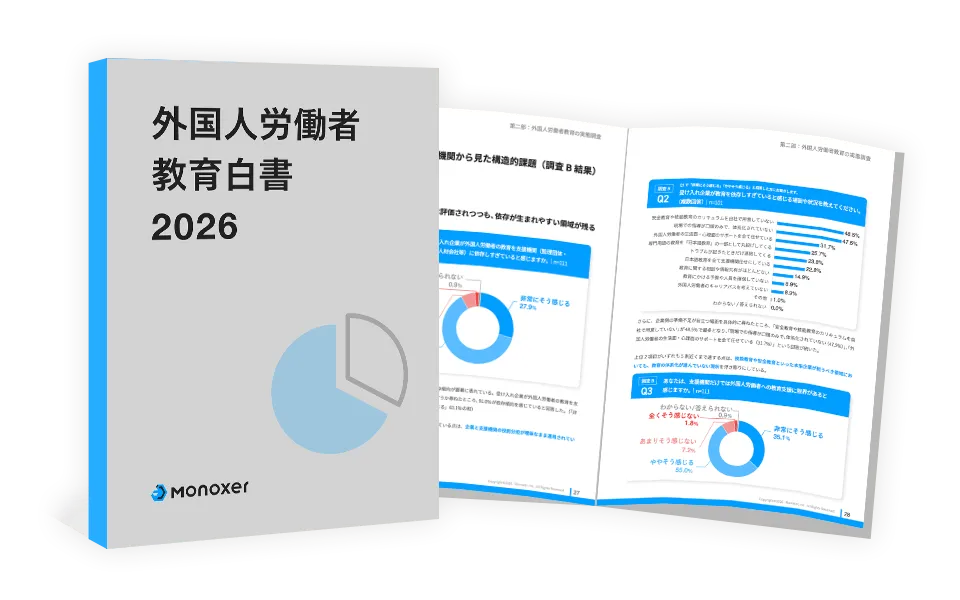
Unveiling the Challenges in Foreign Workers' Education in Japan's Workforce
Unveiling the Challenges in Foreign Workers' Education
Introduction
In a major study supported by IDEATECH and Monogusa, the challenges surrounding the education of foreign workers in Japan have come to light. With the number of foreign workers reaching a record high of 2.3 million, there is an urgency for Japanese companies to establish a robust educational system that meets the needs of this growing workforce.
Findings of the White Paper
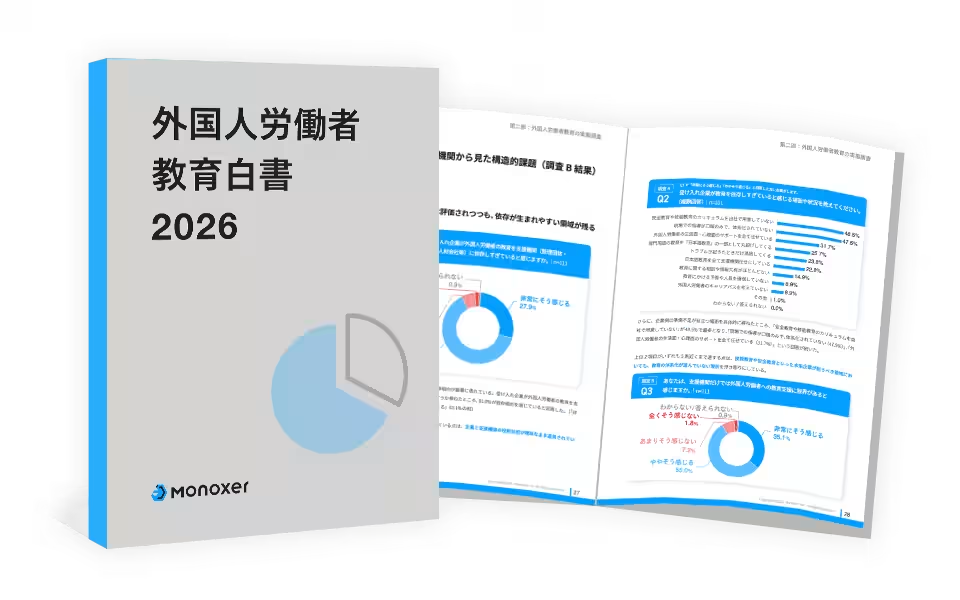
The white paper, titled "Foreign Workers' Education White Paper 2026," provides a comprehensive overview based on surveys conducted with 1,178 respondents — 1,067 from companies employing foreign workers and 111 from employment support agencies. The research delves into the current state of educational frameworks, intentions to promote foreign workers to managerial positions, and the strategies for fostering and retaining talent.
Key Survey Insights
One significant finding from the survey is that 81.3% of companies expressed a desire to promote foreign workers to leadership roles. Despite this positive intention, 71.1% acknowledged that they face substantial challenges in operationalizing educational programs, underscoring a critical disconnect between hiring intentions and existing education systems.
Furthermore, the survey revealed that key challenges in investing in education are not primarily budget-related but stem from human resource shortages (42.5%), time constraints (36.9%), and language barriers (34.3%). Employment support agencies noted that 91% believe companies rely too heavily on them for support, and 90.1% cited limitations in educational support capabilities, urging companies to develop their educational frameworks.
The Necessity of an Evolving Educational Structure
Japan's unique demographic challenges, namely a declining population, necessitate a shift in how foreign workers are perceived and supported. The white paper emphasizes the need to view foreign workers as potential management candidates rather than merely temporary labor. As wage levels in competing countries, like South Korea, surpass those in Japan, along with a depreciation of the yen affecting remittance values, enhancing educational environments and career pathways is crucial for maintaining Japan's attractiveness as a destination for foreign professionals.
Research Design and Implementation
The research was meticulously designed and implemented by IDEATECH, utilizing a structured approach from planning and designing surveys to conducting analyses and designing the final report layout. This integrated methodology leverages a unique set of data combined with objective analyses, solidifying IDEATECH's role in establishing thought leadership in the education of foreign workers.
Conclusion
The findings of the
Topics Other)

【About Using Articles】
You can freely use the title and article content by linking to the page where the article is posted.
※ Images cannot be used.
【About Links】
Links are free to use.