



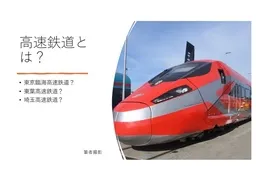
Exploring the Future of High-Speed Rail: Japan's Role and Global Perspectives
Japan's Role in Global High-Speed Rail Development
On November 28, 2025, Japan's Global Infrastructure Foundation (Japan GIF) hosted an online seminar titled "The World of High-Speed Rail: Realities and Future Visions—Understanding Japan's Opportunities from the Field," featuring esteemed journalist Naoki Osaka. The seminar, moderated by Akiko Sakamoto, aimed to explore the future of high-speed rail as a global infrastructure and examine Japan's position in this evolving landscape.
Purpose of the Seminar
High-speed rail has emerged as a vital means of connecting nations, transforming logistics, and bolstering economies worldwide. While Japan's Shinkansen once set the global standard, countries like China have outpaced it in both scale and performance, aggressively expanding their high-speed networks overseas. Osaka, with years of experience in covering high-speed rail development across various countries, shared insights on future growth trends, promising regions, and the differences in technological philosophies and safety perspectives among nations.
Key Highlights from the Lecture
1. Definition of High-Speed Rail and Japan's Current Status
In Japan, high-speed rail is defined under the Shinkansen Railway Act as trains capable of speeds exceeding 200 km/h. In Europe, the standard varies, with dedicated tracks requiring speeds of 250 km/h or modifications to existing lines achieving 200 km/h. Japan’s new Shinkansen lines are subject to a maximum speed limit of 260 km/h due to legal and infrastructural constraints.
2. Impact of China's High-Speed Rail on Southeast Asia
Initially inspired by Japanese and German technology, China has now reached a level of independent innovation, developing trains capable of speeds up to 450 km/h. As of summer 2025, China boasts the world’s largest high-speed rail network at approximately 48,000 km, dwarfing Japan's 3,000 km. In Southeast Asia, China's growing influence is evident, with projects in Indonesia, Laos, Thailand, and Vietnam marking significant shifts in regional infrastructure dynamics.
3. High-Speed Rail Plans in Other Significant Regions
- Taiwan: Originally planned to adopt European technology, Taiwan shifted to the Japanese Shinkansen model following a major earthquake in 1999, which highlighted the latter's seismic resilience.
- India: The Mumbai–Ahmedabad line is currently under construction using Japan's Shinkansen technology.
- Australia: Plans for a high-speed rail line along the east coast have been revived, closely resembling Japanese designs.
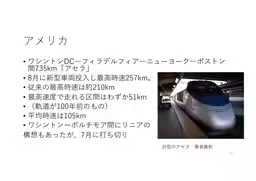
- United States: The aging infrastructure along the Northeast Corridor, particularly between Washington, D.C., and Boston, averages only around 150 km/h due to various financial challenges and outdated systems.
4. European Market Trends and International Supplier Competition
- The UK has seen Hitachi gain traction with the HS1 (Channel Tunnel) and the IEP high-speed project, while continuing to compete with French TGV innovations.
- Germany's new ICE4 trains focus on versatility and cost-effectiveness. The European Commission is moving toward standardizing cross-border rail specifications, including potential inclusion of Shinkansen standards.
- The competition among suppliers is intense, with European manufacturers commonly adopting a ready-made approach to accommodate specific national requirements, contrasted by Japanese companies that typically focus on custom designs.
5. Domestic High-Speed Rail Plans and Future Directions
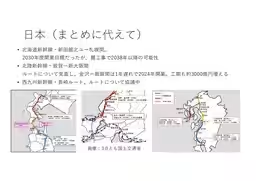
Like many global initiatives, Japan also faces increasing costs and delays in high-speed rail projects. Various challenges surround the ambitious Chuo Shinkansen, including significant cost overruns and the potential postponement of the Sapporo extension of the Hokkaido Shinkansen.
Environmental assessments and community negotiations are crucial yet time-consuming components of these projects. Japan is considering improving conventional rail lines and introducing new rolling stock as a form of “mid-speed rail” to address rising costs and project timelines.
During the Q&A session following the lecture, attendees raised pertinent questions regarding challenges in American high-speed initiatives, governmental safeguards in overseas operations, and potential avenues for successful projects in Japan. Survey feedback indicated heightened interest in the sections addressing high-speed rail plans globally, particularly in other key regions and the competitive European market.
Seminar Overview
- - Organizer: Japan Global Infrastructure Foundation (Japan GIF)
- - Date: November 28, 2025, 2:00 PM - 3:30 PM
- - Format: Online via Zoom (webinar)
- - Speaker: Naoki Osaka (Toyo Keizai reporter and economic journalist)
- - Moderator: Akiko Sakamoto (Japan GIF Secretary General)
- - Participation Fee: Free
- - Video Link: Watch here
Speaker Background
Naoki Osaka, an accomplished journalist and economic analyst, was born in Hakodate and raised in Saitama. A graduate of Waseda University, he has extensive experience in the insurance and reporting sectors, joining the Toyo Keizai publishing house in 2000. He has played pivotal roles in covering the automotive, retail, and rail industries, establishing a reputation for thorough and insightful reporting on high-speed rail developments.
The seminar showcased Japan's vibrant discourse around high-speed rail and its significant implications, both domestically and globally.

Topics Other)

【About Using Articles】
You can freely use the title and article content by linking to the page where the article is posted.
※ Images cannot be used.
【About Links】
Links are free to use.