



Impact of China’s Tourism Advisory on Japanese Inbound Tourism: Insights from Asakusa
The Impact of China’s Tourism Advisory on Japan's Inbound Tourism: A Study from Asakusa
In response to the Chinese government's advisory against traveling to Japan, concerns have arisen regarding its impact on the inbound tourism market. To gain insight, Reelu Co., Ltd., a company based in Minato, Tokyo, which operates a matching service for foreign language support personnel, conducted a survey of local businesses within a 1 km radius of Asakusa's Kaminarimon.
Survey Overview
- - Survey Name: Impact Study of Chinese Government's Travel Advisory on Inbound Tourism
- - Survey Area: Asakusa, Taito, Tokyo (within 1 km radius of Kaminarimon)
- - Survey Method: Direct interviews with local businesses
- - Survey Sample: Businesses accommodating inbound tourists
- - Valid Responses: 32
Key Findings
The results indicate that while many businesses reported no significant change in visitor numbers or sales, they noted qualitative shifts in purchasing behavior, such as a decrease in group visits and bulk purchases.
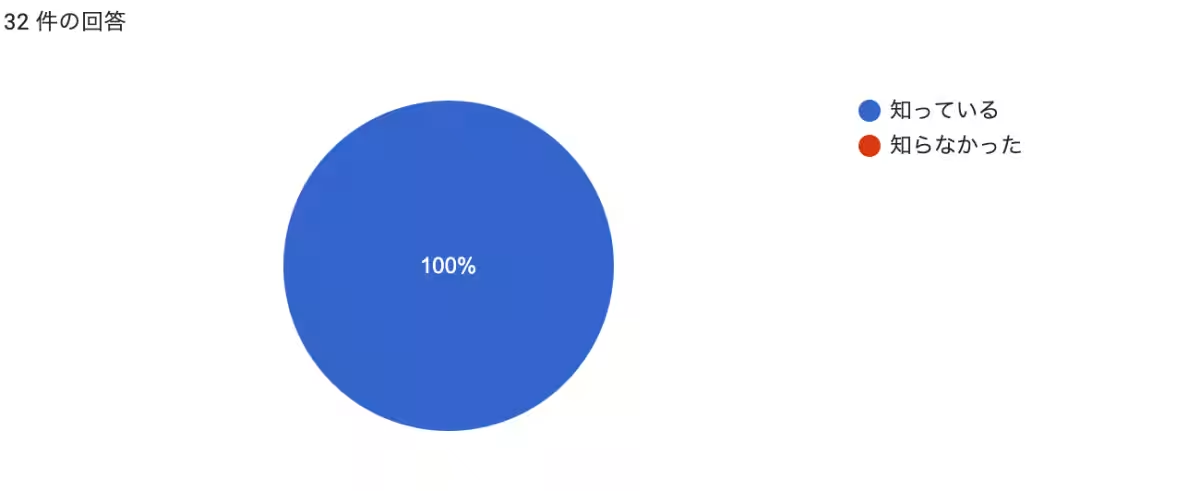
Q1: Did you know about the travel advisory from the Chinese government?
Every participating business (100%) was aware of the advisory, demonstrating an impressive level of information sharing regarding international trends.
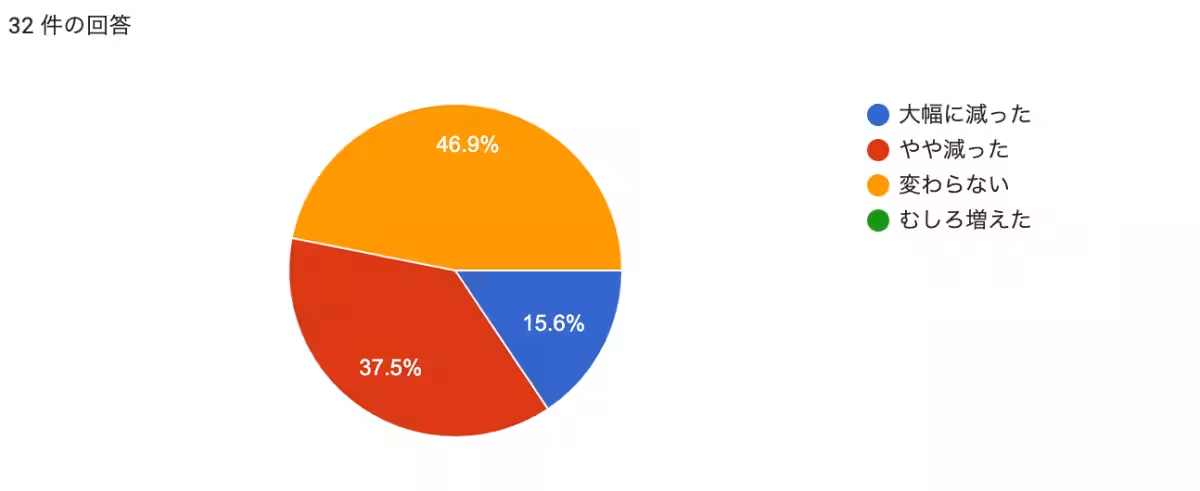
Q2: Have you noticed changes in the number of Chinese tourists visiting since the advisory?
- - No change: 46.9%
- - Slight decrease: 37.5%
- - Significant decrease: 15.6%
Q3: For those who noted a change, how substantial do you perceive it to be?
Businesses feeling a decrease cited reductions such as "around 20%" or "about half of usual numbers," particularly those reliant on group tourists.
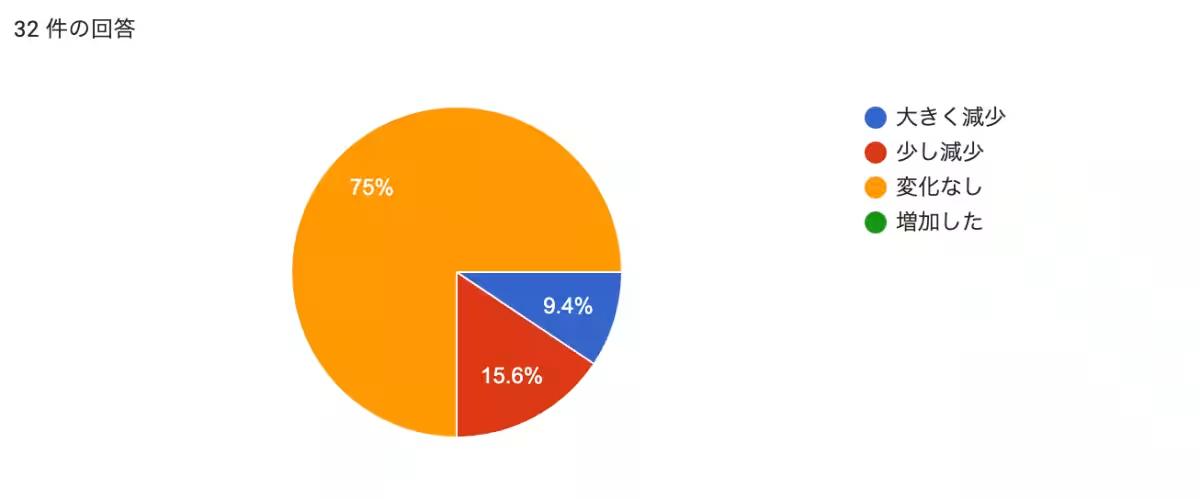
Q4: Has the advisory impacted your sales?
- - No change: 75%
- - Slight decrease: 15.6%
- - Significant decrease: 9.4%
Q5: Could you specify the impact on sales?
Feedback from businesses detecting sales drops included remarks like, "we no longer have bulk purchases," and "we hardly see group tourists," signaling that changes in purchasing behavior may have more impact than visitor numbers.
Q6: Have you perceived changes in Chinese tourists’ behaviors at your store?
- - No change: 60.6%
- - Decrease in group customers (increase in individual tourists): 27.3%
- - Decreased spending: 12.1%
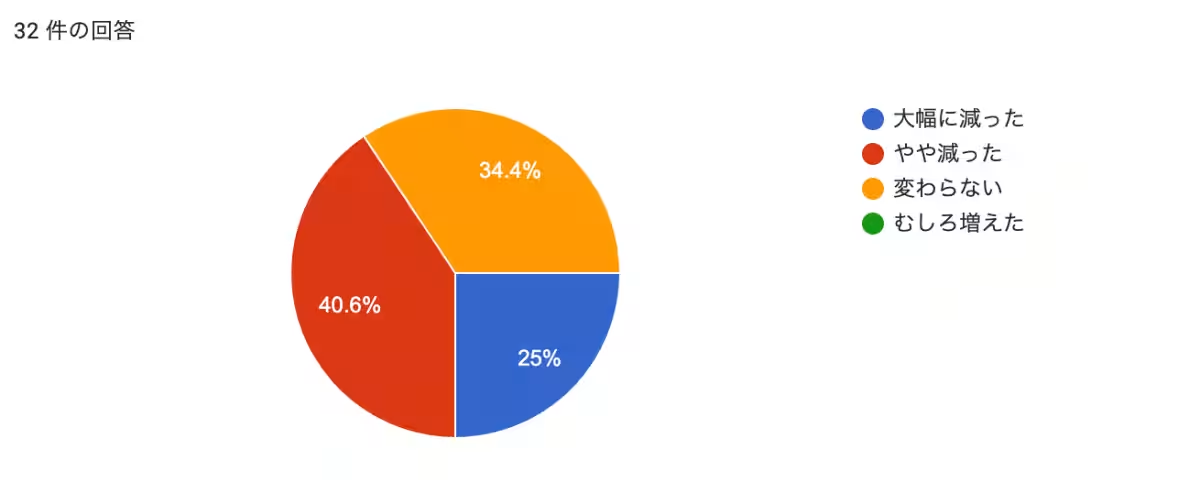
Q7: How do you perceive the overall reduction of Chinese tourists in the tourist area?
- - Slight decrease / Significant decrease: 65.6%
- - No change: 34.4%
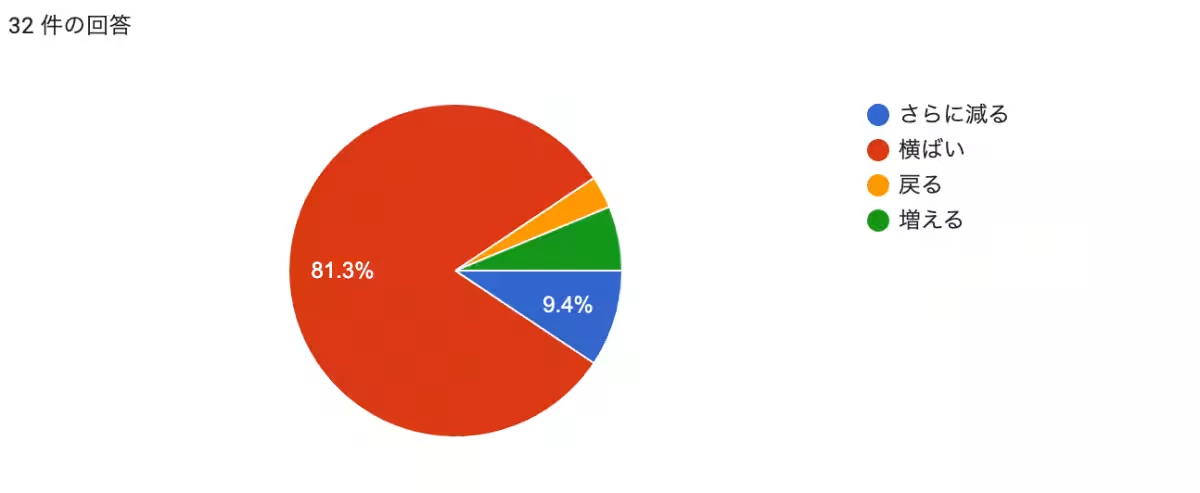
Q8: What do you predict for the number of Chinese tourists over the next three months?
- - Stay the same: 81.3%
- - Further decrease: 9.4%
- - Increase / return: 9.3%
Q9: Are there any concerns regarding sales or operational aspects?
Common concerns include:
- - Language barriers
- - Lack of translation support
- - Dissatisfaction with foreign tourists' manners
- - Uncertainty about staff training for dealing with foreigners
Conclusion
This survey reflects that while the immediate quantitative impact of the Chinese government's advisory is limited, there are noticeable qualitative changes in terms of a decrease in group visitors and high-value purchases. In Asakusa, adopting a flexible acceptance system that caters to multinationals and individual travelers is poised to become increasingly essential.
About Reelu Co., Ltd.
Reelu specializes in matching services for foreign language support personnel. We aim to address the workforce shortages in inbound tourism and international business, providing swift matching for various language needs, including English, Chinese (Mandarin and Cantonese), Korean, Spanish, French, and Japanese.
For more information, companies experiencing challenges in this area can reach out via this contact form. Please refrain from contacting us for sales purposes.

Topics Travel)
【About Using Articles】
You can freely use the title and article content by linking to the page where the article is posted.
※ Images cannot be used.
【About Links】
Links are free to use.