



Mastering the Art of Survey PR: Tips from IDEATECH's Success Cases
Unveiling the Secrets of Successful Survey PR
In an age where the authenticity of advertising is increasingly scrutinized, survey PR has emerged as a reliable approach to convey information. Company IDEATECH, based in Minato, Tokyo, has recently released a comprehensive guide titled "Survey PR Success Casebook" designed to equip PR professionals with essential insights and strategies.
What is Survey PR?
Survey PR focuses on presenting facts before voicing opinions, which distinguishes it from traditional PR methodologies. Instead of highlighting corporate narratives, this approach articulates societal and industry conditions through data collected from surveys, thereby allowing journalists and readers to derive their interpretations and value from the presented numbers.
The rising distrust towards conventional advertisements has made survey PR a favored channel for secure information dissemination. However, it's a common misconception that conducting surveys guarantees success. Careful attention must be paid to question formulation, target selection, data presentation, and effective follow-up strategy to ensure impactful outcomes.
The guide provided by IDEATECH outlines successful cases of survey PR, categorized by industry, purpose, and scale, further illuminating how data can translate into media exposure and business deals.
Key Elements for Triumph in Survey PR
The guide presents three essential factors that contribute to successful survey PR:
1. Formulating Intriguing Questions: Drawing insights from past successes reveals that utilizing questions that pique readers' curiosity regarding societal changes or industry challenges grabs journalists’ and readers' attention effectively.
2. Data Credibility: The results of even small-scale surveys can be compelling if respondents are thoroughly categorized before questioning, thereby painting a clearer picture of the background.
3. Strategic Planning for Post-Survey Utilization: Success doesn’t end with issuing a press release; establishing routes for material requests or business discussions from the get-go guarantees sustained effectiveness.
Industry-Specific Success Stories
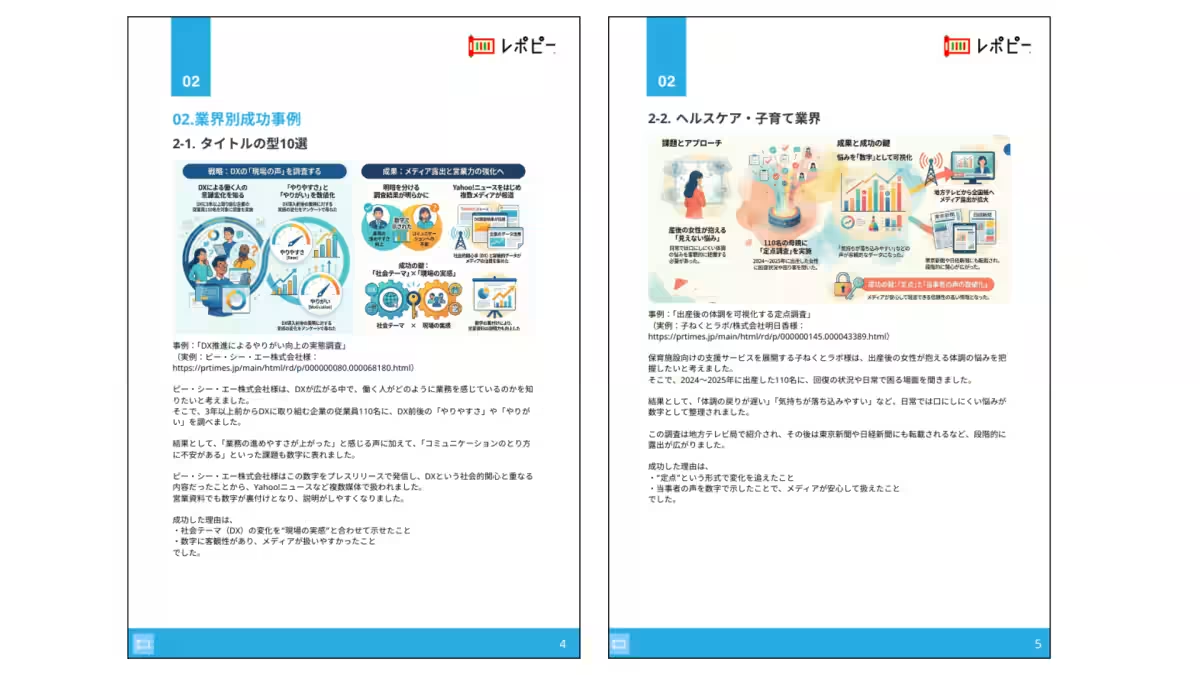
The guide includes noteworthy examples from industries such as IT/DX and healthcare/parenting, showcasing surveys that gained coverage in various media outlets including Yahoo! News, or local television that later reached national newspapers.
Designing Surveys by Purpose and Scale
Surveys aimed at enhancing recognition showed access counts 1.5 times higher than previous months, whereas sales promotion surveys led to revenues 1.4 times greater than the same period in the previous year. The guide emphasizes selecting optimal survey scales tailored to purpose, ranging from small-scale (budgeting between 300,000 to 800,000 yen) to large-scale surveys exceeding 2 million yen.
What You Will Learn From This Guide
- - The three common elements crucial for achieving results through survey PR.
- - Industry-specific success stories in IT, healthcare, and automotive sectors, illustrating how certain survey designs led to media exposure.
- - Various methods of utilizing surveys for enhancing brand recognition, branding, and sales promotions based on specific objectives.
- - Optimal survey scale selection in accordance with the intended goals.
Who Should Access This Guide
- - PR professionals eager to implement survey PR but uncertain about thematic or design effectiveness.
- - Marketing personnel looking to utilize survey data beyond press releases, expanding its application to sales materials and white papers.
- - Individuals aiming to maximize outcomes from limited budgets while executing effective survey PR campaigns.
For those interested, the complete "Survey PR Success Casebook" can be downloaded for free here.
By harnessing the strategies outlined in the guide, organizations can improve their visibility and credibility in their respective industries while generating meaningful engagement with their target audiences.
- ---
Frequently Asked Questions
1. What distinguishes Survey PR from traditional PR?
Survey PR places facts before opinions, presenting collected data as a reliable source of social and industry insights, countering the growing skepticism surrounding advertising.
2. What is the most critical aspect of successful Survey PR?
Three notable components: formulating intriguing questions, ensuring data credibility, and planning for post-survey actions to maintain effectiveness.
3. Can small-budget surveys yield effective results?
Absolutely! Small-scale surveys involving 100 to 300 respondents have gained significant media coverage, particularly for niche topics, showcasing the potential of focused engagements.
4. How can one measure the effectiveness of Survey PR?
Effectiveness can be gauged through media exposure counts, website traffic variations, the number of material downloads, and conversion rates in business discussions.
5. What should be prioritized when outsourcing Survey PR?
A strong understanding of your industry and themes should take precedence over price to ensure a successful partnership that can support you from survey design to execution.
Conclusion
By effectively leveraging the insights from this guide, companies can carve out stronger connections with their audiences and navigate the complexities of modern-day communication in an increasingly skeptical market.
Topics Consumer Products & Retail)
【About Using Articles】
You can freely use the title and article content by linking to the page where the article is posted.
※ Images cannot be used.
【About Links】
Links are free to use.