


Breaking Down Barriers: Employee Perspectives on Entrepreneurship and Expert Selection
Understanding Employee Entrepreneurship Motivations and Challenges
A recent survey conducted by Jigyoka Group, targeting 1,007 company employees aged 20 to 40, sheds light on the growing interest in entrepreneurship amid shifting work trends. With changes in job security and a rise in diverse working styles, the prospect of starting a business seems closer than ever for employees. However, despite easier access to information through AI and online resources, many individuals still hesitate to take the first step towards entrepreneurship due to uncertainty about how to begin and how to choose reliable experts for guidance.
Current State of Entrepreneurial Preparedness
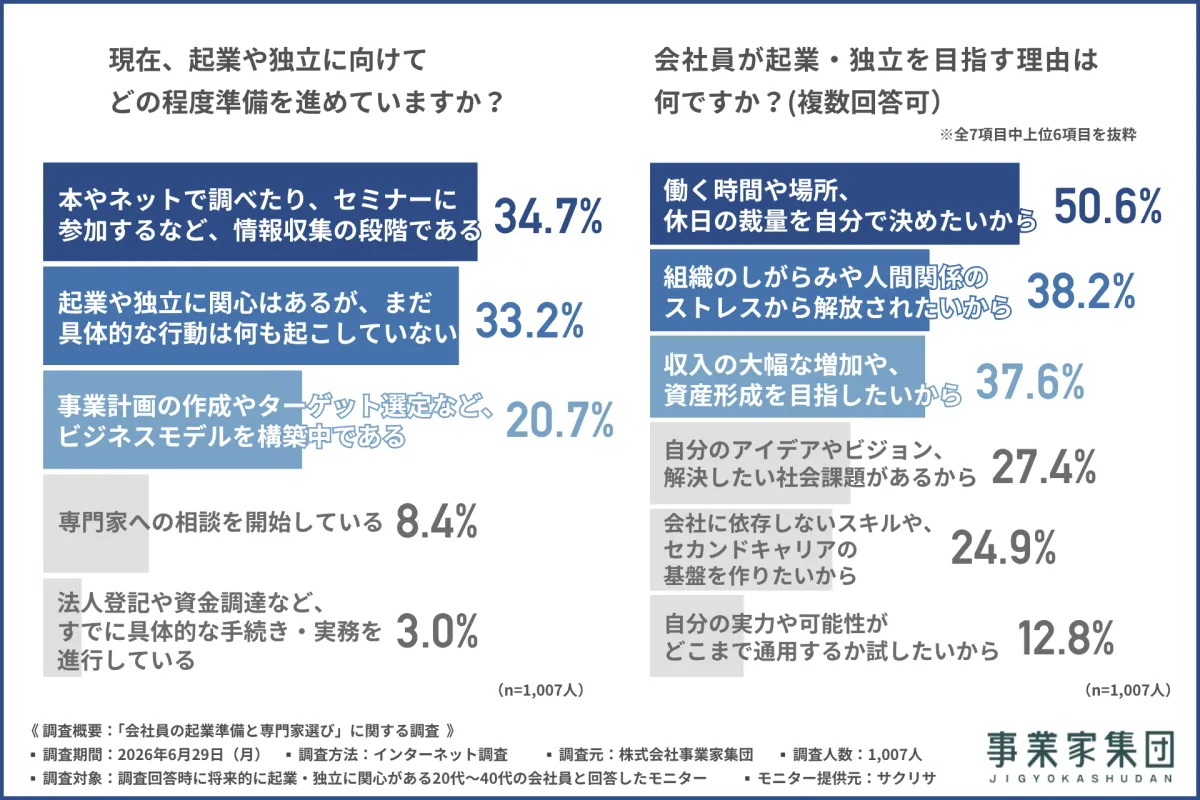
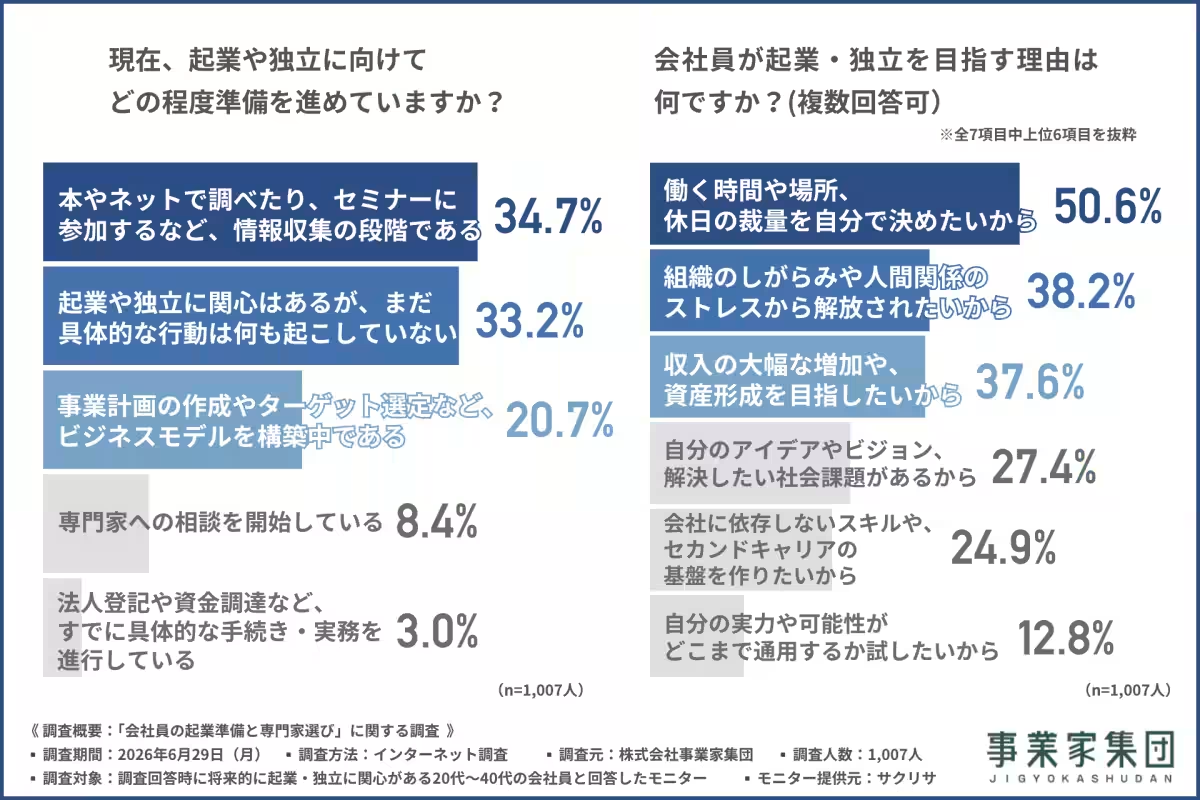
When asked about their level of preparation for starting a business, the majority (34.7%) reported they were still in the information-gathering stage, utilizing books and seminars. Following them, 33.2% acknowledged they were interested in entrepreneurship but had not yet taken any specific actions, while only 20.7% indicated they were actively working on their business model, including crafting a business plan and selecting a target market. This data reveals that approximately 70% of respondents remain in the preliminary stage of gathering information or have not acted at all. Although there is significant interest in entrepreneurship, there appear to be psychological and physical barriers preventing progress towards actual implementation.
Motivations Behind the Desire to Start a Business
When investigating the motivations behind employees' aspirations to become entrepreneurs, the survey findings were revealing. The top motivation cited was the desire for autonomy in choosing work hours and locations (50.5%), followed by a wish to escape organizational constraints and the stress of workplace relationships (38.2%) and the aim of increasing income and building assets (37.6%). Notably, the preference for freedom in work environment and relationships outweighed the desire for financial gain, suggesting a growing aversion to the stress and limitations imposed by conventional employment.
Barriers to Taking Action
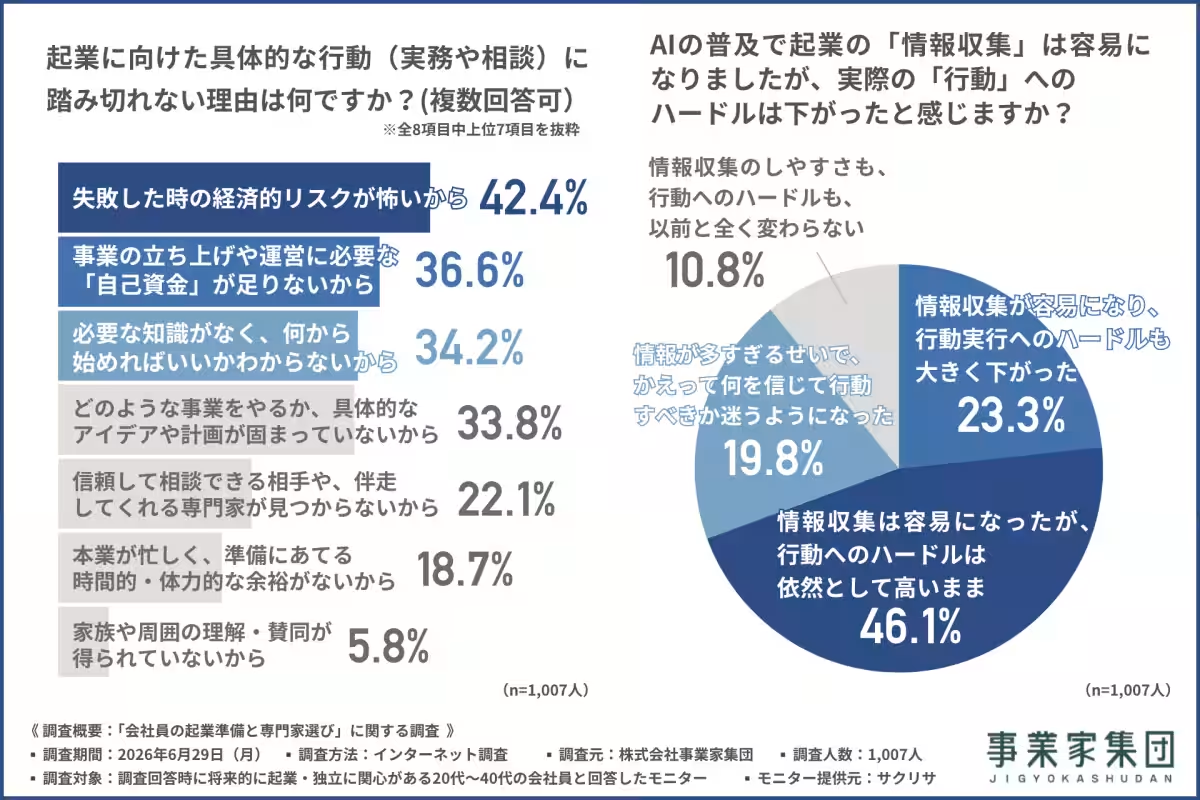
Despite a keen interest in entrepreneurship, many individuals face considerable barriers when contemplating action. Among the reasons hindering their progress were fears of economic risks associated with potential failures (42.4%) and a lack of sufficient personal funds needed to start a business (36.6%). Furthermore, 34.2% expressed concerns over not having adequate knowledge (such as legal and tax issues) and uncertainty about where to begin.
The rise of AI technology has certainly improved access to knowledge, yet it poses its own challenges. When asked about the impact of AI on their willingness to take action, 46.1% of respondents reported that while information collection had become easier, the actual barriers to taking meaningful steps remained high. In essence, almost half feel that an abundance of information does not correlate with readiness to act, and this sometimes leads to confusion and indecision about what actions to take.
Preferences for Seeking Advice
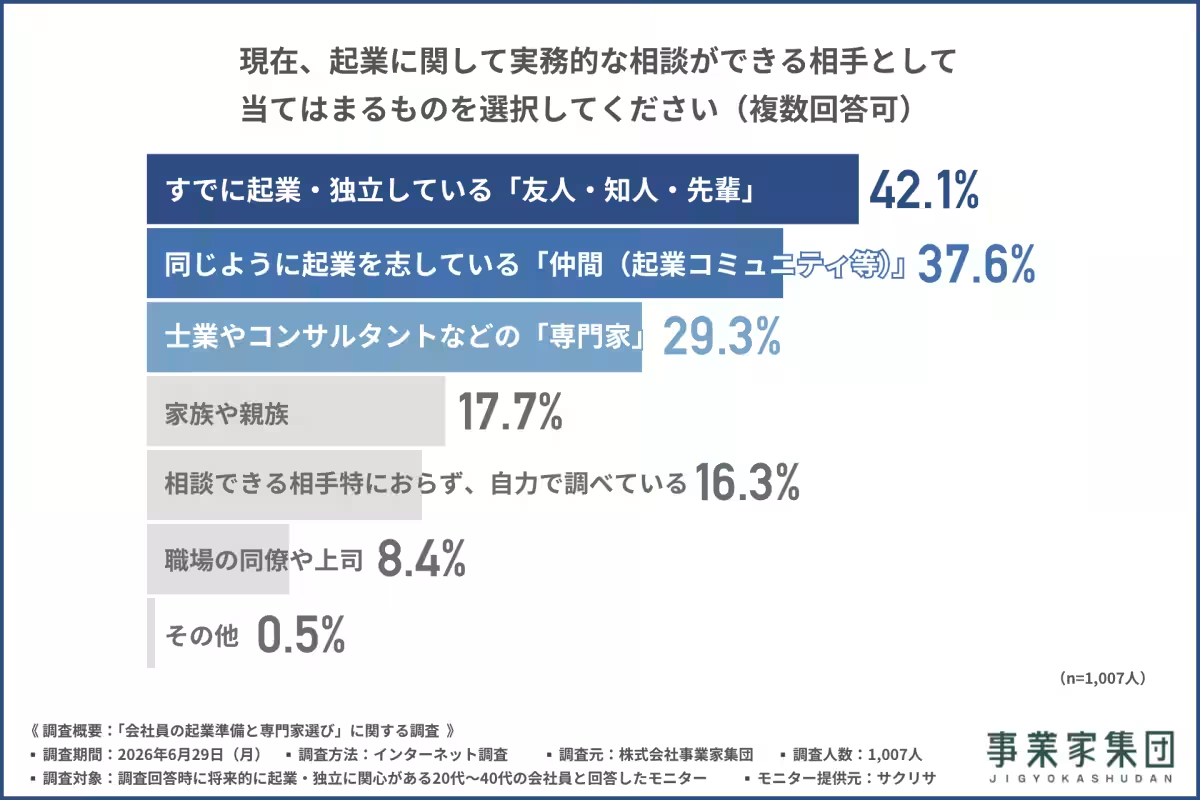
When exploring whom potential entrepreneurs seek advice from, it became evident that personal connections take precedence. The survey noted that the primary source of practical advice came from friends, acquaintances, or seniors who are already entrepreneurs (42.1%), followed by peers interested in entrepreneurship (37.6%) and professionals like consultants (29.3%). This trend indicates a tendency to turn first to familiar sources rather than professionals, likely due to the psychological hurdles associated with seeking expert advice.
Criteria for Choosing Experts
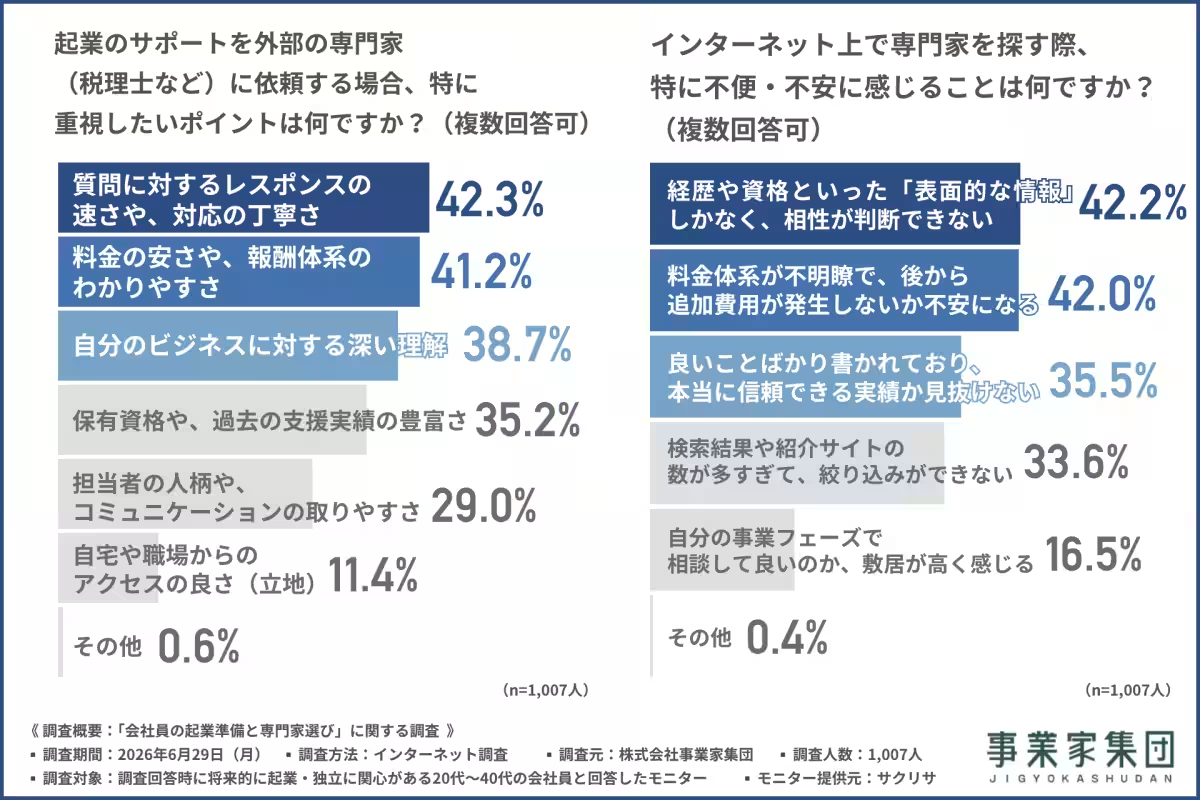
In cases where individuals do consult external experts, certain criteria significantly influence their selection. The foremost factor is the speed and quality of responses to inquiries (42.3%), closely followed by clarity in pricing and compensation structures (41.2%), and a deep understanding of the individual's business context and model (38.7%). These findings suggest that during the uncertain early stages of entrepreneurship, individuals favor responsive and empathetic partners who connect on a personal level, rather than merely considering qualifications and credentials.
Challenges with Online Expert Searches
Despite the convenience of online searches for experts, various challenges persist. When asked about concerns when searching online, 42.2% noted that they only encounter superficial information regarding qualifications and background, making it difficult to gauge interpersonal compatibility. Furthermore, uncertainties regarding pricing and the credibility of positive reviews contribute to significant apprehension about the potential for mismatches between clients and experts. In a situation where an overwhelmed entrepreneur has numerous options, the process can lead to paralysis due to indecision.
The Need for Reliable Information
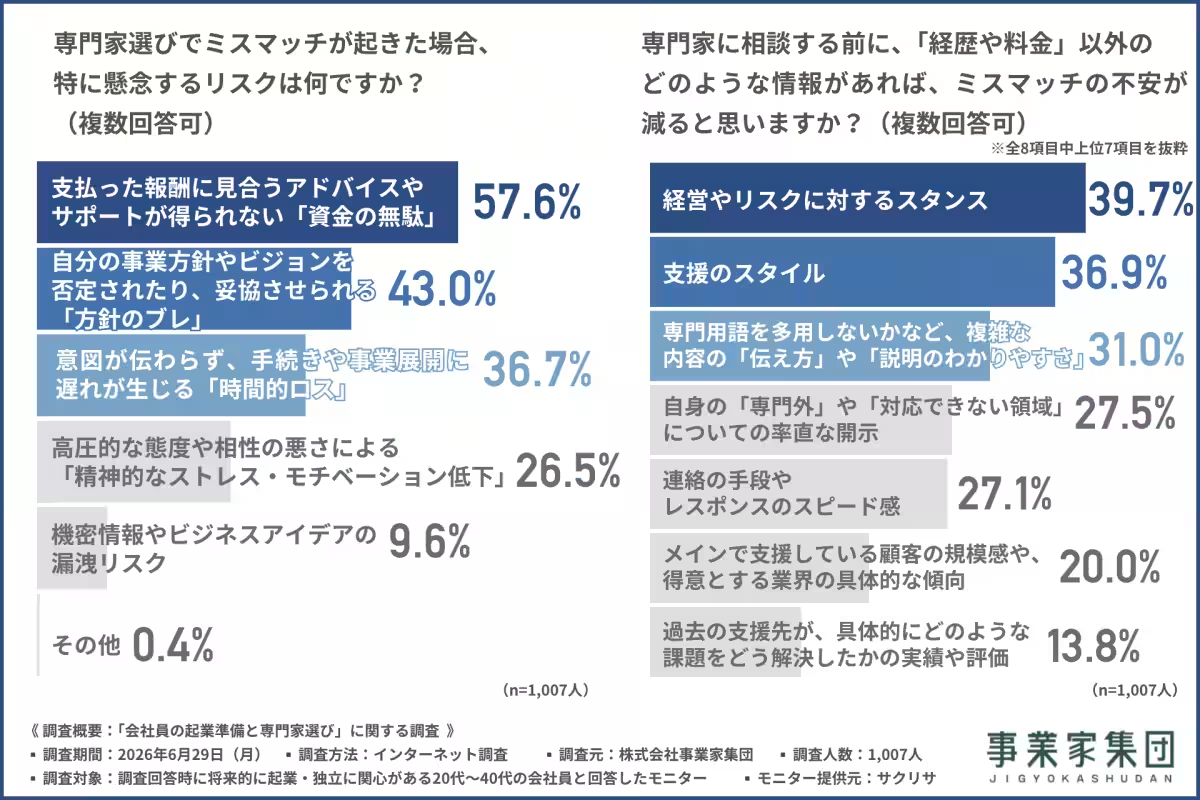
The survey also explored the kinds of information that could alleviate fears of mismatches with experts. A clear preference emerged for insight into the expert's risk management and business philosophy (39.7%), their support style (36.9%), and the clarity of their communication (31.0%). This indicates that a deeper understanding of an expert's approach and values can significantly enhance trust and reduce anxiety for novice entrepreneurs.
Conclusion
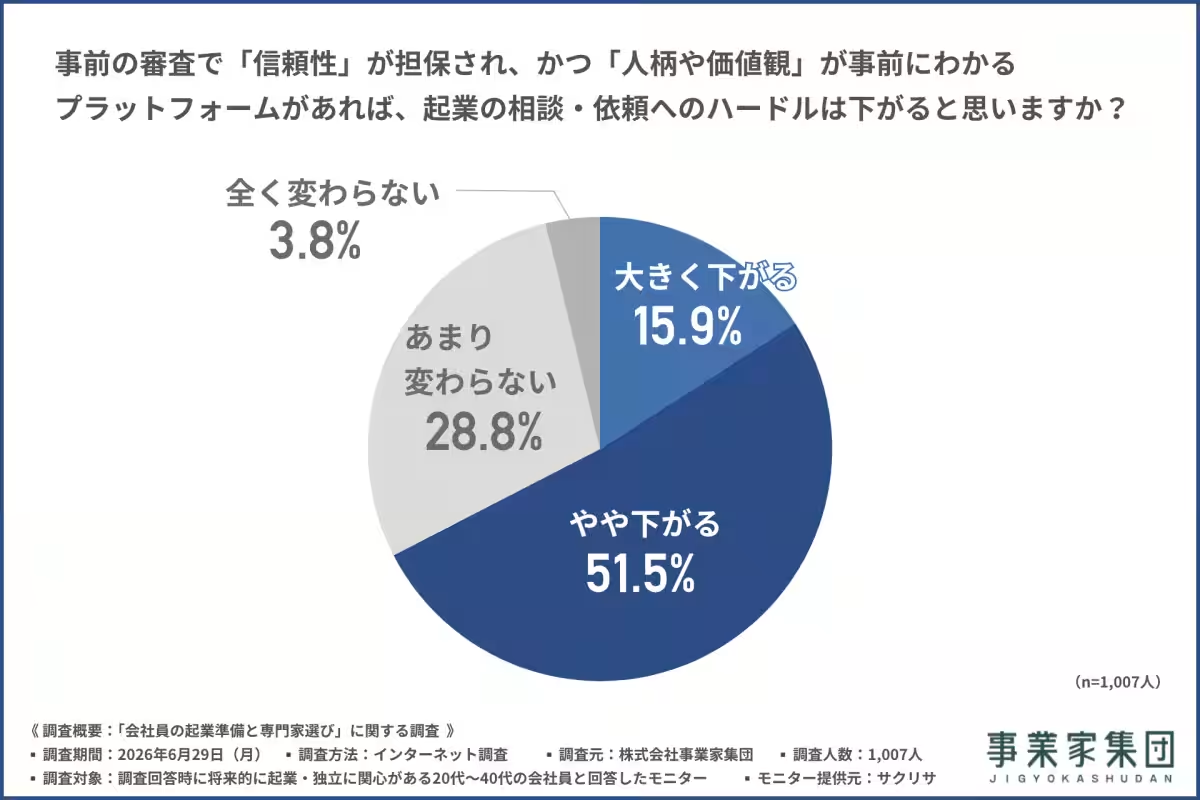
Overall, the survey underlines the hurdles faced by employees who aspire to start their own businesses while highlighting the importance of trustworthy partners. As individuals confront a paradox of information overload yet remain averse to taking action, the introduction of platforms that not only present an expert's credentials but also offer insight into their character can bridge the gap. The insights reinforce the growing demand for environments that prioritize relationship-building alongside expertise, ultimately supporting a more confident entrepreneurial journey.
For those considering entrepreneurship, Jigyoka Group provides vital resources and connections to established professionals, ensuring a smooth transition from aspiration to action.
Topics Business Technology)

【About Using Articles】
You can freely use the title and article content by linking to the page where the article is posted.
※ Images cannot be used.
【About Links】
Links are free to use.