




Shifting the Focus: Selecting Digital Transformation Tools Beyond Functionality
Understanding the Need for Beyond-Functionality Tool Selection
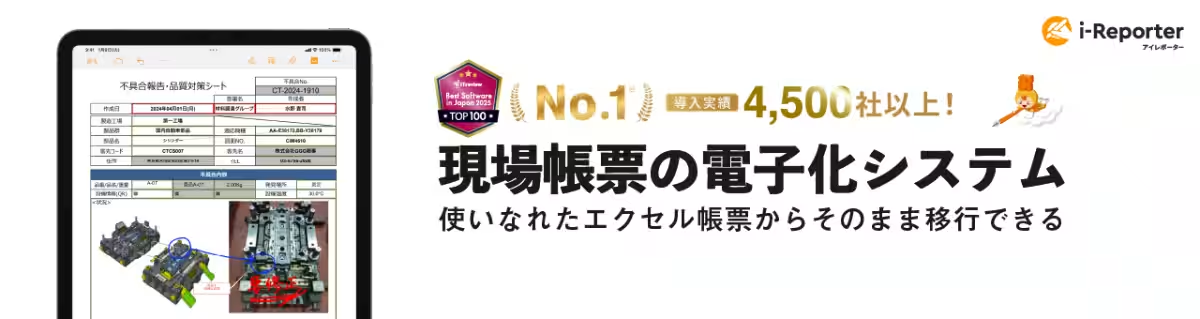
In August 2026, Shimtops Inc., based in Shinagawa, Tokyo, launched a special website to propose a new selection criterion for field reporting systems amid the AI revolution. Known for its flagship product, i-Reporter, which is already implemented in over 4,500 companies and serves more than 220,000 users, Shimtops' focus is now on the essential element of community in driving digital transformation (DX) in the workplace.
As innovations in artificial intelligence continue to advance, tools aimed at improving operational efficiency are proliferating. However, the growing list of features complicates the selection process, making it increasingly challenging to choose a product that meets the unique needs of each organization. Research from Shimtops reveals a significant disparity in DX progress, based on the existence of user communities; companies with community membership reported that 71.4% considered their manufacturing and production processes digitized, compared to only 36.0% among non-members. This indicates that success is deeply influenced not solely by functionality but also by the operational environment that fosters improvement.
Why Functionality Alone is Insufficient
A recent report from the Ministry of Economy, Trade, and Industry highlights that over 60% of manufacturers indicate a shortage of guidance from skilled personnel, underscoring the critical need for an conducive environment to leverage data and AI capabilities. Simply installing tools is inadequate if there’s a lack of knowledgeable peers to exchange insights and practices. This gap often represents a formidable barrier to achieving DX.
Further analysis of the Shimtops community participants shows that 74.2% were single representatives from their organizations, illustrating that many face the challenge of driving transformation in isolation without colleagues available for consultation or validation of their methods.
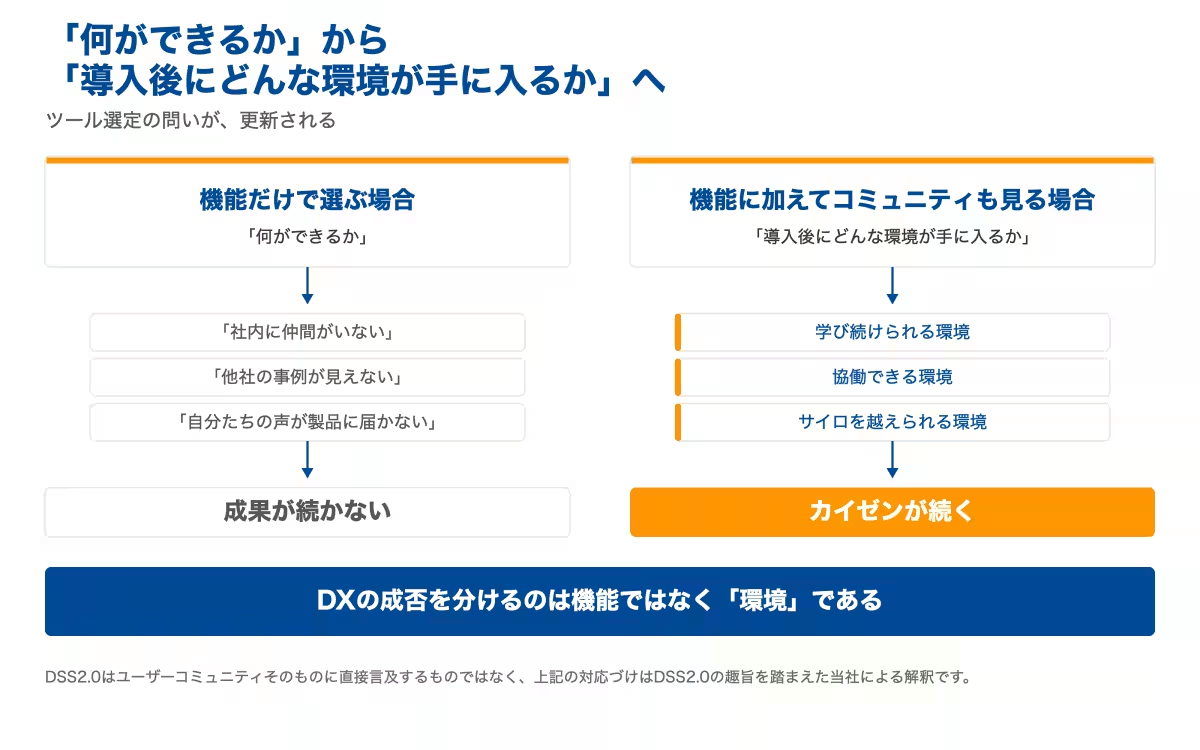
Moreover, the Digital Skills Standard Version 2.0 released in April 2026 emphasizes the importance of continuous learning and collaboration to break down silos in knowledge sharing, underscoring the argument that the environment, rather than mere functionality, dictates the success of DX initiatives. Therefore, the criteria for selecting tools must evolve from examining only capabilities to evaluating the environments that they will foster post-implementation.
New Selection Criteria: The Importance of Community Support
Based on DSS2.0 principles, Shimtops identifies three vital environmental elements necessary when selecting a field reporting system:
1. A Continuous Learning Environment: Can individuals independently pursue ongoing learning?
2. A Collaborative Environment: Does the system facilitate the practice of collaboration among users?
3. An Environment that Breaks Silos: Are there opportunities for domain experts to collaborate and integrate knowledge effectively?
The absence of any of these environments may result in stagnation, where field personnel feel isolated, unable to see other companies’ case studies, and struggle to ensure their feedback reaches product development teams. A successful DX cannot be achieved by focusing solely on products; whether a tool serves as a gateway to achieve these environments will ultimately determine the sustainability of its results.
Survey Insights: Communities and DX Advancement
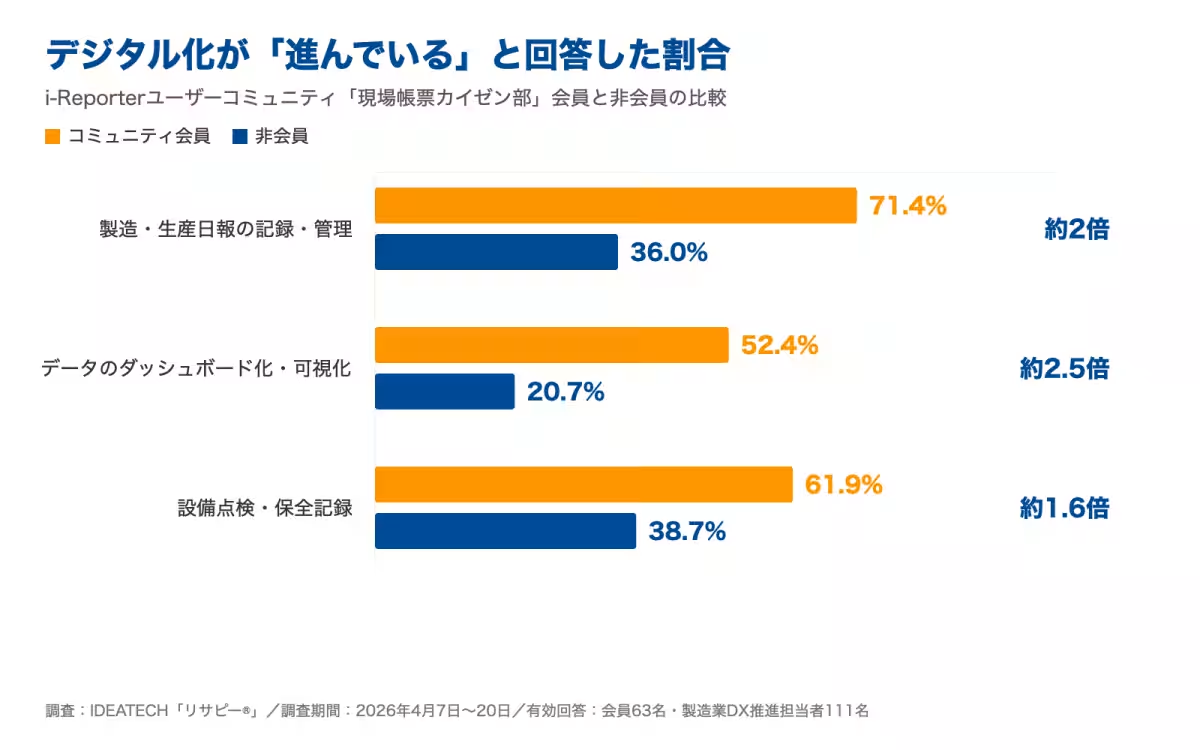
To investigate the impact of community participation on digital transformation, Shimtops conducted a comparative survey of i-Reporter community members against non-members in the manufacturing sector. The survey results were illuminating:
| Activity | Community Members | Non-Members | Difference |
|---|---|---|---|
| ----- | ---- | -- | ----- |
| Recording and managing production reports | 71.4% | 36.0% | 2x about |
| Dashboarding and visualizing data | 52.4% | 20.7% | 2.5x about |
| Equipment inspection and maintenance records | 61.9% | 38.7% | 1.6x about |
Members reported better progress in digitizing complex tasks, suggesting that access to external case studies inspires them to take proactive approaches to improvement rather than retreating due to perceived challenges.
Responses regarding the motivation for DX also reflected this disparity. A notable 65.1% of community members identified the accumulation and utilization of field data for improvement as a primary goal, contrasting sharply with only 27.0% of non-members—nearly a 2.4 times difference.
Additionally, members reported experiencing significant improvements beyond efficiency metrics, including reductions in paper usage and printing costs (63.8% versus 28.1%) and effective data analysis for ongoing enhancements (31.9% versus 19.1%). Members also felt less isolated concerning resource availability, with a significantly lower percentage (11.6% versus 18.2%) indicating a lack of external collaborators.
Key Points for Sustained Success
The special website provides decision-making criteria for determining post-implementation success, focusing on three main elements:
1. Availability of Peer Consultation: Is there a platform for continuous exchange among users?
2. Interactive Learning: Can users access shared knowledge and experiences interactively?
3. Transparency in Implementing Feedback: Are there clear processes for user feedback and product enhancement?
The i-Reporter User Community: Driving Continual Growth
The “Field Reporting Improvement Group” serves as a free user community for enterprises implementing i-Reporter, witnessing rapid growth with registrations exceeding 1,000 companies and 1,500 individuals two years post-launch. The community has accumulated over 1,000 success stories, significantly contributing to ongoing improvements across various industries.
Future Perspective
By shifting focus from purely functional changes to fostering community-driven improvement, Shimtops aims to establish a new standard in field reporting systems. With the community-driven tools that facilitate knowledge sharing and collaboration, Shimtops strives to enhance the sustainability of digital transformation initiatives across the industry.


Topics Business Technology)
【About Using Articles】
You can freely use the title and article content by linking to the page where the article is posted.
※ Images cannot be used.
【About Links】
Links are free to use.