



The Essential Software Choices for Creatives: Balancing Professional Features and User-Friendly Tools
Exploring the Priorities and Challenges of Creatives in Software Selection
A survey conducted by Wondershare Software, headquartered in Minato, Tokyo, aimed to uncover insights about the production environment and operational challenges faced by professionals in the creative sector, focusing on photographers and content creators.
The increasing demand for content has led to a variety of shooting equipment and distribution platforms, resulting in larger data sizes and complexities in file formats and editing processes. Consequently, creatives are encountering burdens related to data management, which detracts from their core production responsibilities.
The survey, conducted from April 23 to April 24, 2026, engaged 1,011 individuals—503 photographers and 508 content creators—who provided their insights regarding the state of their work environments.
Current Activities and Income Levels
When queried about their current work forms, it was revealed that a significant number of photographers (24.7%) are freelancers, while 18.9% are affiliated with studios or companies, and a smaller portion work as part-time creators (5.9%). In contrast, 44.9% of respondents identified as content creators on social media platforms.
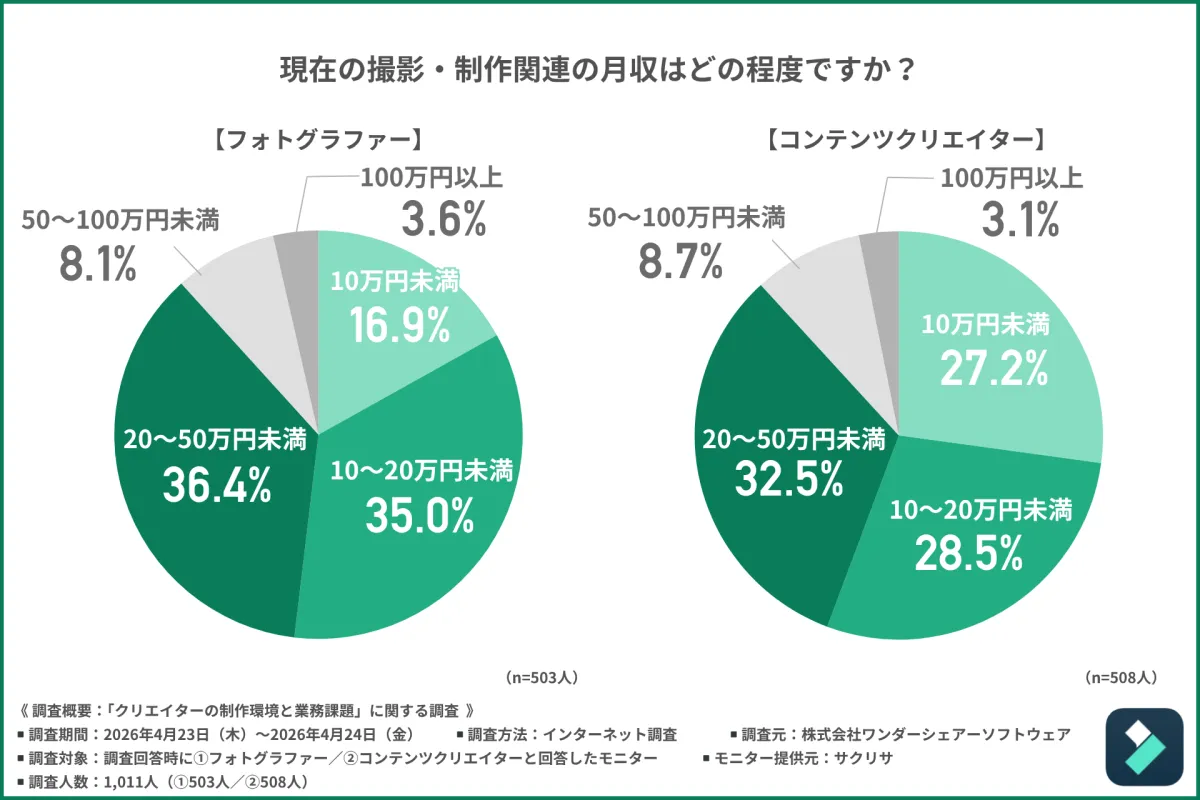
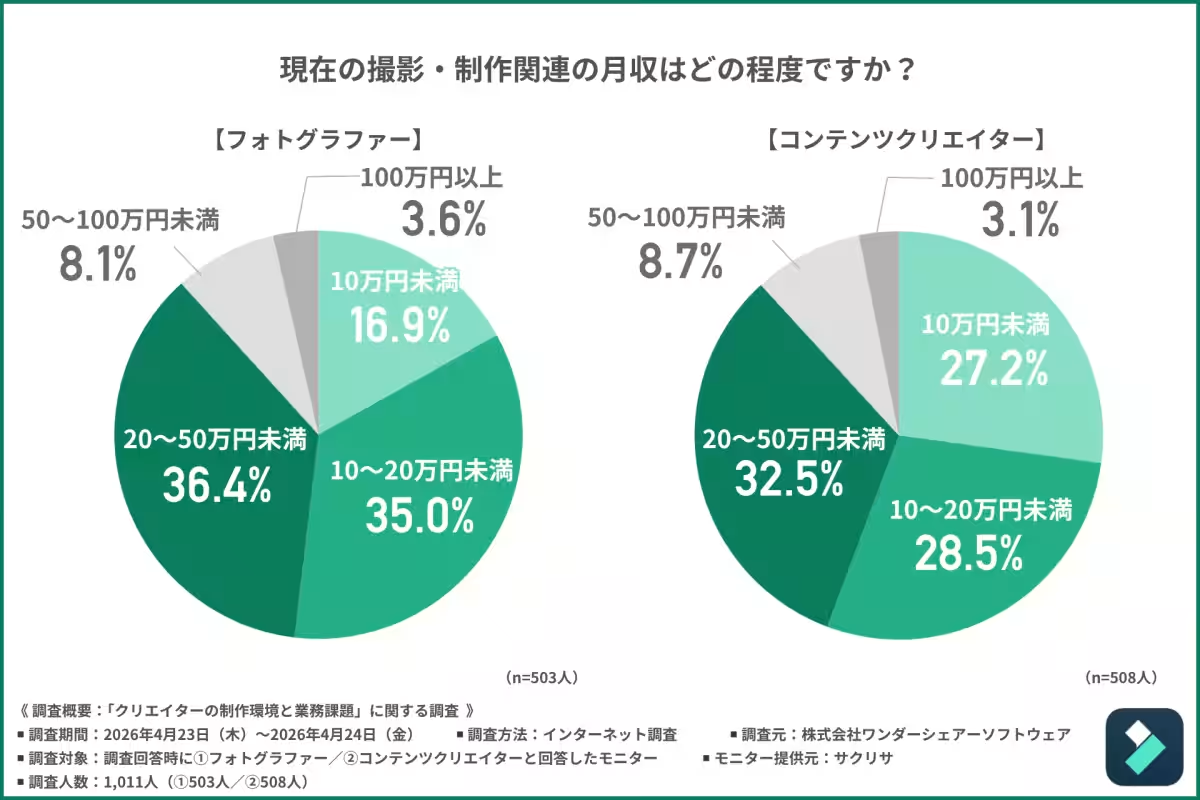
Regarding income, the respondents indicated that approximately 90% earn less than 500,000 yen monthly, with the most common income bracket being between 200,000 to 500,000 yen. This indicates a significant earning challenge across both professions.
Equipment Utilization
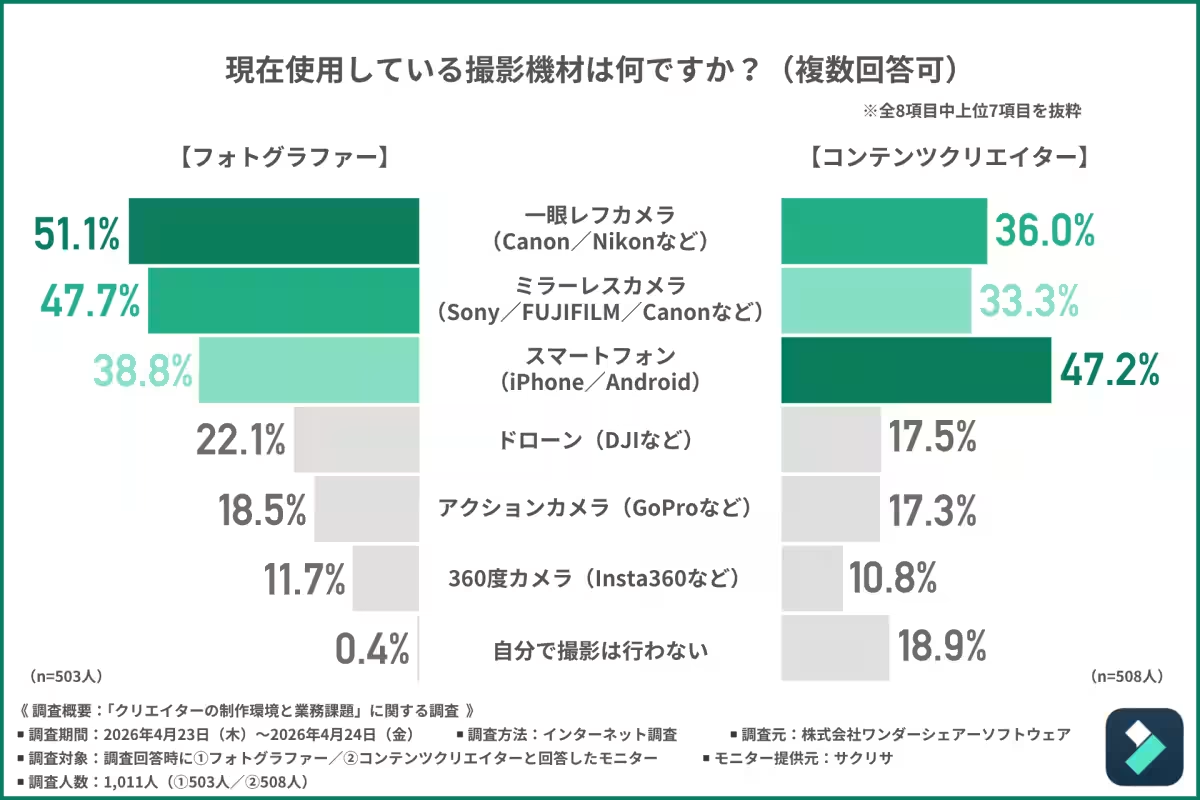
The survey further examined the equipment used by these professionals. Photographers predominantly use advanced cameras such as DSLRs and mirrorless systems, whereas content creators often rely on smartphones. The statistics indicate that smartphones have become essential tools for content creators due to their operational speed and immediacy for social media posting.
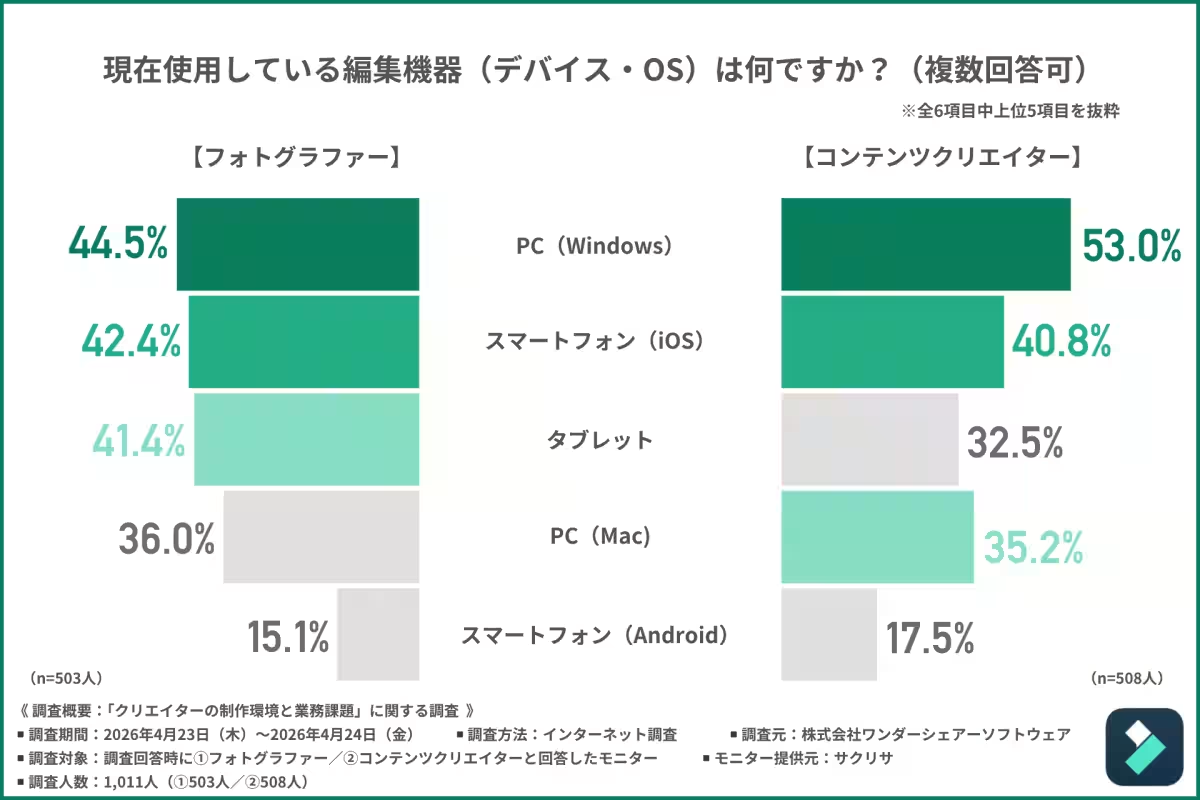
When looking at editing tools, both groups largely use PCs (Windows), followed by smartphones (iOS). This pattern suggests a dual strategy, where intensive editing is performed on PCs while simpler tasks are carried out on mobile devices.
Software Preferences
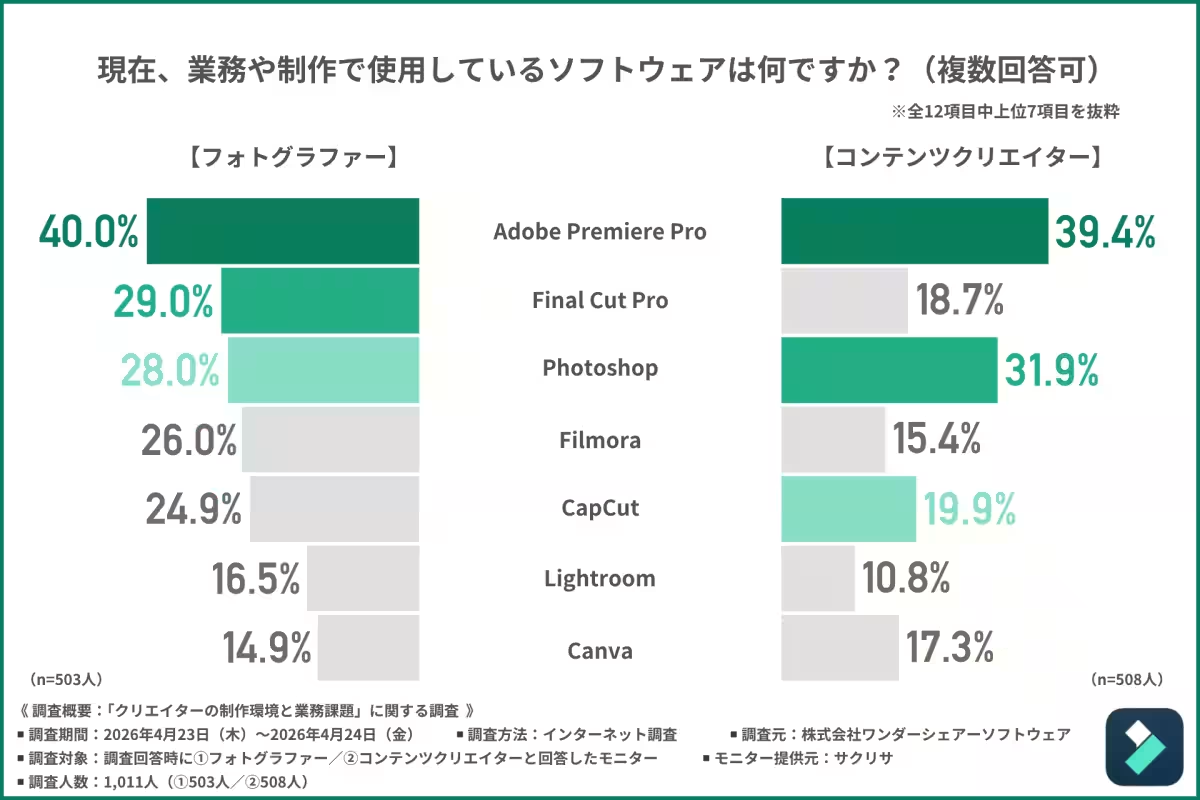
Investigating the software favored by these creators revealed a strong reliance on Adobe Premiere Pro and Photoshop, although Filmora is among the top three tools used by photographers. This differentiation indicates that photographers may prioritize professional features, while content creators look for intuitive software that allows for quick and straightforward production.
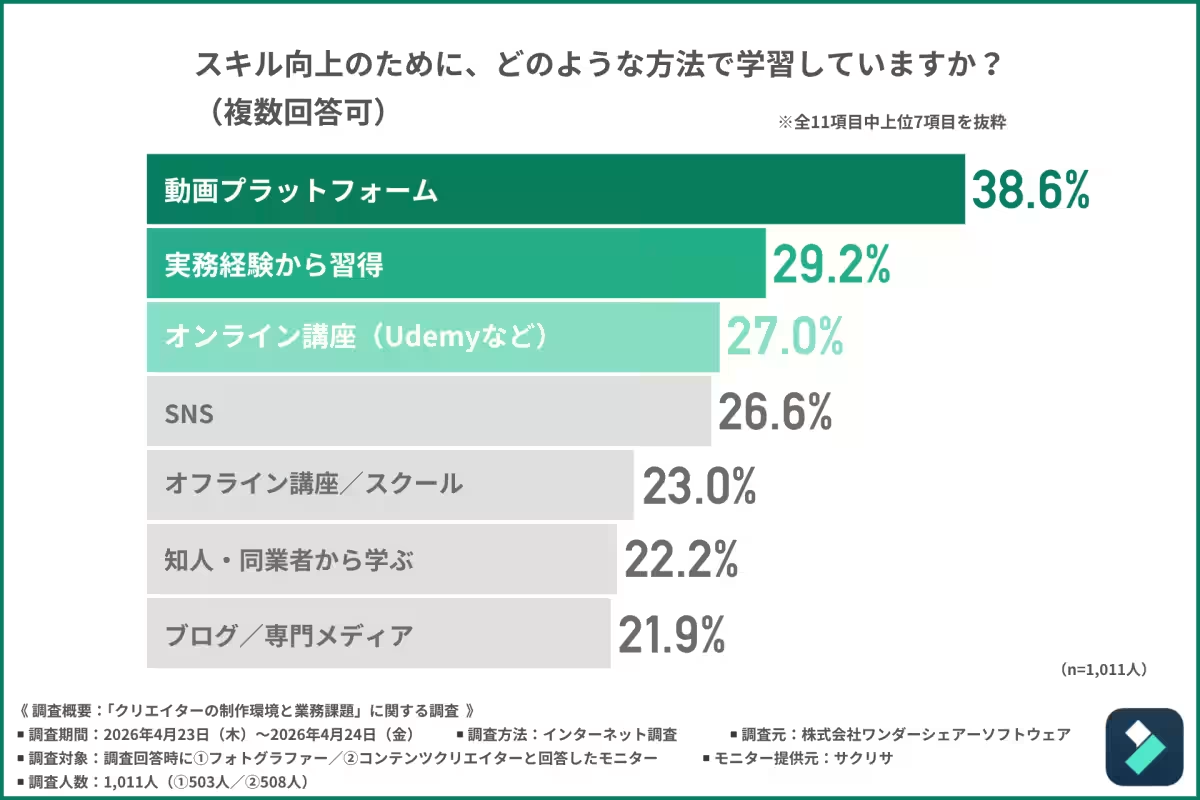
To enhance their skills, many respondents reported using video platforms (38.6%), practical experiences (29.2%), and online courses (27.0%), highlighting a trend towards flexible, visual, and hands-on learning methodologies.
Operational Challenges
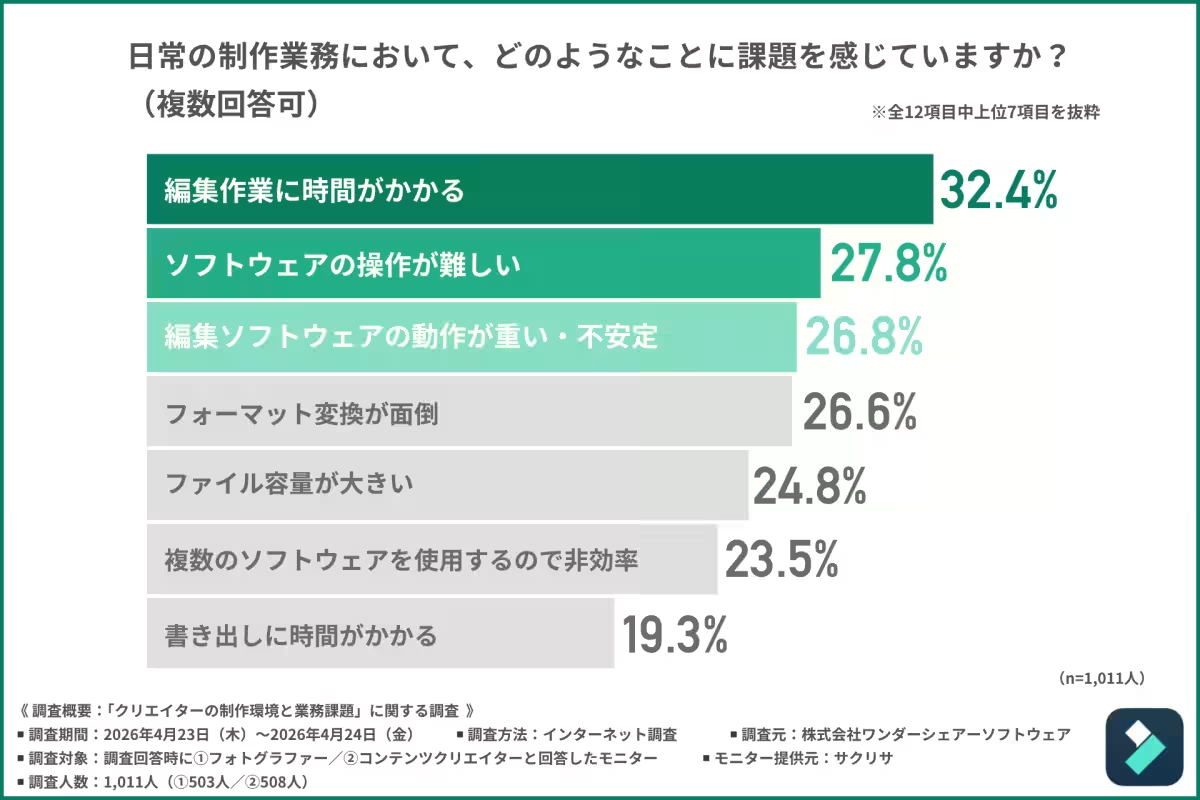
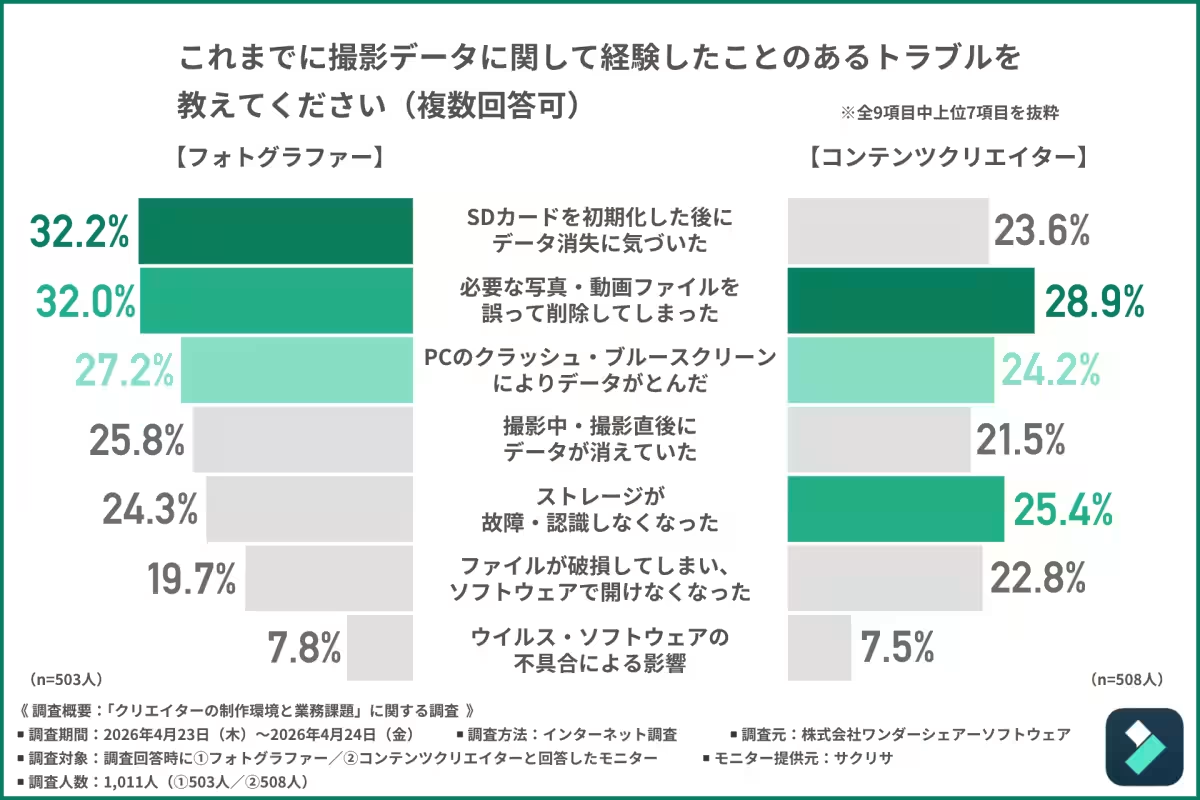
In daily operations, the most significant challenge encountered is the time-consuming nature of editing work (32.4%), followed by difficulties with software usability (27.8%) and performance issues (26.8%). These obstacles illustrate the operational bottlenecks that many creatives face. Those involved in large-scale content creation often run into serious issues, including data loss from accidental deletions or system crashes. The survey revealed that both photographers and content creators are particularly susceptible to human error and technical failures, and a solid data protection strategy is essential.
Software Selection Criteria and Future Expectations
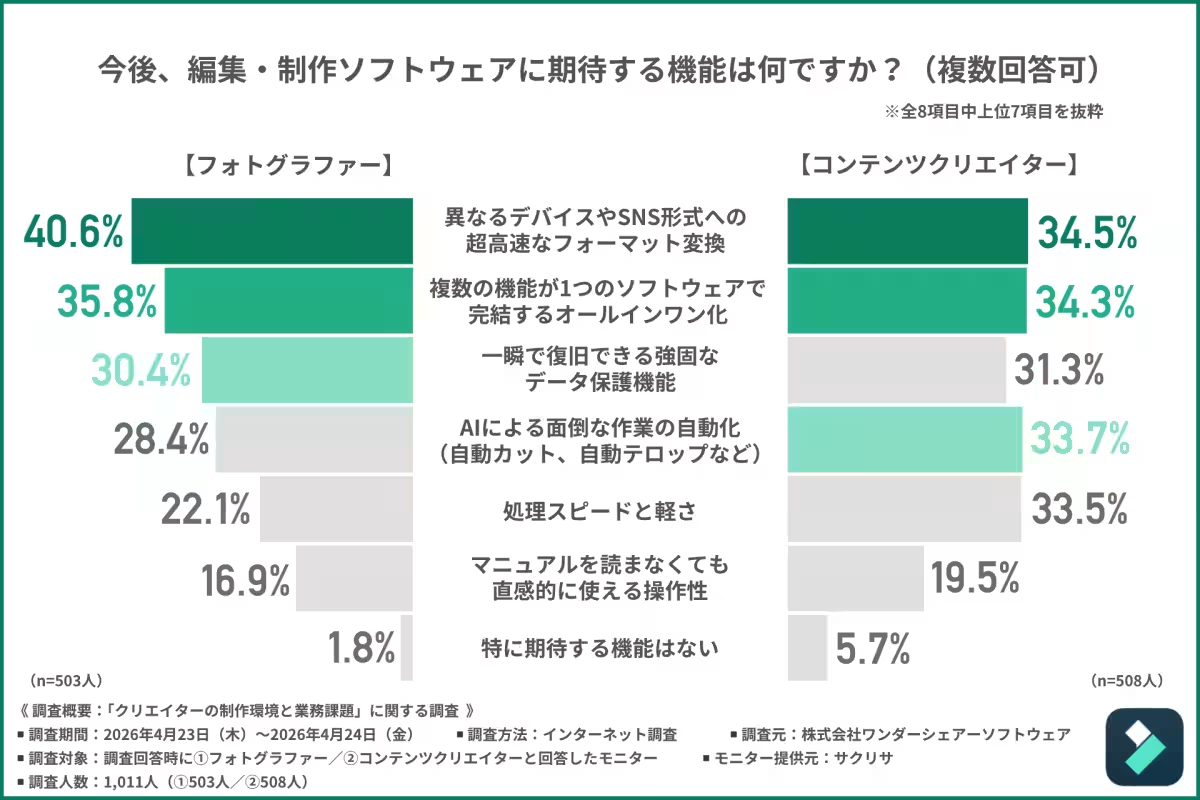
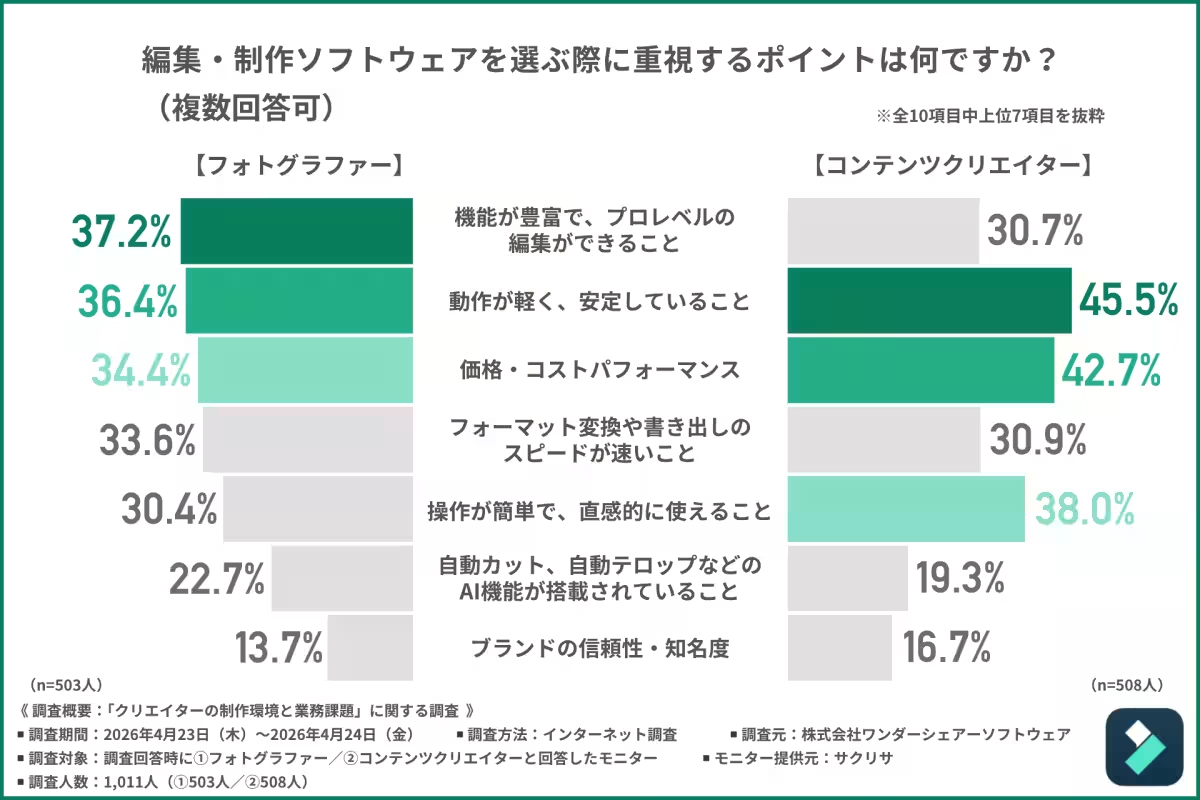
When choosing editing and production software, photographers tend to prioritize advanced functionalities, whereas content creators emphasize user-friendliness. Both groups value system stability and cost-effectiveness, underscoring shared needs across professions. Respondents expressed a strong desire for features like ultra-fast format conversions and comprehensive all-in-one solutions in future software development. This preference indicates a collective push towards embracing efficiency within the creative workflow.
This survey underscores the challenges faced by modern photographers and content creators and their variance in priorities regarding software selection. Most respondents earn under 500,000 yen per month, illustrating the financial concerns pervasive in their professions. While photographers favor high-quality equipment, content creators are increasingly relying on smartphones and PCs for their editing needs.
Moreover, many are enhancing their skills through online platforms, yet they face significant time constraints and operational challenges. As software preferences evolve towards lighter, more cost-effective options, the demand for an all-in-one solution that streamlines the editing process while safeguarding data integrity will only increase. Addressing these challenges is essential for enabling creatives to focus on their core passion: producing compelling content.
Conclusion: The Future of Creative Software
Wondershare Software's recent survey reveals the pressing challenges and preferences of modern creatives. With both groups indicating they require more efficient tools, the demand for all-in-one solutions that enhance workflow and protect data will shape the future of content creation. With current promotions available, this is an excellent opportunity for creatives to optimize their operational environment and invest in tools that facilitate their artistic endeavors.
Topics Entertainment & Media)
【About Using Articles】
You can freely use the title and article content by linking to the page where the article is posted.
※ Images cannot be used.
【About Links】
Links are free to use.