



Revealing the Reasons Why Remote Work Prevents Employee Resignation
Remote Work’s Role in Employee Retention
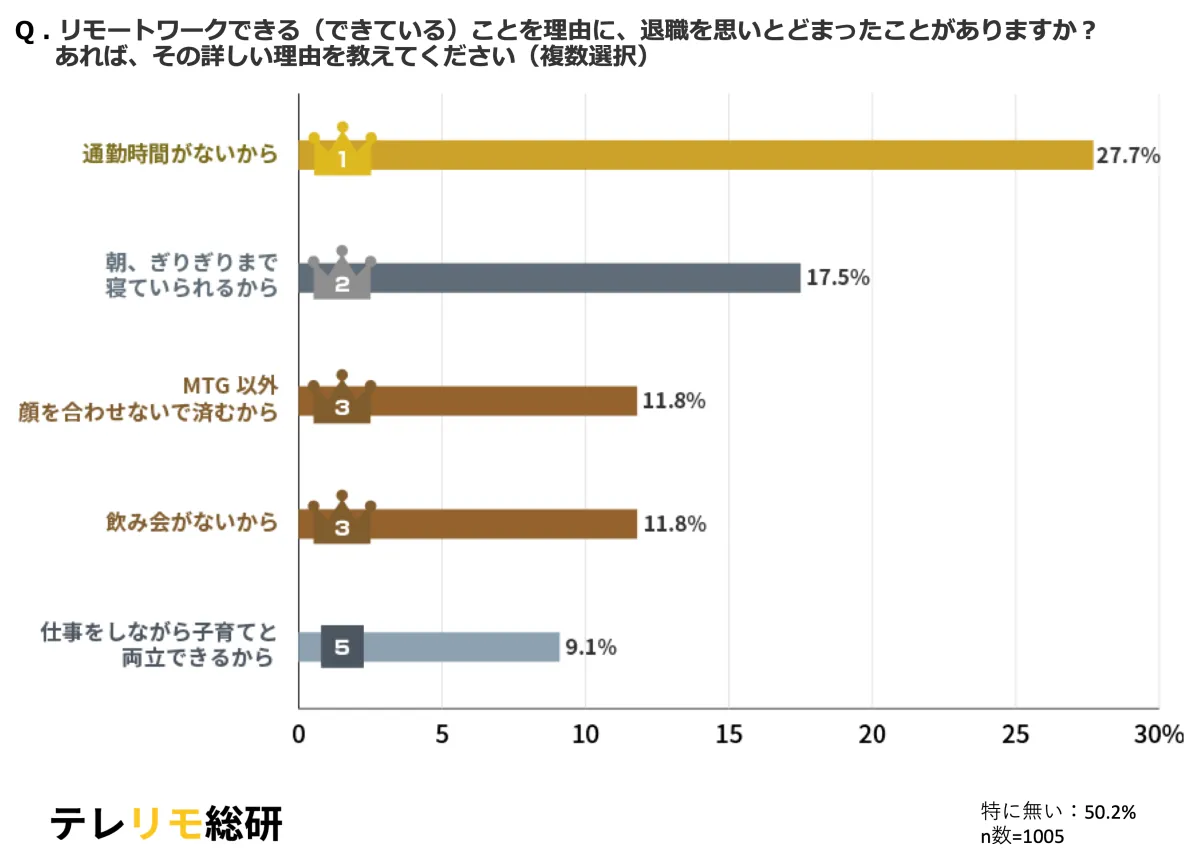
As remote work becomes more prevalent, understanding its impact on employee retention has become crucial. A recent survey by LASSIC’s Telework Research Institute examined the reasons why individuals aged 20 to 65 chose to stay at their jobs due to remote work. The results shed light on this intriguing trend, revealing that almost half of the participants cite the absence of commuting as a primary factor for their decision to stay.
Key Findings from the Survey
Main Reasons for Staying
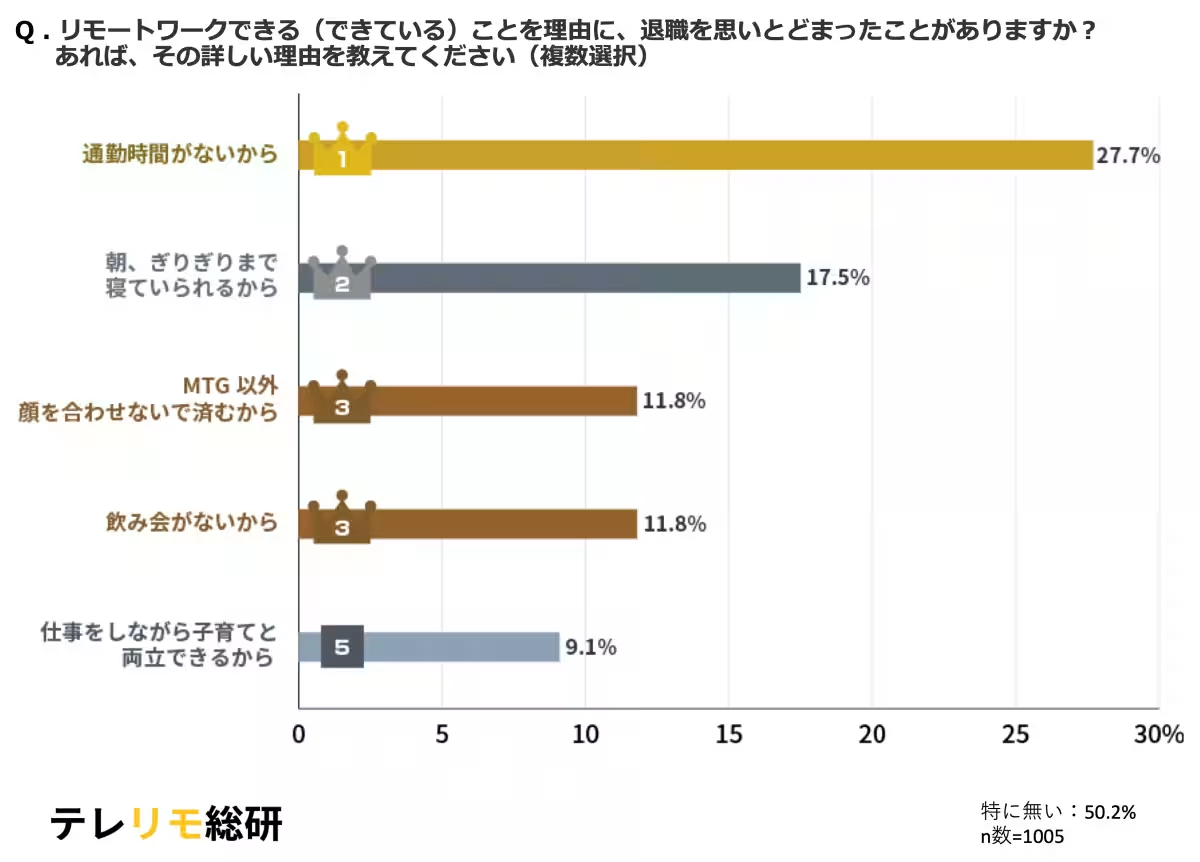
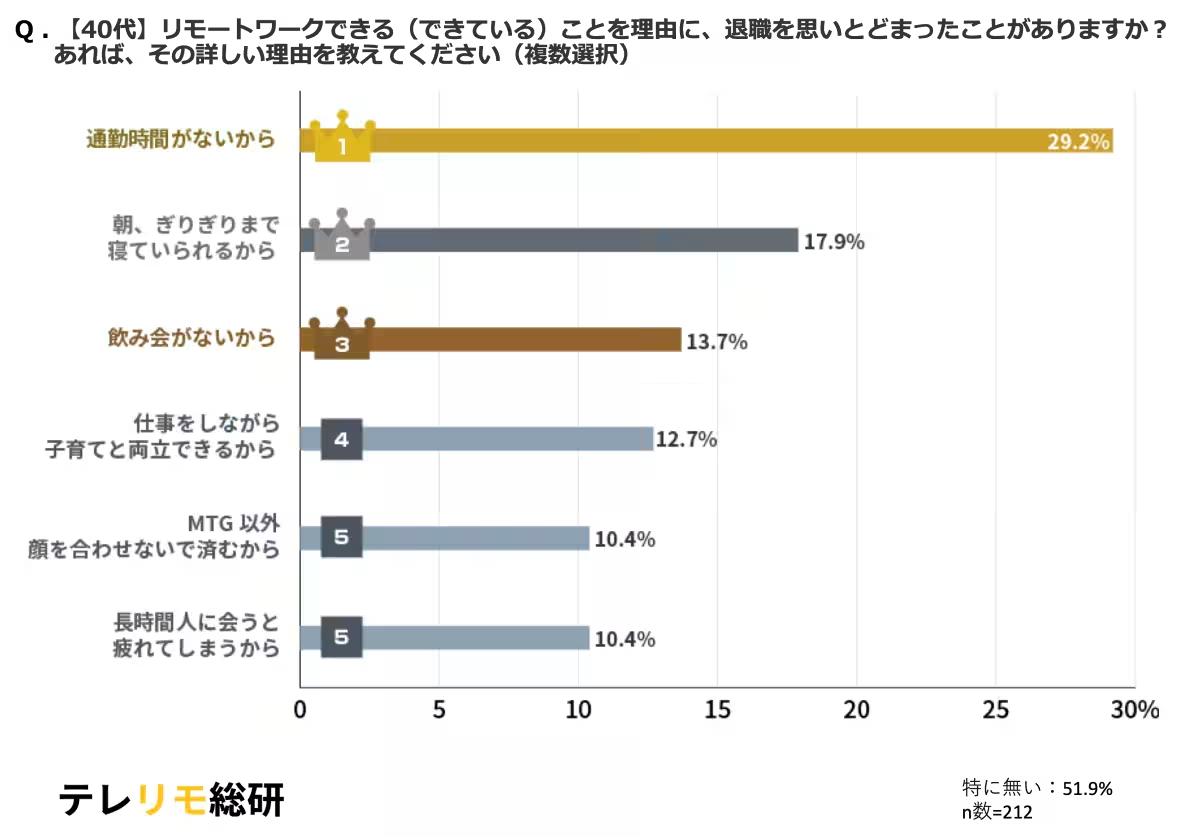
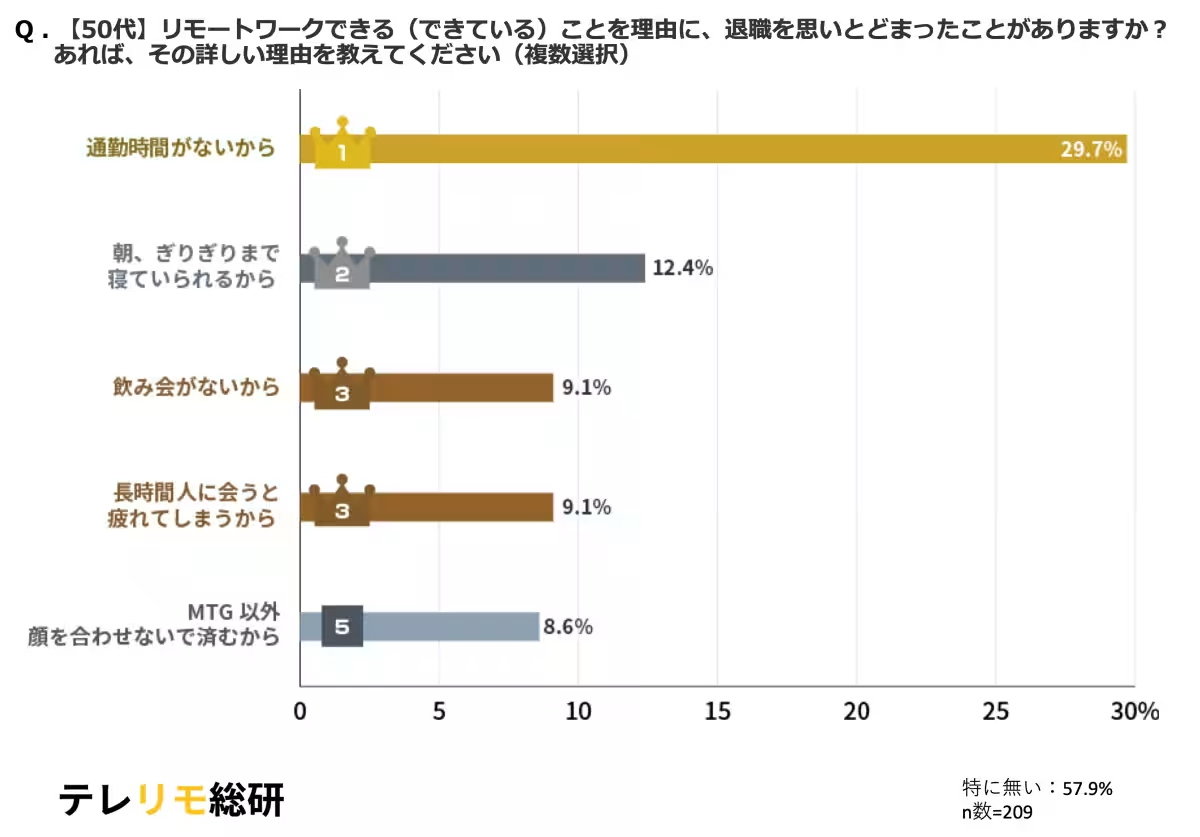
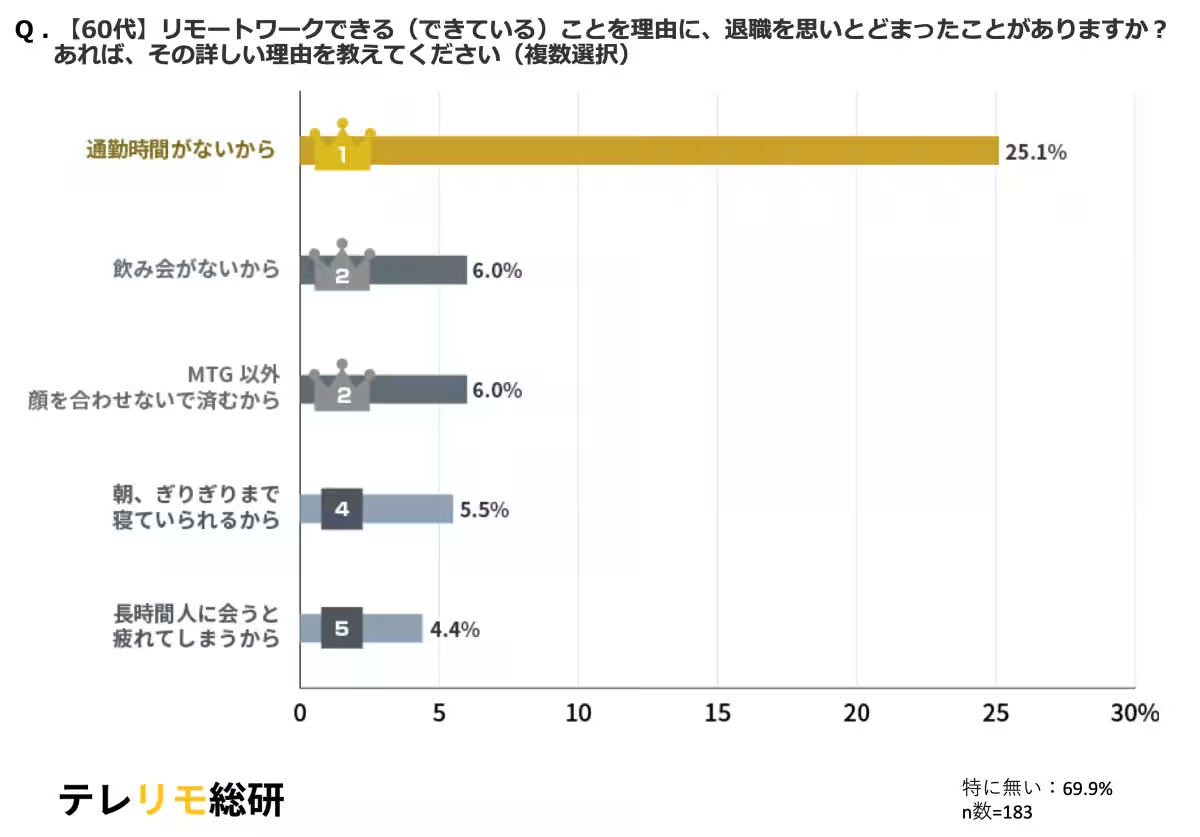
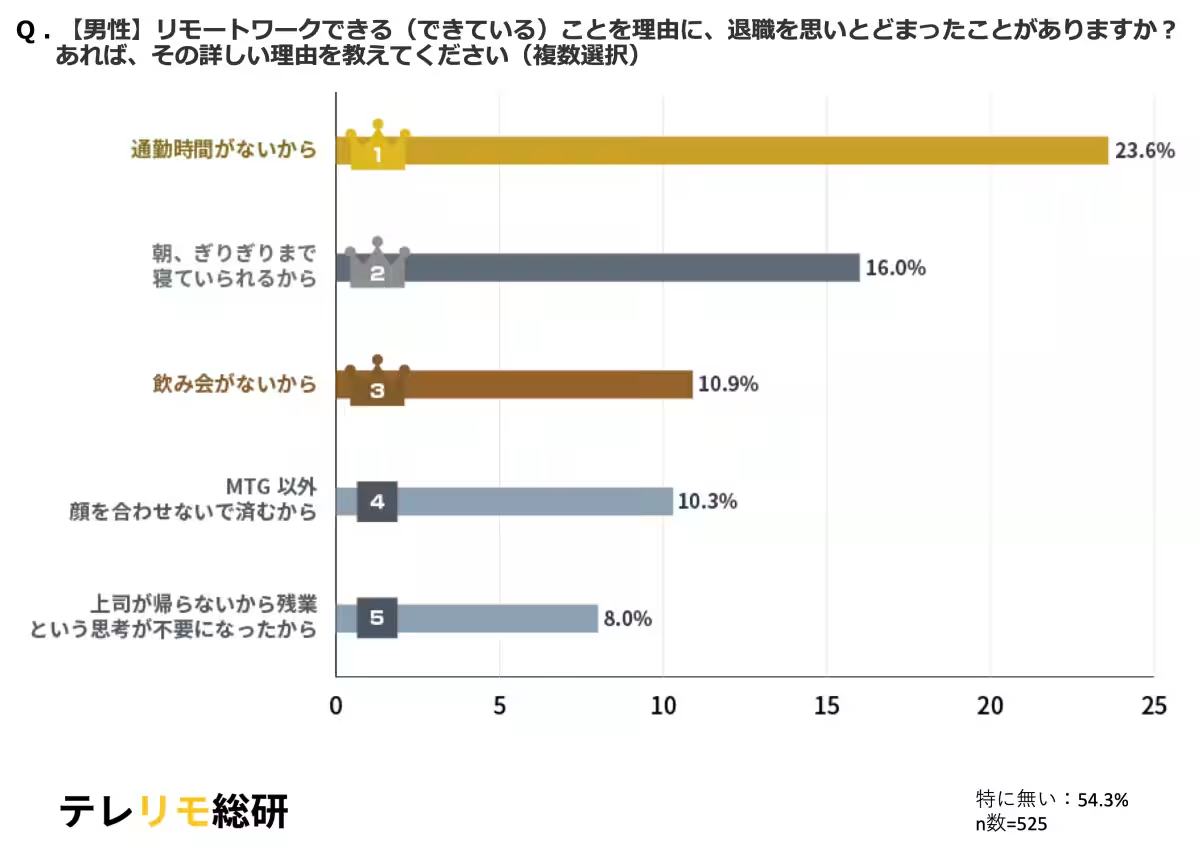
The survey presented a question regarding the reasons for maintaining employment while remote working. The overwhelming common response across demographics was the elimination of commuting time, with 49.8% of respondents affirming that it has played a crucial role in their decision. Out of these respondents, 27.7% specifically pointed to the lack of commuting as their main reason for not resigning.
Alongside commuting concerns, responses also included benefits such as no social obligations tied to in-person meetings or gatherings. This indicates that remote work effectively decreases interpersonal stress, making it an appealing option for many employees.
Gender-based Differences
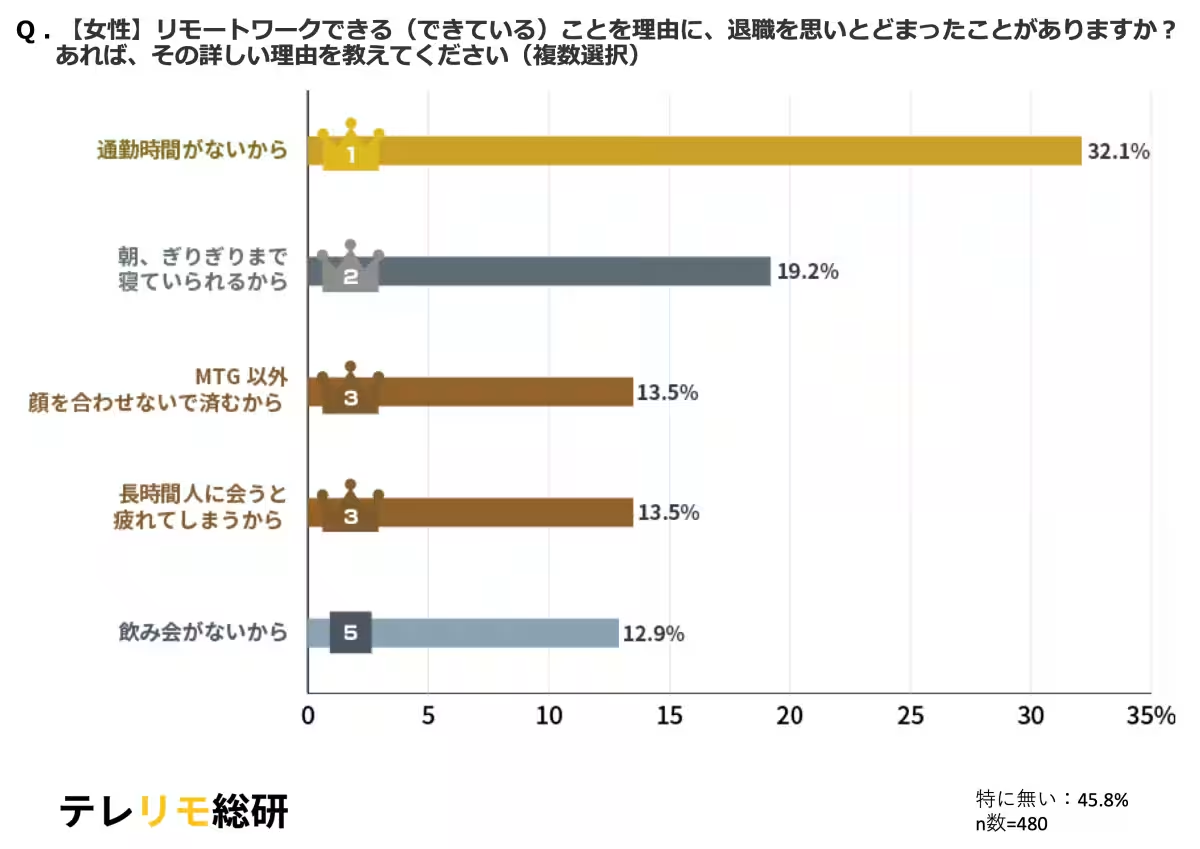
The survey also highlighted differences in outlook between genders. For female respondents, the sentiment of feeling exhausted after prolonged face-to-face interaction was pronounced, suggesting that the mental fatigue associated with in-person meetings is a significant factor in their decision to remain in their roles. Conversely, male respondents indicated that the absence of coworkers’ supervision during work hours led to more efficient working conditions, where remaining past official hours was not an expectation.
Age Group Variances
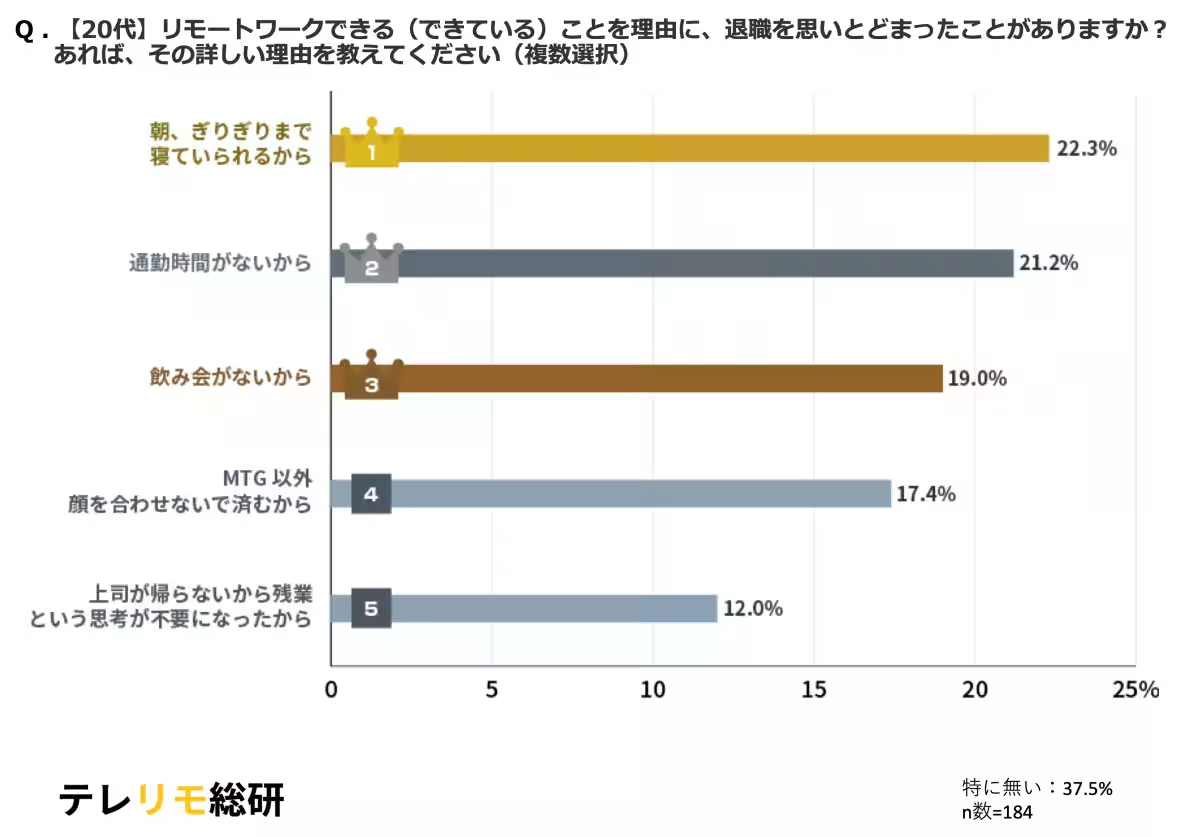
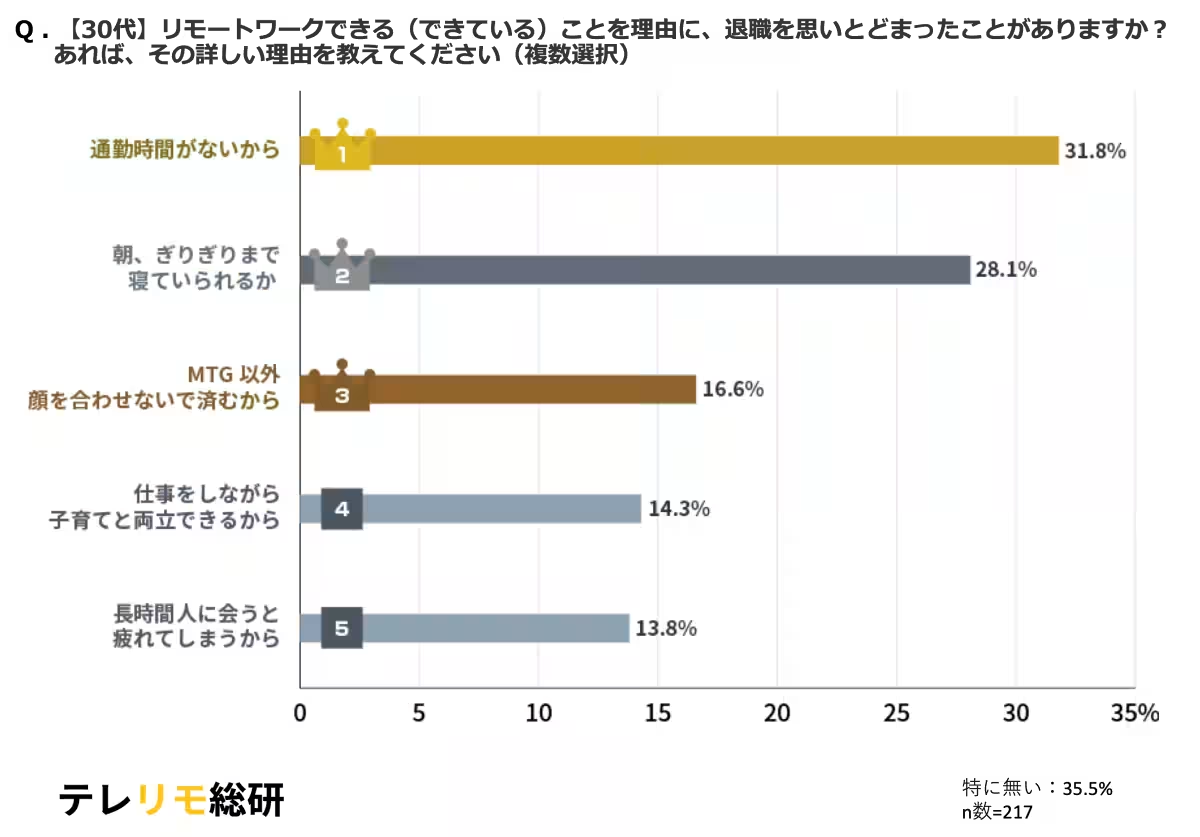
Further analysis revealed that the preferences varied widely across age groups. Younger employees in their twenties favored the ability to sleep longer, ranking it as their highest priority in maintaining employment, while those in their thirties and forties placed significant importance on achieving a balance between work and family commitments, particularly childcare. This illustrates a generational shift in priorities where younger workers advocate for personal timing while older cohorts focus on familial responsibilities.
An intriguing discovery was made with seniors aged sixty and above; a notable 69.9% indicated that they had no particular reason for staying in their jobs related to remote work. This statistic suggests that as one ages, the deterrent effect of remote work on resignation diminishes, necessitating different retention strategies for this demographic.
Implications for Employers
The data underscores the importance of adapting workplace policies based on demographic insights. The universal appeal of eliminating commute time is clear; thus, organizations looking to increase attendance in physical workplaces should offer compelling benefits that outweigh the convenience of working from home.
Employers also need to reassess the design of their employee benefits package, with remote work arrangements increasingly seen as a recruitment tool. The absence of commuting could become a deciding factor for job seekers as businesses strive to attract talent in a competitive job market.
If your company is facing high turnover rates or struggling to attract employees, considering remote work options may be a pivotal move towards enhancing job satisfaction.
LASSIC is committed to continuing research in this area, offering valuable data to progress the dialogue on remote work and employee retention.
Conclusion
The findings of this survey offer critical insights into employee motivations for remaining in their positions amidst a landscape that is heavily influenced by remote work. The responses highlight that while the benefits of remote work are numerous and varied, tailoring strategies to address the distinct needs of different demographics will be key for companies aiming for improved retention rates. Employers must understand the implications of these findings to foster an environment that prioritizes employee satisfaction and well-being.
For more information and detailed results, please visit the Telework Research Institute.



Topics Other)
【About Using Articles】
You can freely use the title and article content by linking to the page where the article is posted.
※ Images cannot be used.
【About Links】
Links are free to use.