



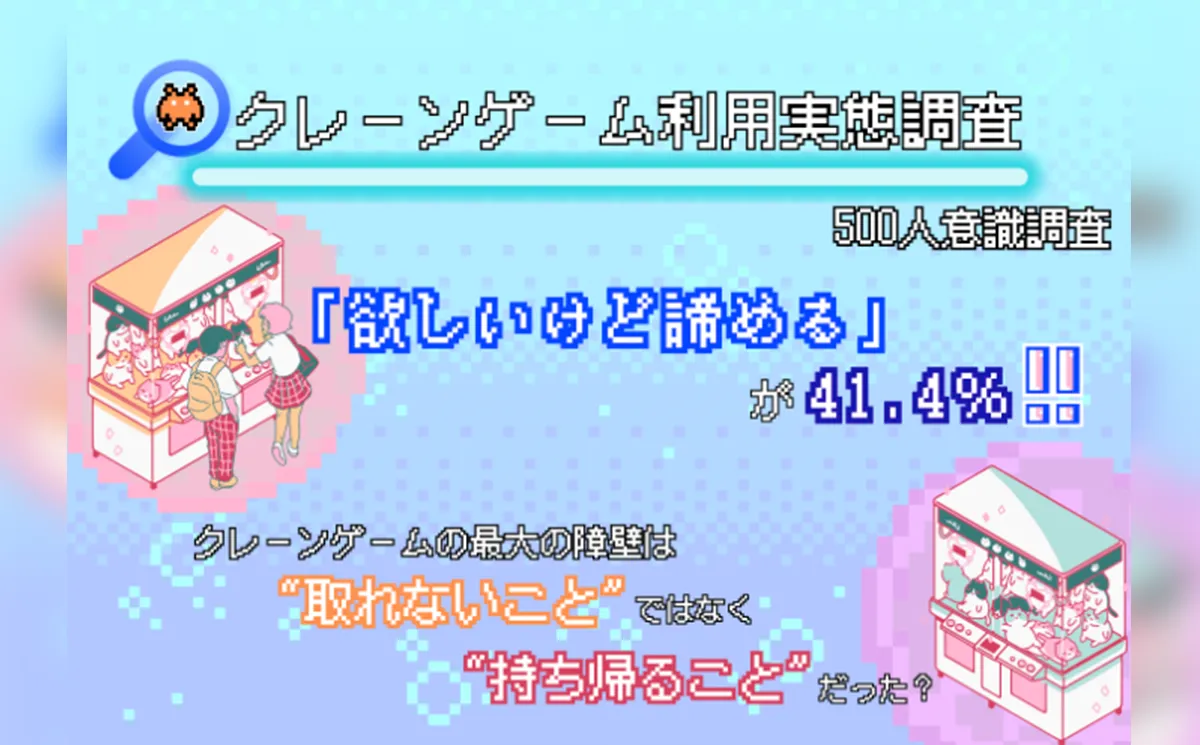
Exploring Barriers in Crane Game Usage: Why Many Users Give Up
Understanding the Barriers in Crane Game Usage
Recent research conducted by OKWAVE, a Tokyo-based company dedicated to building communities around gratitude, delves into the challenges faced by users of crane games. As the popularity of these games grows, understanding why many people abandon their desires for prizes became essential. This study surveyed 500 individuals and uncovered significant insights into the psychological and physical burdens faced by players.
The Rise of Online Crane Games
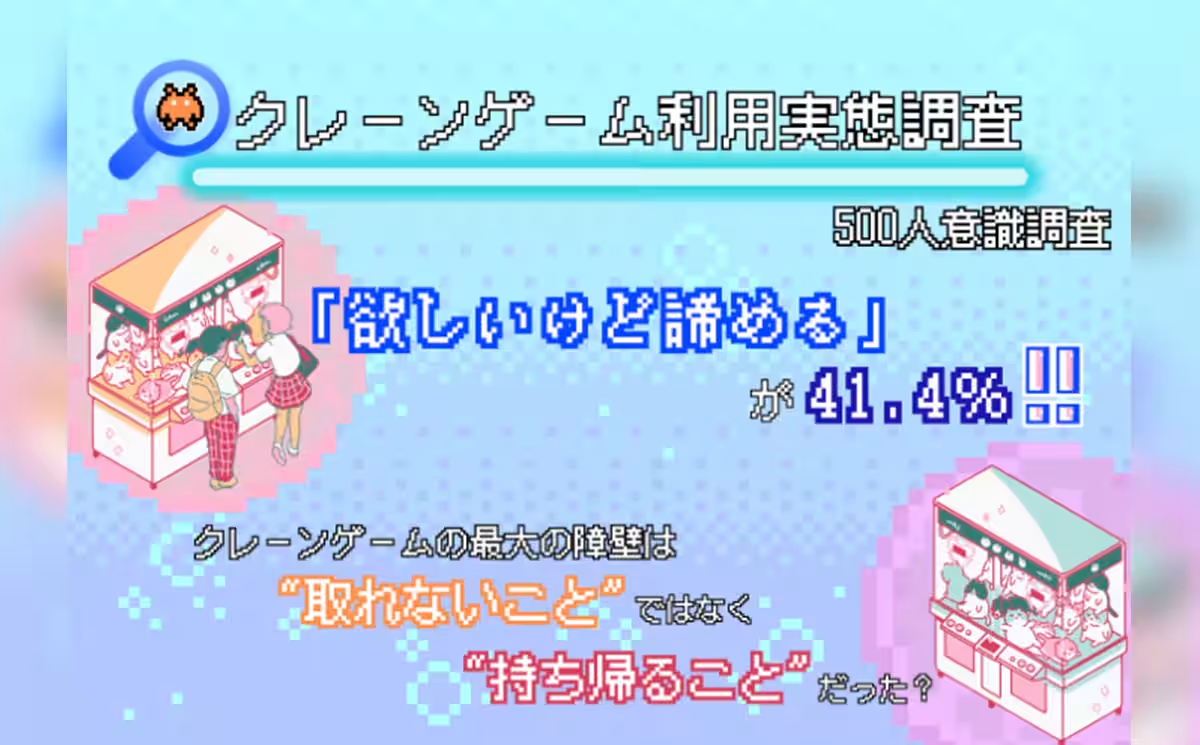
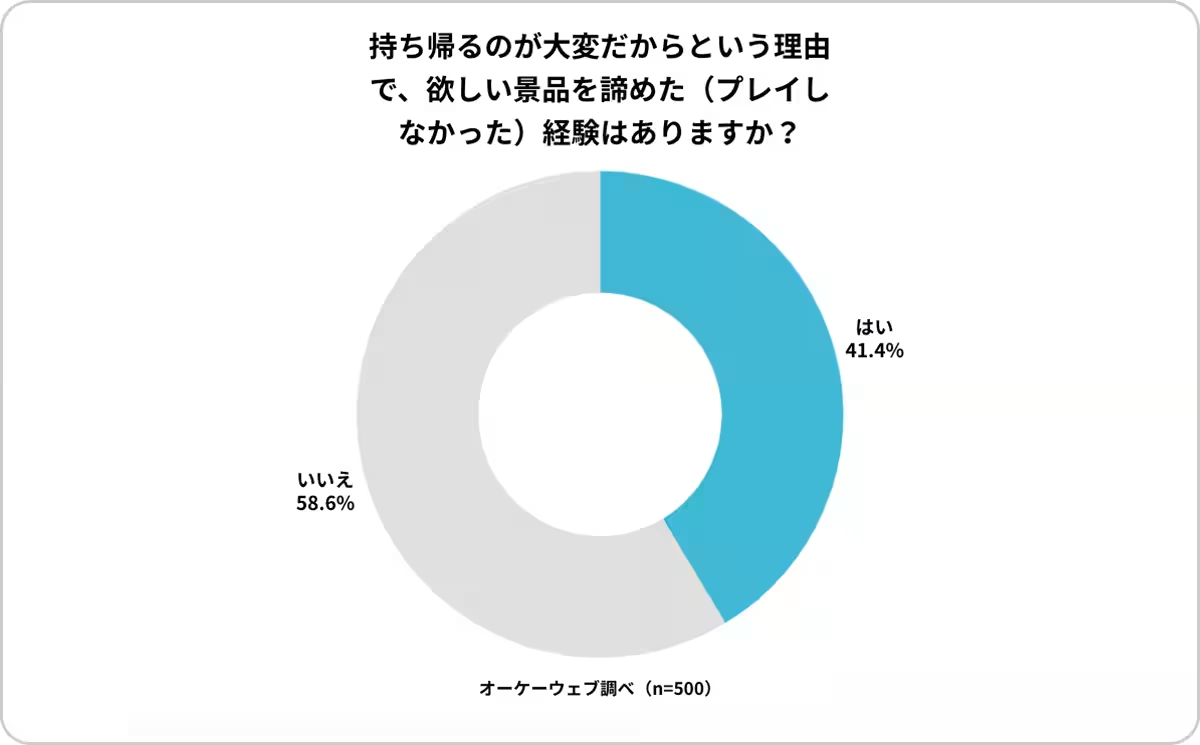
While traditional arcade crane games still hold a space in entertainment, there has been a recent surge in the usage of online crane games (or "onkure"), especially among smartphone users. This shift raises questions about user experiences in both formats. The survey revealed that over 60% of traditional arcade users feel embarrassment when transporting large prizes on public transport, which often leads to 41.4% of them opting out of play altogether.
Physical and Psychological Burdens
Difficulty in Transportation
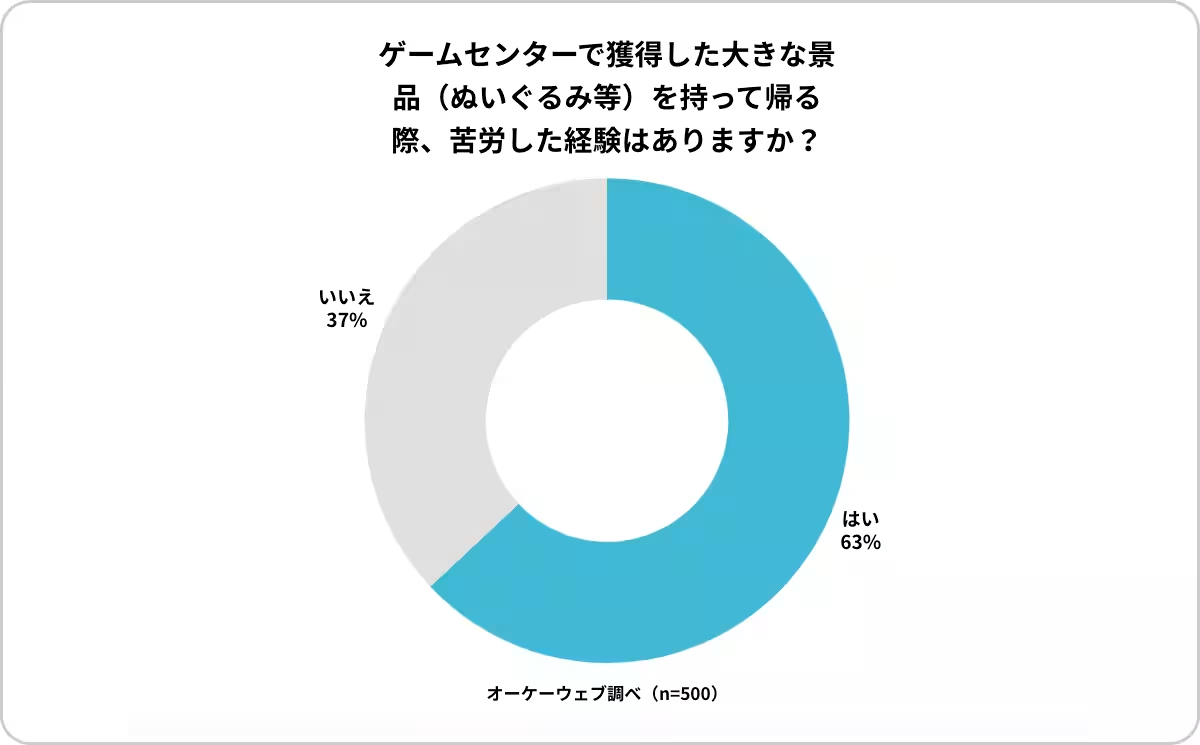
The first key finding highlights that 63% of respondents reported difficulty in transporting large prizes, such as plush toys, after winning them. Many individuals expressed feelings of embarrassment when navigating crowded public spaces with their prizes. This not only indicates a physical issue but also presents a psychological hurdle that deters users from engaging with crane games. The following data further exemplifies this:
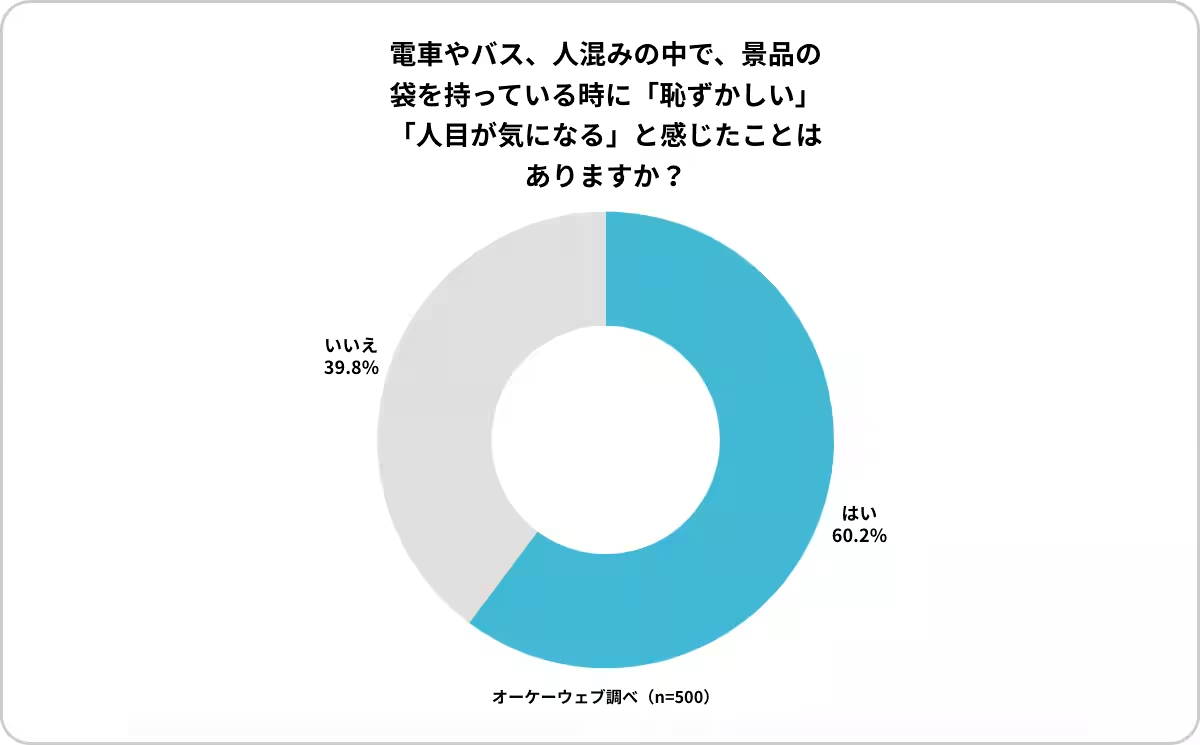
- - Embarrassment in Public: 60.2% of respondents admitted to feeling self-conscious while managing their prizes in public transport settings, underlining the real-world implications of their experiences.
Opportunity Costs
The survey's most striking revelation is the impact of these burdens on user engagement. The overwhelming majority of participants indicated that the physical difficulties associated with carrying prizes contribute directly to lost purchasing opportunities. Of those surveyed, a significant segment (41.4%) confirmed they had previously considered desired prizes but chose not to play due to transportation concerns. This finding emphasizes a critical gap between user desire and engagement due to logistical issues.
A Desire for Convenience
The Need for Delivery Services
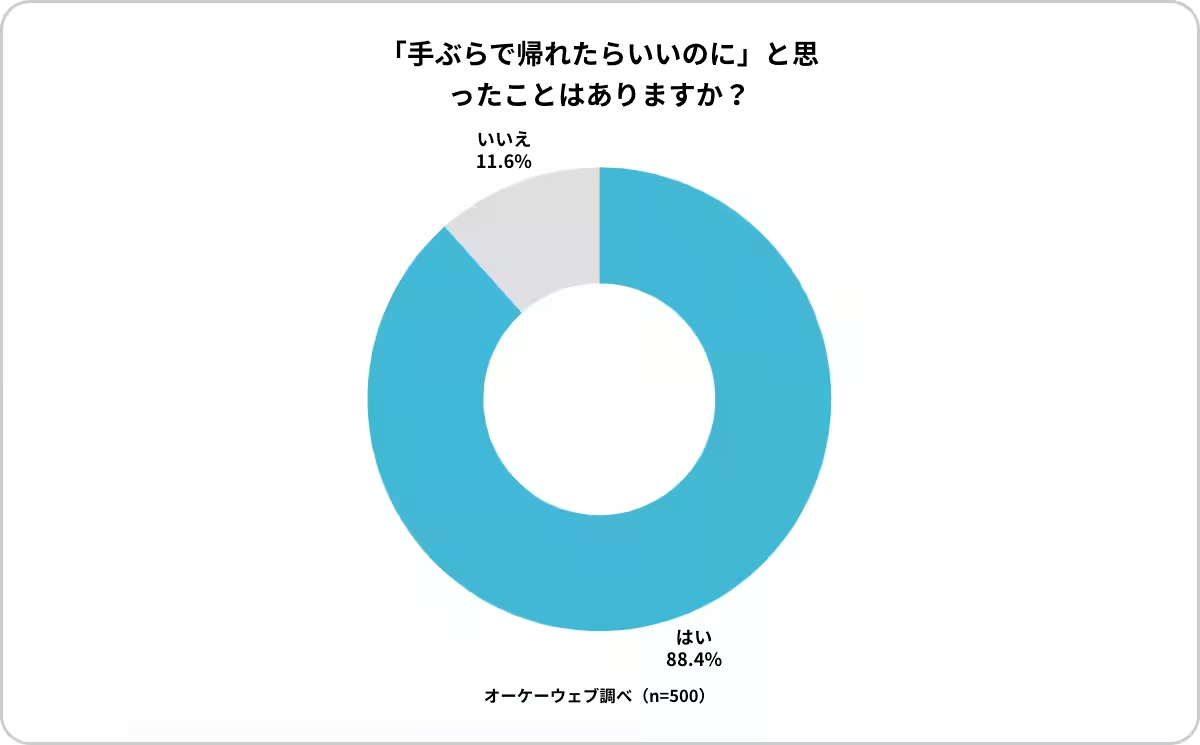
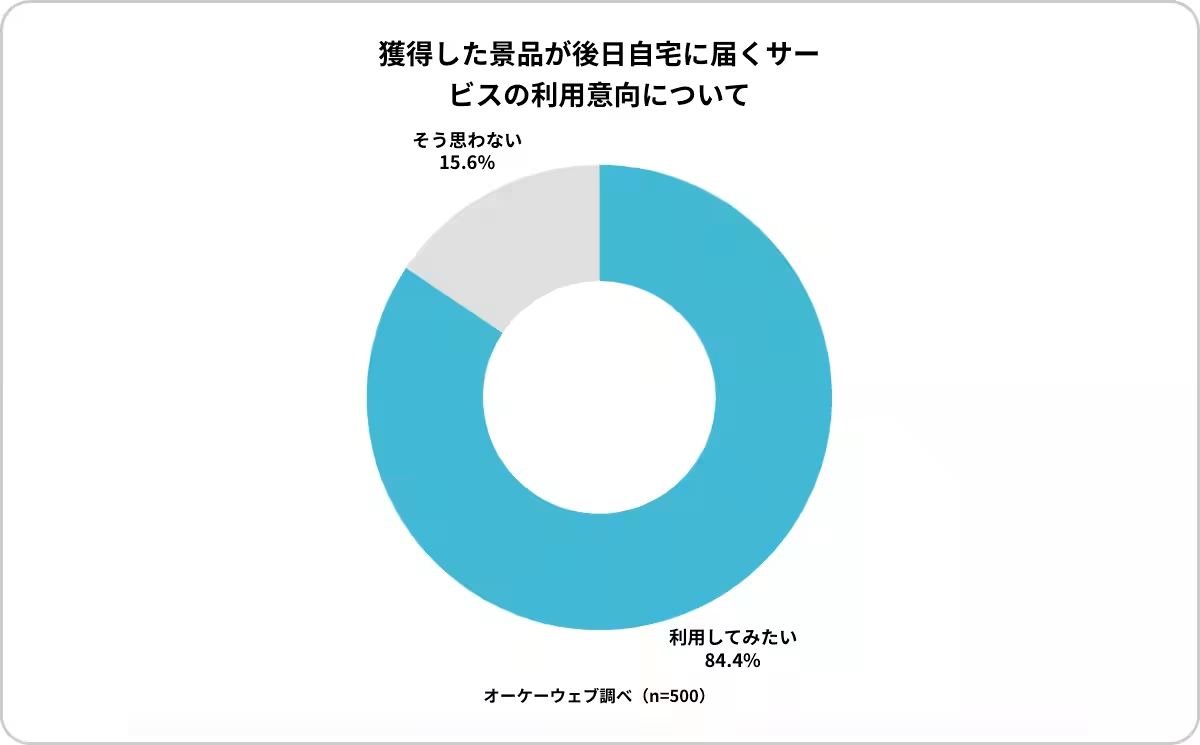
As the data suggests, there is an enormous potential demand for solutions that eliminate these burdens. An astounding 88.4% of respondents expressed a desire for a system that allows them to return home empty-handed after winning. Furthermore, approximately 84.4% indicated interest in a service that facilitates the shipment of prizes directly to their homes, with no shipping costs incurred. This highlights how online crane games fulfill a unique market need.
The Value of Onkure
The model of online crane games, which incorporates shipping functionalities, proves to be exceedingly appealing to users seeking a hassle-free experience. Users want to enjoy the thrill of playing without the subsequent burden of carrying large toys home. This model stands as a stark contrast to traditional arcade experiences, which focus solely on immediate prize collection.
Enhancing User Experience (UX)
This investigation reaffirmed that user experience in crane games extends beyond the moment of winning; the journey back home is equally significant. The high rate of opportunity loss reveals the vast market potential that can be unlocked with delivery services. Eliminating negative factors like weight and embarrassment enables players to enjoy the pure joy of gaming without logistical concerns.
Future Insights
As industries continue to blend the physical and digital realms, addressing and alleviating these physical stressors may unlock significant growth opportunities across the sector. This survey by OKWAVE serves as a crucial insight into improving user experiences, especially in enhancing convenience for crane game enthusiasts. The company strives to create environments where gratitude can thrive, focusing on fostering communities that share in the joy of gameplay without stress.
In summary, these findings present an exciting opportunity for both arcade owners and technological innovators in providing solutions that cater to modern users’ needs. With the rise of online crane games, it may just be the beginning of a new chapter for the crane gaming industry, where both users' desires and logistical solutions harmoniously align.

Topics Other)
【About Using Articles】
You can freely use the title and article content by linking to the page where the article is posted.
※ Images cannot be used.
【About Links】
Links are free to use.