



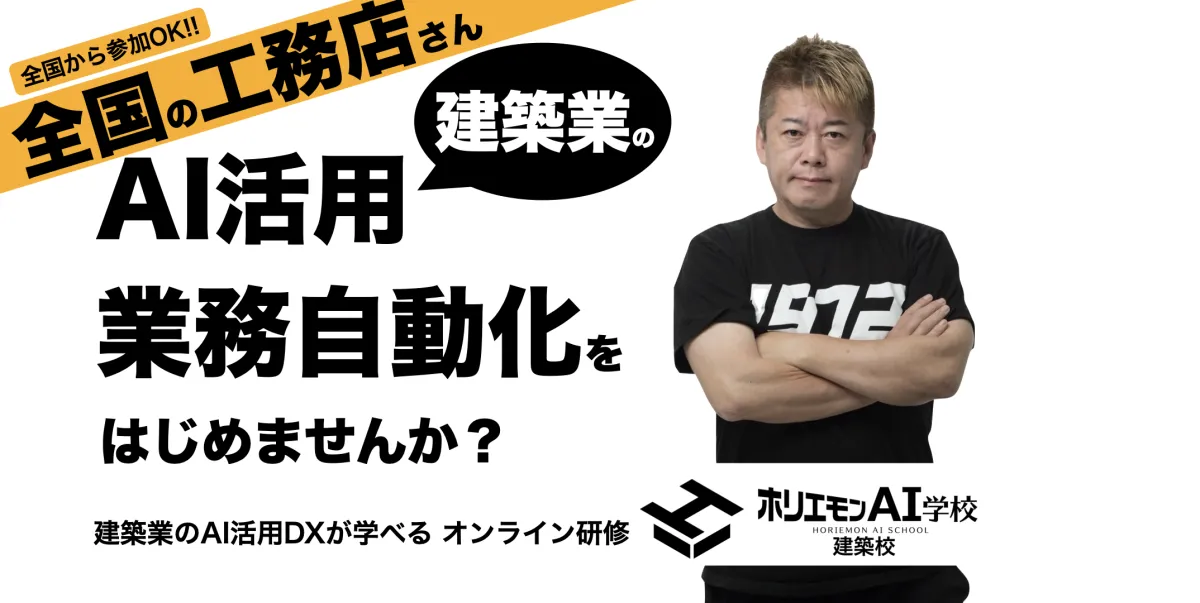
Launch of Horiemon AI School for Architecture Industry Amid Growing Demand for AI Skills
The Rise of Horiemon AI School for Architecture
In a significant development for the architecture industry, Horiemon AI School Co., Ltd., based in Shinjuku, Tokyo, has officially launched a specialized franchise called "Horiemon AI School for Architecture." This initiative comes in partnership with LIFEFUND Co., Ltd., located in Hamamatsu, Shizuoka, aiming to tackle pressing issues within the construction sector.
Objective of the Franchise
The new franchise seeks to address some longstanding challenges within the industry, such as chronic labor shortages, task dependency, and the slow adoption of digital transformation (DX). With the rise of generative AI technologies like ChatGPT, there is an increasing demand for efficiency and automation in operations. However, many professionals in the field express uncertainty about how to effectively implement these new tools.
Horiemon AI School for Architecture's curriculum focuses on usable applications of generative AI directly relevant to construction sites, ensuring that the program goes beyond mere tool installation to include sustained usage and practical implementation.
Launch Event: AI Work Techniques Webinar
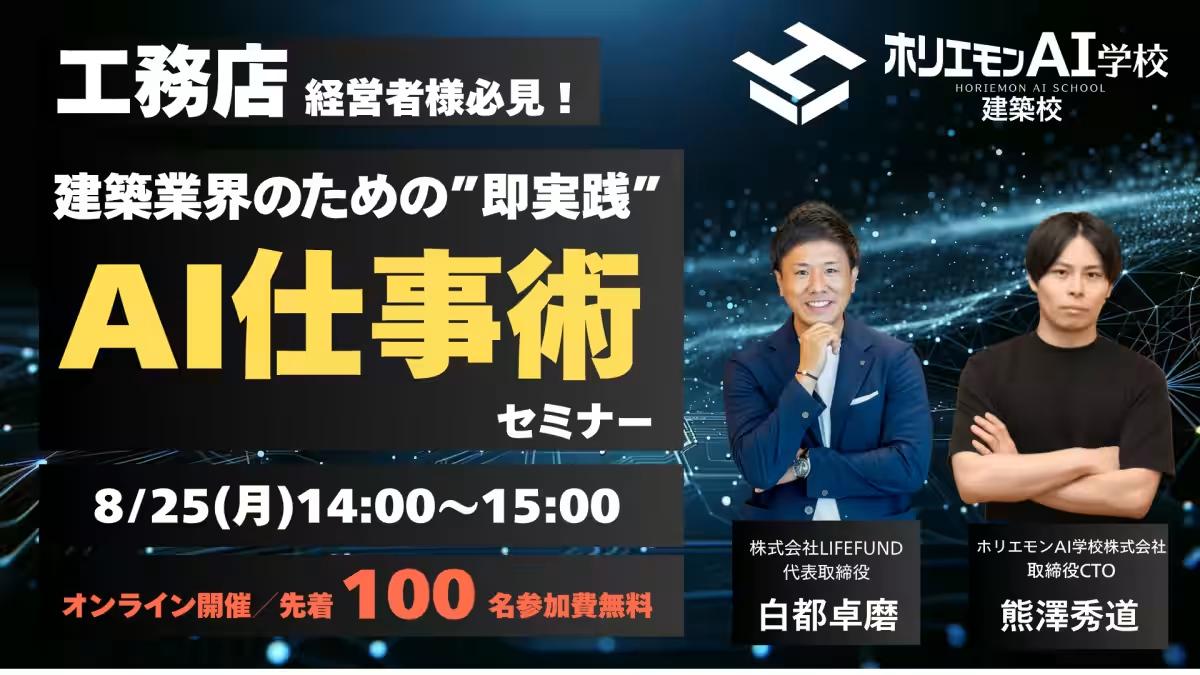
To celebrate the opening, the school will host a free webinar titled “AI Work Techniques for the Architecture Industry” on August 25, 2025. This online event aims to introduce participants to practical AI applications specifically designed for their field and will accommodate the first 100 registrants.
Addressing the Industry's Structural Issues
Recent discussions around the construction industry highlight several challenges:
- - Persistent labor shortages.
- - Heavy reliance on individual expertise, leading to inefficiencies.
- - Delayed responses to digital transformation initiatives.
As generative AI becomes more prevalent, organizations are eager to leverage these technologies to improve workflows. However, there's a prevailing confusion about which tools to adopt and how to ensure their effectiveness long-term. Horiemon AI School aims to resolve this by providing tailored AI implementation support.
Comprehensive Support for AI Integration
The school's offerings include:
1. Support in Selecting and Implementing AI Tools: Evaluating specific challenges faced by construction sites, such as photo organization, report generation, and management tasks, and assisting in the selection and setup of appropriate generative AI tools.
2. Process Visualization and Automation Design: Transitioning traditionally manual and document-driven processes to digital platforms, facilitating a more efficient workflow through AI integration.
3. Training and In-House Development Support: Training employees, including site managers and design professionals, who may not be engineers but need to employ relevant tools to enhance their operations.
Gradual Learning Approach
The curriculum is designed to gradually elevate the AI literacy of employees within the organization. It begins with basic courses that are accessible to beginners, progressing to advanced applications relevant to the field. This approach ensures that organizations can adapt at a comfortable pace, aligning the learning experience with actual workplace understanding.
Practical Applications and Success Stories
Participants will learn through a wealth of real-world examples applicable to various members of the construction industry, including contractors, architectural design offices, and home builders. This ensures the curriculum provides applicable knowledge across different departments, such as sales, design, interior coordination, site management, and after-sales services.
Beyond Tool Installation
Unlike many programs that stop at the technological deployment phase, Horiemon AI School is dedicated to developing capable personnel who can consistently utilize the tools in their daily responsibilities. The program aims to foster an environment where AI's potential is fully realized through continuous application.
Conclusion: Commitment to Industry Growth
Horiemon AI School seeks to not only aid in adopting AI technologies within the construction sector but also to instill a permanent culture of using these tools to solve real industry problems. With a focus on reproducible application methods tailored to the nuances of each project, the school aspires to significantly contribute to the industry's digital transformation journey.
Topics Other)
【About Using Articles】
You can freely use the title and article content by linking to the page where the article is posted.
※ Images cannot be used.
【About Links】
Links are free to use.