



Establishing Eco-Friendly Learning Spaces Amid Global Crises
Establishing Eco-Friendly Learning Spaces Amid Global Crises
In light of the escalating impacts of climate change, which have intensified the magnitude and severity of crises worldwide, the Education Cannot Wait (ECW) fund has launched a substantial initiative aimed at rethinking temporary learning environments in emergency situations. Recently, ECW announced a grant of $650,000 under its Acceleration Facility, allocated to Save the Children, in collaboration with Arup and the World Wildlife Fund (WWF). This effort seeks to set new standards for environmentally responsible temporary educational spaces, underscoring the crucial link between climate action and education in times of emergency.
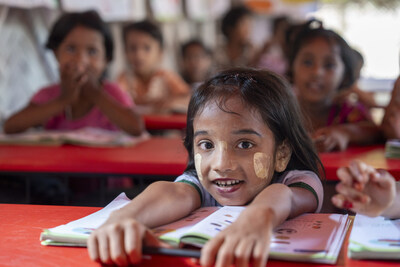
As the world witnesses unprecedented crises—from refugee camps in Bangladesh to flood-stricken areas in South Sudan—temporary learning spaces serve as lifelines for children in dire circumstances, offering stability and hope amidst chaos. However, there has been a significant gap in clear guidelines governing the design, construction, and management of these environments in an environmentally sustainable, resilient, and inclusive manner. Without adequate standards, there's a risk of exacerbating the environmental degradation, further impacting educational conditions.
To address this shortfall, this grant combines Save the Children’s longstanding expertise in child rights and emergency solutions with Arup's technical expertise and WWF’s deep environmental knowledge. This pioneering partnership cohesively merges humanitarian assistance, engineering, and ecological sustainability. As Marian Hodgkin, Global Education Lead for Save the Children's Learn Breakthrough strategic goal states, “Our temporary educational spaces provide stability and hope during crises—but this hope must transcend immediate circumstances to support lasting stability. This requires combining technical know-how with the voices of children.” Hodgkin emphasizes the importance of making these spaces safer, more relevant, and inclusive, highlighting that children must have a role in shaping their learning environments.
Hayley Gryc, Associate Director and Business Lead for the UKIMEA Education Program at Arup, expresses pride in partnering with Save the Children and WWF, supported by ECW. She emphasizes that this initiative is a pivotal step towards redefining the connection between education and climate action. It aims to ensure that temporary learning spaces serve not only educational goals but also uphold human dignity and environmental responsibility, even in the most challenging environments.
Anita van Breda, Lead Director for Environment and Disaster Management at WWF, warns that while temporary educational spaces are sanctuaries helping children regain a sense of normalcy post-disasters, neglecting environmental considerations risks worsening the challenges communities face due to extreme events such as floods, earthquakes, or wildfires. She states, “Through this partnership, we are developing practical tools aimed at making every classroom more resilient, inclusive, and eco-friendly in times of crisis.”
The initiative will focus on developing, piloting, and sharing practical and user-friendly tools for education stakeholders in crisis areas. Support will encompass the entire life cycle of temporary educational spaces—from design and material procurement to maintenance and decommissioning—with an emphasis on constructing low-impact, environmentally sound solutions tailored to local conditions. Notably, attention will also be paid to the inclusion of children with disabilities and those facing gender-specific barriers.
In collaboration with both local and international partners, a global framework for the ecological adaptation of temporary educational spaces will be established, along with practical guidelines and cost-calculating tools. These will be tested across various crisis scenarios to ensure applicability in emergency settings. The aim is to openly share these tools through educational, climate, and humanitarian networks, promoting widespread adoption and impact.
This grant aligns with ECW's strategic commitment to addressing educational needs in emergency contexts while considering climate factors. It highlights the urgent need for collective investments in education as a critical pillar of climate action and adheres to the challenges arising from COP30, contributing to the global effort to enhance the resilience, sustainability, and inclusiveness of education systems amidst growing climate and humanitarian risks.
Topics Other)
【About Using Articles】
You can freely use the title and article content by linking to the page where the article is posted.
※ Images cannot be used.
【About Links】
Links are free to use.