



Okayama University Unveils Mechanism for Photosynthesis Under Stress Conditions
New Insights into Plant Resilience: Photosynthesis Mechanism Uncovered
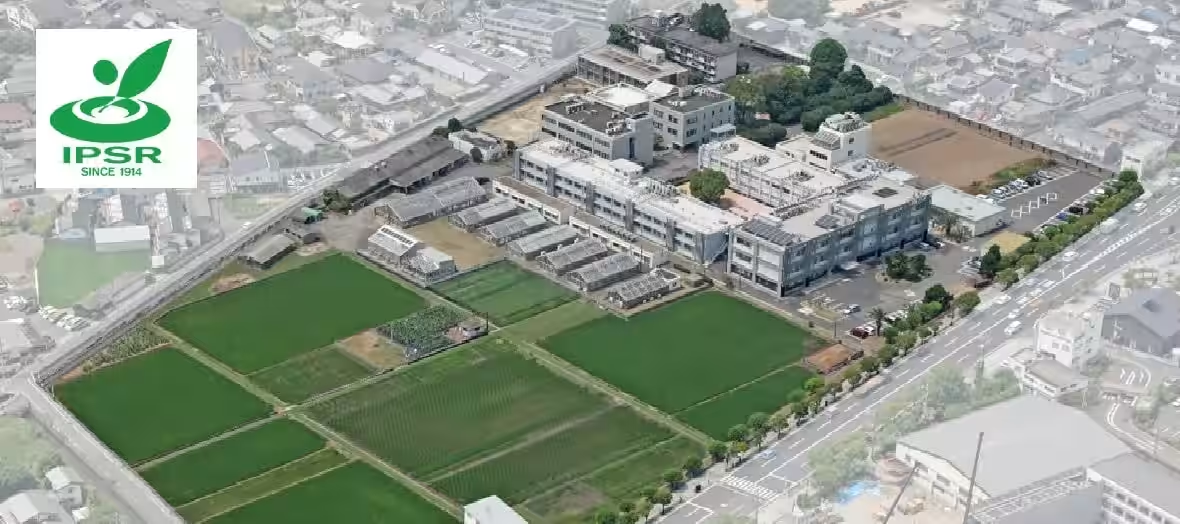
Okayama University has made a groundbreaking discovery in plant biology, revealing how plants maintain their photosynthesis capability even under extreme stress conditions. A team led by Professor Wataru Sakamoto at the Institute of Plant Science has identified a crucial interaction between heat shock protein HSP70 and the thylakoid membrane remodeling protein VIPP1. This synergy plays a vital role in helping plants cope with environmental challenges, especially under high temperatures.
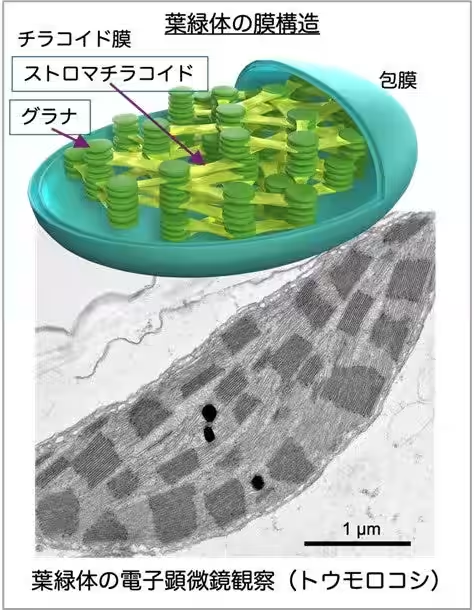
The process of photosynthesis takes place on a specialized membrane structure called the thylakoid membrane, located within chloroplasts. This membrane harbors essential protein complexes that are fundamental for photosynthesis—essentially the lifeblood for plants. However, varying environmental factors such as sunlight intensity and temperature can damage both the proteins involved in photosynthesis and the thylakoid membrane itself. For plants to withstand stress, they need mechanisms to protect damaged proteins and repair their membrane structures.
Through this research, the team discovered that the protein VIPP1, which is responsible for maintaining the homeostasis of thylakoid membranes, interacts with cpHsc70-1, a member of the HSP70 family. This interaction was found to control the assembly and disassembly of VIPP1 oligomers, playing a significant role in the dynamic maintenance of the thylakoid membrane.
Under high-temperature stress, this collaborative mechanism allows plants to sustain the structure and functionality of thylakoid membranes, thereby ensuring continuous photosynthesis. This discovery provides a new molecular basis for understanding how plants adapt to environmental changes, indicating the complexity and sophistication of life systems.
The research findings were published in the January 2026 issue of the prestigious journal PNAS Nexus, where they contribute to advancing our comprehension of photosynthesis control mechanisms in plants.
Professor Wataru Sakamoto's Insights
Professor Sakamoto commented on the significance of their findings: "The thylakoid membranes that support photosynthesis are constantly being remodeled in response to changing environmental conditions. This study highlights the role of chloroplast heat shock proteins, which not only protect proteins but also maintain the structural integrity of membranes crucial for photosynthesis. By linking the regulation of proteins to membrane structures, we can see how plants adapt to high-temperature stress, reaffirming the intricacy of life systems."
These findings not only enhance our understanding of plant biology but also hold the potential to inform agricultural practices, particularly in breeding more resilient crop varieties that can withstand changing climate conditions.
This research was funded by the Japanese Ministry of Education, Culture, Sports, Science and Technology and was part of the Initiative for Scientific Change Research and Basic Research funding. The project also included international collaboration with the University of Münster in Germany, showcasing the global effort to address pressing issues in plant science.
For further information about this research, you can visit the Okayama University Institute of Plant Science Research page.
Related Work and Future Directions
The implications of this research extend into various spheres, including sustainability and food security. As climate change continues to challenge agricultural productivity, understanding the mechanisms that allow plants to survive under stress is crucial. Future studies may explore genetic modifications or biotechnological methods to enhance these resilient traits in economically important crops, ensuring food supplies in an uncertain future.
Stay tuned for more updates from Okayama University as they continue to pioneer research that contributes to global agricultural innovation and sustainability.


Topics Other)
【About Using Articles】
You can freely use the title and article content by linking to the page where the article is posted.
※ Images cannot be used.
【About Links】
Links are free to use.