



Significant Changes in Valuation Trends for Aging and High-Mileage Cars in Japan
Significant Changes in Car Valuation Trends
The automotive market in Japan is witnessing noteworthy shifts regarding the valuation of older and high-mileage vehicles. According to a recent report by MOTA, a leading vehicle appraisal service based in Tokyo, substantial changes are emerging in the valuation landscape. The analysis spanned approximately 1.5 million assessment records from their online car appraisal service, MOTA Car Purchase, highlighting that previously deemed 'unsellable' older cars are now fetching notable prices.
Rising Valuations for Older Vehicles
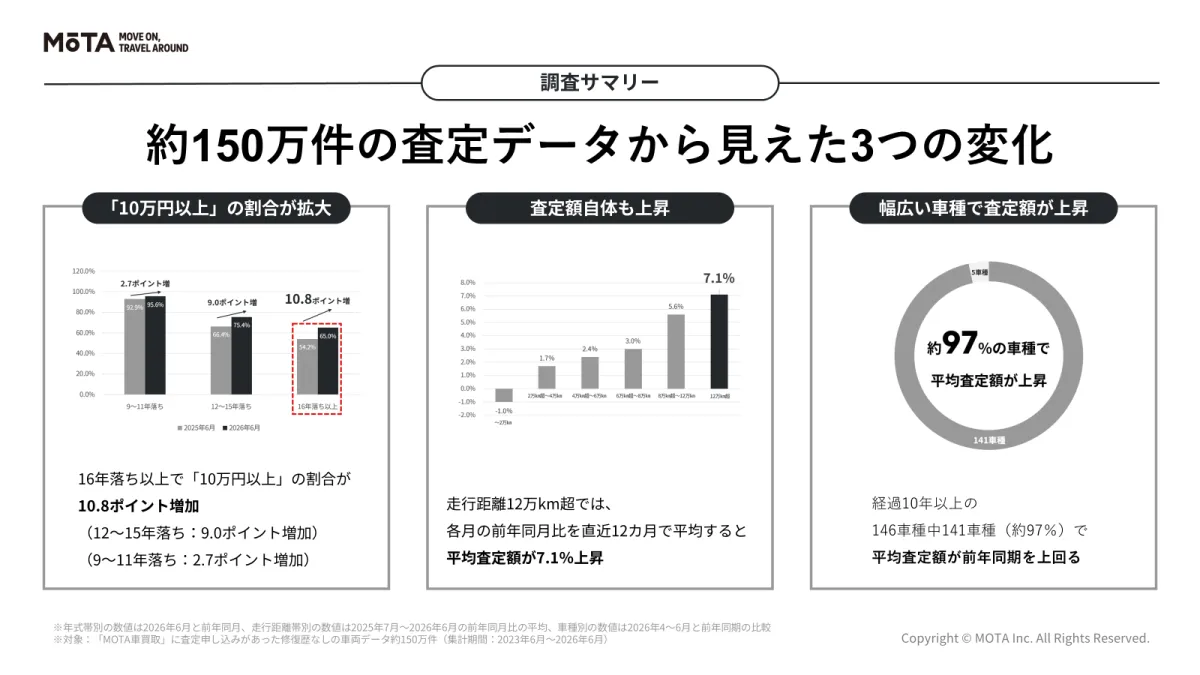
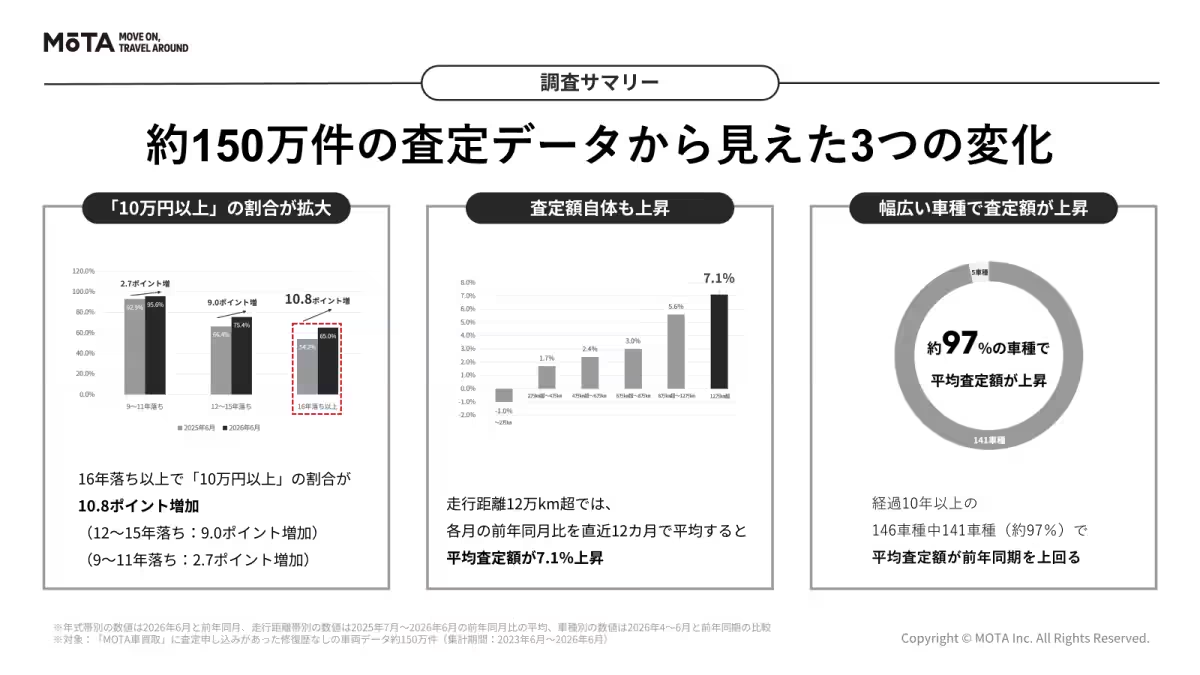
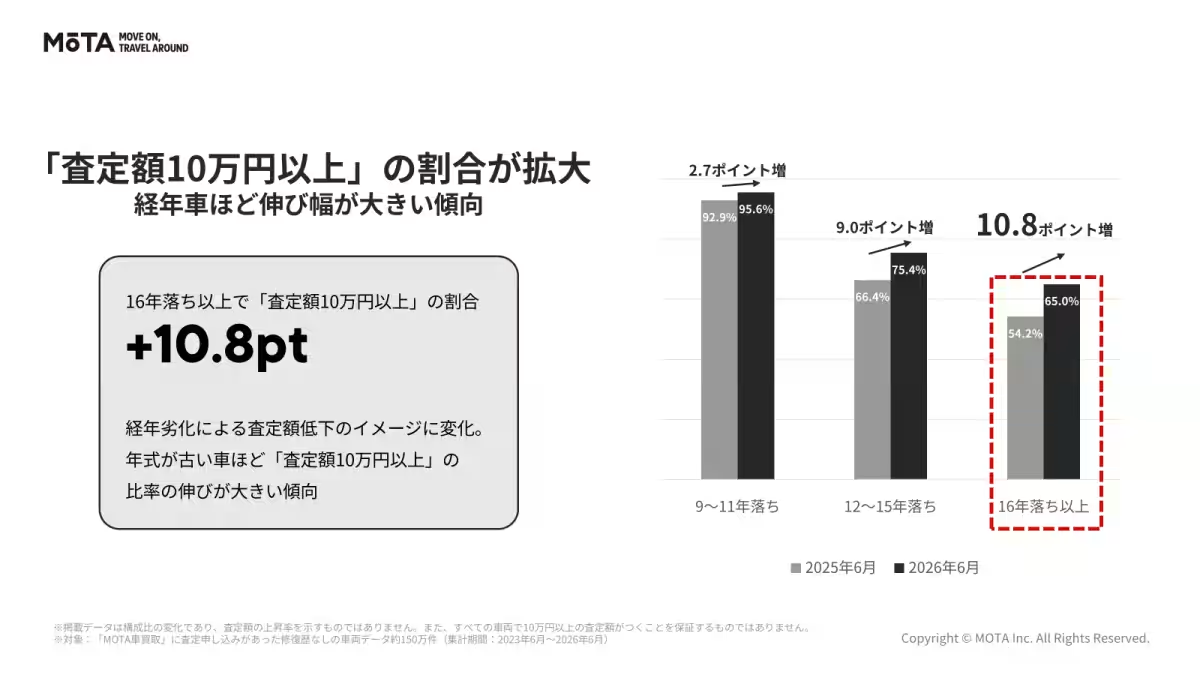
The data reveals that as of June 2026, there was a 10.8% increase in the proportion of vehicles over 16 years old receiving appraisals exceeding 100,000 yen compared to the previous year. This is significant because vehicles in this age category are often dismissed as having little to no market value. The increase in the average appraisal value correlates with the growing demand for these vehicles amid market changes.
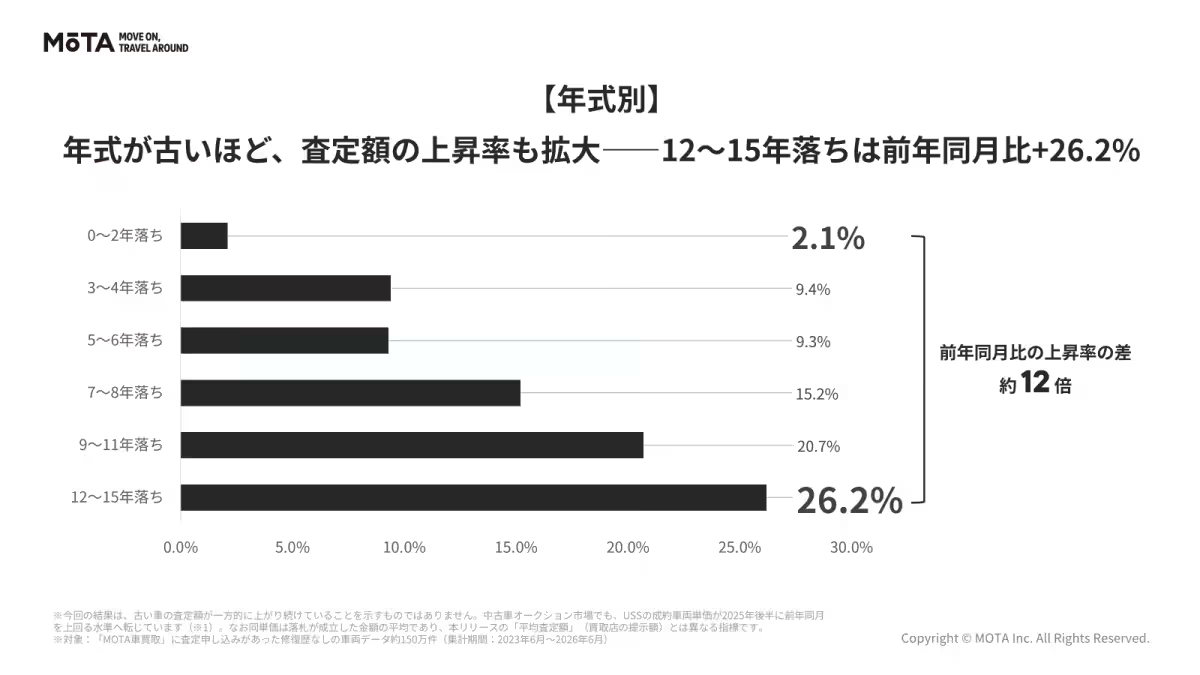
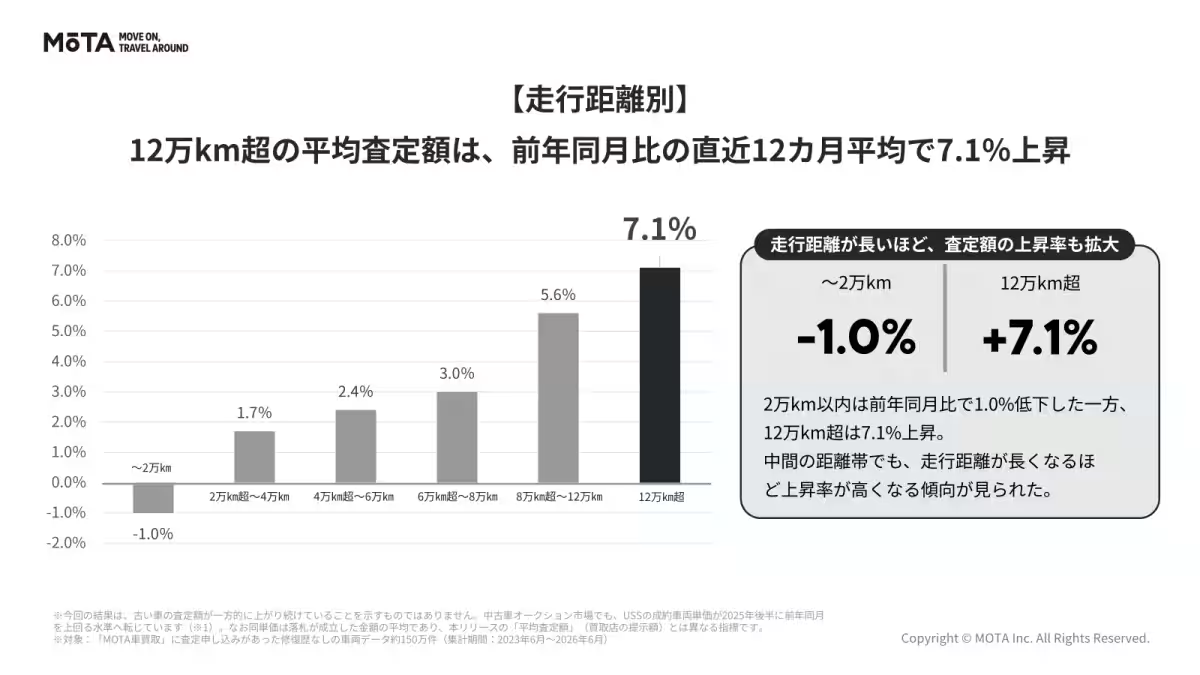
- - Average Valuations on the Rise: For cars aged 12 to 15 years, the average appraisal increased by 26.2% year-on-year, reaching approximately 330,000 yen. Interestingly, vehicles with over 120,000 kilometers on the odometer noted a 7.1% year-over-year increase in average appraisal values during the same evaluation period from July 2025 to June 2026.
- - Diverse Range of Models: Among the 146 models assessed that are over 10 years old, 141 (about 97%) received higher average appraisal values than in the previous year, illustrating a broad-based trend across different makes and models.
Summary of Findings
The report highlights three key transformations based on the appraisal data:
1. Increased Proportions of High Valuations: The rise in the percentage of cars valued over 100,000 yen is especially notable among older vehicles, with significant increases across different age brackets.
- Vehicles 9 to 11 years old: 2.7% increase (from 92.9% to 95.6%)
- Vehicles 12 to 15 years old: 9.0% increase (from 66.4% to 75.4%)
- Vehicles over 16 years: 10.8% increase (from 54.2% to 65.0%)
2. Substantial Year-on-Year Increases in Average Appraisals: This trend shows that age and mileage do not automatically equate to diminished value. The report showcases significant rising values for notable models, such as the Nissan Note and Honda Freed, with increases as high as 64.1% and 63.5%, respectively.
3. Changing Consumer Behavior and Needs: As average vehicle age continues to rise in Japan, the longer ownership cycle influences the types and ages of vehicles entering the market for resale.
Analysis Behind the Shift
Several factors contribute to the growing value of older vehicles:
- - Supply Constraints: New car supplies are facing challenges, leading to a reduction in new car sales for the first time in four years as of 2025. This scarcity has led consumers to consider older models, significantly boosting their demand.
- - Export Demand: The devaluation of the yen has led to an increase in exports of used vehicles, which reached record highs in 2025. The international demand helps maintain prices for older cars in domestic markets.
- - Extended Ownership Periods: The average age of vehicles on Japan's roads has now reached around 9.44 years, indicating that drivers are keeping their cars longer, which affects the age distribution of resale vehicles available.
Expert Commentary
Daisuke Sato, CEO of MOTA, remarked, "Given the extensive appraisal data we analyze, we observe that old and high-mileage vehicles are sensitive to market fluctuations. Our findings underscore the importance of checking current appraisal values before deciding on scrapping or trading a vehicle. At MOTA, our mission is to empower car owners with valuable data on the current worth of their vehicles to facilitate informed decisions about potential sales."
Conclusion
MOTA’s continuous analysis emphasizes the evolving dynamics of vehicle valuation, urging car owners not to undervalue older cars based solely on age or mileage. With clear market changes, now is the time for owners to reassess their vehicles' worth, ensuring they capitalize on favorable market conditions. As consumer attitudes evolve, MOTA aims to provide insight and assistance in navigating these changes effectively.
For more updates and analyses on the automotive market, visit MOTA's official webpage and stay informed on how these trends might affect your vehicle’s value.
Topics Consumer Products & Retail)









【About Using Articles】
You can freely use the title and article content by linking to the page where the article is posted.
※ Images cannot be used.
【About Links】
Links are free to use.