



Survey Reveals Manufacturing Workers' Struggles with Paperwork and Data Entry Tasks
Survey Results on Data Entry Workload in Manufacturing
Introduction
Manufacturing processes require precision, efficiency, and timely execution of tasks. However, a recent survey involving 108 manufacturing workers has unearthed the burdens associated with paperwork and data entry tasks. Conducted by Shimtops, the company behind the leading field report system, i-Reporter, the survey sheds light on how these routine tasks are perceived as time-consuming and stressful by the majority of respondents.
Perceptions of Data Entry Tasks
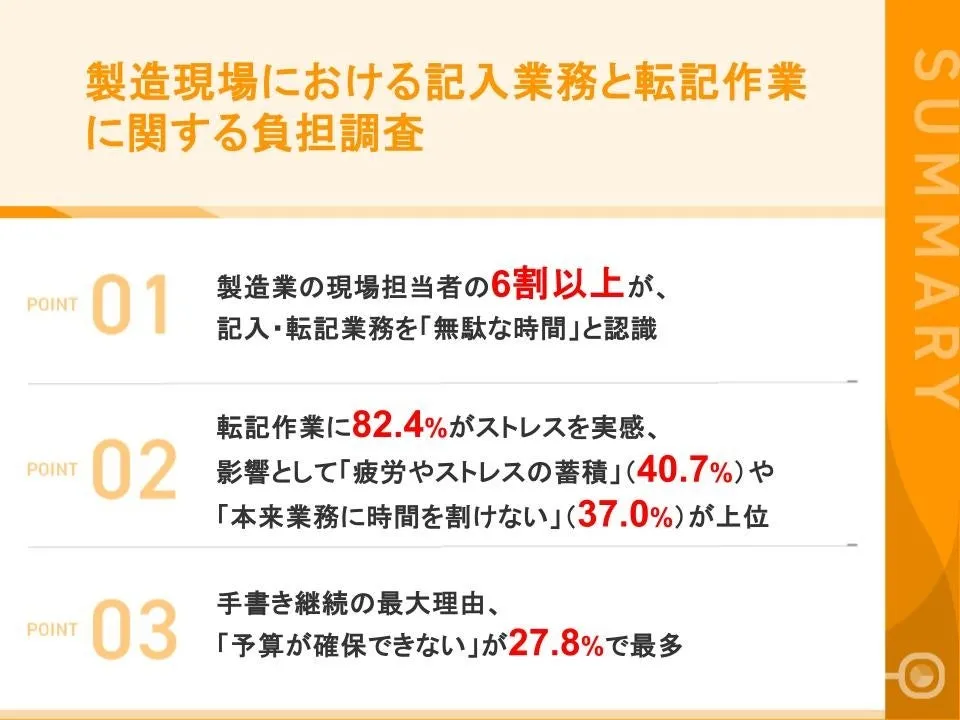
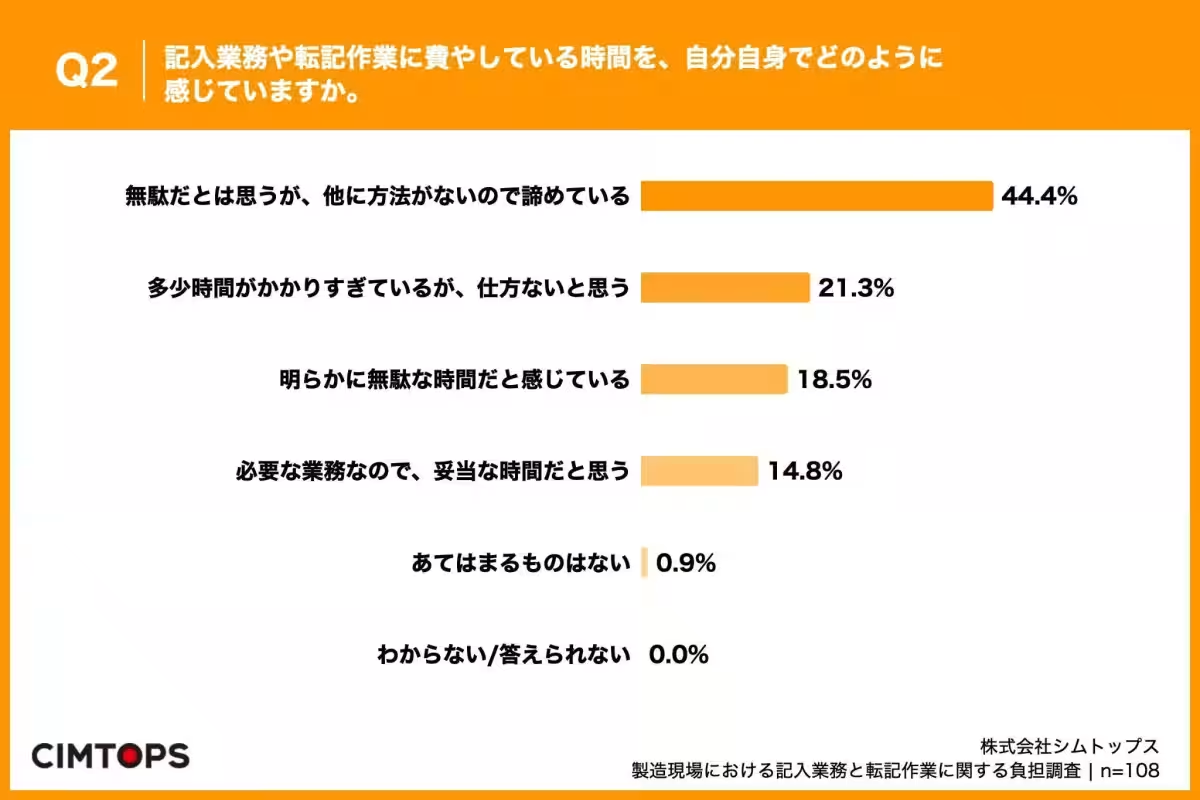
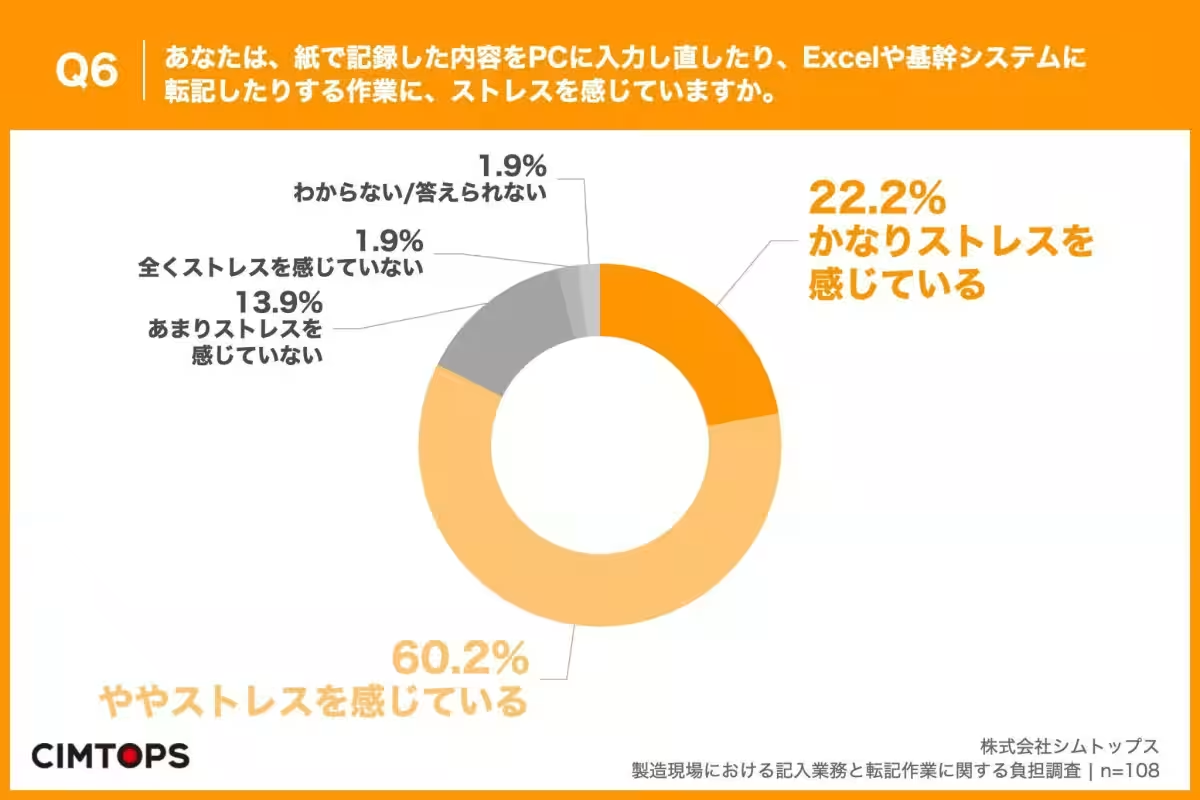
According to the survey, a staggering 62.9% of respondents view data entry tasks as “wasted time.” This sentiment is echoed by the fact that 44.4% have resigned themselves to continue manual entries despite the ongoing frustration, suggesting a deep-seated challenge in overcoming traditional processes. The burden of data entry does not simply affect productivity but also the mental wellness of employees; 82.4% report experiencing stress due to data entry tasks.
Situations Prone to Errors
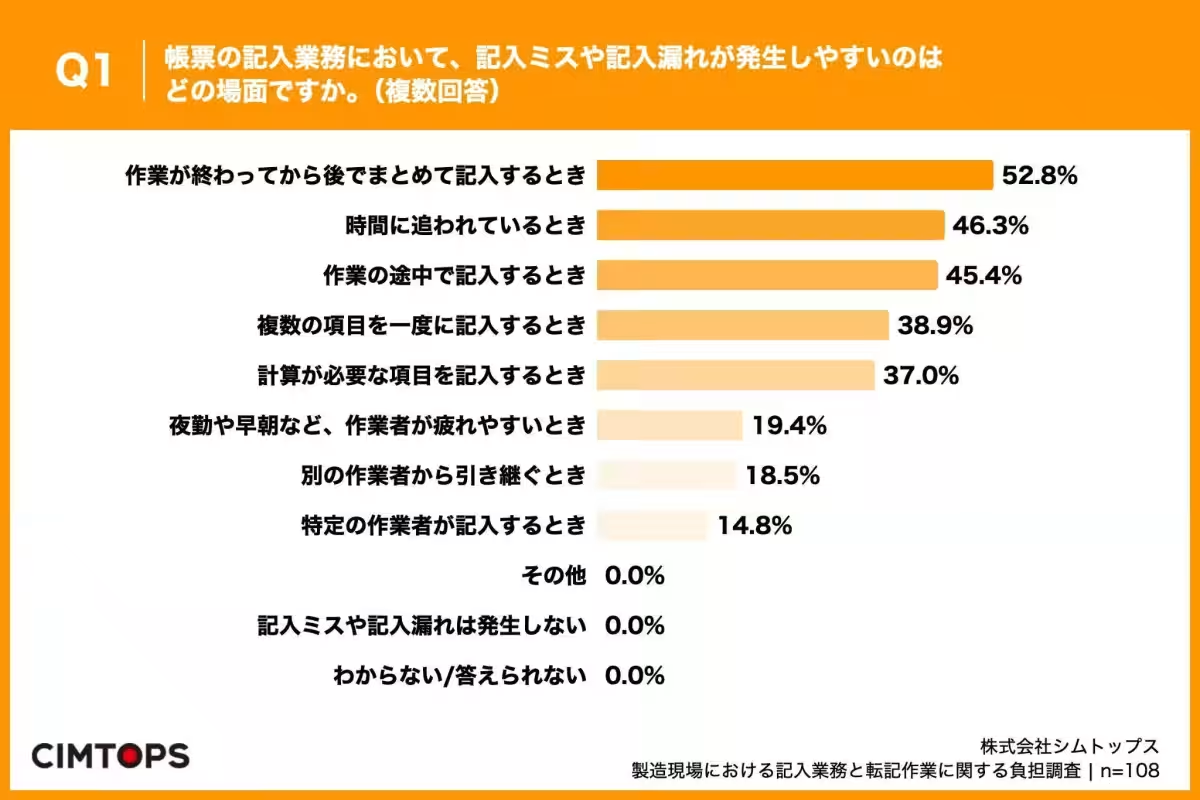
When asked about scenarios that frequently lead to mistakes in data entries, 52.8% identified the act of consolidating records after completing tasks as the most common occasion for errors. Following closely, 46.3% reported that being pressed for time during various tasks often led to oversight.
Reasons for Continued Manual Entry
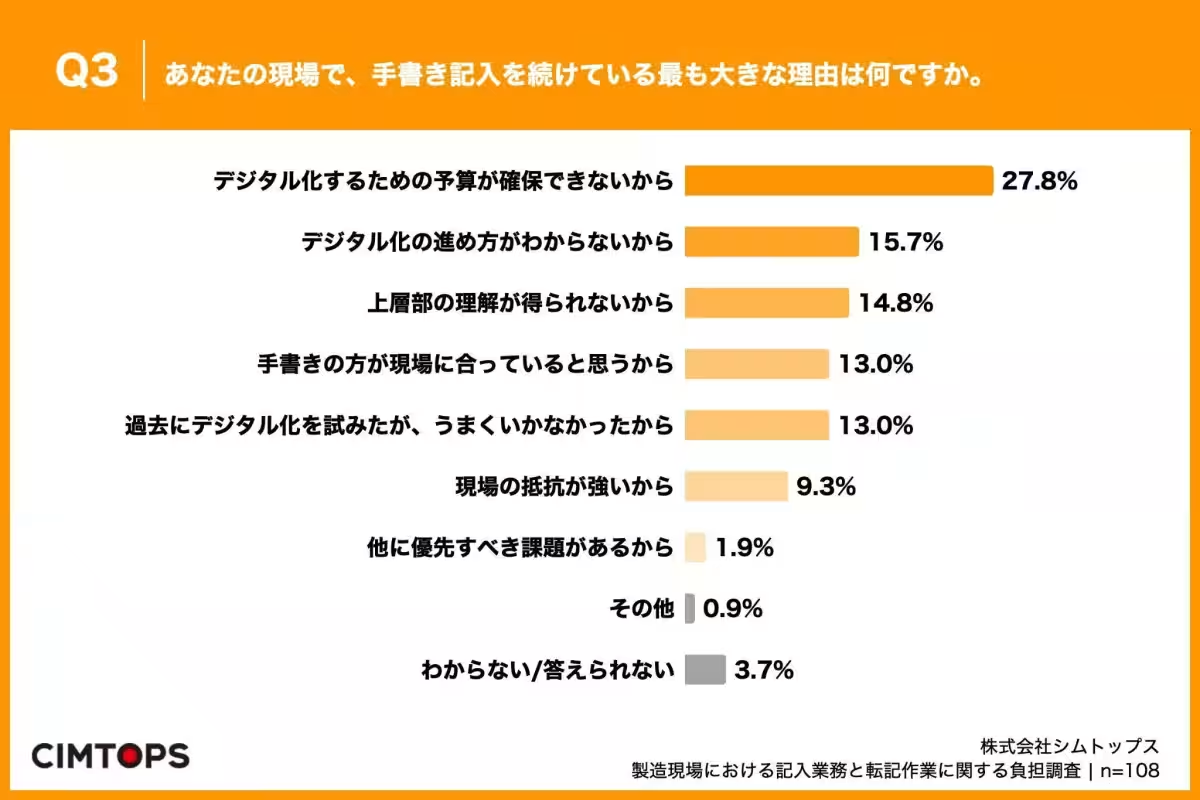
Despite the clear acknowledgment of the inefficiencies in manual processes, many workers feel they have no choice but to continue. The survey indicates that 27.8% cite the inability to secure budgets for digital tools as the primary barrier to change, while 15.7% feel uncertain about how to implement a digital transition. Furthermore, 14.8% believe that management lacks a clear understanding of these challenges.
Stress and Workload Impact
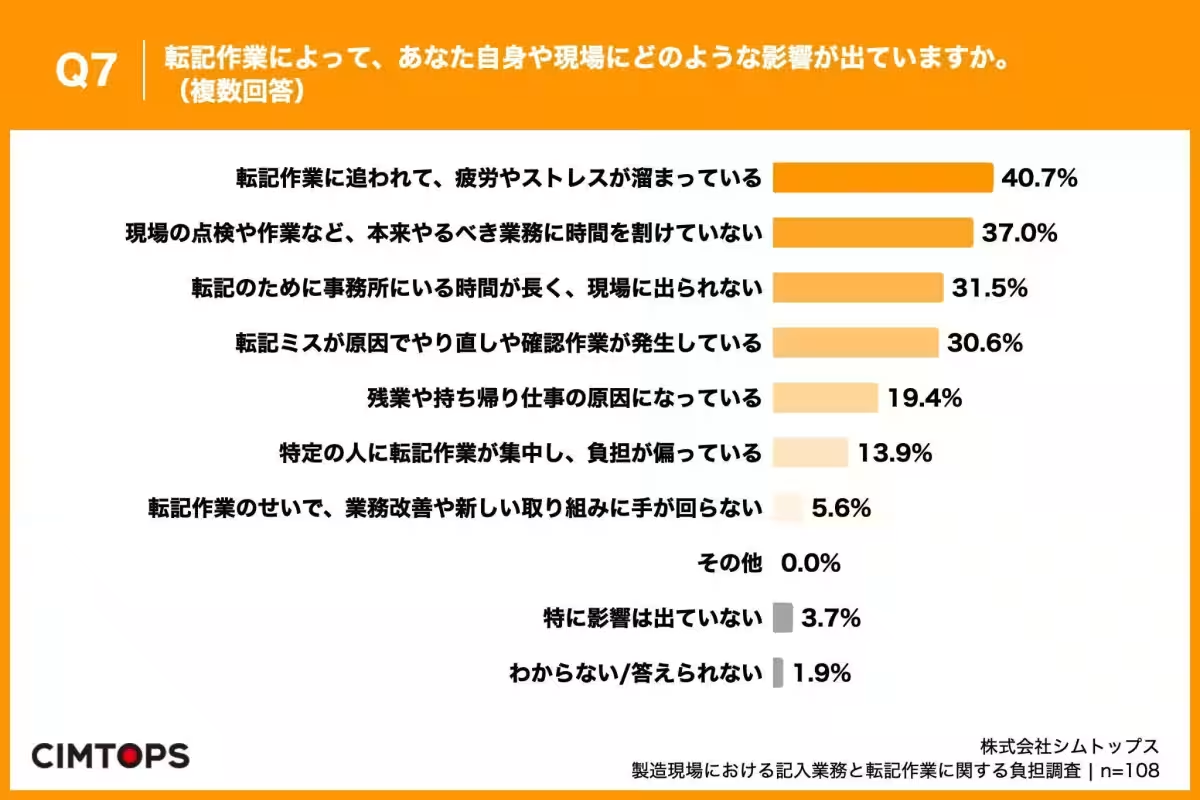
The impact of data entry is not trivial; 40.7% of respondents reported feeling accumulated fatigue and stress as a direct consequence of their data entry responsibilities. Additionally, 37.0% indicated that these tasks prevent them from engaging in core activities that are essential to their roles. Repeatedly, employees find themselves tethered to their desks, sacrificing their presence on the production floor for paperwork obligations.
Consequences of Data Entry in Manufacturing
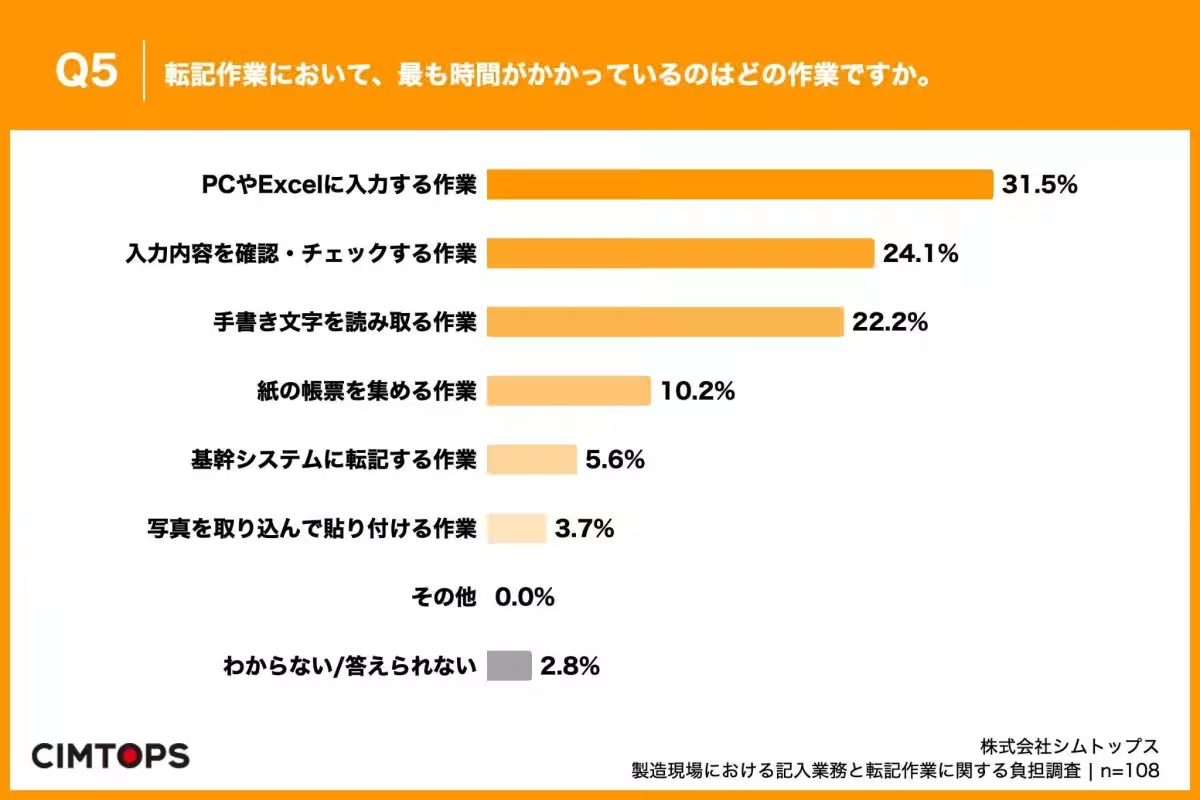
The data entry process, specifically the transcription of hand-written notes into computers or spreadsheets, has become a significant time sink. 31.5% of survey participants spend a considerable amount of their daily activities just on entering data into PCs or Excel, further questioning the overall effectiveness of current processes.
Organizational Awareness
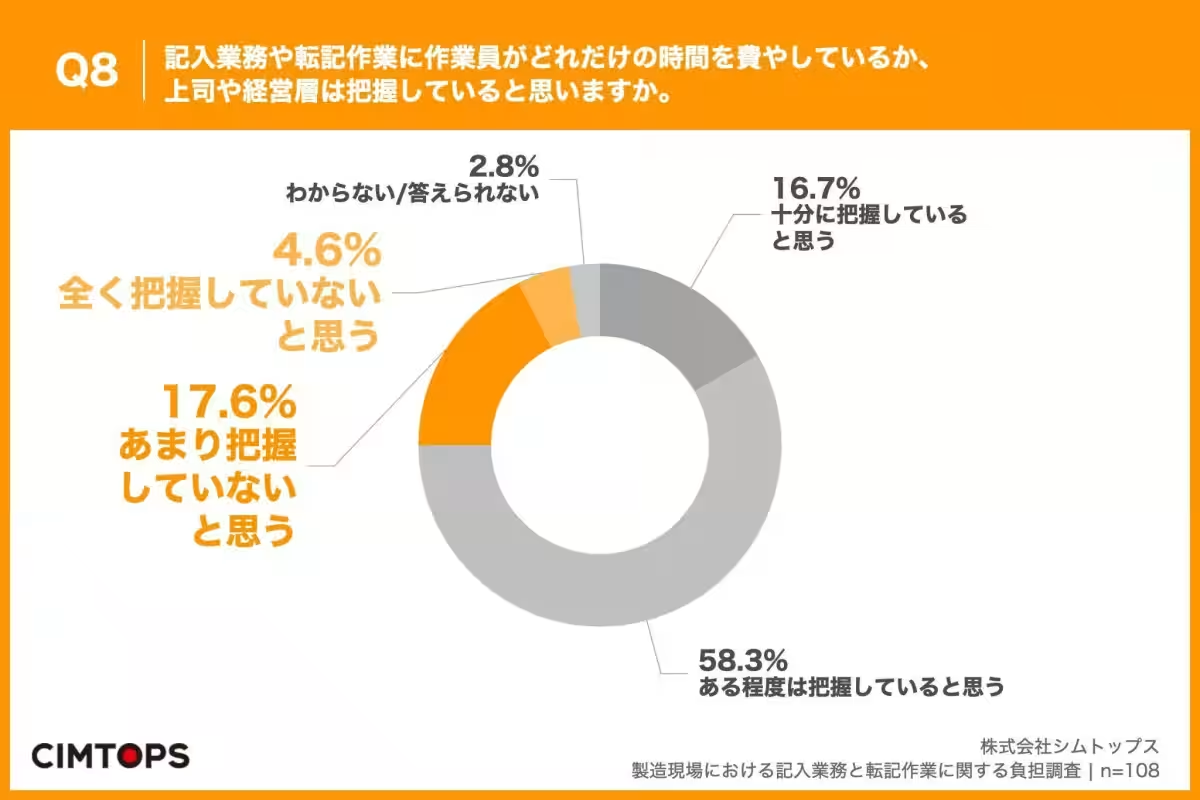
Interestingly, 22.2% of the workforce believes that their superiors are largely unaware of the time they spend on paperwork and data entry tasks. This disconnect points to an urgent need for improved communication within organizations to address such inefficiencies.
Need for Digital Transformation
In conclusion, the results of this survey are a clarion call for the manufacturing sector to embrace digital transformation, particularly in resolving the burdens of paperwork and data entry tasks. By digitizing these operations through effective strategies like those offered by i-Reporter, companies can alleviate burdens on their personnel, enhancing productivity while simultaneously improving job satisfaction. This change will be essential as organizations strive to modernize and remain competitive in the ever-evolving manufacturing landscape.
For further insights and research details, visit i-Reporter Research Download.



Topics Consumer Technology)
【About Using Articles】
You can freely use the title and article content by linking to the page where the article is posted.
※ Images cannot be used.
【About Links】
Links are free to use.