



How Effective Photography and Video Strategy Can Transform Local Government Public Relations
Introduction
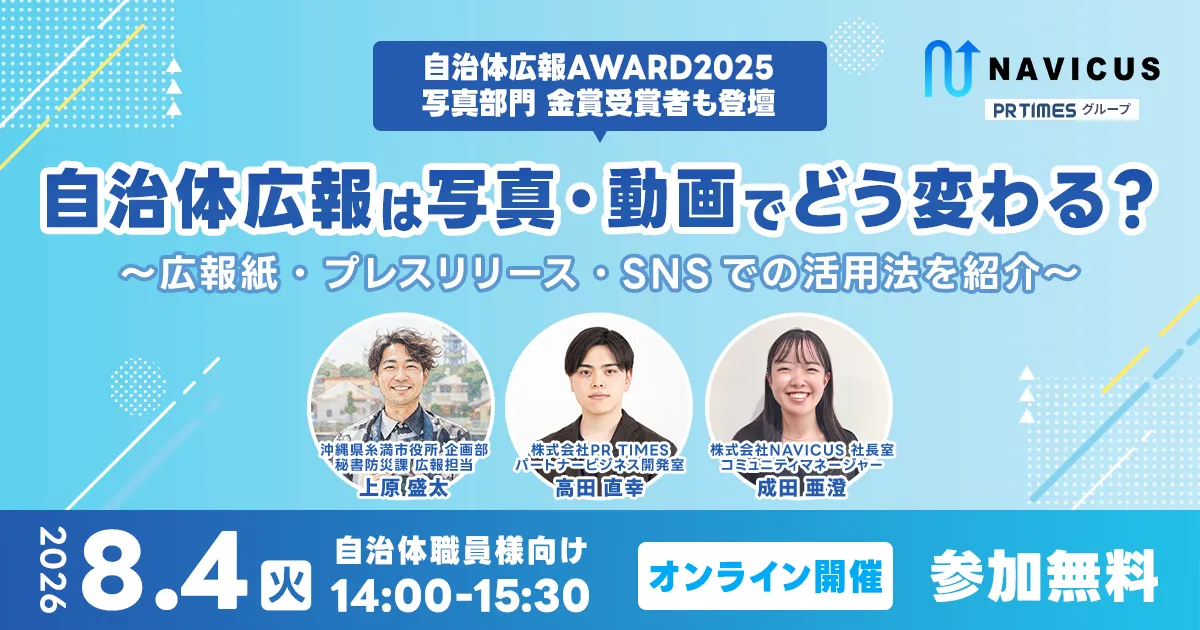
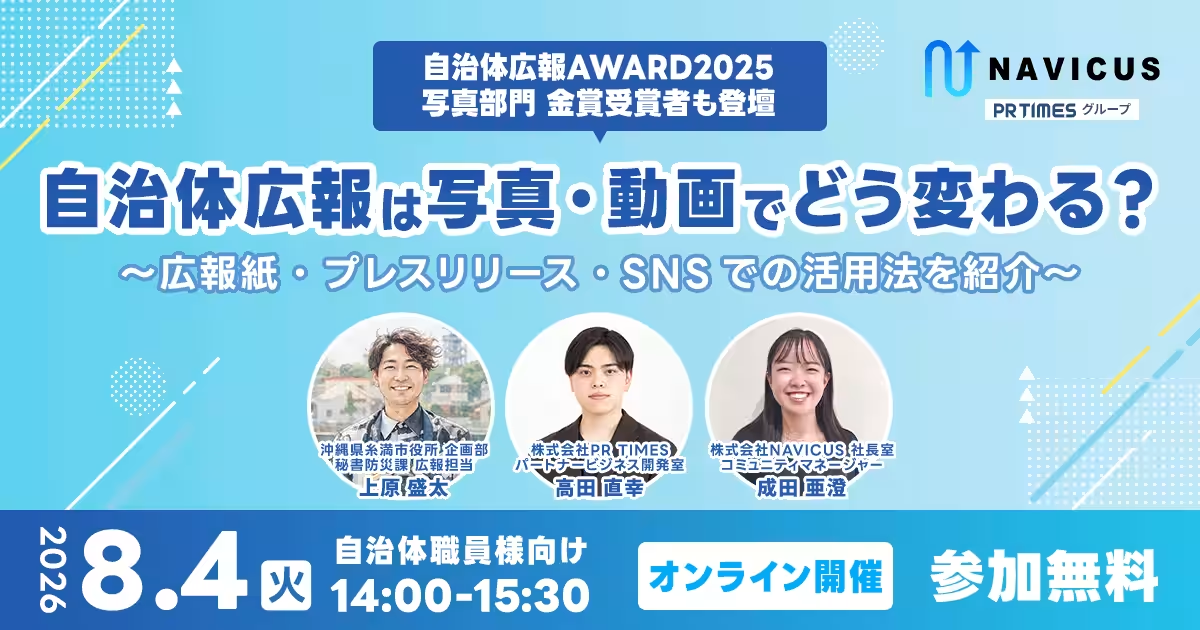
On August 4, 2026, NAVICUS collaborated with PR TIMES to host an online seminar titled "How Will Local Government PR Change with Photos and Videos?" This event aimed at local government officials gathered valuable insights on optimizing the use of multimedia in public relations. With the rise of digital media and social networks, understanding how to effectively utilize images and videos is increasingly crucial for conveying messages to various audiences.
The Role of Multimedia in Local Government PR
Public relations in local governments involves diverse media formats, including press releases, public newsletters, and social media. Each of these platforms serves a distinct purpose and targets a different audience, which in turn influences the role that photographs and videos play within them.
During the webinar, industry experts from NAVICUS, PR TIMES, and Okinawa's Itoman City Hall shared their knowledge focusing on the importance of effective photography and video strategies tailored to each media type.
Emphasizing the Message Over the Subject in Social Media
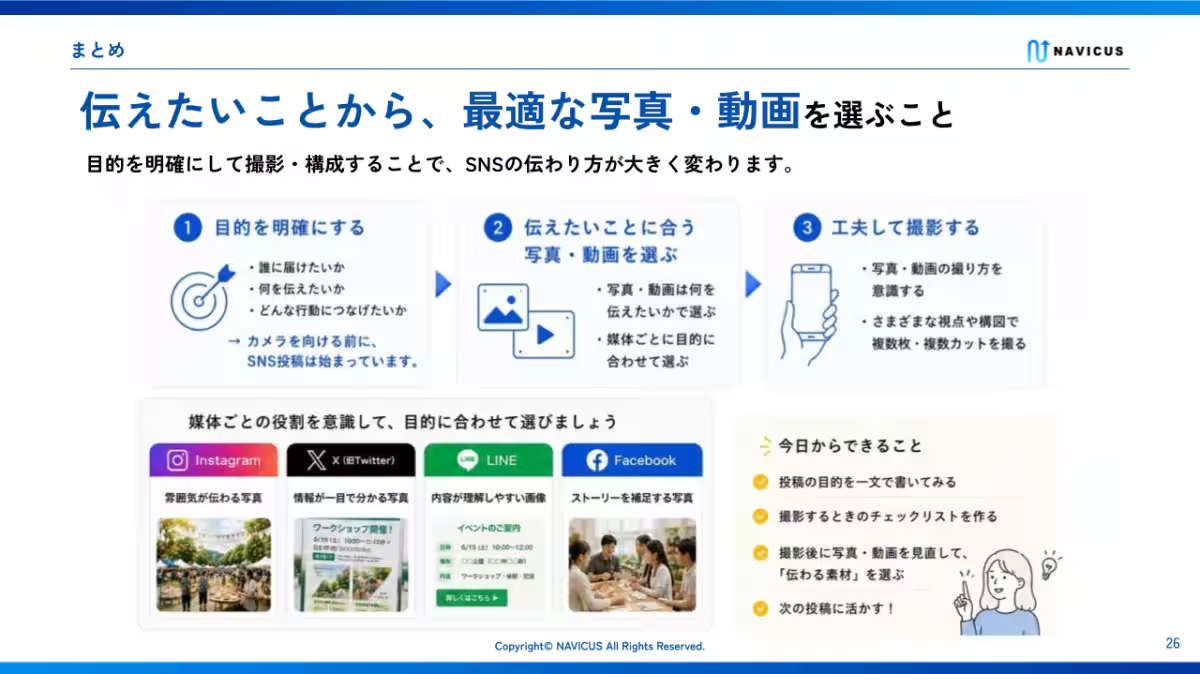
The seminar began with Asumi Narita, Community Manager of the NAVICUS President’s Office, who emphasized that when it comes to social media, the focus should shift from merely what to photograph to fundamentally understanding what message needs to be communicated. According to Narita, social media serves as a powerful tool for attracting user interest and encouraging engagement.
It is essential to convey the atmosphere of events or the usability of services through compelling imagery, leading the audience to express their desire to participate or utilize those services. Therefore, before taking any photos, officials should clarify whom they intend to reach, what they want to say, and what actions they hope to inspire. This strategic approach ensures that content resonantly connects with its intended audience.
The Importance of Visuals in Press Releases
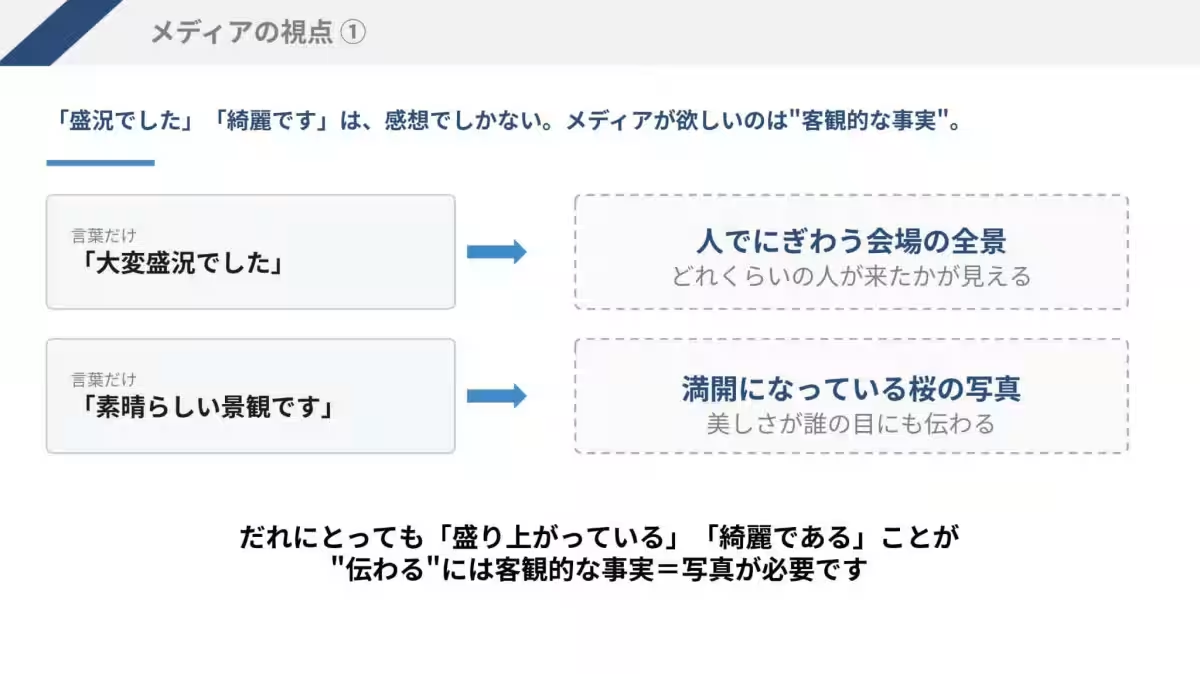
Next, Naoyuki Takada from PR TIMES discussed the critical role of images in press releases from a media perspective. He stressed that photos included in press releases serve as "informational resources" assisting media outlets in deciding where to allocate their reporting efforts. Rather than just decorating the text, images should provide visual evidence to substantiate claims made within the press release—like proving attendance numbers by showing a full event venue, rather than relying solely on descriptive phrases.
Takada advocated for including visuals that simplify complex information about policies or local events. By providing easy-to-understand illustrations and compelling photographs, public officials can enhance journalists’ understanding of the context, thereby increasing the likelihood of coverage.
Itoman City's Approach to Capturing Community Memories
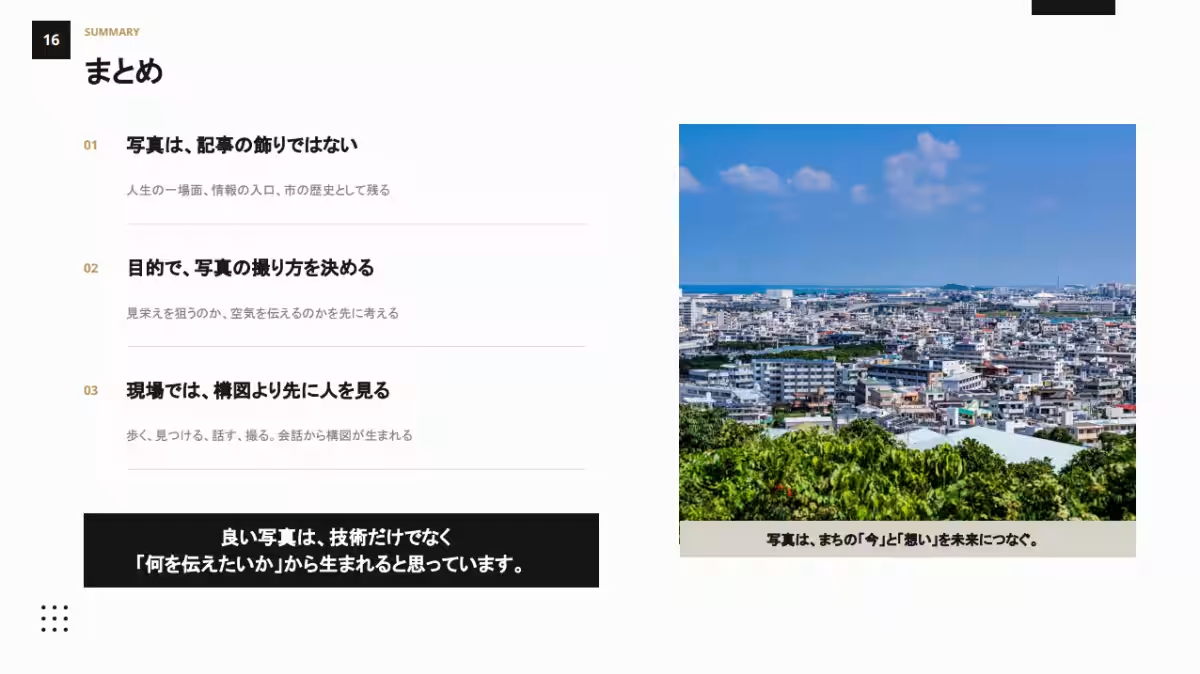
Uehara from Itoman City Hall shared practical experiences showing how capturing meaningful photographs serves the community's history and current affairs. Uehara highlighted how his perspective on photographs shifted when residents expressed gratitude for featuring their loved ones, igniting an understanding of the significance photos hold for personal and communal memories.
For Uehara, each newsletter page can encapsulate a singular, precious moment in someone's life. Thus, photos should serve multiple purposes: documenting life events, serving as a bridge for initial information contact, and preserving the community's history.
He also addressed the balance between creating visually stunning content versus delivering messages clearly, underscoring the necessity of tailoring one's approach based on the photograph's intended use—whether it's grabbing attention for a newsletter cover or documenting local happenings.
Unified Message Across Different Media
The various perspectives presented during the webinar reiterate a recurring theme—regardless of the medium, the fundamental question must always be: "What do we want to communicate?" From engaging residents on social media to providing credible information to the press, and preserving local history through newsletters, the effective application of photography and video is essential.
NAVICUS continues to support local governments by offering webinars and resources that enhance communication strategies in an increasingly visual world.
Conclusion
In conclusion, as technologies and social practices evolve, local governments must adapt their messaging strategies to leverage visual communication effectively. NAVICUS stands ready to assist local municipalities in overcoming challenges related to multimedia use, ensuring that they can meet the community's informational needs effectively and meaningfully.
Topics People & Culture)
【About Using Articles】
You can freely use the title and article content by linking to the page where the article is posted.
※ Images cannot be used.
【About Links】
Links are free to use.