



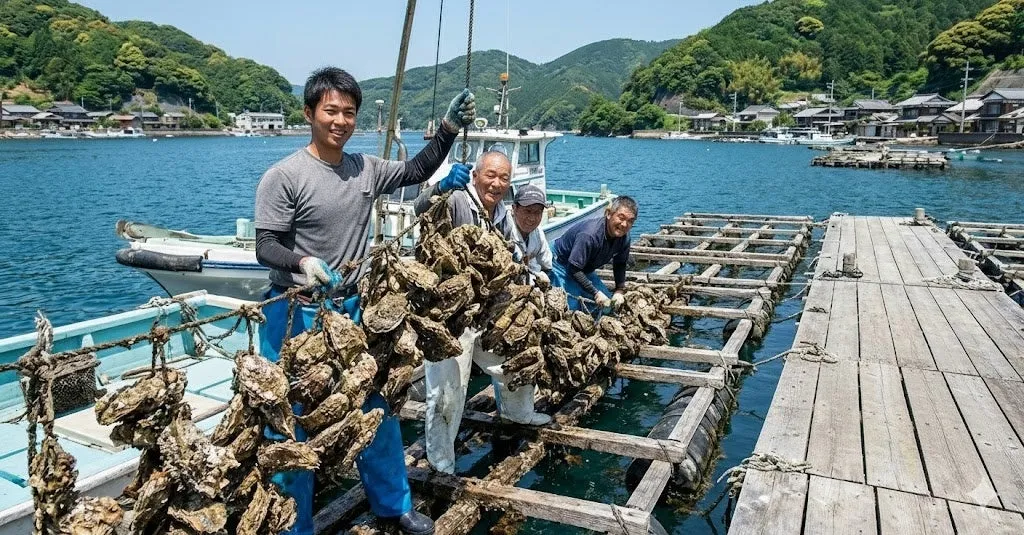
Kaminobuchi Oysters: A Sustainable Future Through Innovative Partnerships
Ku-An, a startup specializing in regional innovation, has signed a collaboration agreement aimed at the sustainable development of Kaminobuchi oysters with the Ehime Prefecture Fishing Cooperative and the Kaminobuchi Oyster Production Association. Based in Uwajima City, Ehime Prefecture, the company, led by CEO Makoto Hamamura, seeks to create a comprehensive strategy that ensures the longevity of the local oyster industry while enhancing tourism and agricultural products.
Under this agreement, Ku-An will prepare for the succession of oyster seedling and juvenile oyster cultivation, while also developing travel experiences that allow visitors to engage with the region's natural beauty and activities. Additionally, the company aims to provide a unique online purchasing experience, offering urban consumers a way to sample and directly purchase local seafood and agricultural products.
Kaminobuchi is renowned for its delicious oysters, nourished by the rich blessings of Uwajima. However, the region faces a shortage of skilled labor, highlighting the need to connect the accumulated local knowledge and culture to future generations. The agreement focuses on realizing three primary goals: the continuation and development of the Kaminobuchi oyster business, the transfer of techniques and know-how to the next generation, and the holistic creation of new value through tourism, product development, and disaster prevention.
The collaboration includes establishing facilities necessary for seedling and juvenile oyster cultivation by Ku-An, with the fishing cooperative and production association providing the expertise and data they have built up over the years. Future discussions will center on the transfer of the oyster farming operations that have been handled by the production association to ensure continuity in the industry.
To support this transition, Ku-An will send newcomers from urban areas as successor talents to the local operations, where the production association will offer hands-on training in cultivation techniques. In terms of sales, the fishing cooperative will deliver oysters to Ku-An as a first wholesaler, allowing Ku-An to develop its own sales channels with the aim of increasing both the value and selling price of regional products.
Moreover, Ku-An plans to create immersive travel packages in Kaminobuchi. These experiences will include hands-on activities such as oyster seed production and cultivation, and staying at the GO-HIGHTAKA campsite by the seaside, along with participatory product development processes utilizing local oysters. These will be complemented by event marketing and recipe development experiences in local restaurants, merging industry, tourism, and experiential learning.
In pursuit of further innovation, Ku-An is also focusing on the development of a delicious and practical “phase-free” disaster food series. Currently, they have produced retort pouches that utilize underutilized parts of sea bream. They plan to showcase these products at the Uwajima-Chikuma Sister City Fair in Tokyo from November 26-28, 2025, presenting delicious disaster-preparedness food options to urban residents. Future expansions will include an oyster-based series.
Although the current product exhibition will not feature oysters, visitors will have the opportunity to sample local mandarins and purchase products with simple in-person transactions and home delivery, achieving a seamless and hands-free shopping experience. This model is anticipated to be extended for oysters and other agricultural products in the future.
“Our partnership aims not just at safeguarding Kaminobuchi oysters, a treasured resource nurtured by the local community, but at creating new value across tourism, processing product development, and disaster relief,” stated Ku-An’s CEO, Makoto Hamamura. Ku-An will be present at the product exhibition to showcase and explain their initiatives, inviting the public to engage and learn more.
Furthermore, the company is working on developing local mobility solutions to facilitate easier access for both visitors and residents, thus addressing the transportation deficits in the area and maximizing the region's appeal, contributing comprehensively to the expansion of local economic initiatives.”
Under this agreement, Ku-An will prepare for the succession of oyster seedling and juvenile oyster cultivation, while also developing travel experiences that allow visitors to engage with the region's natural beauty and activities. Additionally, the company aims to provide a unique online purchasing experience, offering urban consumers a way to sample and directly purchase local seafood and agricultural products.
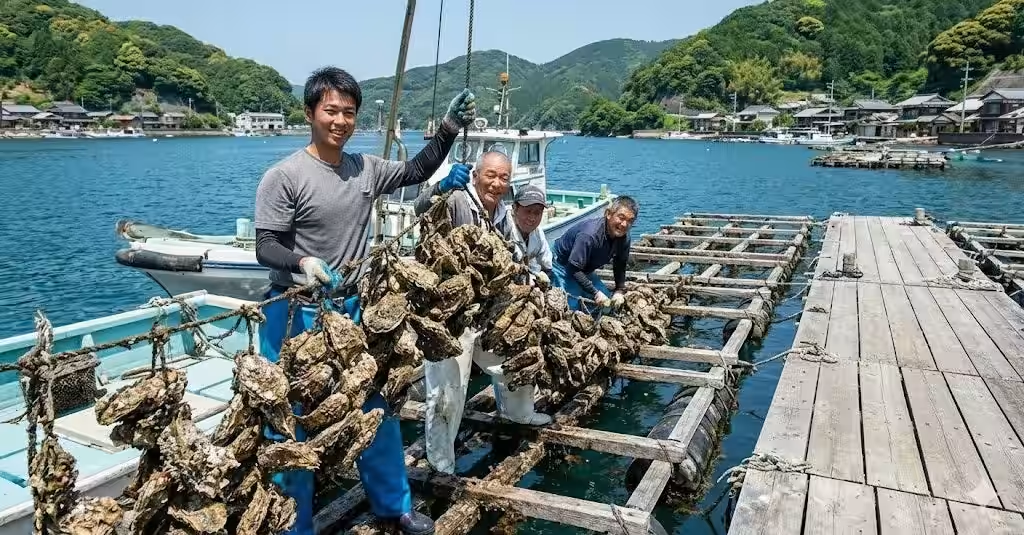
Kaminobuchi is renowned for its delicious oysters, nourished by the rich blessings of Uwajima. However, the region faces a shortage of skilled labor, highlighting the need to connect the accumulated local knowledge and culture to future generations. The agreement focuses on realizing three primary goals: the continuation and development of the Kaminobuchi oyster business, the transfer of techniques and know-how to the next generation, and the holistic creation of new value through tourism, product development, and disaster prevention.
The collaboration includes establishing facilities necessary for seedling and juvenile oyster cultivation by Ku-An, with the fishing cooperative and production association providing the expertise and data they have built up over the years. Future discussions will center on the transfer of the oyster farming operations that have been handled by the production association to ensure continuity in the industry.
To support this transition, Ku-An will send newcomers from urban areas as successor talents to the local operations, where the production association will offer hands-on training in cultivation techniques. In terms of sales, the fishing cooperative will deliver oysters to Ku-An as a first wholesaler, allowing Ku-An to develop its own sales channels with the aim of increasing both the value and selling price of regional products.
Moreover, Ku-An plans to create immersive travel packages in Kaminobuchi. These experiences will include hands-on activities such as oyster seed production and cultivation, and staying at the GO-HIGHTAKA campsite by the seaside, along with participatory product development processes utilizing local oysters. These will be complemented by event marketing and recipe development experiences in local restaurants, merging industry, tourism, and experiential learning.
In pursuit of further innovation, Ku-An is also focusing on the development of a delicious and practical “phase-free” disaster food series. Currently, they have produced retort pouches that utilize underutilized parts of sea bream. They plan to showcase these products at the Uwajima-Chikuma Sister City Fair in Tokyo from November 26-28, 2025, presenting delicious disaster-preparedness food options to urban residents. Future expansions will include an oyster-based series.
Although the current product exhibition will not feature oysters, visitors will have the opportunity to sample local mandarins and purchase products with simple in-person transactions and home delivery, achieving a seamless and hands-free shopping experience. This model is anticipated to be extended for oysters and other agricultural products in the future.
“Our partnership aims not just at safeguarding Kaminobuchi oysters, a treasured resource nurtured by the local community, but at creating new value across tourism, processing product development, and disaster relief,” stated Ku-An’s CEO, Makoto Hamamura. Ku-An will be present at the product exhibition to showcase and explain their initiatives, inviting the public to engage and learn more.
Furthermore, the company is working on developing local mobility solutions to facilitate easier access for both visitors and residents, thus addressing the transportation deficits in the area and maximizing the region's appeal, contributing comprehensively to the expansion of local economic initiatives.”
Topics Consumer Products & Retail)
【About Using Articles】
You can freely use the title and article content by linking to the page where the article is posted.
※ Images cannot be used.
【About Links】
Links are free to use.