




The Impact of Japanese Language Education on Refugees' Integration into Society
The Transformative Power of Japanese Language Education for Refugees
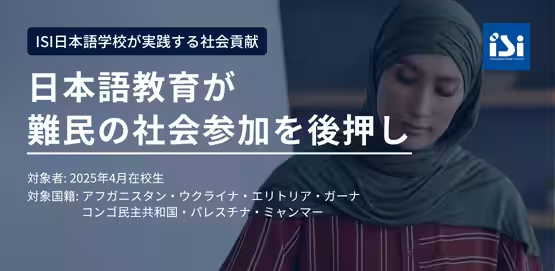
In recent developments from WEWORLD, headquartered in Shinjuku, Tokyo, the ISI Japanese Language School has published results from a study on its special scholarship program aimed at supporting refugees. This initiative focuses on providing free Japanese language education to individuals who have fled their home countries due to war, conflict, or persecution. The goal is to equip these individuals with essential Japanese language skills and cultural understanding, crucial for their social integration in Japan. With the backing of the United Nations High Commissioner for Refugees (UNHCR), this program has welcomed a total of 76 refugees as of July 2025.
Background of the Study
Language barriers are one of the significant obstacles faced by individuals who have sought asylum in Japan. In recognition of this issue, WEWORLD launched a free Japanese language education program in 2022, aiming to assist refugees in establishing a stable foundation in their new environment. The recent study was carried out to assess the effectiveness of the program and identify areas for further support.
Study Overview
- - Target Group: Current students enrolled in April 2025 semester
- - Number of Respondents: 22 individuals
- - Countries Represented: Afghanistan, Ukraine, Eritrea, Ghana, Democratic Republic of Congo, Palestine, Myanmar
- - Age Range: 20 to 41 years
- - Enrollment Duration: 1 to 12 months
- - Response Method: Combination of multiple-choice and open-ended questions (online)
- - Number of Questions: 25, including inquiries about class experiences and support systems
- - Study Period: June 13 - June 23
Highlights of the Study Results
1. Real-Life Applications of Japanese Language Skills
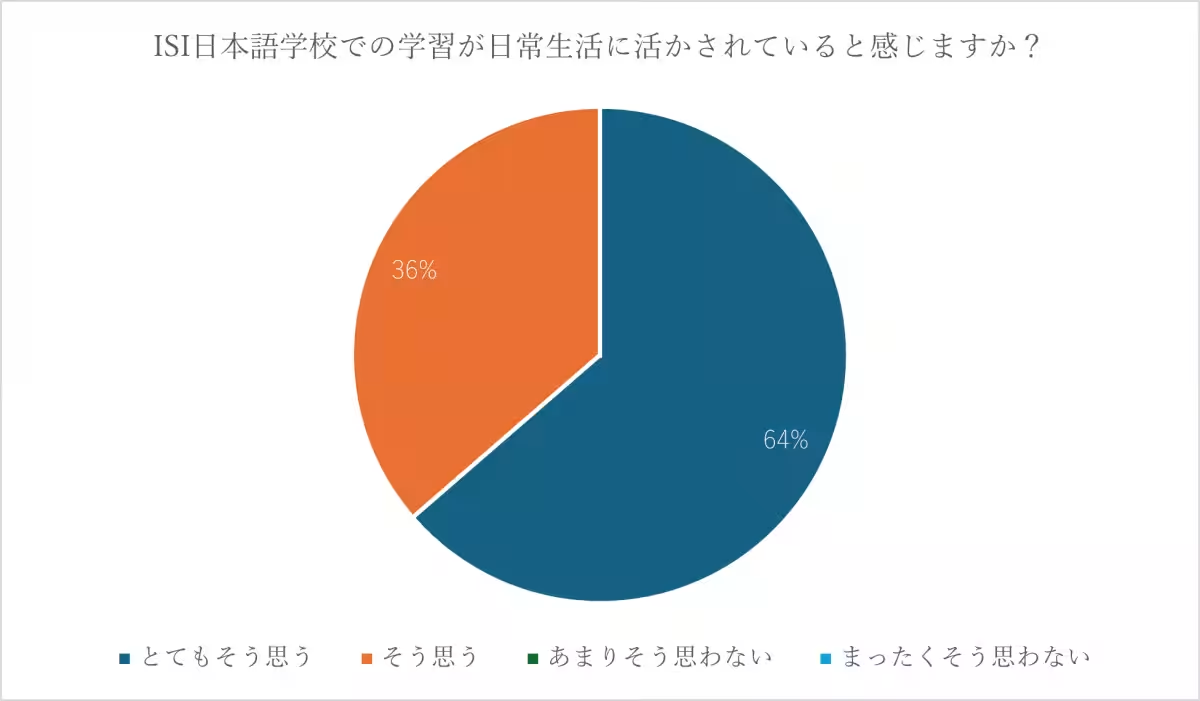
All respondents (100%) confirmed that their Japanese language education was beneficial for daily life. Specifically, 63.6% felt it was very helpful, while 36.4% acknowledged it was helpful. Respondents highlighted instances where Japanese skills were particularly beneficial, including interactions at hospitals, workplaces, and communication with their children's schools.
- Voices from Respondents:
- “I was able to explain my symptoms at the hospital entirely in Japanese from the reception to the examination.”
- “I've improved communication at work and with my child's school teachers.”
- “I feel especially enhanced in listening and conversation.”
- “I managed to have a short conversation with my neighbor in Japanese. It wasn’t significant, but understanding and responding in Japanese boosted my confidence.”
2. Community Building and Social Participation
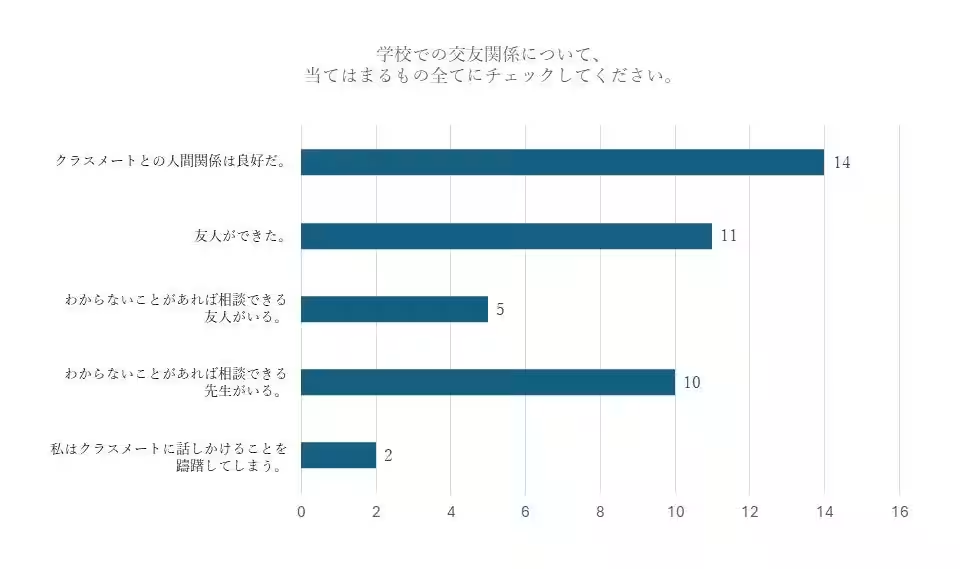
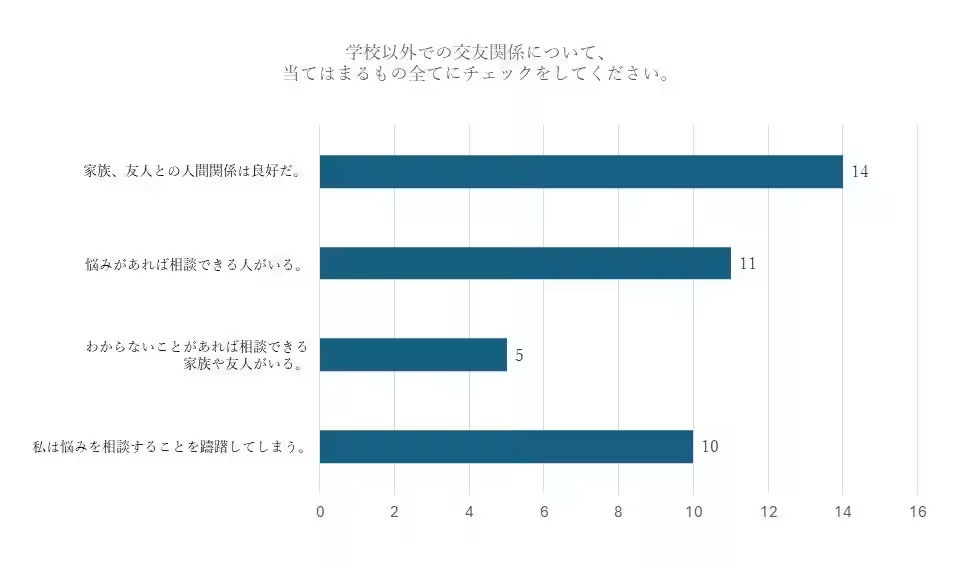
An impressive 91% of respondents reported having established relationships within the school setting, while 95% reported doing so outside the school. This suggests that the ISI Japanese Language School serves not only as a place of learning but also as a supportive community that mitigates feelings of isolation and fosters psychological security.
3. Feedback from Participants
- A female student from Myanmar (1 year enrolled) shared, “I couldn’t even drop my child off at daycare due to language barriers, but now I can handle letters from the school and meetings with teachers in Japanese. I feel motivated to learn even more.”
- A female student from Palestine (5 months enrolled) expressed, “I enrolled with the aim of attending university. My conversational skills have improved, making daily interactions more enjoyable. I learned approaches to studying that I didn’t understand on my own, boosting my confidence for further education.”
- A male student from the Democratic Republic of Congo (1 year and 2 months enrolled) admitted, “Initially, I was anxious about learning Japanese in Japanese, but after three months, I understood most of the classes. I could use what I practiced in job interviews, significantly changing my life.”
Insights from WEWORLD's Director
Yukiko Inoue, Head of the Japanese Language Education Division at WEWORLD, commented on the findings: “Japanese language education is foundational for empowering refugees to rebuild their lives. The results underscore the importance of collaboration with both domestic and international support organizations and government entities. We are committed to expanding sustainable support as part of our corporate social responsibility.”
About ISI Japanese Language School
The ISI Japanese Language School, managed by WEWORLD, is recognized as Japan’s largest Japanese language institution. With locations in Tokyo, Osaka, Kyoto, and Nagano, it accommodates over 10,000 international students annually. The school provides a comprehensive curriculum ranging from basic conversation to preparation for university and vocational exams, supporting students in their integration into Japanese society.
About WEWORLD
WEWORLD aims to foster a society where individuals globally can connect and grow beyond cultural and linguistic barriers. It operates various educational and career support programs both domestically and internationally, including the support of Japanese language education for foreigners and refugees.
Company Name: WEWORLD Co., Ltd.
Location: 12th Floor, Sumitomo Realty & Development Shinjuku Grand Tower, 8-17-1 Nishi-Shinjuku, Shinjuku, Tokyo
Representative: Masakazu Ogino, President
Business Focus: Japanese language education, vocational school operations, university management, preparatory schools, and human resources services.
More Information: WEWORLD CSR Activities
Topics Other)
【About Using Articles】
You can freely use the title and article content by linking to the page where the article is posted.
※ Images cannot be used.
【About Links】
Links are free to use.