



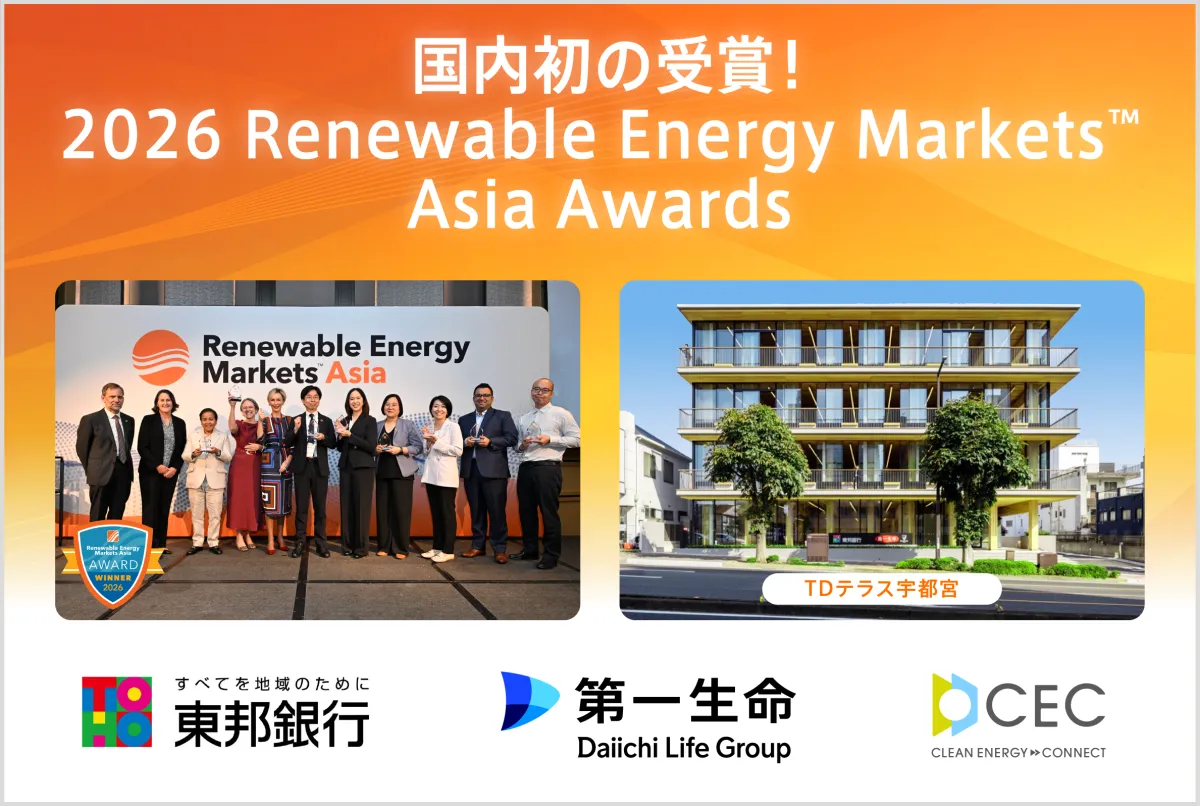
Pioneering Renewable Energy Solutions: Japan's First 2026 Renewable Energy Markets Asia Award Winner
Japan's Groundbreaking Achievement in Renewable Energy
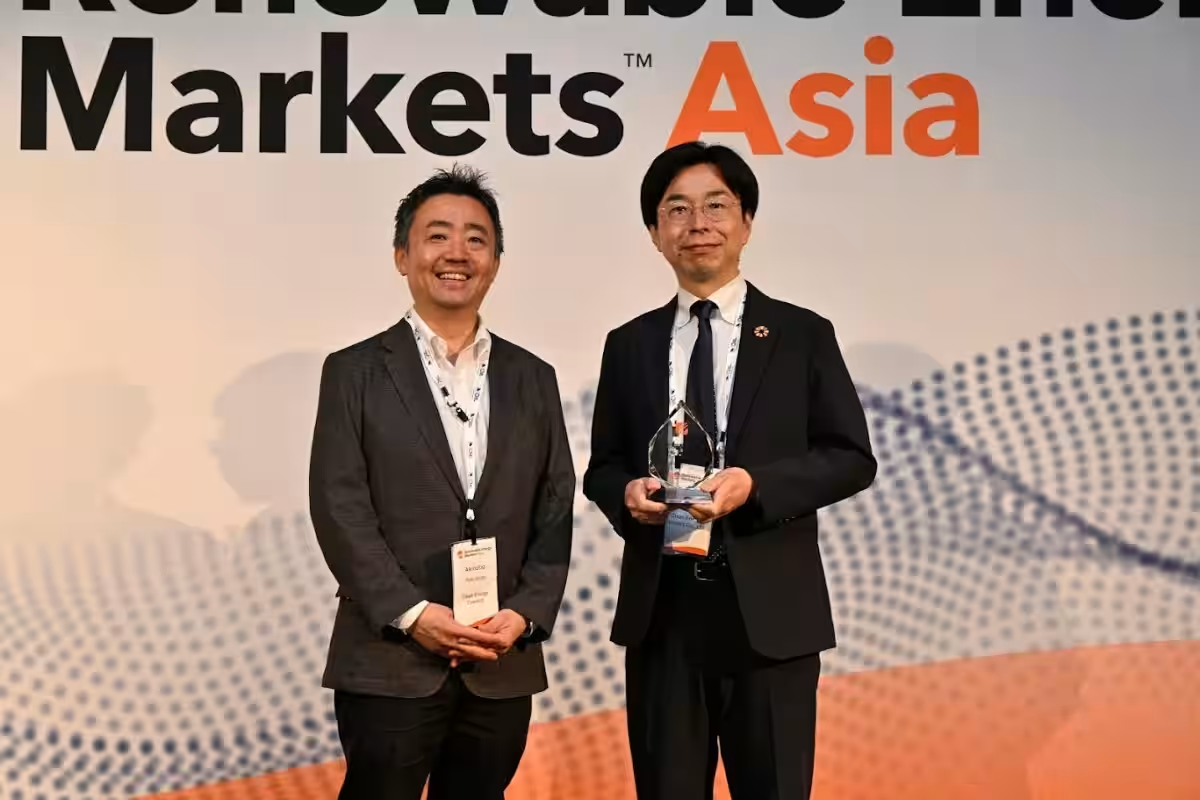
In a landmark event for renewable energy in Japan, Clean Energy Connect, Dai-ichi Life Insurance, and Toho Bank have jointly received the prestigious 2026 Renewable Energy Markets™ Asia Award. This award marks a significant milestone as it is the first of its kind awarded in Japan. The recognition stems from their innovative initiative regarding a corporate Power Purchase Agreement (PPA) that utilizes solar power and battery storage to provide 24/7 carbon-free energy.
Understanding Renewable Energy Markets™ Asia Awards
The Renewable Energy Markets™ Asia Awards are organized by the Center for Resource Solutions, a nonprofit organization based in the United States. This international award aims to honor companies, organizations, and individuals contributing to the promotion of renewable energy and the development of green electricity markets in the Asian region. The awards are esteemed in the renewable energy sector, recognizing not only the innovation but also the market impact and potential benefits for other businesses.
The Initiative Behind the Award
The targeted initiative, focused on the TD Terrace Utsunomiya project, cleverly combines solar energy generation with battery storage. By leveraging offsite corporate PPAs, this project delivers stable and environmentally friendly energy across a full 24-hour cycle, 365 days a year. The evaluation of this project highlighted it as a new benchmark in renewable energy efforts—addressing long-standing challenges in energy supply and demand alignment.
The combination of renewable energy generation and cutting-edge energy storage solutions allows for a significant increase in the utilization of renewable sources. This innovative approach effectively mitigates the time gaps traditionally encountered in energy supply, thereby fostering a model for 24/7 carbon-free electricity that can expand to other enterprises.
Key Highlights of the Award
Integration of Energy Storage with Offsite Corporate PPAs
The project accomplished the establishment of a power procurement model that emphasizes not just the quantity of renewable energy but also the
Topics Environment)
【About Using Articles】
You can freely use the title and article content by linking to the page where the article is posted.
※ Images cannot be used.
【About Links】
Links are free to use.