




Booost Submits Public Comments on UK CBAM: Insights for Manufacturers
Booost Submits Public Comments on UK CBAM
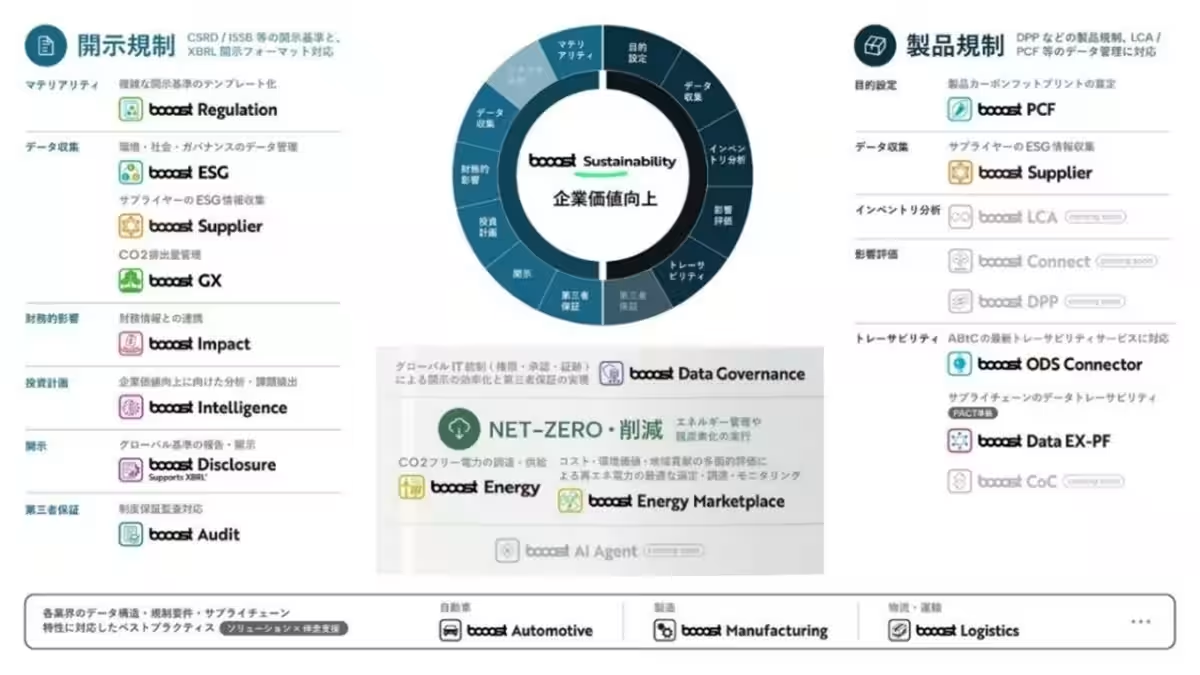
Booost Inc., a leading provider of sustainability ERP, has made significant strides in supporting Japanese manufacturers in their compliance with the upcoming UK Carbon Border Adjustment Mechanism (CBAM). Recently, the company submitted a detailed technical consultation response to the UK government, particularly focusing on CBAM and its implications for downstream steel product supply chains involving components such as bolts and screws.
Background
Set to be implemented by 2027, the UK CBAM will demand reporting of embodied emissions and carbon price adjustments for specific products, including steel, aluminum, and cement. This policy change calls for meticulous data gathering and verification across a complex multi-tiered supply chain, a process expected to create an operational burden for many companies. Japan, with its strong presence in industries involving downstream steel products, stands to face unique challenges in adapting to these regulations.
In light of the practical issues raised by Japanese manufacturers regarding the EU and UK CBAM, Booost has provided recommendations to the UK government aimed at ensuring both effective regulation and operational practicability. These insights are critical as Japanese companies prepare for a transformation in their sustainability practices in alignment with global standards.
Key Recommendations
In its response, Booost highlighted several crucial considerations:
1. Clarification of the CBAM Calculation Scope: Defining the system boundary for downstream steel products (HS7318, HS7326) is vital for appropriate implementation.
2. Reducing Third-Party Verification Burden: Streamlining the verification process for multi-layered supply chains will ease the operational load on businesses.
3. Consideration for Operational Load: Efforts need to be made to minimize practical burdens arising from acquiring and sharing information from upstream material manufacturers.
4. Fair Default Value Design: It is essential to ensure that low-emission supply chains are not disadvantaged by the default value frameworks.
5. Simplification and Standardization: Introducing standardized methods for carbon price relief would enhance clarity for all stakeholders.
6. Facilitating Mass Balance Management: Allowing manageable data sharing across the entire supply chain is a practical necessity.
Particularly for businesses producing bolts and screws, effective data coordination extending across multiple companies is crucial. This necessitates the inclusion of considerations for small and medium enterprises as well as exporters in the regulatory design.
Looking Forward
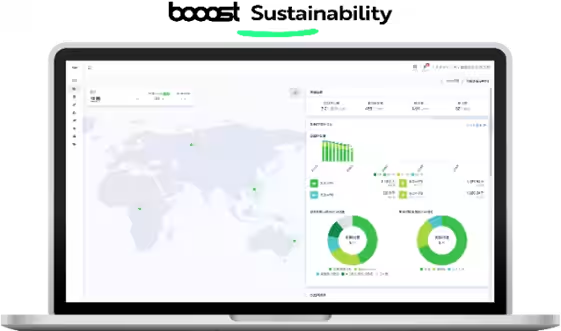
Booost is committed to enhancing its support mechanisms for companies navigating the complexities presented by the UK CBAM. This includes providing emission data calculation and reporting assistance through its application


Topics Consumer Products & Retail)
【About Using Articles】
You can freely use the title and article content by linking to the page where the article is posted.
※ Images cannot be used.
【About Links】
Links are free to use.