



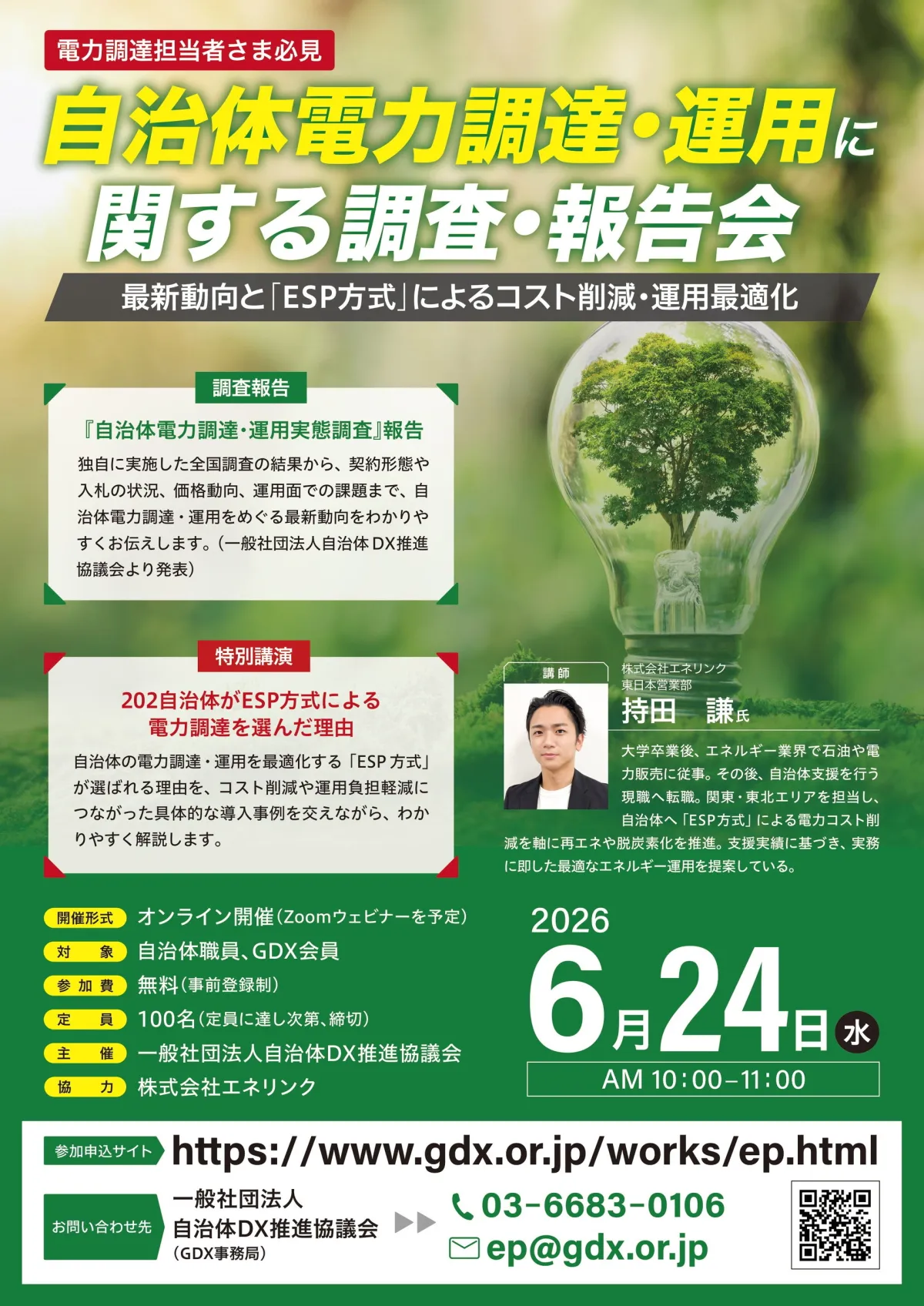
Research Reveals Impact of Rising Electricity Costs on Local Governments in Japan
Examining Electricity Procurement and Management: Insights from Japanese Local Governments
In a recent comprehensive study, the General Incorporated Association for Municipal DX Promotion (GDX) investigated the current state of electricity procurement and management among local governments across Japan. This survey garnered responses from 465 municipalities, revealing significant impacts stemming from escalating electricity prices.
Key Findings of the Survey
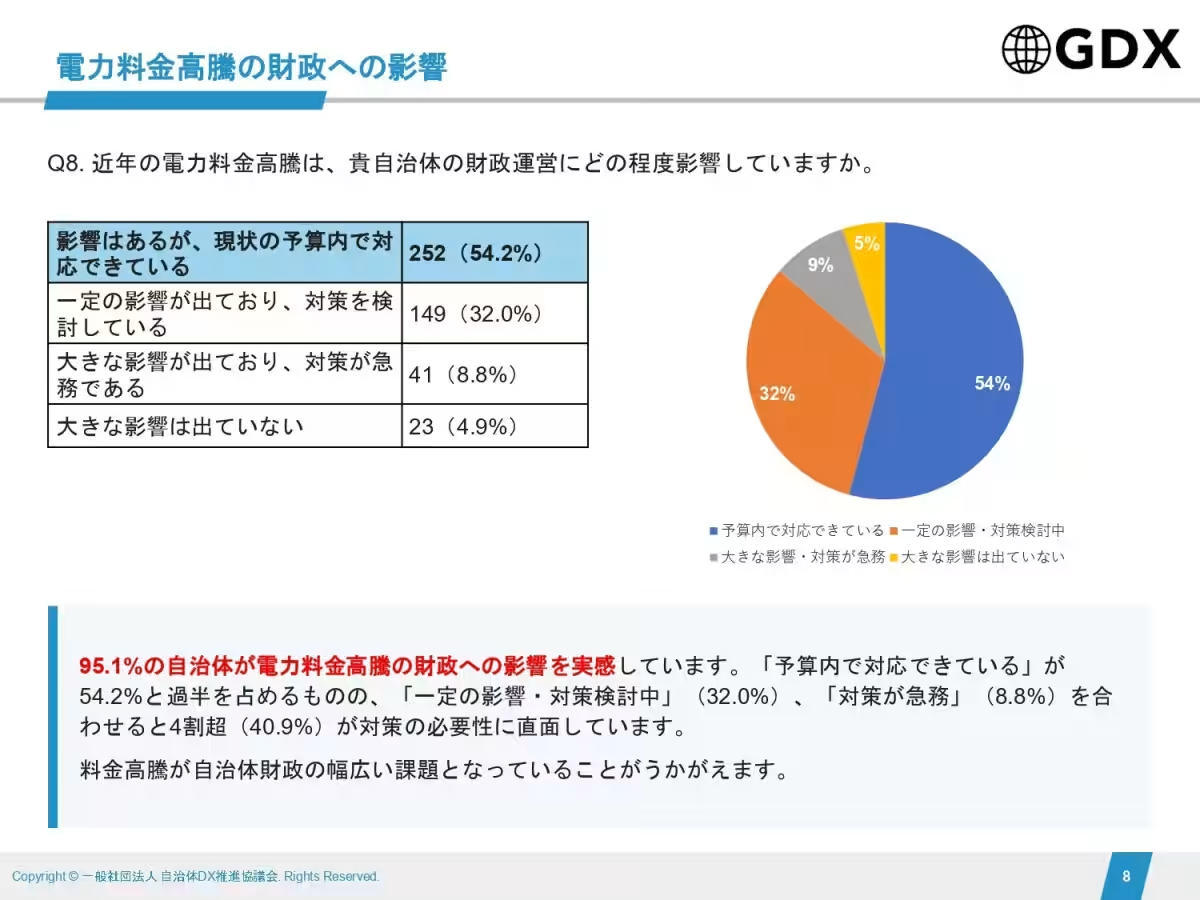
One of the most striking outcomes from the survey is that a staggering 95.1% of respondents indicated they have felt the impact of rising electricity costs on their finances. The breakdown reveals that approximately 40.9% of these municipalities are faced with critical issues, with 32.0% reporting they are considering countermeasures due to the ongoing financial strain, while 8.8% deem immediate action crucial.
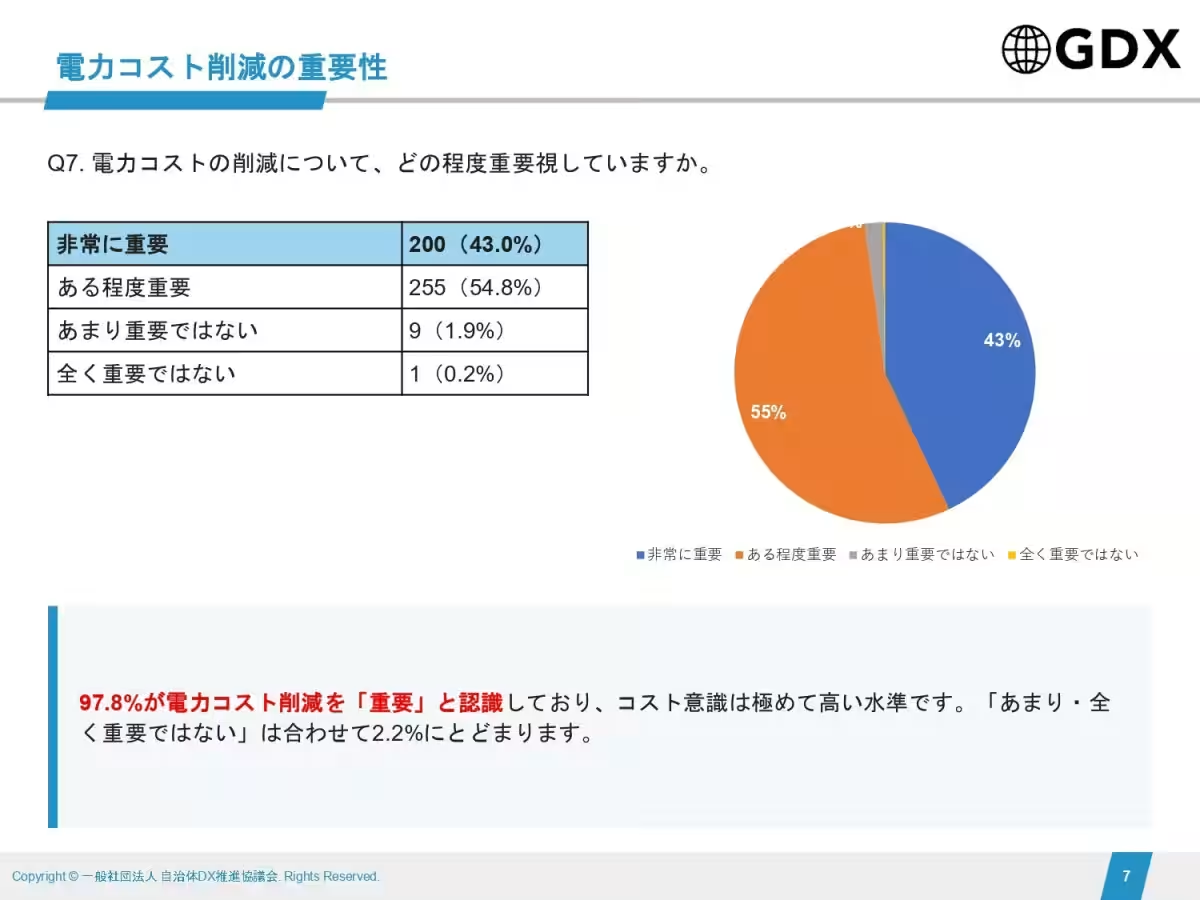
Moreover, the survey reported that an overwhelming 97.8% of local governments regard electricity cost reduction as significant, with 43.0% considering it very important. This emphasizes a pressing need for effective strategies to mitigate these mounting costs.
The predominant method of electricity procurement remains through contracts with local power companies, with 59.4% of respondents opting for this approach. Additionally, the survey highlighted a diversification in procurement strategies, including bids (20.9%) and options categorized as 'others', such as ESP methods, reverse auctions, joint procurement, and collaborations with local renewable energy producers (15.5%).
Challenges Faced by Municipalities
The report duly notes the various hurdles that local governments encounter during procurement and operations. 27.7% of respondents indicated that the administrative burden significantly increases with each contract renewal, while 27.1% mentioned the challenges posed by fluctuations in fuel costs, further complicating their procurement strategies.
Interestingly, 85.4% of participants acknowledged the importance of achieving SDGs and carbon neutrality, yet 34.0% admitted uncertainty surrounding the practical steps necessary for their implementation. Additionally, a large portion of respondents (60.2%) indicated minimal information exchange among municipalities, reflecting a need for improved collaboration in navigating these complexities.
Upcoming Online Briefing
As part of efforts to address these pressing issues, GDX will host an online briefing on June 24, 2026, aimed at disseminating the findings from this comprehensive survey. Participants can learn about the latest trends in electricity procurement and management, with a special focus on the innovative ESP methodology. This approach could serve as a pivotal opportunity for municipalities aiming to optimize their processes and realize substantial cost savings.
Participants in the briefing will also hear from Enelink Co., a firm dedicated to power procurement support, which will provide insights into practical implementations of the ESP approach.
This session is highly relevant to municipal officials grappling with challenges such as:
- - The need to develop strategies for curtailing expenditures due to soaring electricity costs.
- - Difficulties encountered during competitive bidding processes, resulting in no bidders participating.
- - Aiming to alleviate the administrative burdens associated with selecting energy suppliers and contract negotiations.
- - The desire to reconcile cost reductions with the integration of renewable energy sources and achieving decarbonization targets.
- - An interest in learning from the experiences of other municipalities regarding energy procurement and management.
Conclusion
This upcoming online report by GDX and the insights into the ESP approach represent essential resources for local governments in Japan navigating the ever-increasing complexities of electricity procurement amidst a backdrop of fluctuating market conditions and rising costs. The GDX is committed to fostering collaboration between municipalities for a more sustainable future, ultimately supporting the digital transformation efforts aimed at enhancing local governance and community well-being.
Topics Other)
【About Using Articles】
You can freely use the title and article content by linking to the page where the article is posted.
※ Images cannot be used.
【About Links】
Links are free to use.