



Importance of Oral Health Support for Shift Workers in Factories
Addressing Oral Health Challenges for Shift Workers
Recent studies have highlighted a significant concern regarding the oral health of individuals working in factory settings under shift work. The Sunstar Group, in collaboration with Tokushima Bunri University, conducted a comprehensive investigation into dental health among factory workers, revealing alarming patterns among those engaged in rotating shifts.
Key Findings from the Research
The study indicated that shift workers had poorer oral hygiene and higher instances of gum bleeding. Not only were these workers less likely to visit the dentist within a year, but they also reported a lower percentage of having a regular dental practice compared to those on standard schedules. This disparity suggests a critical need for workplace initiatives that consider the unique rhythms of shift work and their impact on oral health.
Research Background and Purpose
The recognition of oral health’s impact on overall well-being and longevity has prompted calls for ongoing dental health interventions that cater to individuals at varying life stages. The working years, however, present increased risks such as declining gum health and tooth loss, making it imperative for employers to implement adequate health measures tailored to the specific demands of shift workers. The purpose of this study was to distinguish oral health conditions and preventive behaviors between workers with and without shift schedules.
Study Methodology
In 2023, a survey was conducted with 66 participants from factories offering regular dental check-ups. Participants were divided into two groups: one with shift work and the other without. The study compared dental examination results—such as the number of present teeth, pocket depth of gums, instances of gum bleeding, and oral hygiene assessed through Oral Hygiene Index-Simplified (OHI-S)—and also analyzed questionnaire responses related to dental health behaviors, eating habits, and health consciousness.
Participant Demographics
The average age in the shift worker group was notably lower at 31.3 years, with 76.9% being under 50, while the non-shift group averaged 50.6 years, with merely 18.9% falling below 50. Gender distribution between the two groups exhibited no significant differences.
Oral Health Status Evaluation
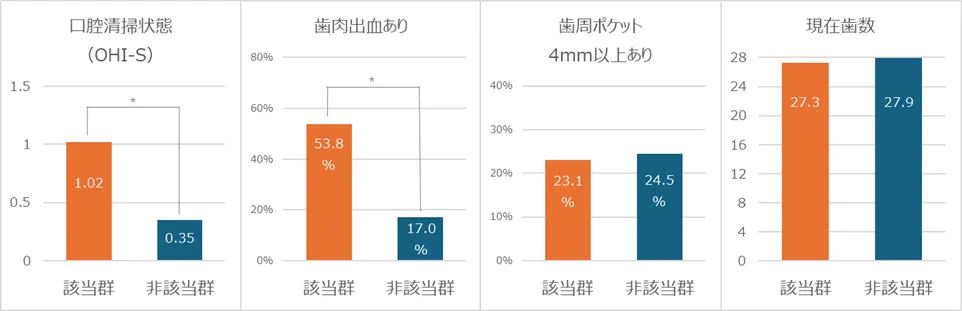
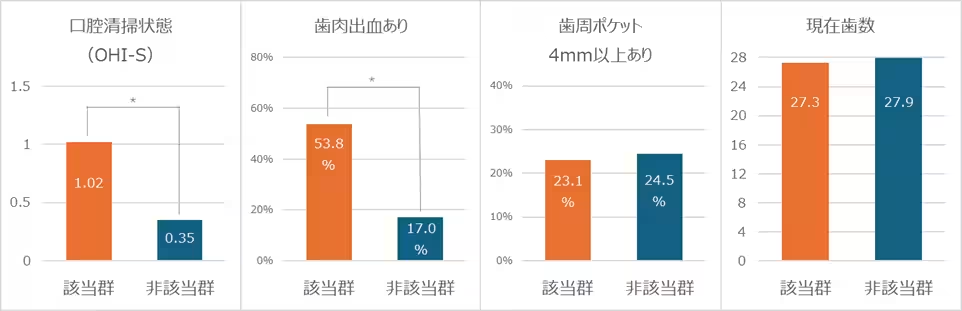
Using OHI-S, the findings indicated a concerning trend: shift workers had an average OHI-S score of 1.02, whereas non-shift workers averaged 0.35, indicating significantly poorer oral hygiene. Furthermore, 53.8% of the shift workers reported gum bleeding, compared to only 17% in the non-shift group.
Despite these alarming results, the rates of moderate gum disease (defined by periodontal pockets deeper than 4mm) were nearly the same across both groups, suggesting that the younger average age within the shift group might be a mitigating factor against severe oral illness. Nonetheless, these health outcomes could worsen as these workers age.
Behavioral Insights
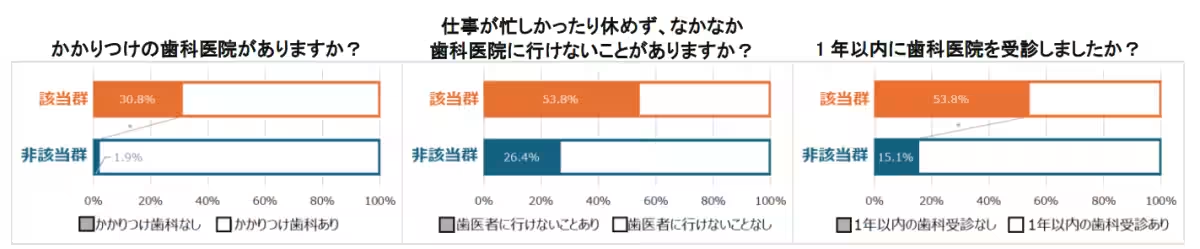
The study also illuminated concerning trends in dental health behaviors. A significant 30.8% of shift workers reported not having a regular dentist, in stark contrast to just 1.9% of the non-shift workers. Additionally, 53.8% of shift workers acknowledged that their busy schedules hindered their ability to see a dentist. The finding that over half of the shift worker group had not visited a dentist in the past year accentuates this risk, compounded by lower health priority rankings given their lack of symptoms.
In terms of eating habits and health consciousness, shift workers displayed patterns like irregular eating (69.2%), occasional skipping of meals (69.2%), and a lack of awareness regarding proper weight management—46.2% in contrast to 11.3% in the non-shift group. These behaviors reflect broader challenges in maintaining healthy routines amidst the complexities of shift work schedules.
Conclusion and Future Directions
Ultimately, the findings reveal a pressing need for tailored health-support measures within workplaces for those engaged in shift work. The evidence strongly suggests that shift workers face distinct challenges regarding oral health awareness, behaviors, and outcomes, and underscore the urgency for industries to develop comprehensive oral health programs that holistically address the potential long-term impacts on both oral and overall health. Efforts will need to extend beyond mere dental visits to incorporate lifestyle guidance that promotes healthier eating and sustainable oral health practices.
Expert Commentary
Dr. Masami Yoshioka, Professor in Oral Health at Tokushima Bunri University
"Shift work inherently alters meal timing and sleep habits, which can inadvertently affect dietary choices and oral health practices. Our study highlights the necessity of addressing these correlations to promote better oral care among shift workers. Comprehensive interventions must recognize these unique lifestyle challenges to improve the overall health trajectories of these individuals."
About Tokushima Bunri University's Oral Health Department
Established in April 2017, the dental hygiene department at Tokushima Bunri University strives to equip future dental hygienists with the skills needed to thrive in their communities through extensive practical training.


Topics Health)
【About Using Articles】
You can freely use the title and article content by linking to the page where the article is posted.
※ Images cannot be used.
【About Links】
Links are free to use.