



Standard Radio Wave JJY Recognized as an IEEE Milestone for Over 80 Years of Contribution
Standard Radio Wave JJY Achieves IEEE Milestone Recognition
On November 24, 2025, the IEEE Board officially recognized Japan's Standard Radio Wave JJY as a historic milestone. This honor comes as a testament to JJY's significant contributions to Japan’s infrastructure, which have spanned over 80 years, supporting the nation's development, reconstruction, and technological innovation.
The Significance of the IEEE Milestone
The IEEE, a leading global organization for electrical and electronic standards, awards the IEEE Milestone to outstanding achievements in the field that have influenced society and industry. To qualify, these innovations must have been in operation for at least 25 years. JJY, which began broadcasting in 1940 as the world’s second standard radio wave station, has been pivotal in enabling synchronized infrastructure across various sectors, including broadcasting, transportation, and utilities.
Historical Background of JJY
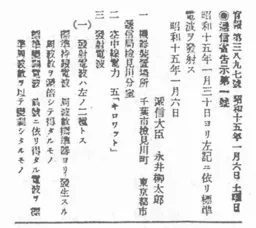
In the early Showa era, the rapid advancement of wireless communication technology led to increased interference among various radio stations due to frequency mismatches. This situation necessitated the creation of a standard frequency signal to ensure all stations operated in unison. Thus, the then Japan Ministry of Communications initiated JJY, which began operations in January 1940 from the Kameyama transmission station in Chiba. Following the end of World War II, JJY began broadcasting accurate time signals in August 1948, further solidifying its role in the modernization of Japan.
As Japan moved through the post-war reconstruction phase, JJY provided essential time signals for synchronized services crucial to various industries and everyday life, including public broadcasting and transportation systems.
Evolution of JJY and Advanced Technological Integration
Over the years, the transmission facilities for JJY have moved several times, adapting to the technological innovations of the day. By March 2001, traditional shortwave transmission was phased out in favor of high-frequency signals with improved accuracy. The establishment of the Ohtakadoyama station in Fukushima in 1999 marked a new phase in JJY’s capabilities, delivering standard frequencies with precision.
With the introduction of technology allowing radio clocks to automatically adjust to JJY signals, the impact has reached everyday consumers, enriching daily life with precise timekeeping.
IEEE Milestone Recognition Process
The IEEE Milestone program, initiated in 1983, aims to celebrate significant technological feats in electrical, electronic, and information technology. Currently, there are 297 recognized milestones globally, with Japan holding 58 of those accolades. The recognition process involves a formal proposal to the IEEE Board, which is then subject to review and discussion before potential approval.
The awarding of the milestone typically involves a special ceremony where a commemorative plaque is presented at a location significant to the milestone.
Future Outlook for JJY
As part of its ongoing commitment, the National Institute of Communications Technology (NICT) continues to operate JJY under legal mandates to ensure stable transmission of accurate standard frequencies. NICT aims to sustain JJY operations and enhance the delivery of Japan Standard Time to the public. This dedication underscores the importance of maintaining high standards in timekeeping and frequency synchronization for the future.
In conclusion, the IEEE milestone recognition not only honors the historical significance of JJY but also highlights the ongoing importance of precision in the age of advanced communication technologies. Through its continuous evolution, JJY remains a cornerstone in Japan's commitment to reliable infrastructural support and technological advancement.

Topics Entertainment & Media)
【About Using Articles】
You can freely use the title and article content by linking to the page where the article is posted.
※ Images cannot be used.
【About Links】
Links are free to use.