



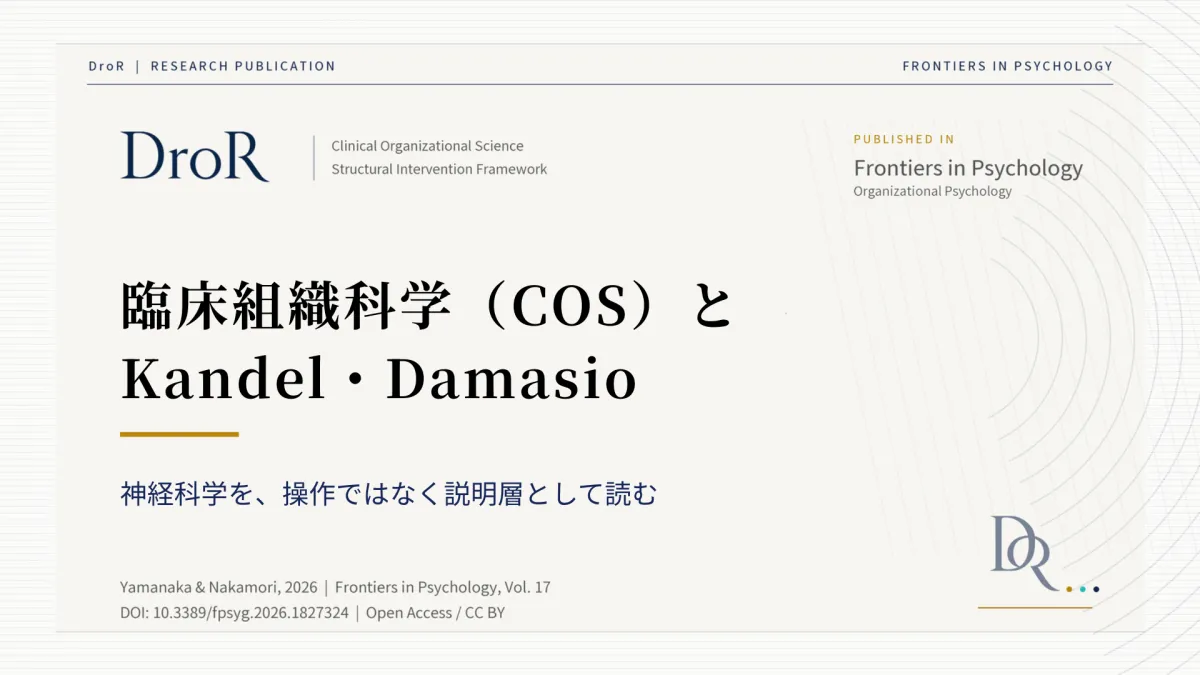
Exploring Clinical Organizational Science and Its Relevance in Neuroscience
Unveiling Clinical Organizational Science (COS)
Clinical Organizational Science (COS) presents an integrative framework aimed at understanding and intervening in complex organizational dynamics. The framework effectively integrates elements from complex systems science, neuroscience, organizational psychology, and behavioral science. The primary goal of COS is to create structures that actively support and reproduce stable organizational interactions. This reinterpretation of organizational change focuses not on changing individual behaviors but instead on transforming organizational attractors. Its core methodologies include Field Gradient Theory, Loop Conversion Design, and Neural Base Design, alongside a novel concept known as the 'emergence bridge' which connects individual habits to organizational changes.
The Role of Neuroscience in COS
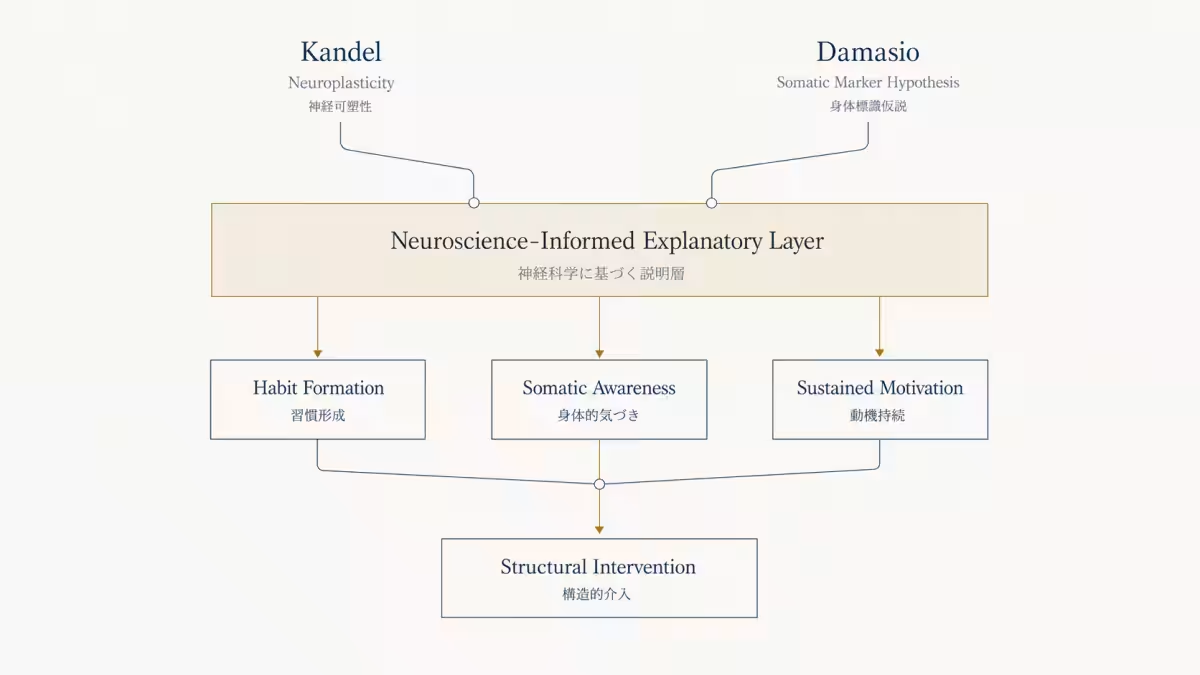
In the context of COS, neuroscience is introduced not as a means to measure brain activity or manipulate neural states, but rather as a theoretical framework that elucidates the nature of self-sustaining behaviors, habit formation, bodily awareness, trust-building, and sustained motivation. This distinction allows neuroscience to serve as a coherence layer, complementing practical interventions without reducing complex organizational phenomena to mere neural mechanisms.
Insights from Kandel's Research on Neural Plasticity
Kandel's groundbreaking work on neural plasticity highlights how repeated experiences and behaviors influence neural connections. COS utilizes this insight to stress the importance of habit formation within organizational transformations. Single training sessions or isolated policy announcements are often insufficient to engender self-sustaining behaviors. By embedding new interaction patterns into routines—daily, weekly, or monthly—COS facilitates the automation of individual behaviors, thus enhancing their integration at the interaction level.
Damasio's Somatic Marker Hypothesis
Damasio's body-focused decision-making theory emphasizes the significance of physiological states in judgments and decision-making processes. COS aligns this perspective with its Somatic Awareness Axis under Neural Base Design, focusing on the importance of recognizing stress, discomfort, tension, fatigue, and relational issues before they are articulated verbally. Structured somatic check-ins serve as practices to early recognize these bodily states, leveraging them as resources for collective sense-making.
What COS Aims to Inherit and Avoid from Neuroscience
| Aspect | COS Utilization | What COS Does Not Claim |
|---|---|---|
| ----- | --------- | ---------- |
| Neural Plasticity | Explains why repetitive behaviors can sustain themselves | Does not claim direct measurement of neural changes within organizations |
| Somatic Marker Hypothesis | Theoretical support for physical check-ins | Does not claim that decisions are explained solely by bodily states |
| Social Bond Formation | Supplementary explanation for gratitude sharing and trust-building | Does not assert measurement of specific neurotransmitter changes within organizations |
| Reward Prediction | Explains motivation sustainability through predictable organizational rhythms | Does not claim manipulation of neurological rewards |
Ethical Boundaries of COS
The interventions proposed by COS are designed to operate on behavioral and social conditions rather than on neural processes themselves. This includes focusing on interaction structures, feedback architectures, habitual practices, and organizational rhythms. Maintaining this distinction is crucial for the ethical integrity of COS implementations.
Statements from Makoto Yamanaka, CEO
In using the term neuroscience, the potential for misunderstanding exists. Therefore, COS reiterates its stance of not engaging in neural measurement or stimulation, instead focusing on the behaviors and interactions that recur within organizations. Neuroscience is positioned as a conceptual tool to elucidate the significance of these behavioral designs, rather than attempting to manipulate employee brain functions.
Academic Contribution: Conceptual Analysis
The recent publication in the journal Frontiers in Psychology titled 'Clinical Organizational Science: An Integrative Framework for Structural Intervention in Complex Organizations' is a conceptual analysis that has not yet finished validating the effectiveness of each COS method. It aims to synthesize dispersed scientific insights, reframing organizational change as a structural intervention challenge. Consequently, COS does not propose to replace existing theories but rather reorganizes established knowledge in psychology, behavioral sciences, and other areas under the lens of structural interventions.
Future Insights and Related Publications
The next installment in the COS explanatory series will be released, potentially investigating the relationship between positive emotions and cognitive expansion, informing techniques for enhancing workplace interactions and behaviors.
Conclusion
COS provides a unique multidisciplinary framework that endeavors to bridge the gap between theoretical neuroscience and practical organizational interventions. As it seeks to continuously explore and define its concepts, future publications will further establish its role in transforming the understanding of organizational dynamics.
Topics Business Technology)
【About Using Articles】
You can freely use the title and article content by linking to the page where the article is posted.
※ Images cannot be used.
【About Links】
Links are free to use.