



JAL Group Achieves Record Revenue in Q1 of FY2027 Despite Rising Fuel Costs
Record First Quarter for JAL Group
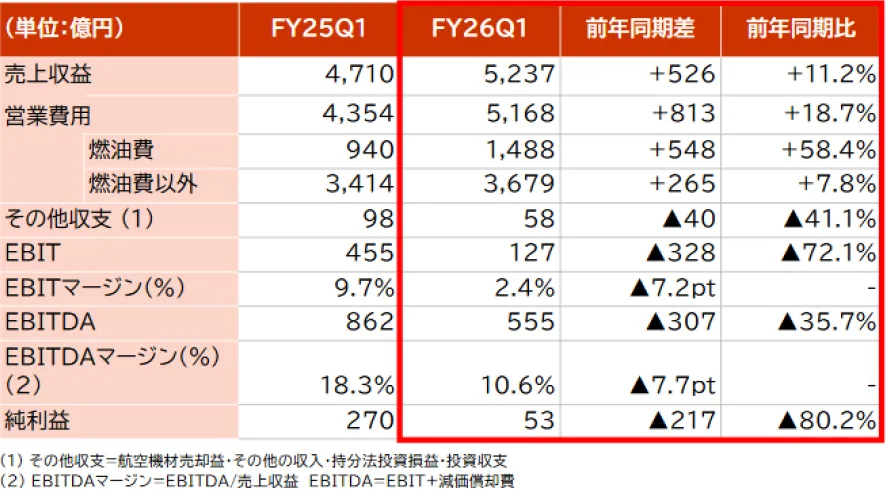
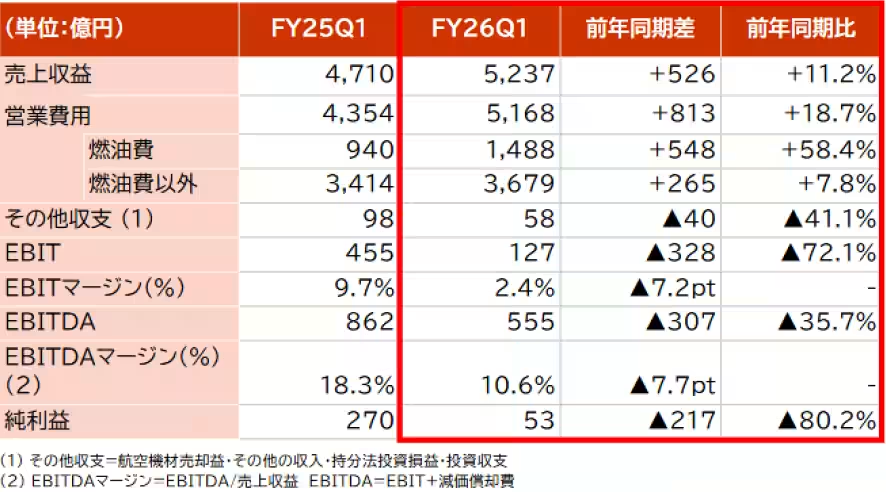
On August 3, 2026, JAL Group announced impressive financial results for the first quarter of fiscal year 2027, covering the period from April 1 to June 30, 2026. The company achieved unprecedented revenue of 523.7 billion yen, a notable increase of 11.2% year-on-year, primarily driven by strong demand in both the airline business and its mileage/financial commerce sectors.
Despite these achievements, the company faced significant headwinds, including soaring fuel prices and a persistent depreciation of the yen. These factors adversely impacted their EBIT, which came in at 12.7 billion yen, reflecting a 72.1% year-on-year decline. Nonetheless, JAL Group remains steadfast in its goals, continuing to aim for an EBIT target of 180 billion yen and a net profit of 110 billion yen for the fiscal year.
1. Consolidated Performance Overview
In this quarter, JAL Group's revenues were bolstered by its ability to dynamically adjust pricing in response to changing demand amid geopolitical tensions in the Middle East and climbing oil prices. The demand for international passenger and cargo services remained robust. Consequently, the total revenue reached the highest ever recorded for a first quarter at 523.7 billion yen. However, operational costs surged as well, driven by a significant rise in fuel expenses due to the unfavorable foreign exchange situation. Total operating expenses grew by 18.7% year-on-year, reaching 516.8 billion yen. As a result, the EBIT was recorded at 12.7 billion yen, and the net profit decreased to 5.3 billion yen, down 80.2% from the previous year.
2. Segment Analysis
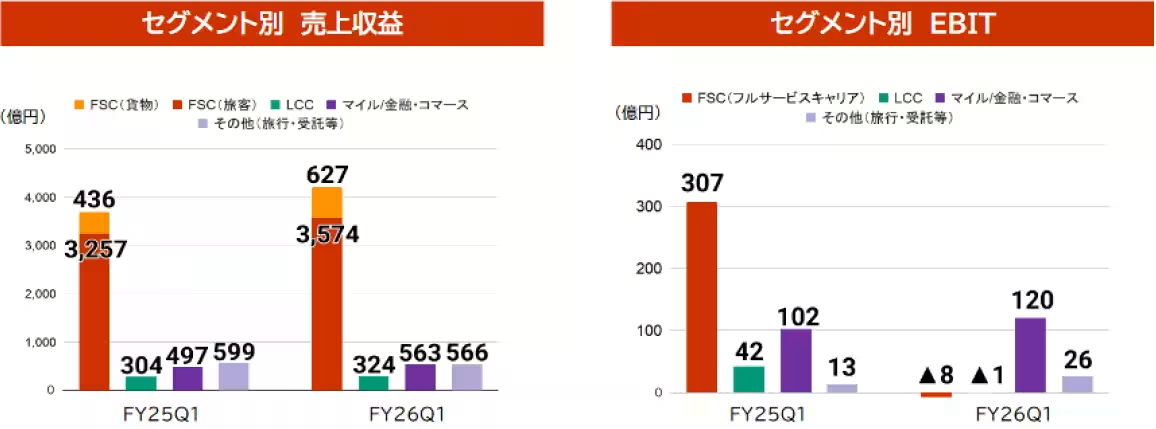
The company's full-service carrier and low-cost carrier (LCC) segments experienced increased revenue but suffered a decline in profits due to high fuel prices. Conversely, the mileage/financial and commerce segments saw gains, benefiting from promising growth in mileage issuance income.
Full-Service Carrier Segment:
Dynamic revenue management strategies have yielded improved yields for both international and domestic travelers, leading to a revenue increase of 13.8% year-on-year, totaling 420.2 billion yen. However, the escalating fuel prices negatively impacted EBIT, resulting in a loss of 800 million yen.
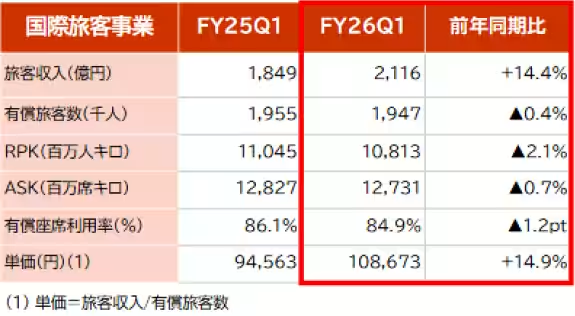
- - International Passengers: Although passenger numbers slightly decreased by 0.4%, passenger revenue surged by 14.4% due to effective revenue management and adjustments to the fuel surcharge scheme.
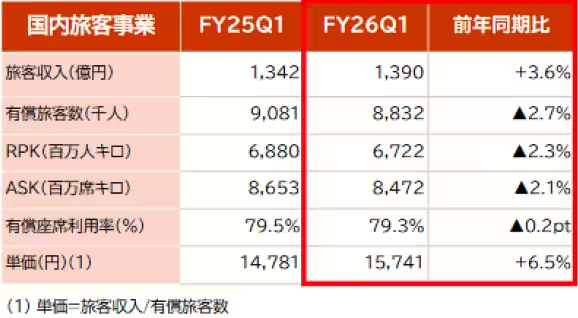
- - Domestic Passengers: Focused on structural reforms and thorough revenue management, passenger income rose by 3.6%, despite a 2.7% drop in traveler numbers.
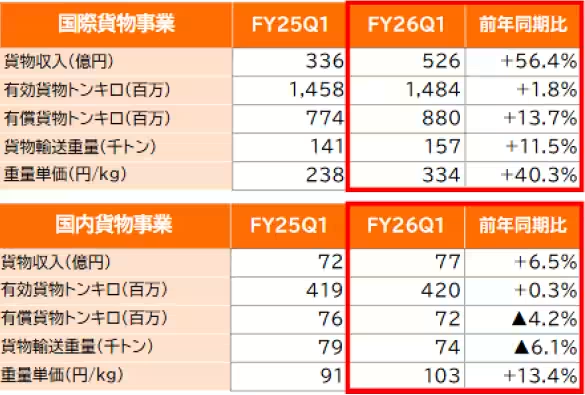
- - Cargo Services: The international cargo sector thrived, benefiting from high demand on Asia-North America routes, leading to a revenue increase of 56.4%. Domestic cargo services also grew by 6.5% as new customer acquisition efforts paid off.
LCC Segment:
The LCC market saw a 6.7% year-on-year revenue growth to 32.4 billion yen, yet the segment faced EBIT losses of 100 million yen due to fuel price increases.
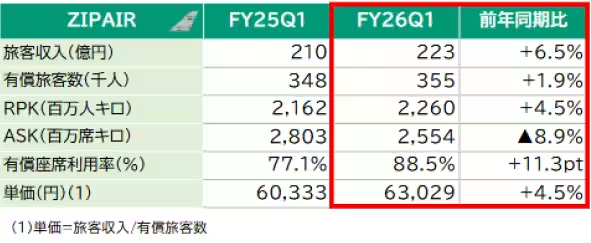
- - ZIPAIR: Successfully completed the installation of high-speed internet service 'Starlink' across all its aircraft, enhancing product value and resulting in a revenue growth of 6.5% year-on-year.
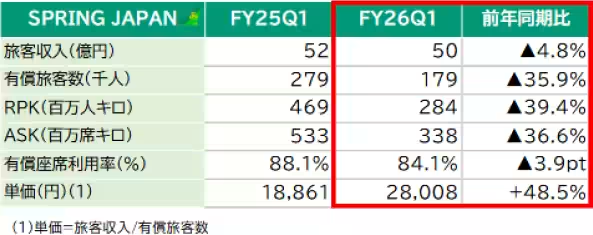
- - SPRING JAPAN: Although faced with a 4.8% decline in revenue due to supply reduction, strategic market adjustments succeeded in raising unit pricing.
Mileage/Financial and Commerce Sector:
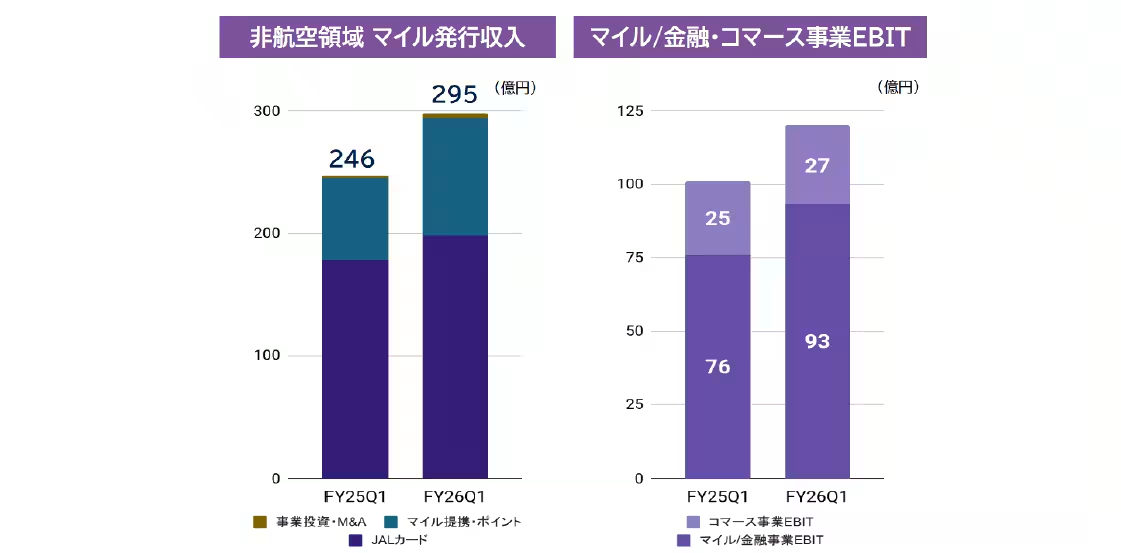
In this segment, revenue reached 56.3 billion yen, marking a 13.3% increase, with EBIT rising 17.6% to 12 billion yen, highlighting stable profit growth through enhanced partnerships and diversified mile redemption opportunities.
Other Segments:
Despite a revenue decrease of 5.5%, the company recorded EBIT growth of 96.7%, driven by variations in foreign exchange evaluations through the JAL Innovation Fund.
3. Financial State and Future Outlook
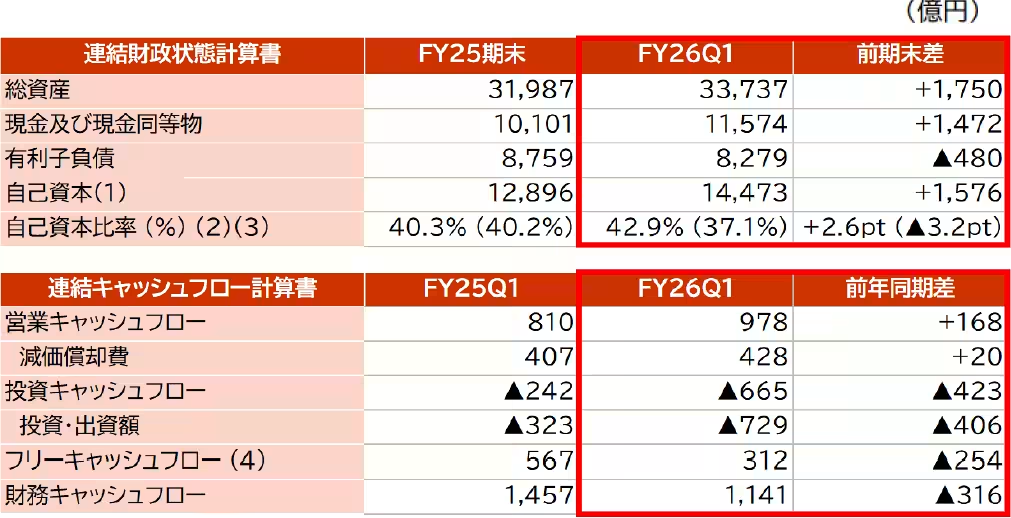
The consolidated fiscal status remains solid, maintaining its target forecasts for fiscal year 2027 as previously disclosed. The group is poised to continue driving innovation in its operations, as reflected in its ongoing initiatives.
4. Strategic Initiatives
To meet government tourism goals and enhance regional economic vitality, JAL plans to launch international routes to local airports, promoting sustainable tourism.
In its LCC segment, ZIPAIR led advancements in customer experience by integrating high-speed internet services. Collaborations with other firms are in place to enhance the customer lifestyle, including significant partnerships with NTT Docomo and LifeNet Insurance. Future projects aim to sustain growth through innovation while supporting local and global community engagements.
JAL Group remains aligned with its vision for a financially sustainable and customer-centric future, demonstrating its commitment to adapting to market changes while providing high-quality services to its customers.
Through these ongoing efforts, JAL is setting a strong foundation for future growth while maximizing its operational profitability in a challenging economic landscape.









Topics Business Technology)

【About Using Articles】
You can freely use the title and article content by linking to the page where the article is posted.
※ Images cannot be used.
【About Links】
Links are free to use.