



Exploring Economic Security and Export Control in the AI Era at JX LIVE! 2026
Overview of JX LIVE! 2026
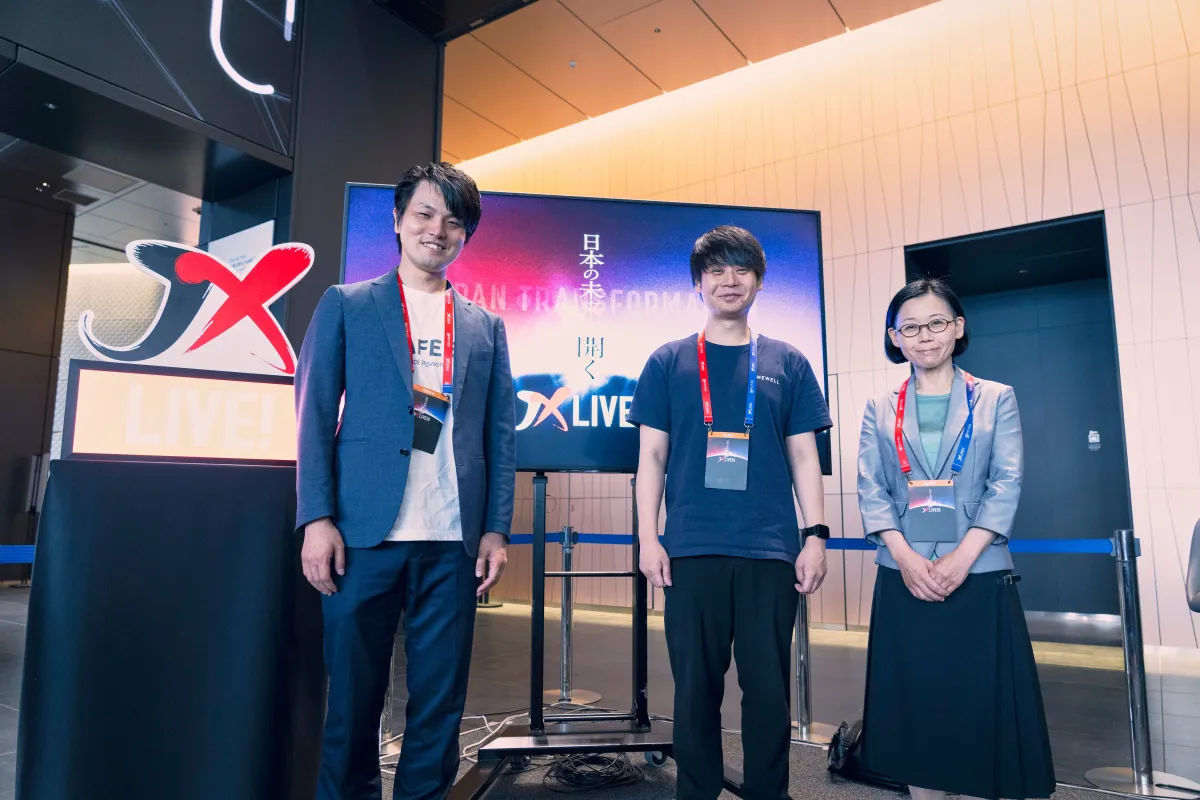
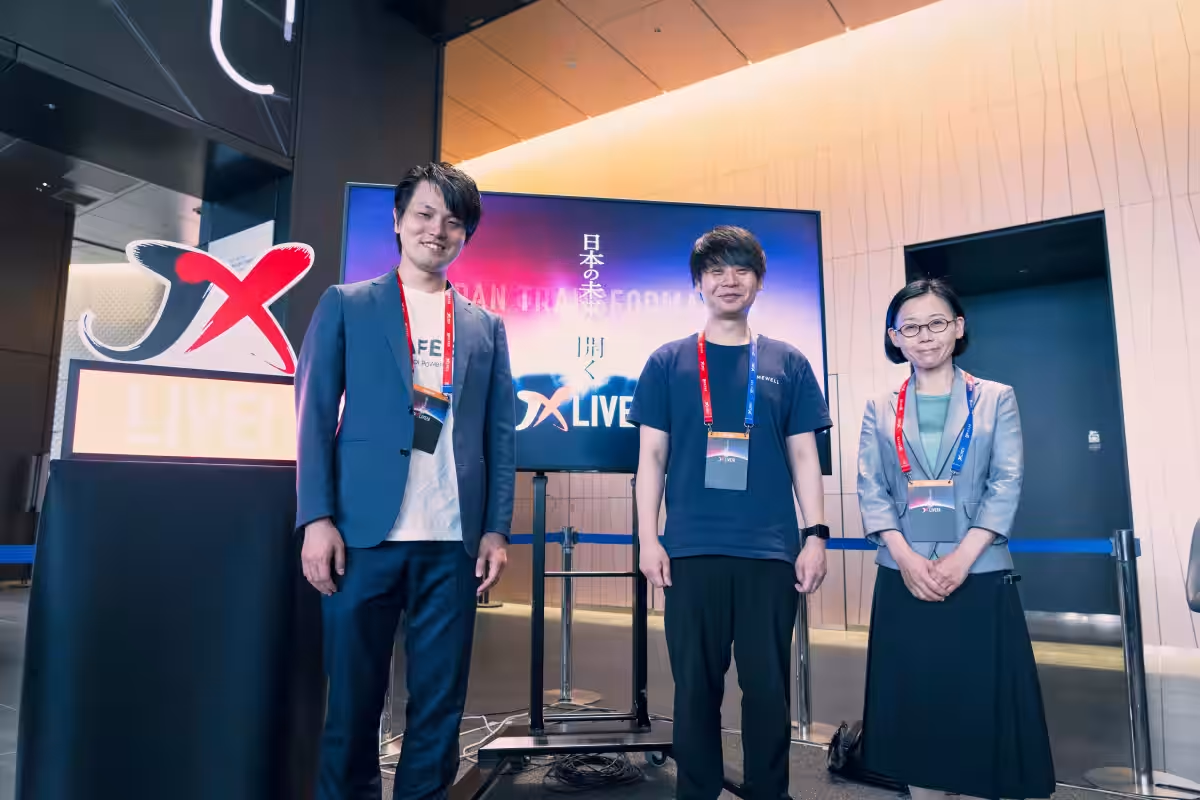
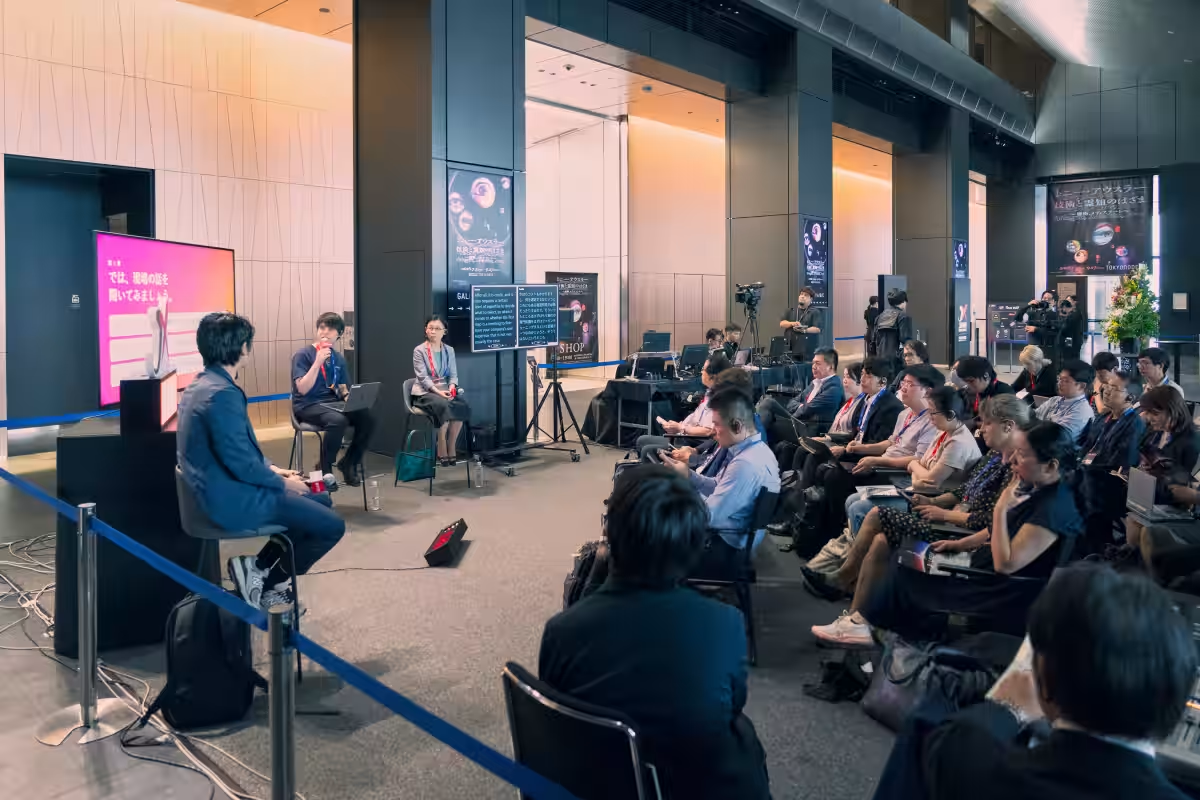
On July 28, 2026, TIMEWELL, a Kanagawa-based company specializing in autonomous AI agents and led by CEO Ryuta Hamamoto, participated in the JX LIVE! 2026 conference hosted by the Japan New Economic Federation at the Tokyo Node in Toranomon Hills. A crucial session titled "Is Your Technical Information Leaking? - Economic Security and Export Control in the Age of AI" featured insightful discussions on the risks of technology leakages in the context of AI proliferation. Ryuta Hamamoto and TIMEWELL's CTO Kazuki Naito joined Shinobu Matsubara from Okayama University to exchange views on managing the evolving threats posed by AI technologies.
The JX LIVE! event, recognized as one of the largest gatherings organized by the Japan New Economic Federation, attracted over 600 participants keen to explore themes essential for Japan’s future, including AI. The conferences showcased a plethora of discussions led by political and economic leaders, and our session drew considerable attention from attendees.
Highlights from the Session
Current State of Export Control
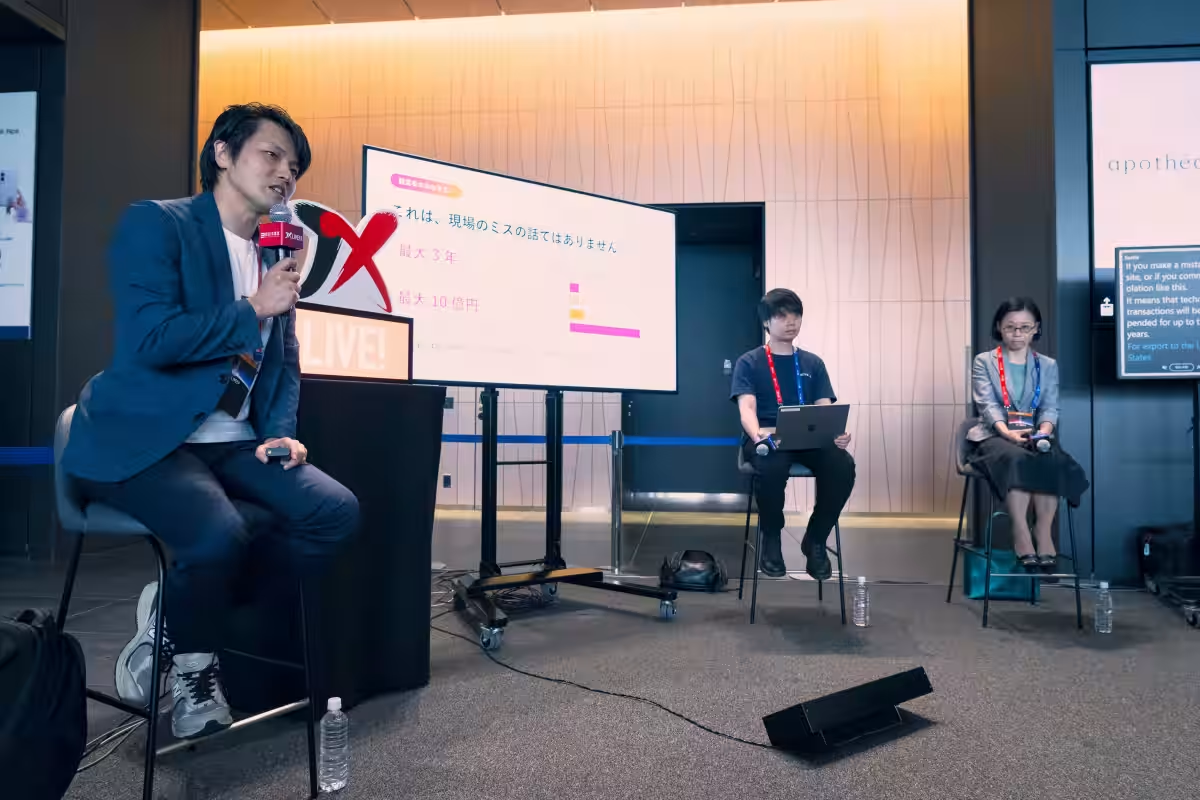
In the initial part of the session, Ryuta Hamamoto outlined the current state of export control, emphasizing that violations of the Foreign Exchange and Foreign Trade Act (FEFTA) can lead to severe administrative sanctions, including bans on exporting and fines up to 1 billion yen, which underscores the gravity of the oversight required.
Hamamoto noted that a significant portion (64%) of violations stem from the judgment involved in determining whether a product is subject to regulation, highlighting that it is crucial for companies to have robust systems to make these determinations effectively. Furthermore, with rapidly changing global political landscapes, such as in light of the ongoing conflict in Ukraine, the risks become even more pronounced. He warned that relying solely on transaction parties to navigate compliance risks is insufficient; management must prioritize these concerns strategically.
The Impact of AI on Regulatory Practices
As the session continued, the conversation shifted to how AI technologies are increasingly becoming subject to regulatory scrutiny. In early 2026, there were instances where U.S. government decisions affected the deployment of AI models, indicating the risks organizations face if reliant on proprietary systems that can halt operations based on government decrees. It was noted that compliance is dictated not merely by the location of data but by the nationality of the entity that owns it.
The discussion emphasized the need for businesses to dissect the layers of their operations, identifying the intersections between products ('things'), information shared with AI ('data'), and the qualifications of personnel involved ('people'). By addressing these three dimensions, organizations can better safeguard themselves against potential compliance failures.
Panel Discussion: Implementing Practical Solutions
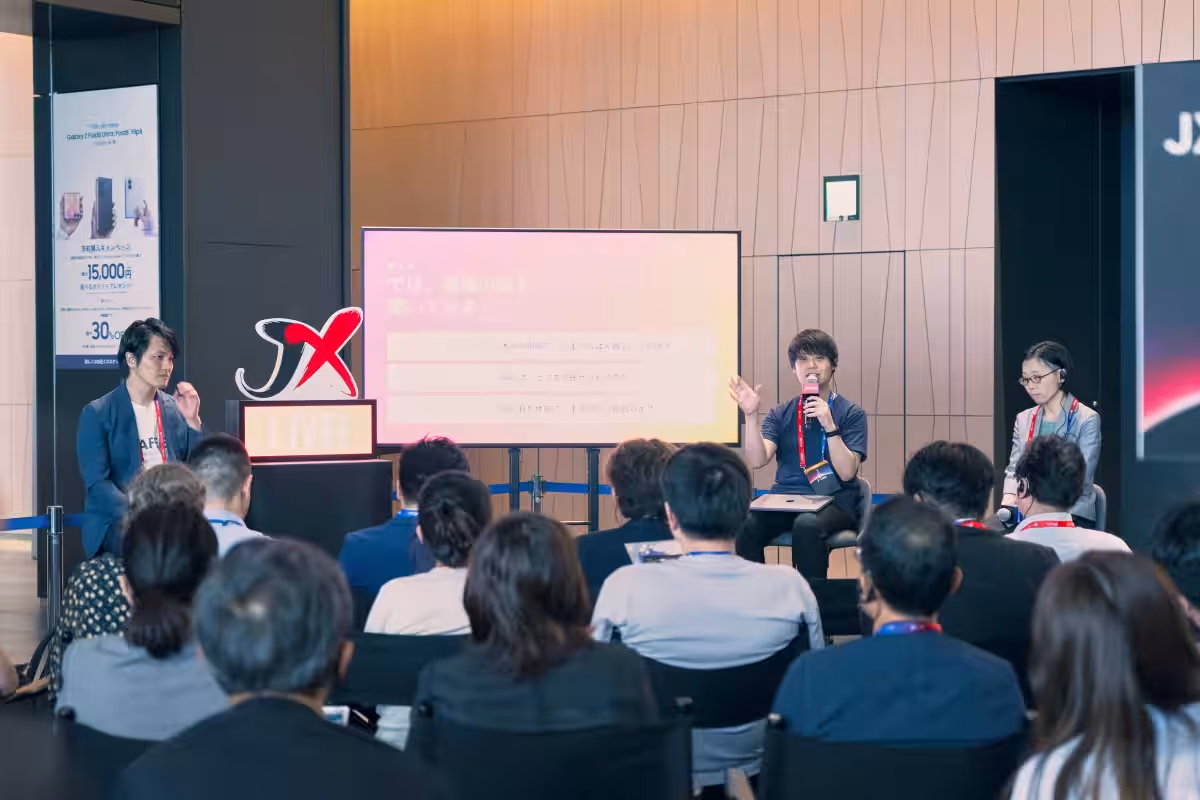
The latter part of the session engaged participants in a panel discussion featuring Matsubara, Naito, and Hamamoto, probing into actionable steps businesses can take with limited resources. They discussed the greatest challenges facing academic institutions in establishing export control frameworks, the level of confidence that can be placed in AI systems, and definitive first steps for organizations working with constrained personnel and budget.
The insights provided during this exchange enriched practical understanding, grounding the conversation in real-world realities rather than idealistic theory. Additionally, it was emphasized that the evolution of technology demands a proactive approach from management to avoid the pitfalls associated with regulatory compliance.
Closing Remarks by TIMEWELL
CEO Ryuta Hamamoto concluded with a powerful statement on the vital importance of economic security not as a burden but as an investment for sustainable business operations abroad. The complexity surrounding technology information flow is indeed escalating, and collaboration with experts like Matsubara is essential to navigate these turbulent waters. TIMEWELL continues to position itself at the forefront of this important dialogue, developing AI agents like TRAFEED specifically targeted at export control management.
Future Outlook
Looking ahead, TIMEWELL aims to support organizations and individuals in overcoming challenges using AI-driven infrastructures. The company intends to enhance its collaborations with universities and industries, actively participating in forums to disseminate insights on economic security and export regulations. Through its commitment, TIMEWELL strives to transform economic security from a disadvantage into a competitive edge for Japanese businesses.
For more information about our AI solutions, please visit our product pages for TRAFEED and ZEROCK.
Topics Business Technology)
【About Using Articles】
You can freely use the title and article content by linking to the page where the article is posted.
※ Images cannot be used.
【About Links】
Links are free to use.