


Changing Attitudes Towards Work Styles: Insights from 1,200 Business Professionals
Changing Attitudes Towards Work Styles: Insights from 1,200 Business Professionals
In an era marked by rapid changes in workplace dynamics, a new survey conducted by ALL DIFFERENT Co., Ltd. and the Learning Innovation Research Institute sheds light on how business professionals in Japan perceive their work values and the impact of recent reforms on their work styles. Conducted over a span of three days from February 26 to 28, 2026, this survey included 1,200 respondents from various age groups across different professional backgrounds.
Background
Since the implementation of work-style reform laws in 2019, Japan has been experiencing a significant shift in its work culture. With new regulations on overtime work limits, mandatory annual leave, the introduction of interval systems between shifts, and the expansion of flexible work hours, the country has made strides in eradicating long working hours and promoting more adaptable work styles. The COVID-19 pandemic has further accelerated the adoption of remote work.
Despite these changes, the survey sought to gauge whether these reforms have led to tangible improvements in the perceived 'ease of working' and 'reduced burdens' felt by business professionals on the ground. Amid ongoing labor shortages and increasing task complexities, how have work attitudes shifted?
Summary of Survey Results
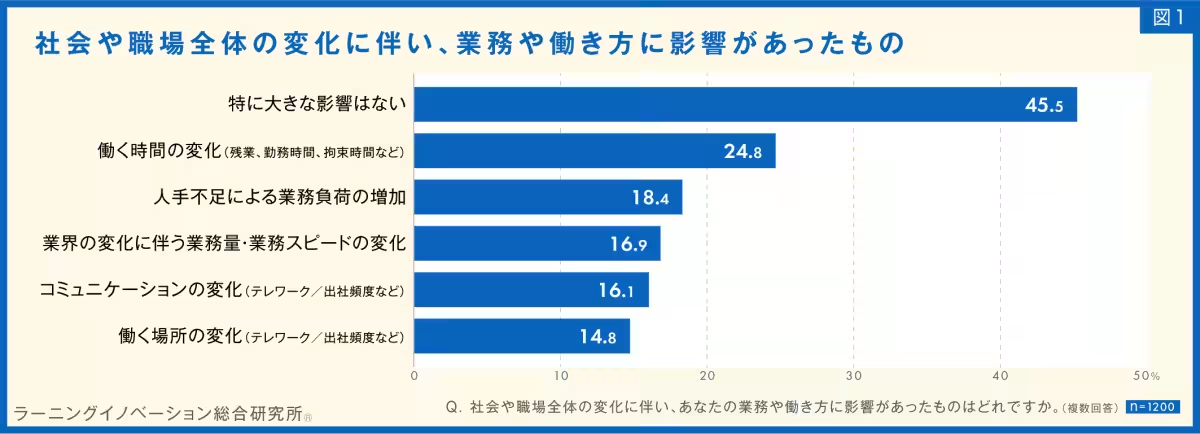
1. Impact of Social Changes on Work Dynamics: Approximately 45.5% of respondents reported feeling no significant impact from societal changes on their work conditions. The predominant change observed was related to altered working hours (24.8%).
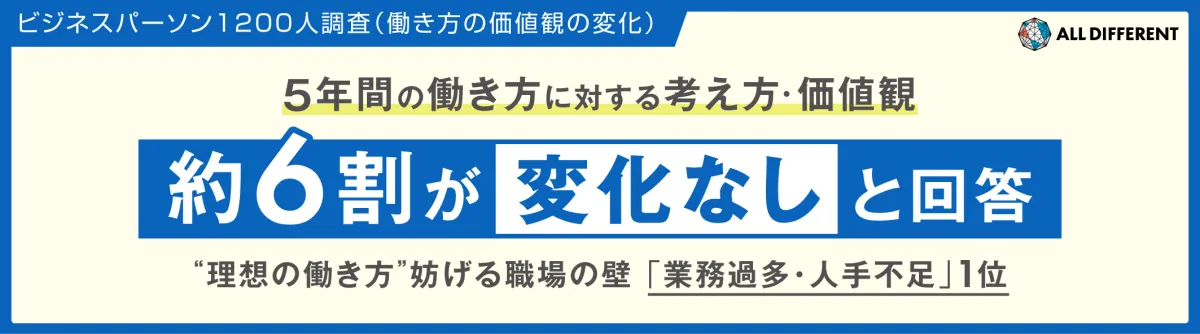
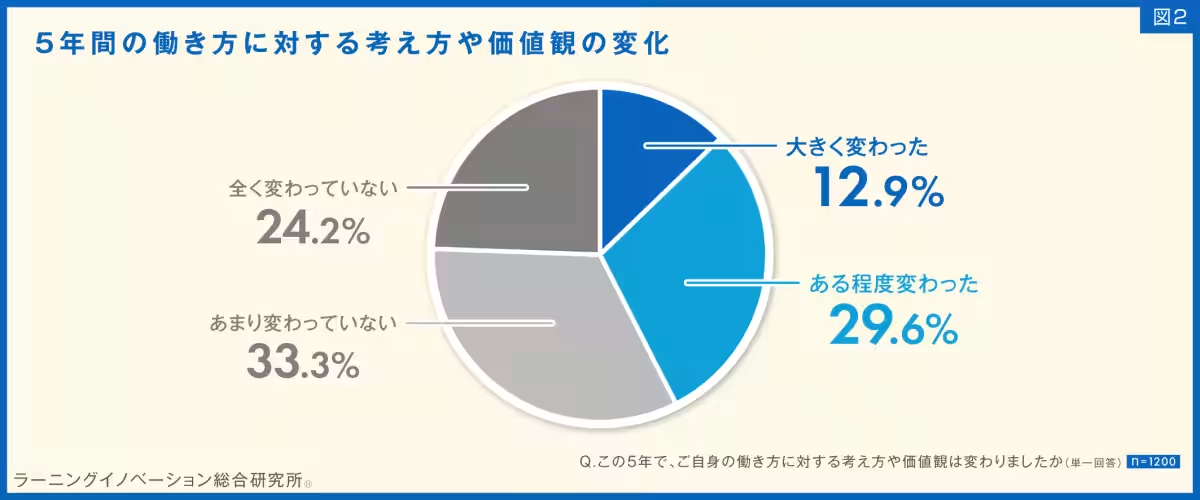
2. Changes in Attitudes Towards Work Over Five Years: About 40% of the respondents indicated that their attitudes towards work have changed, while around 60% felt they remained the same.
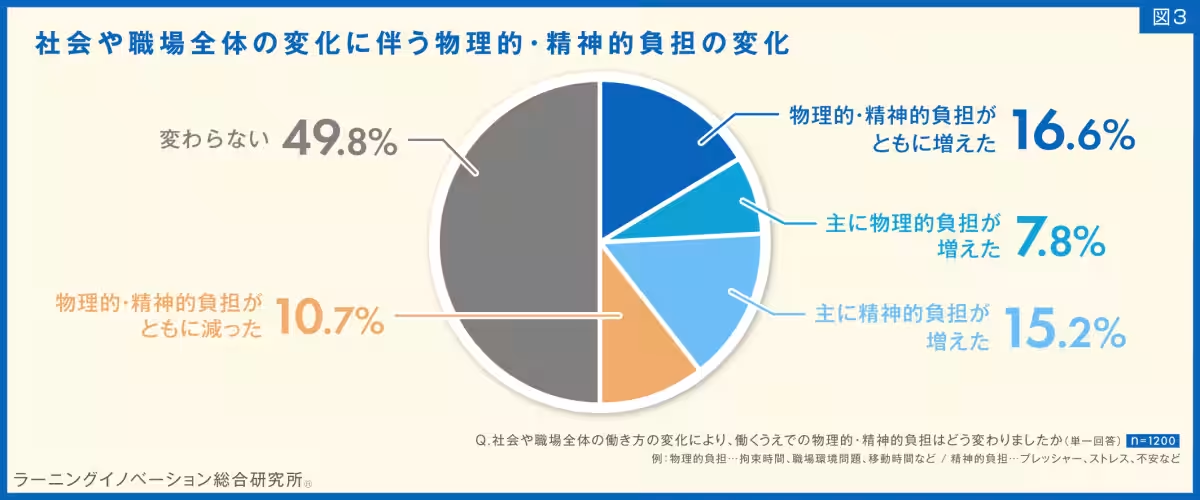
3. Perceived Physical and Mental Burdens: Close to half reported unchanged burdens, whereas about 40% observed an increase.
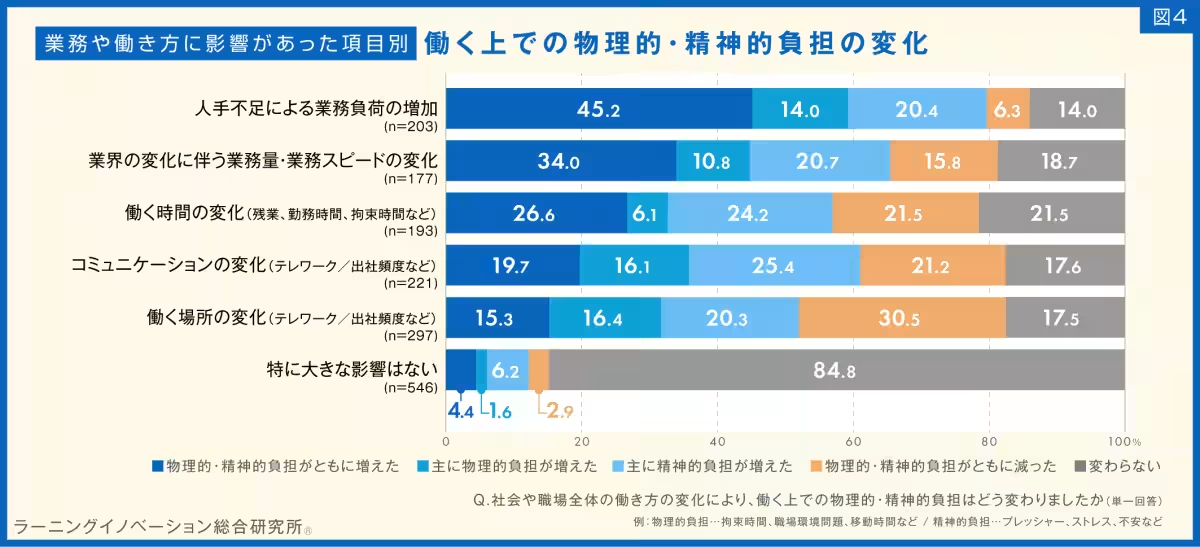
4. Workload and Labor Shortages: Nearly 80% of those who experienced increased workloads attributed this to labor shortages, noting greater physical and mental burdens.
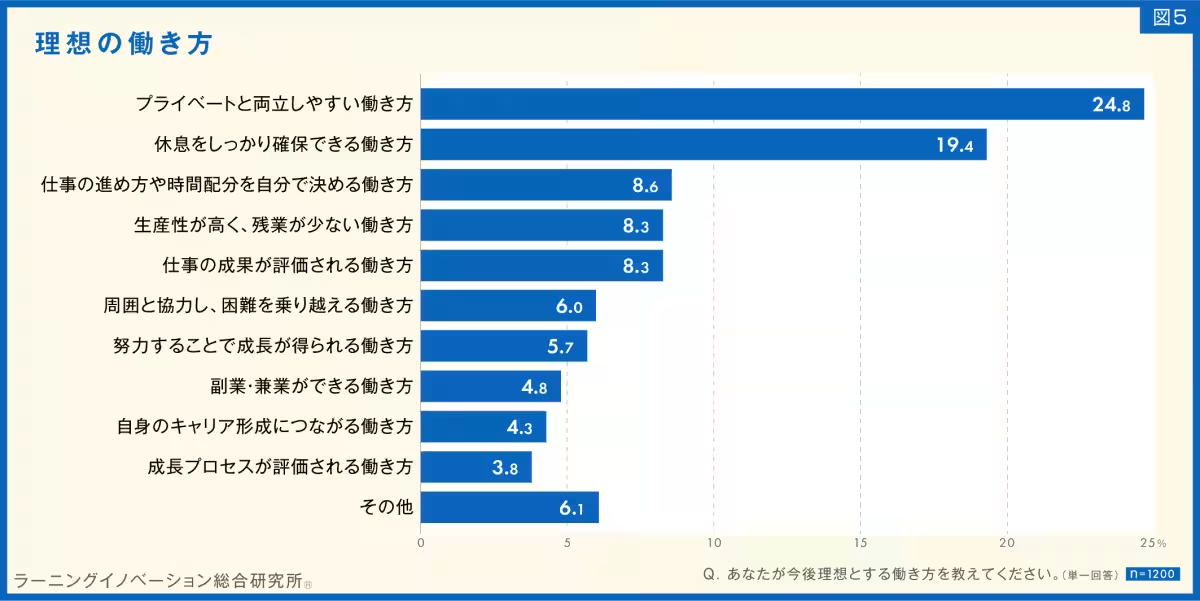
5. Ideal Work Styles: The top choice for an ideal work style was one that promotes better work-life balance, with about 25% of respondents favoring this option.
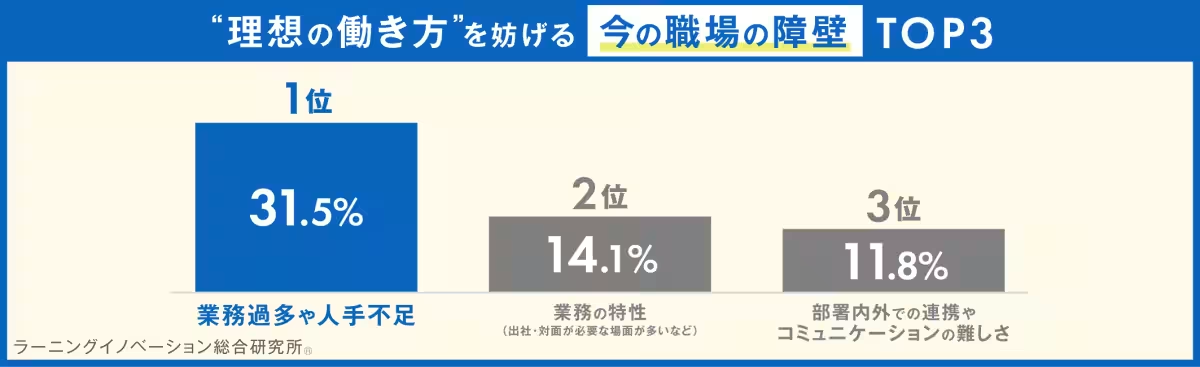
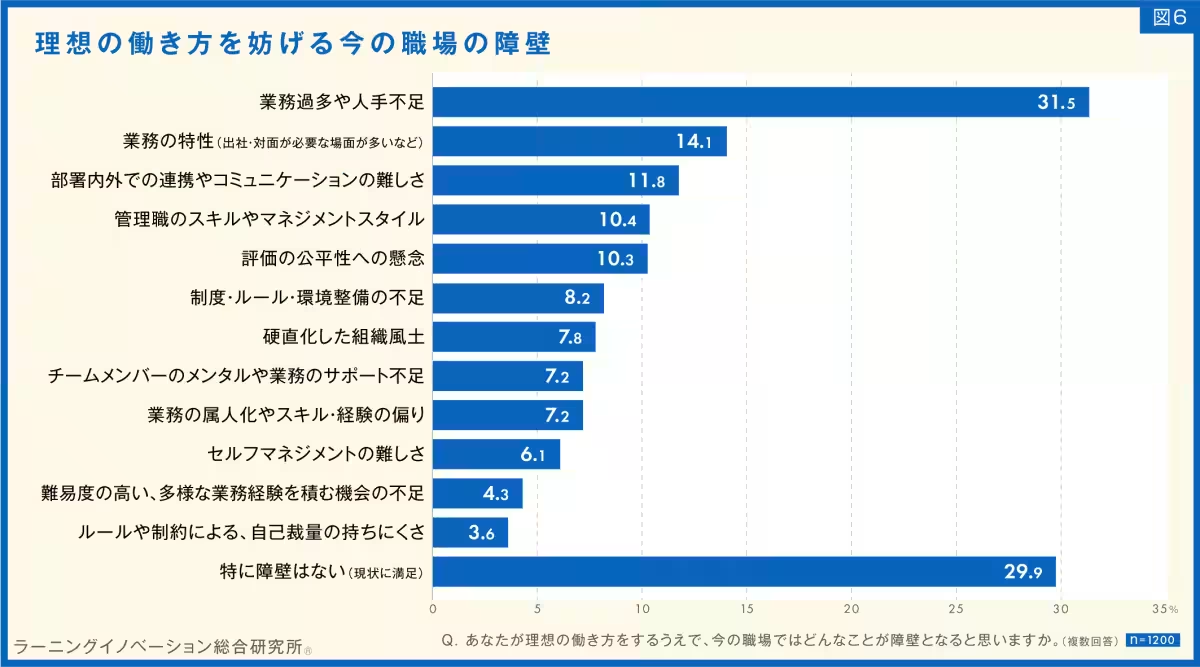
6. Barriers to Achieving Ideal Work Styles: The two major obstacles identified were excessive workloads and labor shortages (31.5%).
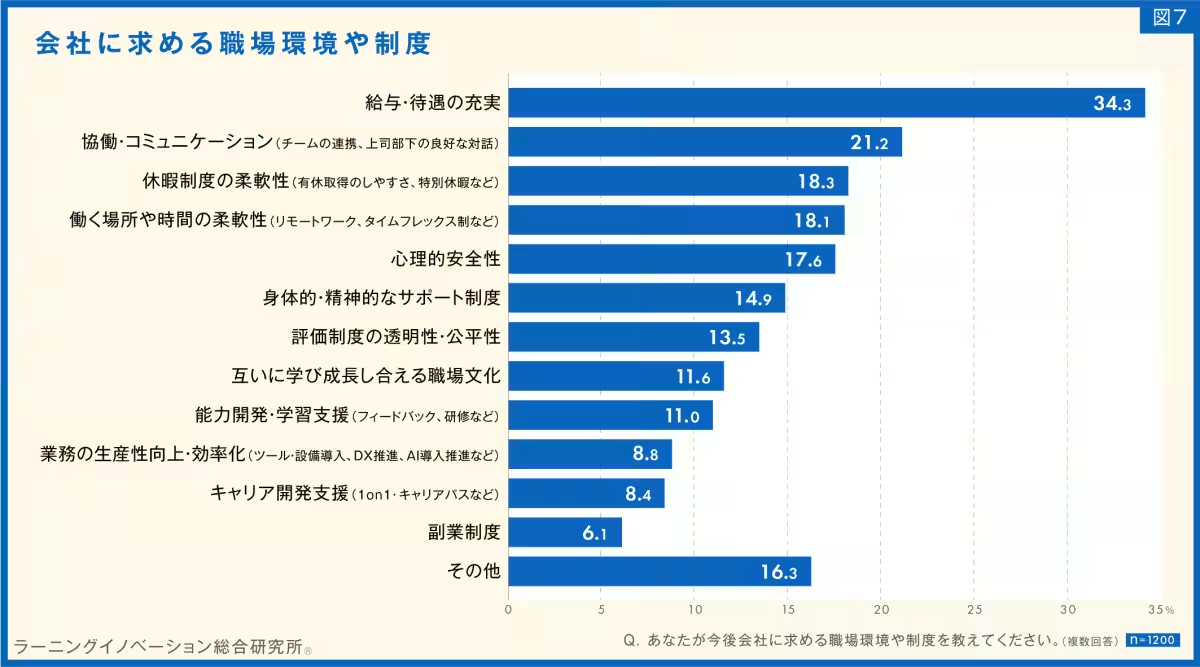
7. Workplace Environment Expectations: Most respondents indicated a hope for better salaries and benefits (34.3%) in their workplace environment.
Detailed Analysis
1. Remarkable Stability in Work Attitudes
Despite significant legislative changes, a large portion of respondents (45.5%) felt that their job conditions remained unaffected. The most notable changes were related to working hours, highlighting a shift towards more structured work time management even if some employees feel the core of their work hasn't changed much.
2. Attitudes Towards Work: A Mixed Response
The survey reveals a notable divide in how business professionals assess their evolving work attitudes. Around 40% acknowledged changes over the last five years, indicating a shift in personal values concerning work ethics and responsibilities. Yet, a significant majority, highlighting a potential status quo bias, felt their values remained stable, suggesting that transitioning workplace reform may not be uniformly impactful.
3. Perceptions of Work-Related Stress
Interestingly, half of the survey respondents felt their work-related stress remained unchanged. Notably, around 40% expressed that both physical and mental burdens had increased, a significant observation considering Japan's current labor crisis. The implications of labor shortages are evident as they correlate with mounting workloads and decreasing job satisfaction for many.
4. The Impact of Labor Shortages on Job Stress
The stress stemming from increased workloads due to labor shortages was prevalent among respondents, with almost 80% feeling higher physical or mental stress. This underlines the critical challenge organizations face in managing human resources effectively.
5. The Pursuit of Work-Life Balance
Interestingly, the ideal work preference of many respondents leaned heavily towards a better work-life balance. This indicates a generational shift in focus towards personal time and fulfillment, reflecting notable changes in expectations for modern work environments.
6. Barriers to Achieving Work-Life Integration
With challenges identified in achieving ideal work styles, excessive workloads and labor shortages stood out as critical barriers, emphasizing the need for organizations to reassess workload management and recruitment strategies.
7. Desires for Enhanced Workplace Conditions
As expectations for workplace environments evolve, the call for improved salaries and benefits significantly resonates with employees, highlighting economic concerns in the face of rising living costs.
Conclusion
The findings from this survey not only highlight the perceived stability in work attitudes but also indicate that significant gaps remain between current work experiences and ideal work situations for many professionals. The stark difference between the seen impact of reforms and the reality of workplace stress signifies an urgent need for organizations to adapt their approaches to staff welfare.
As companies prioritize job satisfaction and the reduction of burdens, a dual focus on adopting more flexible work policies and enhancing employee support systems ought to be a fundamental strategy moving forward. Only through comprehensive engagement can companies thrive in retaining talent and recognize the true potential of their workforce.


Topics People & Culture)






【About Using Articles】
You can freely use the title and article content by linking to the page where the article is posted.
※ Images cannot be used.
【About Links】
Links are free to use.