


Insights from the Recent Study on Children's Reading Habits in Japan
Insights from the Recent Study on Children's Reading Habits in Japan
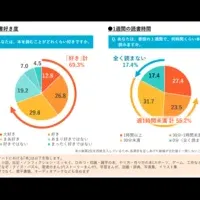
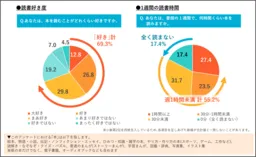
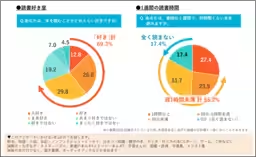
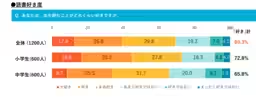
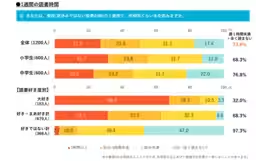
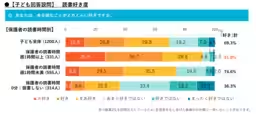
A recent survey conducted by the Hakuhodo Institute of Education analyzed the reading behaviors of Japanese elementary and junior high school students. The study highlights a clear divide between children's love for books and their corresponding reading time. While a remarkable 69.3% of the students surveyed expressed a fondness for reading, their actual reading habits paint a different picture.
Key Findings
According to the survey, 17.4% of students reported not engaging in any reading each week, and an additional 55.2% stated they read for less than one hour a week. Altogether, this indicates that about 72.6% of children are reading very little despite their professed love for literature. This disparity raises vital questions about the factors influencing reading habits among young learners.
Enjoyment Versus Action
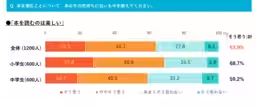
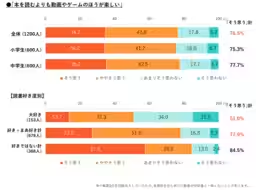
A notable aspect of the study is that 63.9% of students found reading enjoyable. However, an even higher percentage, 76.5%, believed that activities such as watching videos or playing games were more fun than reading books. This suggests that, while the enjoyment of reading is acknowledged, modern forms of entertainment might overshadow traditional reading.
Reasons for Loving Books
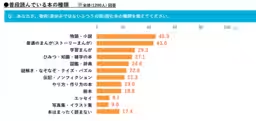
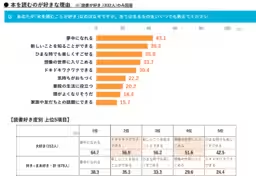
Students who love reading mentioned that they enjoy becoming absorbed in stories or learning new things as their top reasons. The survey revealed that 45.3% of children favor reading stories and novels, while 43.6% prefer comic books. Interestingly, the reasons for enjoying reading varied among different age groups. Young readers cited immersion in stories and excitement, while older students tended to appreciate the knowledge gained from books.
Exposure to Reading Materials
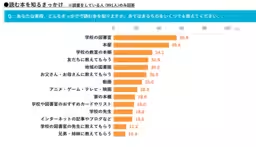
The pathways through which children discover new books have diversified tremendously. Traditionally, libraries and bookstores were the primary venues, but contemporary influences include media formats such as videos, animations, games, television, and the Internet. The survey indicated that 55.5% of students were introduced to reading materials through school libraries, while 48.6% frequented bookstores. A significant 25% noted that multimedia content sparked their interest in reading.
The Role of Parents in Cultivating Reading Habits
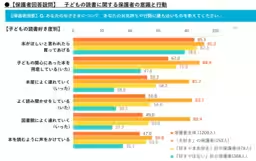
The influence of parental reading habits looms large over children's own reading interests. The study found that in households where parents read for at least one hour a week, 91.8% of children indicated they liked reading. If parents actively participate in reading practices—such as providing books aligned with their children's interests or taking them to libraries—their children's inclination towards reading tends to be higher. This connection emphasizes the crucial role parents play in shaping their children’s literary engagements.
Schools as a Reading Safety Net
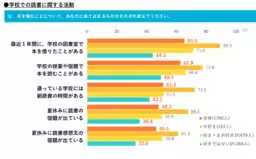
Remarkably, schools provide essential opportunities for children who may not otherwise engage with books. The survey highlighted that even students less inclined toward reading find value in school-related reading assignments. About 65.5% of students had borrowed books from school libraries, and more than 50% had reading periods incorporated into their school schedules. For some students, these school environments serve as vital connections to literature that may be lacking at home.
Conclusion
The findings from this extensive survey reveal a complex landscape of children's reading habits in Japan. Although the majority express a love for reading, their actual practice may fall short due to competitive alternatives for entertainment and insufficient engagement facilitated by external environments. The insights underscore the necessity for parents, educators, and communities to collaborate in fostering a culture that inspires children to cultivate meaningful reading habits in today’s digital world.
About the Study
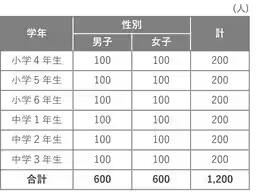
This national survey, targeting 1,200 elementary and junior high school students, was conducted online and involves comprehensive data analysis performed by the Hakuhodo Institute of Education’s Children's Research Center. The survey serves as a critical probe into understanding the current state of children's reading habits in an increasingly digital landscape.
Overall, the study serves as a pivotal reminder of the need to nurture children's literary interests while adapting to the evolving cultural context.
Topics People & Culture)


【About Using Articles】
You can freely use the title and article content by linking to the page where the article is posted.
※ Images cannot be used.
【About Links】
Links are free to use.