



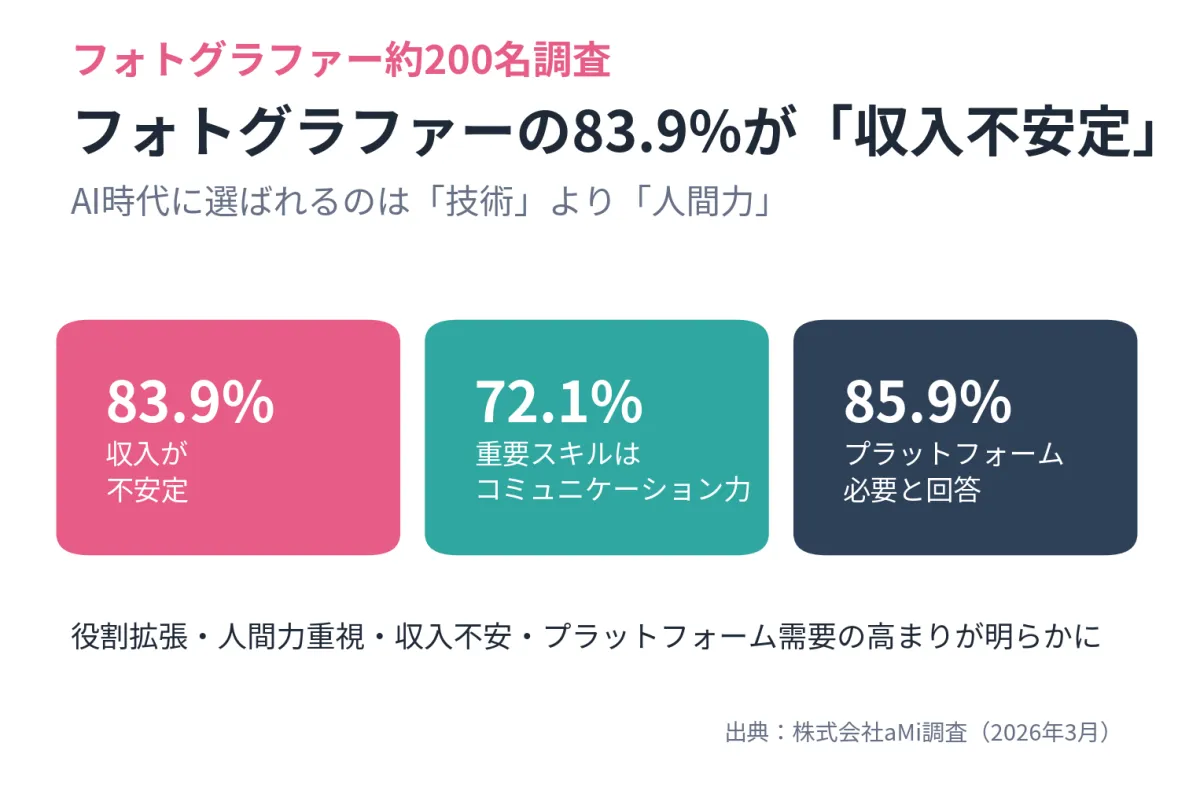
Survey Reveals 83.9% of Photographers Facing Income Instability in AI Age
Survey Highlights Photographers' Income Instability in AI Era
In a recent survey conducted by aMi, a company running the photographer matching platform AMI PHOTO, nearly 83.9% of the 200 professional photographers surveyed reported feeling instability in their earnings. The study sheds light on the evolving role of photographers in today’s digital and AI-driven landscape.
Key Findings
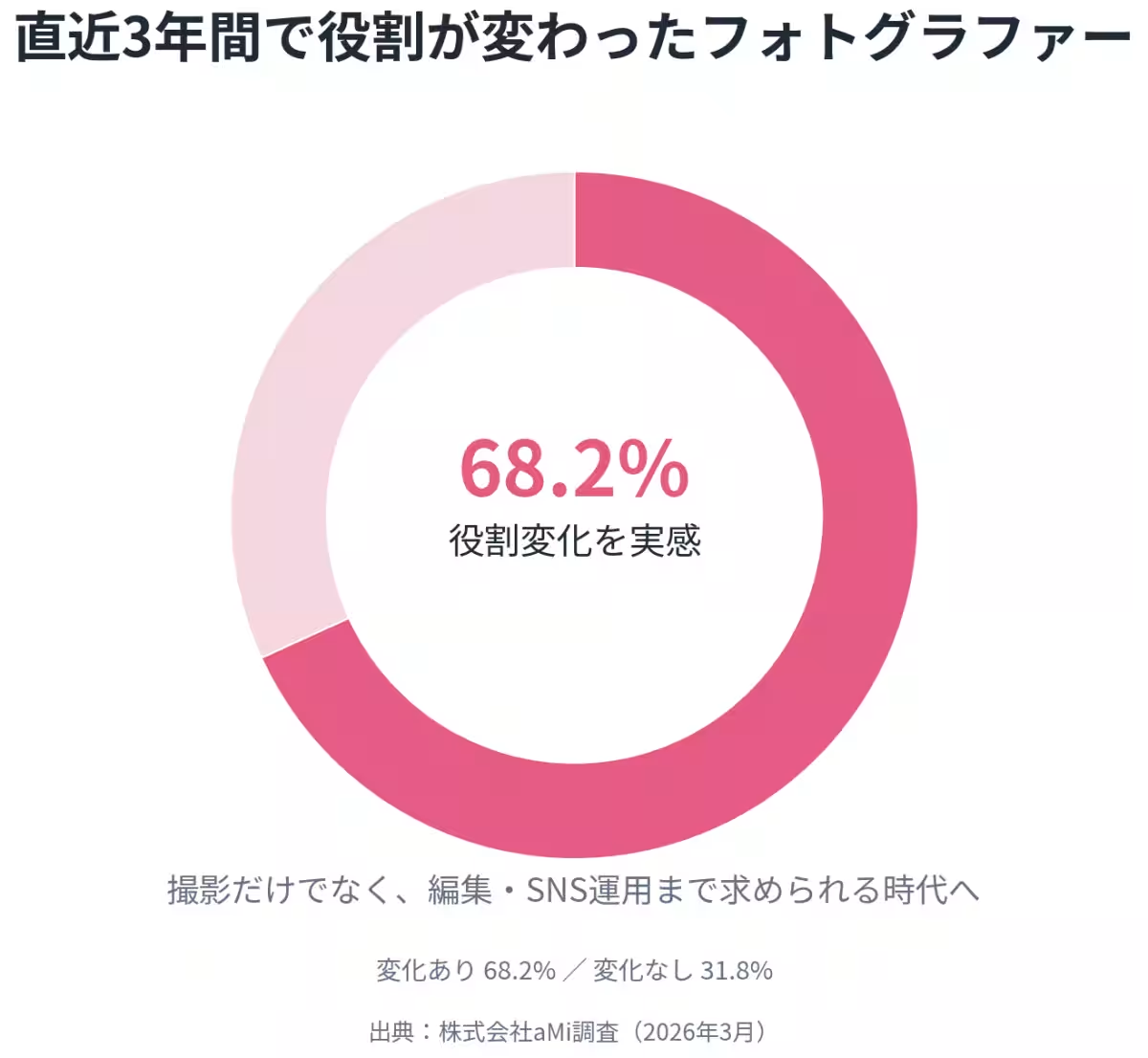
- - Changing Roles: Approximately 70% of photographers have sensed a significant shift in their professional roles over the last three years. Not only are they required to capture images, but they are also increasingly tasked with editing and managing social media channels—shifting from a narrow focus on shooting to a broader skill set.
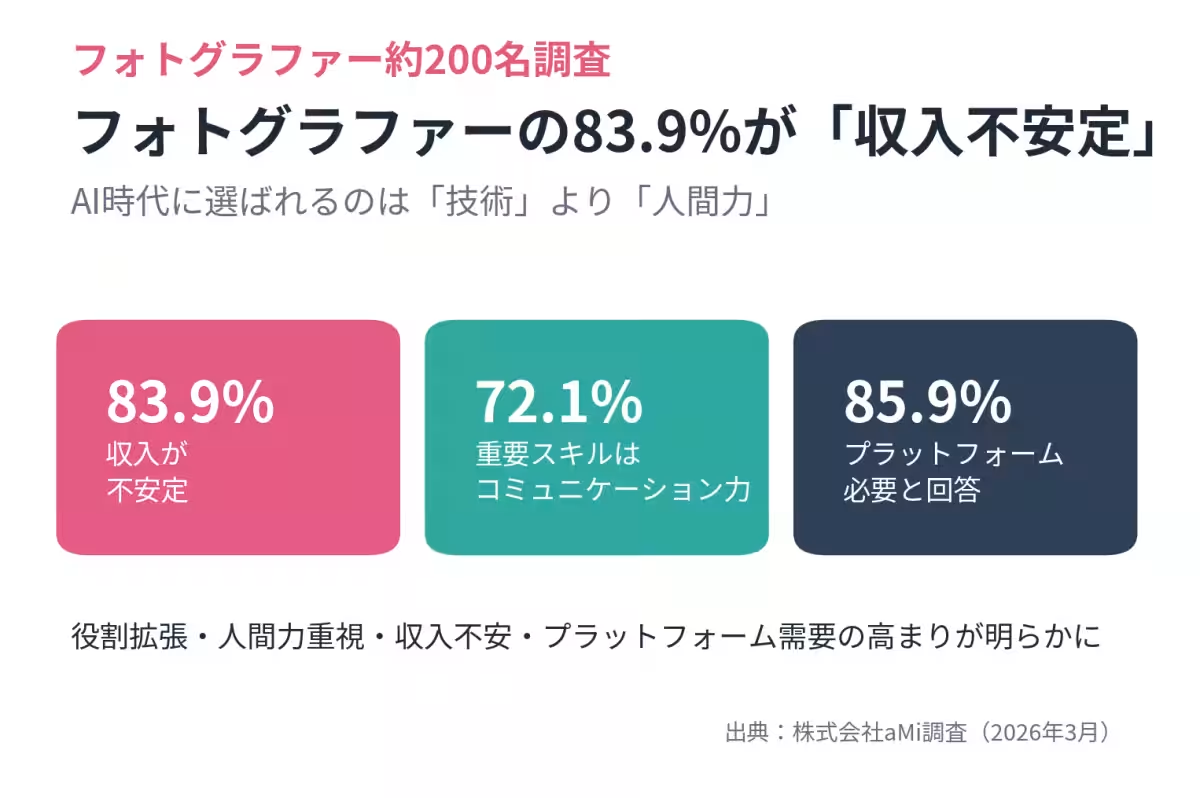
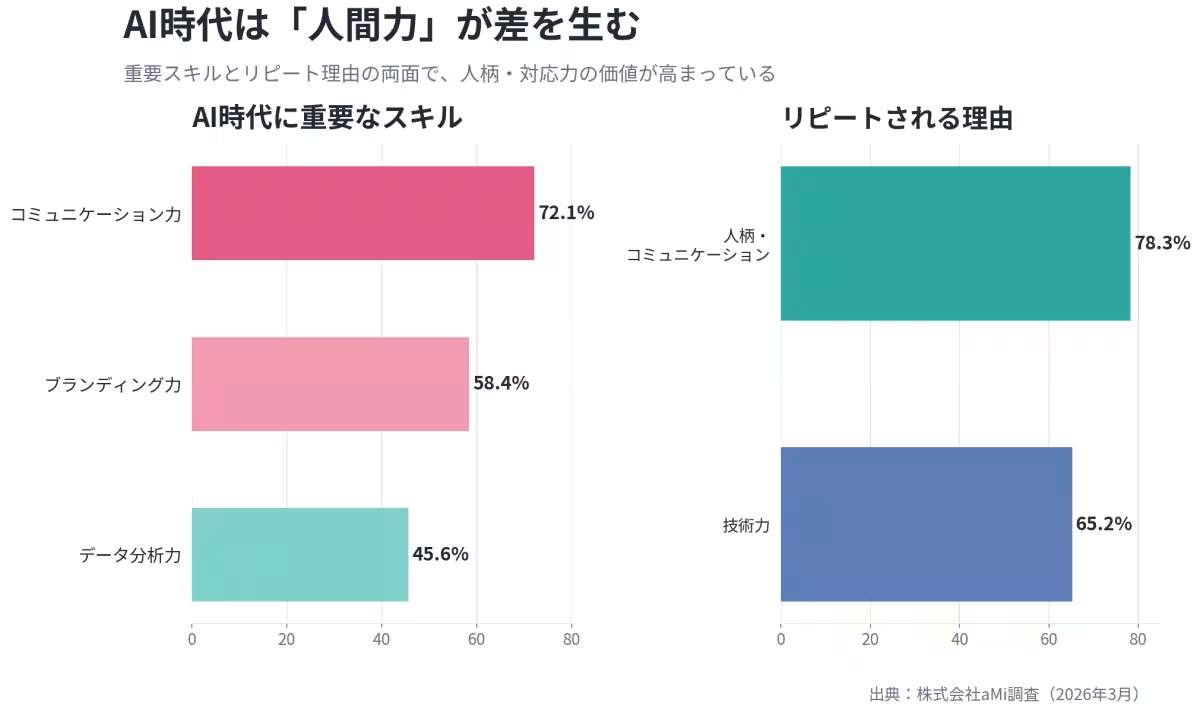
- - Importance of Human Skills: In this new age, strong communication skills have emerged as the most critical asset, with 72.1% of photographers highlighting it over technical abilities. The ability to connect with clients is becoming essential, replacing purely technical skills as the deciding factors in client retention.
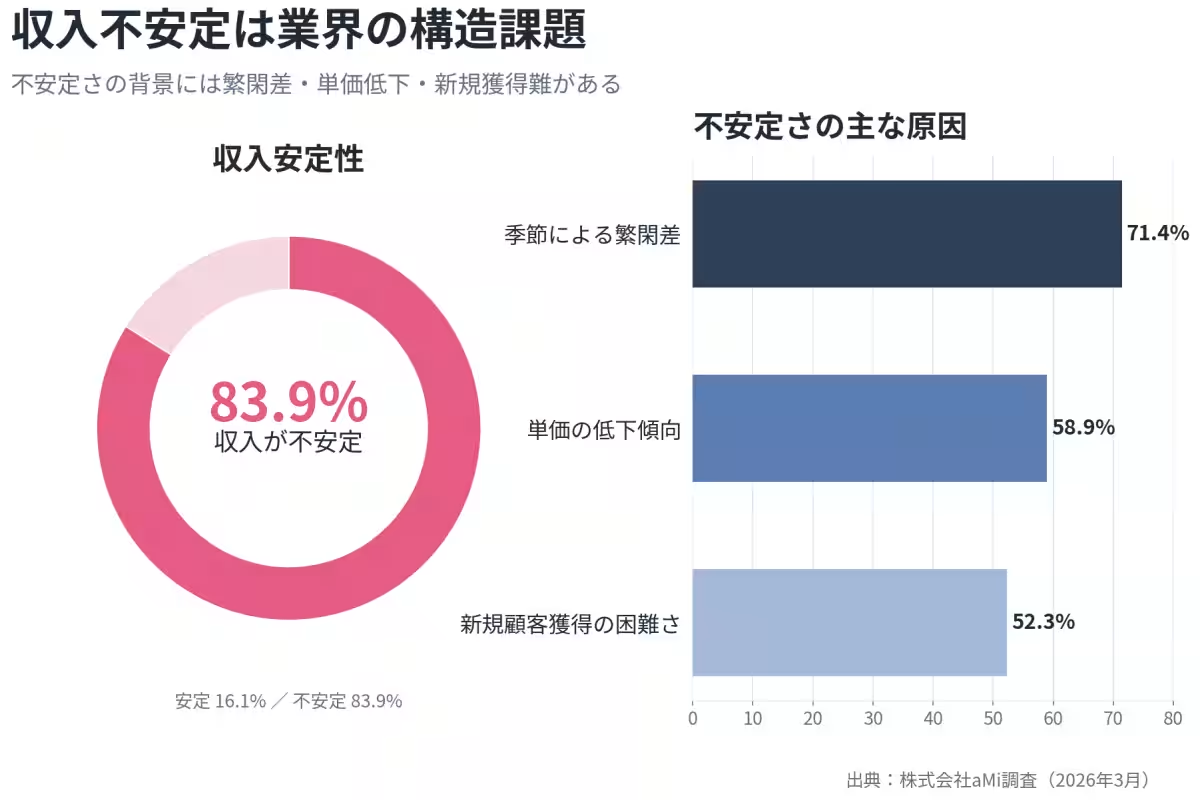
- - Income Concerns: The survey revealed that an overwhelming 83.9% of photographers feel their earnings are unstable. Key reasons for this instability include seasonal fluctuations in demand, a decline in pricing, and difficulties in acquiring new clients.
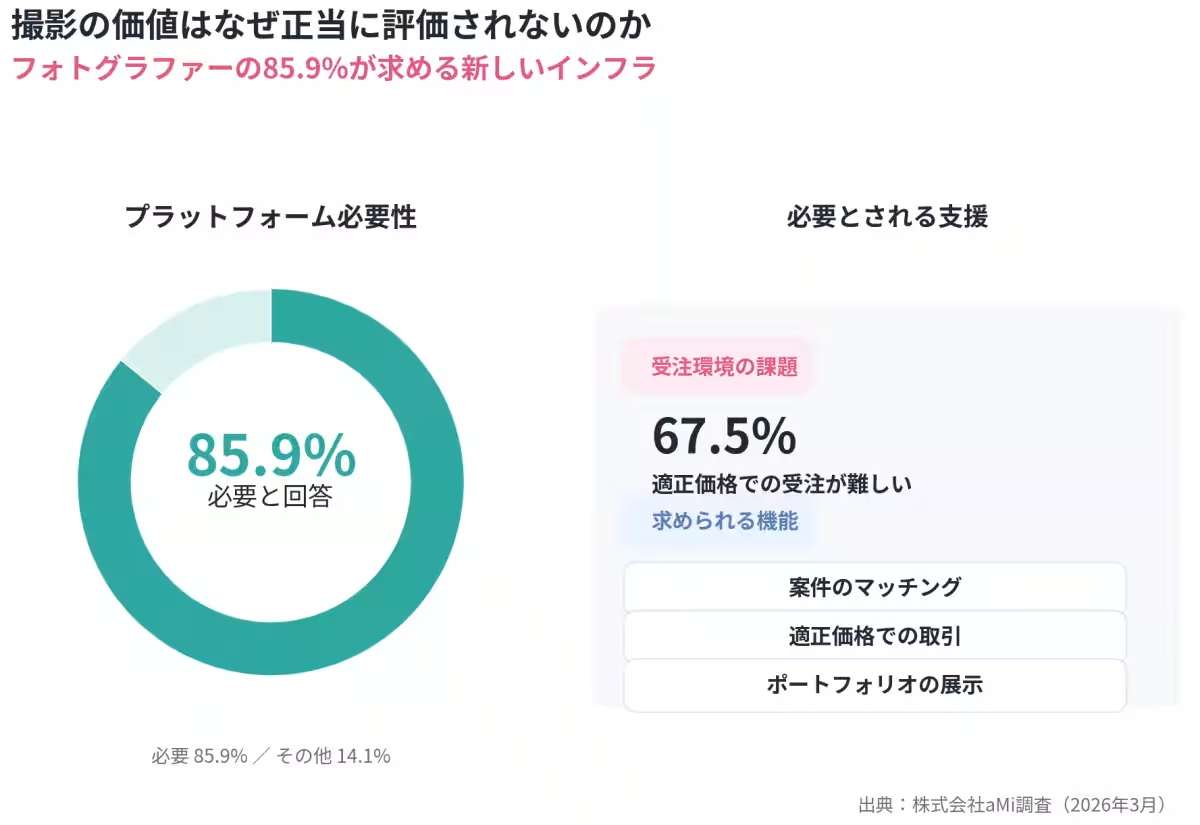
- - Need for Support Platforms: Furthermore, 85.9% of photographers acknowledged the necessity of supportive platforms, primarily for job matching, fair pricing, and portfolio displays, underlining their need for a cohesive system to navigate their careers effectively.
Why This Survey Matters
With the rapid evolution of generative AI and the increasing demand for social media and video content, the expectations placed upon photographers have dramatically transformed. Beyond simply mastering technical skills, photographers today must exhibit adaptability, relationship-building capabilities, and value-added experiences that cannot easily be replicated by machines. This survey aims to capture the essence of how professional photographers perceive their value and what kind of support they find most beneficial in this shifting landscape.
Detailed Findings
Changing Responsibilities
The survey indicates that the role of photographers has expanded significantly. A noteworthy 68.2% reported that they are now being asked to manage not only shooting but also editing and their social media presence. This change signifies that the traditional skill set of photography is morphing in response to contemporary demands.
Human Element as a Competitive Edge
In the age of AI, human interpersonal skills are proving to be invaluable. Among the skills surveyed, communication prowess holds the highest priority for 72.1% of respondents, followed closely by branding prowess and data analysis. It’s interesting to note that clients cite personal qualities and relationship skills (78.3%) as the leading reason for returning to the same photographer, surpassing technical skill assessments (65.2%). This trend illustrates an industry-wide recognition that building trust remains irreplaceable.
Income Stability Issues
The results highlighted a concerning reality for photographers: a staggering 83.9% admitted to feeling income instability. The primary contributors to this insecurity included seasonal demand fluctuations, declining prices for services, and challenges in attracting new clients. Clearly, these financial setbacks reflect broader economic realities impacting the freelance landscape.
Desire for Enhanced Platforms
An overwhelming majority, 85.9%, expressed that they believe a supportive photographer platform is imperative. They particularly emphasized the necessity for features that aid in job matching, equitable pricing negotiations, and a space to showcase their portfolios. This need points toward a desire for systems that more justly connect photographers with clients and simplify their operational burdens.
Value Recognition Dilemma
The survey's findings also illuminate a struggle within the photography profession: although most photographers comprehend the value they provide, 67.5% still find it challenging to receive fair compensation for their work. This misalignment indicates a pressing need for infrastructures that integrate fair evaluation and sustainable transactions.
A Vision for the Future
Yuka Fujii, CEO of aMi, acknowledged the shifting landscape and commented on the necessity of adapting to AI's advancements. She emphasized that while the tangible outcomes of photography may be changing in valuation, the roles demanding emotional intelligence, adaptability, and relationship management are expanding.
AMI PHOTO, with its comprehensive ecosystem, aims to redefine the photograph's role within the societal infrastructure by easing the operational burdens on photographers so they can focus on what they do best—creating stunning visuals and meaningful experiences for clients.
Conclusion
This survey underscores the dual challenges of increasing complexity in professional roles and income instability facing the photography industry today. The findings highlight the pressing need for mechanisms that facilitate fair evaluations and create sustainable business practices for photographers. AMI PHOTO is committed to improving the market landscape and ensuring that each photographer’s skillset is justly recognized and rewarded.
About AMI PHOTO
AMI PHOTO is a platform designed to connect photographers globally, enabling them to thrive regardless of their local networks. It addresses structural issues that have historically kept talented photographers from accessing opportunities and fair compensation. Through streamlined processes from project matching to delivery, AMI PHOTO strives to empower photographers to focus on their creative crafts without administrative distractions, revolutionizing the photography experience for both creators and clients.
For more information, visit AMI PHOTO or contact:
Company: aMi
Location: Setagaya, Tokyo, Japan
CEO: Yuka Fujii
Founded: October 2014
Contact: [email protected] | 080-9422-2580
Topics Other)







【About Using Articles】
You can freely use the title and article content by linking to the page where the article is posted.
※ Images cannot be used.
【About Links】
Links are free to use.