



Exploring the Future of Education with AI: Training for Chiyoda Teachers
Event Report: Advancing Educational AI
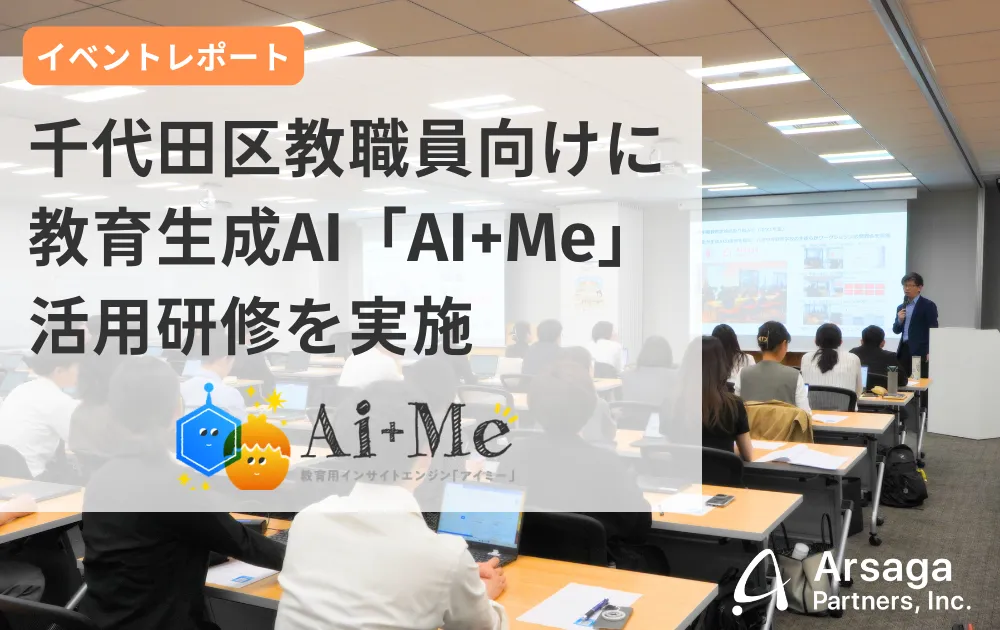
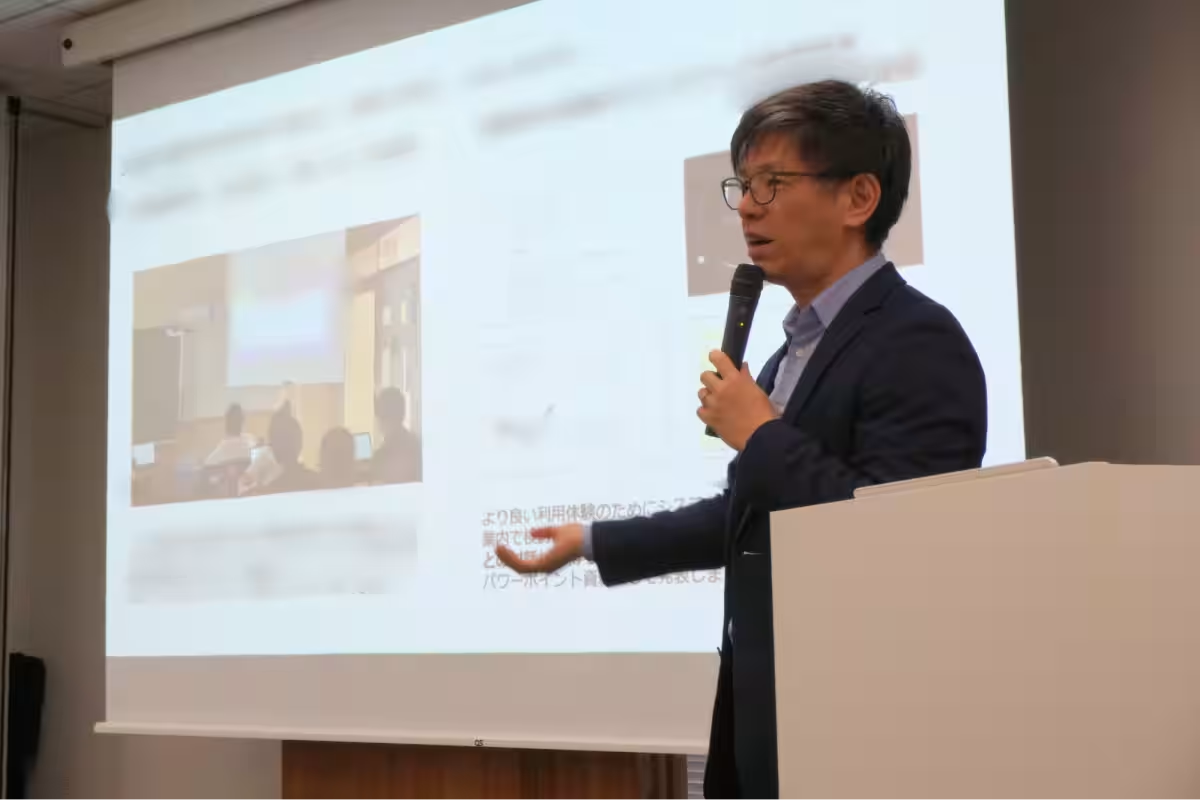
In a bid to promote digital transformation in education, Al Saga Partners conducted a specialized training session for teachers in Chiyoda Ward, focusing on their generative AI platform, AI+Me. The training's central theme revolved around the implications of generative AI in the educational environment, tackling not only the challenges of its integration but also ways to enhance administrative efficiency alongside inquiry-based learning.
The training targeted newly appointed and transferred teachers in Chiyoda Ward, aiming to introduce the next generation of learning methodologies and improve AI literacy in the field. Built on a foundation developed in conjunction with Kudan Junior High School, the AI+Me platform leverages the otomotto system to tailor educational experiences. This innovative approach has garnered significant recognition, including accolades from the Minister of Education and a distinguished award at the Generative AI Awards.
This report will capture the discussions on “The Future of AI and Education” that transcended mere tool usage.
Speaker Introduction
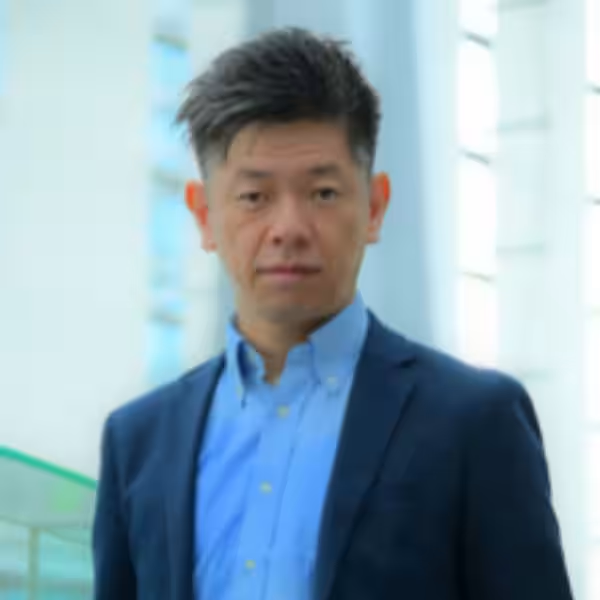
Shinji Ito – Al Saga Partners
Shinji Ito, leading the new business division at Al Saga Partners, began his career in the entertainment industry and has been deeply involved in visualizing customer insights through big data. He was a key player in launching the karaoke SNS UtaSuki JOYSOUND in 2006, and later developed the world's first music preference data visualization service. His role at Al Saga has focused on liaising with enterprises and public institutions.
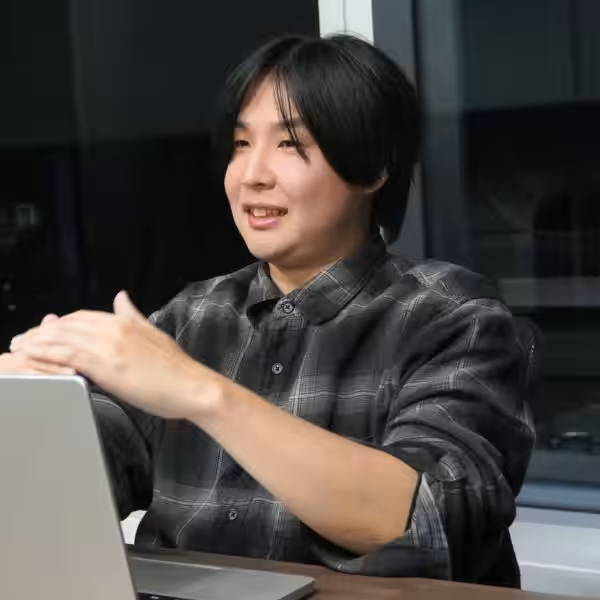
Keigo Nakatsu – Development Engineer for AI+Me
Keigo Nakatsu joined Al Saga Partners in 2023, bringing experience from a previous venture in developing large-scale network and mobile communication infrastructure. He now leads the development of an AI assistant for major real estate firms and spearheads AI chat development projects tailored for educational institutions in the Chiyoda area.
Addressing Barriers to AI Integration in Schools
At the outset, Ito addressed the three barriers that hinder the adoption of generative AI in schools, emphasizing the need for a safe environment to utilize AI tools effectively. The barriers are:
1. Compliance with Guidelines: He discussed the importance of staying updated with government and educational guidelines that shape the design philosophy of the AI platform.
2. Data Privacy Protection: Ito emphasized that unlike generic AI services, the data input into AI+Me remains secure and is not utilized for third-party AI retraining.
3. Policy Violation Visibility: The system is designed to not only block inappropriate queries but also allow administrators to monitor potential violations, facilitating early intervention for students who may need support.
Unique Features of AI+Me and Hands-On Demonstration
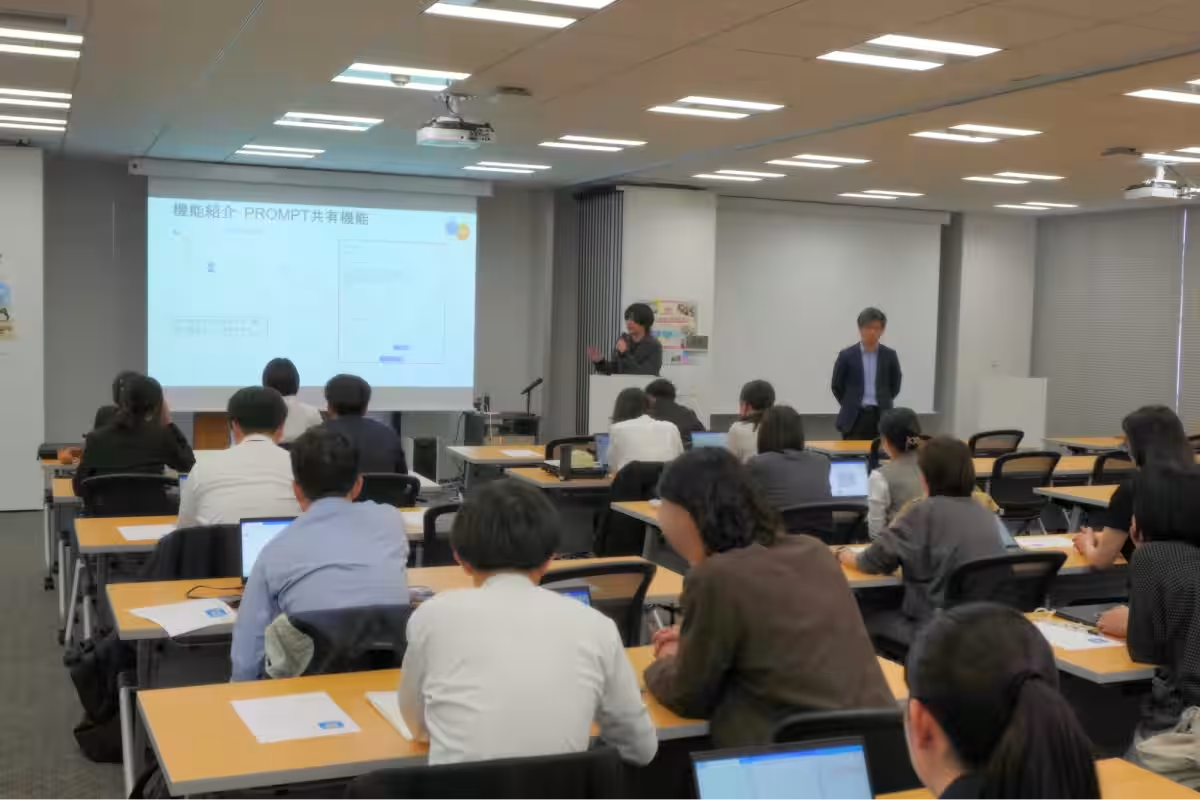
Ito also elaborated on unique features developed from feedback within educational settings and Nakatsu provided a hands-on demonstration. Among the functionalities highlighted were:
- - LLM Comparison Tool: This feature allows students to compare responses from multiple AI models like GPT and Claude, encouraging critical thinking and self-judgment about the validity of information.
- - Prompt Sharing Function: This function enables teachers to share effective prompts and make AI usage more accessible, fostering a collaborative learning environment.
- - Discussion Feature: Instead of providing direct answers, the AI facilitates group discussions, enhancing critical thinking without stifling students’ thought processes.
Q&A Session with Participants
During the hands-on session, participants engaged in an active Q&A. Questions included:
- - Can students use voice input for the discussion feature? Currently, only text input is supported due to the complexity of accurately identifying speakers in voice chats.
- - Is image or video creation possible? While image generation can be performed, video creation remains under consideration due to cost and educational effectiveness evaluations.
- - Is student data safe within the system? While the system is designed to secure data, schools are advised against using sensitive personal information to maintain governance.
Conclusion: Towards AI as Educational Infrastructure
In closing, Ito posed a reflective question: “How would you respond if a student submitted an essay written by AI?” He likened the transition to generative AI to the historical shift from horse-drawn carriages to automobiles, advocating for the creation of frameworks that ensure safety and accessibility.
He expressed a vision where AI becomes as integrated into society as water supply systems, urging educators to collaboratively explore effective AI usage. Al Saga Partners continues to offer workshops and training to enhance AI literacy among educators, catering to those seeking to understand and implement AI in the classroom effectively. Teachers interested in these initiatives are encouraged to reach out for more information through provided contact channels.
Related Press Release
- - Al Saga Partners Supports the Implementation of AI+Me in Kinjo Gakuin High School
- - All public elementary and middle schools in Chiyoda will sequentially implement AI+Me starting Fall 2025.
Al Saga Partners, headquartered in Shibuya, Tokyo, specializes in providing comprehensive digital transformation solutions spanning consulting, system development, maintenance, and operations. The company embraces a mission of delivering value through innovative thinking and logical foundation, effectively addressing a variety of industry challenges.

Topics Other)
【About Using Articles】
You can freely use the title and article content by linking to the page where the article is posted.
※ Images cannot be used.
【About Links】
Links are free to use.