



Exploring the Four Key Risks of Cryptocurrency Through ERM Insights
Understanding Cryptocurrency Risks from an ERM Perspective
Cryptocurrency has become a buzzword, often evoking mixed feelings among potential investors. Many individuals associate it with volatility and a sense of distrust. However, an informed understanding of the risks can lead to better investment strategies. To shed light on these issues, we conducted an in-depth interview with Professor Tsutomu Chano, a risk management expert from Musashi University. He provided a thorough examination of the four primary risks related to cryptocurrency.
The Four Primary Risks
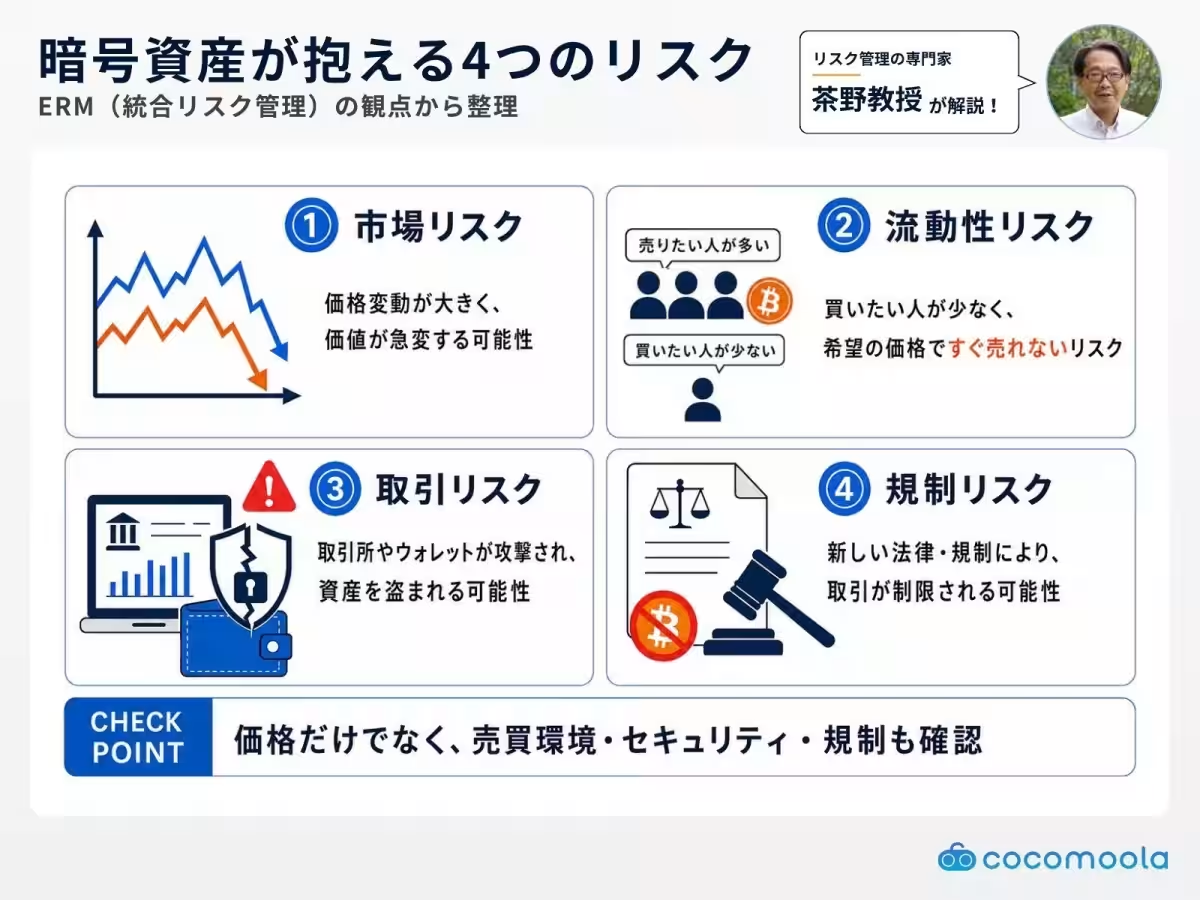
According to Professor Chano, cryptocurrencies pose four main risks:
1. Market Risk: This encompasses the inherent volatility in cryptocurrency prices. The potential for rapid price changes can lead to significant financial losses if not managed properly.
2. Liquidity Risk: This risk arises when investors want to liquidate their assets but find it difficult to do so swiftly. Certain cryptocurrencies may have limited market activity, making it challenging to sell at a desired price point.
3. Transaction Risk: As cryptocurrency exchanges and wallets remain targets for cyberattacks, the risk of losing assets due to a breach is considerable. Ensuring the safety and security of transactions is vital for investors.
4. Regulatory Risk: With rapidly changing legal frameworks governing cryptocurrencies, there is a risk that new regulations could restrict trading or impact asset values in unforeseen ways.
Investors often focus solely on price movements, but Professor Chano emphasizes the importance of evaluating liquidity, transaction security, and regulatory landscapes as integral components of risk management.
The Importance of Terminology
During the interview, Professor Chano highlighted the importance of referring to digital currencies as
Topics Other)
【About Using Articles】
You can freely use the title and article content by linking to the page where the article is posted.
※ Images cannot be used.
【About Links】
Links are free to use.