



Okayama University Launches Helium Recovery Initiative with Local Institutions
Helium Recovery Initiative Launched by Okayama University
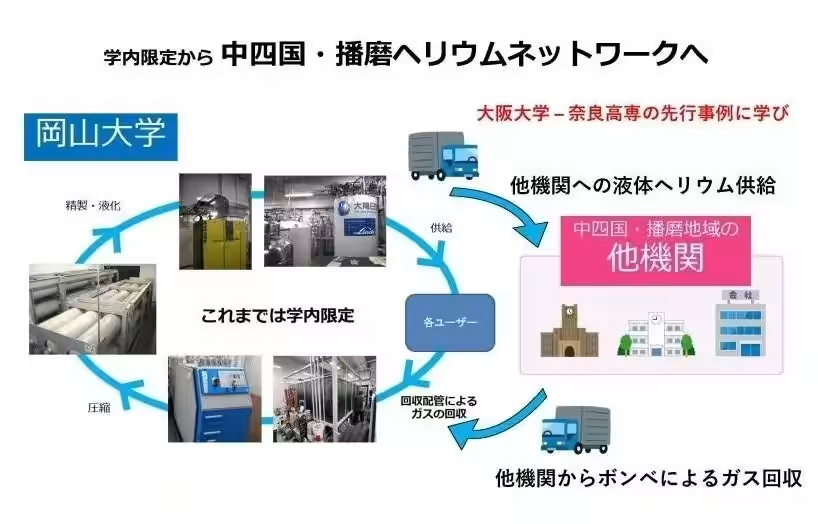
In a significant effort to advance helium recycling capabilities, Okayama University has commenced a collaborative project with several local institutions, including Yonago National College of Technology, Tottori University, and Tokushima University. This initiative is part of a broader network called the Chugoku-Shikoku-Harima Helium Recycling Network (commonly known as HeReNet) aimed at enhancing regional research collaboration and sustainability.
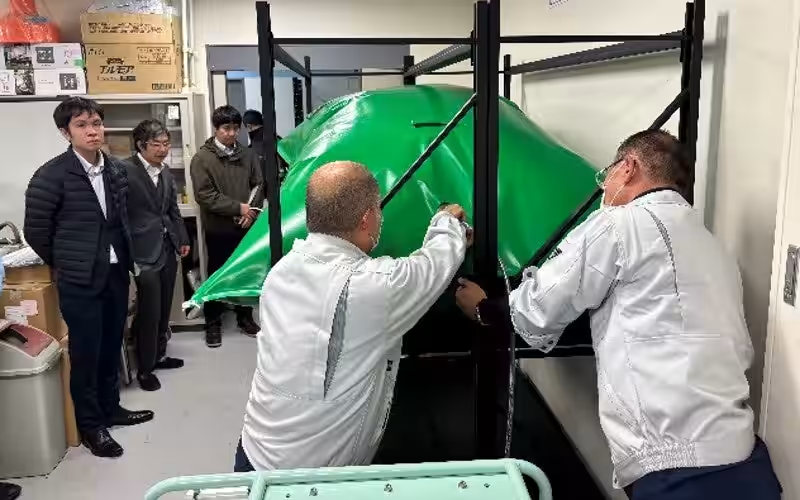
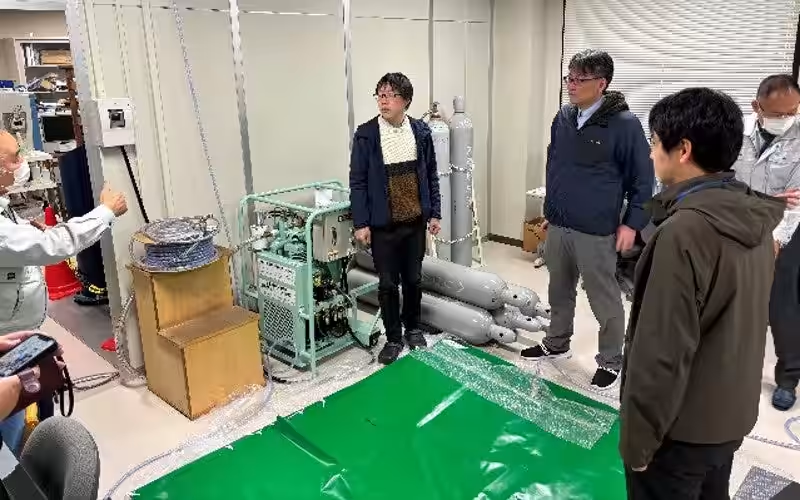
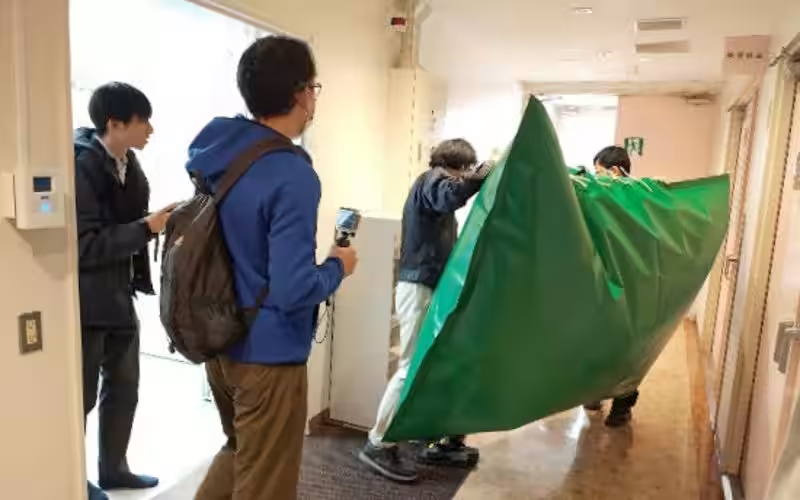
The first phase of this project, which began in December 2025, involves the recovery of helium gas from nuclear magnetic resonance (NMR) equipment. Officials from Okayama University—including Koji Hatanaka, the Deputy Task Force Leader, and various technical staff—visited the collaborating institutions to oversee the installation of equipment necessary for helium gas recovery. The team provided a helium recovery compressor and gas bags to each participating college to facilitate the initial collection of the gas.
On the day of the operation, technicians connected NMR devices to the gas bags using specialized hoses and conducted trial runs on the compressors. Once the gas bags began filling with helium, staff members were trained on how to switch the full bags for empty ones. This hands-on experience is crucial as the goal is to enable personnel from partner institutions to operate the compressors independently in the future.
The timeline for this initiative foresees helium collected from these institutions reaching Okayama University by spring 2026. Following the initial recovery phase, further phases will involve collecting and liquefying the gas in greater quantities for distribution back to the colleges, thereby creating a sustainable supply chain for helium usage in research.
Future Phases
The project will progress through a structured series of phases. Phase 2 will focus on retrieving helium from the partner institutions, liquefying a portion of it, and supplying it back to them. The subsequent Phase 3 aims to maximize this liquidity, optimizing the amount of helium provided to the institutions involved. Discussions on the implementation timelines and methods for these future phases have already commenced during the initial meetings, laying the groundwork for next steps.
Okayama University aims to significantly broaden the availability of liquid helium for research purposes, which is pivotal for advancing various scientific endeavors not just at the university but also within neighboring universities and research facilities. This initiative not only supports local educational institutions but also aligns with national goals for enhancing research capabilities and innovation within Japan.
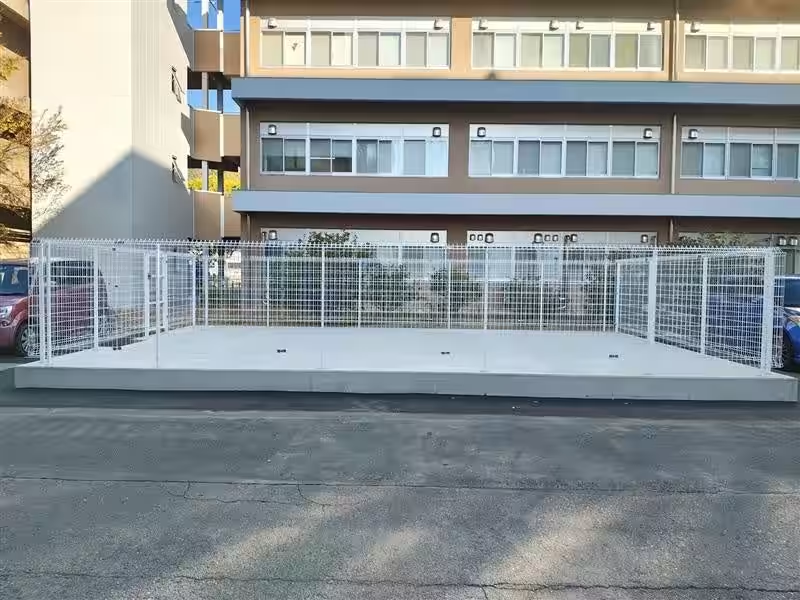
To ensure the success and expansion of this project, Okayama University has obtained support from the Ministry of Education, Culture, Sports, Science and Technology (MEXT). As part of their plans, they are also looking to double the existing liquefaction capacity with new helium liquefaction equipment and related facilities by the end of the fiscal year 2026. Recent construction for additional fundamental equipment has progressed well, indicating positive momentum in upgrading necessary facilities.
As a vital participant in IV research and significant innovation, Okayama University, along with its partner institutions, encourages further support and anticipation of their pioneering efforts in helium recovery and recycling. This initiative underscores a commitment to educational advancements, sustainable practices, and enhancing Japan's position as a leader in global research efforts.
We look forward to seeing the advancements of the Okayama University and its partners as they embark on this exciting new chapter in helium recycling.


Topics General Business)
【About Using Articles】
You can freely use the title and article content by linking to the page where the article is posted.
※ Images cannot be used.
【About Links】
Links are free to use.