



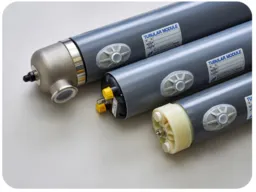
MOLSEP® Tubular Membrane Modules Powering Japan Pavilion's Biogas Plant at EXPO 2025
Introduction
The EXPO 2025 in Osaka, Kansai, presents an innovative approach towards a circular economy, with a significant highlight being the Japan Pavilion. Here, the focus is on waste management and sustainability. Daisen Membrane Systems, based in Minato, Tokyo, has developed the MOLSEP® tubular membrane modules, which are essential for the biogas plant at this pavilion. This plant is designed to convert waste collected from the expo into valuable resources like water and biogas, exemplifying the principles of a circular society.
The Essence of the Japan Pavilion
The Japan Pavilion is divided into three key areas: the Plant Area, Farm Area, and Factory Area. Each segment reflects the core Japanese philosophy of recycling and sustainability. At the Plant Area, waste generated at the expo is processed with the aid of microorganisms, transforming it into useful outputs such as water and biogas. This transformation is not only innovative but serves as an educational tool to showcase the possibilities of sustainable practices.
Features of the Biogas Plant
The biogas plant is ingeniously designed within a compact area of 1,500 m². Every process, from accepting kitchen waste to its shredding, methane fermentation, and extracting biogas for power generation, is conducted on-site. Moreover, the facility handles the processing of wastewater and its subsequent reuse. The plant operates with the following capacities:
- - Maximum processing amount: 1 ton per day.
- - Processing method: Wet methane fermentation and biological denitrification.
- - Biogas production: 150 m³ per day.
- - Electricity generation: 280 kWh per day.
- - Reuse water amount: 1,000 liters per day.
These capabilities emphasize efficient energy utilization and wastewater management, further promoting the circular economy ethos.
Reuse Equipment Details
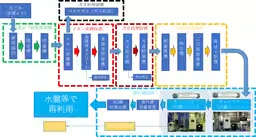
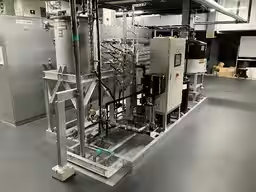
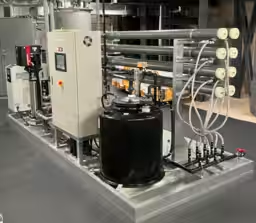
One of the integral components of this system is the reuse facility, which treats the processed wastewater using tubular membrane units. This equipment includes tubular ultrafiltration (UF) and reverse osmosis (RO) units, along with ultraviolet disinfection systems and storage tanks. By employing a two-step treatment with UF and RO membranes, the plant ensures that any chemical oxygen demand (COD) remaining after the UF stage is effectively removed, resulting in water that meets high reuse standards.
MOLSEP® Tubular Membrane Modules
MOLSEP® tubular membrane modules are uniquely engineered with 18 separation membranes within a single unit. Each of these membranes comprises a three-layer structure, consisting of a membrane, support tube, and pressure-resistant casing. With diameters ranging from 10 to 15 mm and lengths of around 3 meters, these cylinders are built for durability and high performance. The internal pressure filtration method used allows for effective cross-flow filtration, preventing clogging and facilitating concentration separation.
This innovative tubular membrane is uniquely produced in Japan by Daisen Membrane Systems, showcasing both exceptional quality and groundbreaking design.
Importance of Wastewater Management
Wastewater released from the biogas plant is rich in various contaminants. To ensure that the water is safe for reuse, these pollutants must be carefully filtered out. The MOLSEP® tubular membrane modules excel in this area, supporting the Japan Pavilion's vision of a diverse ecosystem characterized by 'life-encompassing cycles.' Notably, both the UF and RO membranes from this series work together to achieve an impressive water recovery rate, vital for creating a sustainable water resource.
Broader Impact and Future Directions
Although the EXPO will eventually conclude, the MOLSEP® tubular membrane modules will continue their journey. They have already been adopted by methane fermentation facilities across various municipalities in Japan, drawing attention globally. Through these advancements, the company is at the forefront of Japan's recycling technology.
In conclusion, the MOLSEP® tubular membrane modules symbolize Japan's commitment to advancing sustainable practices and contributing to the global pursuit of a circular economy. As we move forward, Daisen Membrane Systems remains dedicated to expanding these innovations worldwide.
Topics Consumer Products & Retail)
【About Using Articles】
You can freely use the title and article content by linking to the page where the article is posted.
※ Images cannot be used.
【About Links】
Links are free to use.