


Tokyu Construction's Innovative Response to Noto Area Challenges with I DO NOTO BASE
Tokyu Construction's Efforts in the Noto Region
Tokyu Construction Co., Ltd., a member of the Japan Off-site Construction Association, is actively participating in the long-term stay facility project titled "I DO NOTO BASE." This initiative is part of Ishikawa Prefecture's "Noto Entrepreneurship Challenge Support Project," aimed at revitalizing the region following the Noto Peninsula earthquake in 2024. The region has potentially seen a surge of interest from individuals considering starting their own businesses. However, various challenges remain regarding establishing a stable living environment and drafting feasible business plans.
To tackle these hurdles, Ishikawa Prefecture is providing support through entrepreneurship subsidies and establishing consultation systems, coupled with developing container houses for long-term stays. These strategies aim to encourage entrepreneurship in the Noto area.
According to the public announcement by Ishikawa Prefecture, Tokyu Construction and Mukaikaku Design Joint Venture have been designated as the preferred negotiating partner for the construction of the facility.
The Concept of I DO NOTO BASE
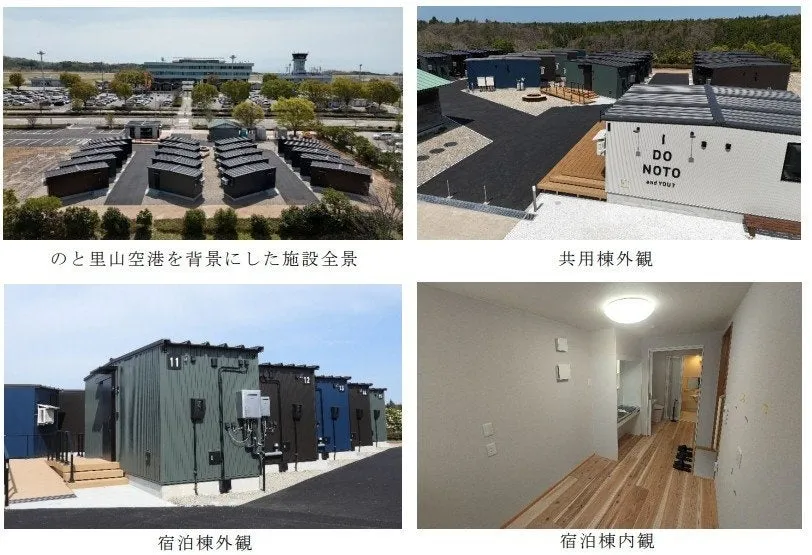
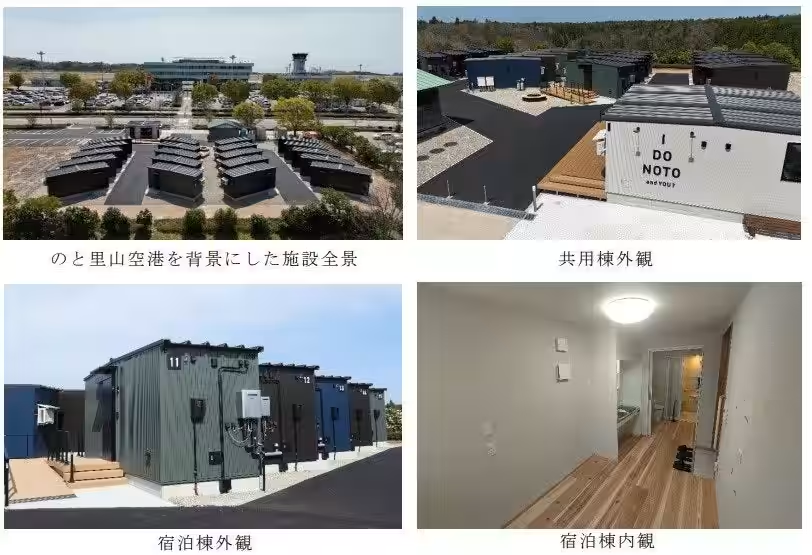
The facility, "I DO NOTO BASE", has been created as part of the Noto Entrepreneurship Challenge Support Project to provide a supportive environment for those who wish to stay in Noto for several months to establish their business or engage in activities aimed at regional problem-solving.
The facility will comprise 20 residential units located on the site of Noto Satoyama Airport, aimed at ensuring stable living conditions for individuals coming from other areas to work on local entrepreneurship and community challenges. The name "I DO NOTO BASE" incorporates the concept of the Noto Multi-Sector Dialogue, emphasizing its role as a base for entrepreneurial and recovery activities in the region.
Off-site Construction as a Key to Improvement
The Japan Off-site Construction Association views this project as a prime example of off-site construction in action. Off-site construction refers to a method where a significant portion of a building is produced at a factory, allowing for a more rationalized construction process on-site. This technique is expected to provide high-quality buildings while minimizing local burdens, especially in circumstances where construction resources are limited, such as in disaster recovery or in remote islands and depopulated areas.
This particular case goes beyond merely developing a facility; it seeks to create a sustainable foundation for individuals engaged in entrepreneurship and community problem-solving to thrive in Noto. The implications of off-site construction extend to disaster response, recovery support, and community development, particularly in light of its potential to meet the needs of the Noto region.
The Future of Off-site Construction
Moving forward, the Japan Off-site Construction Association plans to continue showcasing innovative efforts made by member companies that address societal challenges. Additionally, the association aims to promote and standardize the application of off-site construction in areas such as emergency building supplies during disasters, temporary stay facilities during recovery phases, and housing and facility developments in remote regions, through collaborations with governmental bodies, local governments, private enterprises, and community organizations.
For more information:
- - Tokyu Construction's Use of Wooden Mobile Architecture for Noto Recovery
- - Ishikawa Prefecture: Noto Entrepreneurship Challenge Support Project
- - Results of the Public Proposal for Container-based Long-term Stay Facilities
Topics Other)



【About Using Articles】
You can freely use the title and article content by linking to the page where the article is posted.
※ Images cannot be used.
【About Links】
Links are free to use.