



SBI Securities and Partners Begin Groundbreaking Project on Security Token Payments in Japan
Introduction
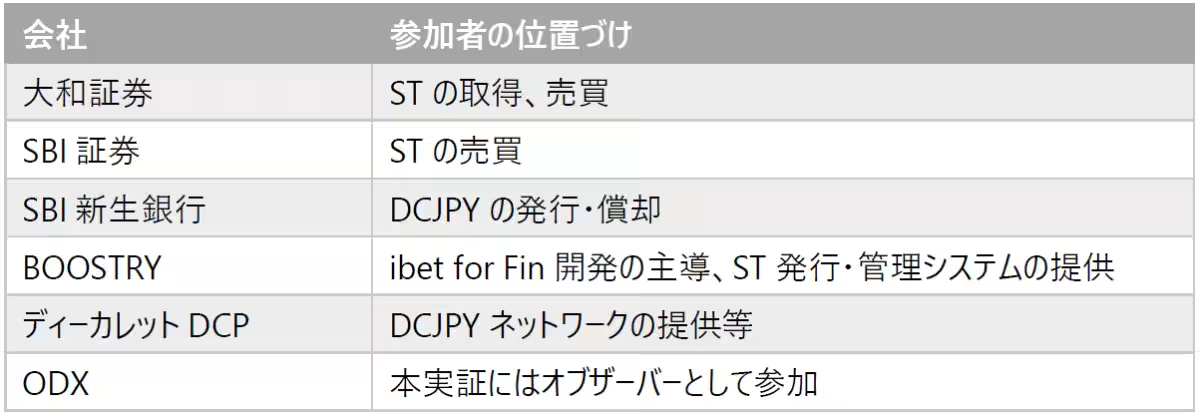
Recently, several leading financial firms in Japan, such as SBI Securities, Daiwa Securities, SBI Shinsei Bank, BOOSTRY, ODX, and Dcarret DCP, announced the commencement of a collaborative project aimed at advancing the secondary market for security tokens (ST). This initiative seeks to implement a new payment scheme utilizing tokenized deposits, specifically a digital currency known as DCJPY, to facilitate Delivery Versus Payment (DVP) transactions involving security tokens. The project’s aim is to enhance the efficiency of payments amid an expanding market, with preliminary validation set for August 2025.
Background of the Project
Since the first issuance of digital bonds in Japan in 2020, the domestic ST market has grown significantly, with a total public issuance expected to reach 270 billion yen by November 2025. However, despite the fast-paced development, the Japanese financial sector still faces challenges in managing settlement risks and alleviating administrative burdens, primarily due to the reliance on bank transfers for clearing transactions executed on blockchain networks. The project aims to address these issues by establishing a standardized and practical DVP settlement method leveraging digital currency. The collaboration between BOOSTRY and Dcarret DCP will focus on testing this new payment system within sales transactions of security tokens between SBI Securities and Daiwa Securities.
Overview of the Project
Scope of Validation
The project will specifically validate DVP payments utilizing DCJPY in the secondary trading of security tokens. BOOSTRY will lead the development of a blockchain platform called "ibet for Fin," established for issuing and managing these tokens. SBI Shinsei Bank will issue DCJPY using Dcarret DCP’s platform, which will be employed in the testing process.
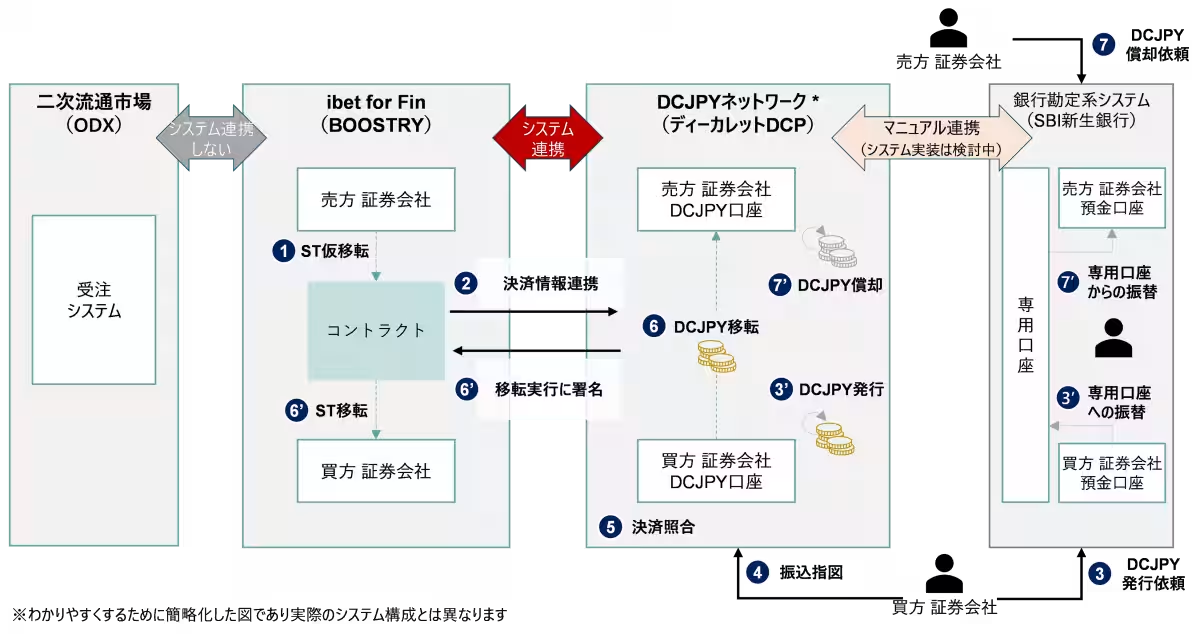
The following steps outline the proposed transaction flow for the validation:
1. The selling securities company temporarily transfers the security token (preparation before the actual transfer).
2. Payment information regarding the security token is shared between systems.
3. The purchasing securities company requests the issuance of DCJPY (moving funds from its deposit account to a dedicated account).
4. The purchasing securities company executes the instruction to transfer DCJPY to the selling securities company.
5. Dcarret DCP verifies the settlement information.
6. Concurrent with the DCJPY transfer, the system integrates and executes the final transfer of the security token.
7. The selling securities company requests the redemption of DCJPY (moving funds from a dedicated account back to its deposit account).
Tokenized Deposit DCJPY
Tokenized deposits are assets characterized by their use of distributed ledger technology (DLT) for recording, managing, and transferring values. The utilization of DLT supports programmable payment features, streamlining the DVP process in securities settlements and easing administrative burdens while reducing settlement risk. DCJPY will serve as a key payment medium; it is a tokenized deposit issued by SBI Shinsei Bank and facilitated through Dcarret DCP's platform, making it a vital option for security token settlements.
Current Progress
The stakeholders gathered in August 2025 to validate a DVP payment model using the generated ST bonds and DCJPY. In this meeting, participants reviewed the operational flow for securities settlements in the secondary ST market. Various stakeholders engaged in the transaction were involved, ensuring a comprehensive review of onboarding workflows and system interactions.
Future Outlook
This project positions itself as the initial step toward achieving immediate gross settlements for security tokens. Following the validation phase, results will be communicated widely to market participants, and discussions will continue towards practical utilization in relevant platforms like START, operated by ODX, which focuses on the secondary market for security tokens. By integrating this payment scheme into the market, it is anticipated to enhance overall market efficiency and mitigate payment risks, ultimately fostering a more robust and healthy market environment for security tokens.
Topics Consumer Technology)
【About Using Articles】
You can freely use the title and article content by linking to the page where the article is posted.
※ Images cannot be used.
【About Links】
Links are free to use.