



Taiwan Enhances 6G Collaboration with Europe at EuCNC 6G Summit
Advancing 6G Collaboration: Taiwan's Role at EuCNC 6G Summit
In June 2026, the renowned EuCNC 6G Summit served as a critical platform where Taiwan's Industrial Technology Research Institute (ITRI) showcased its commitment to international 6G collaboration. This summit not only highlighted cutting-edge innovations but also facilitated key partnerships, enhancing Taiwan's participation in the global 6G ecosystem.
Strengthening Global Partnerships
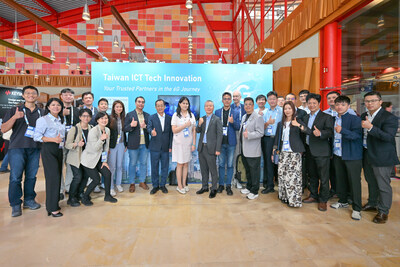
The ITRI led a formidable delegation at the summit, comprising influential figures from industry, academia, and research sectors. This initiative aimed to bolster Taiwan's innovation in 6G technologies and validate its capabilities in this emerging field. One of the pivotal moments during the summit was the signing of a Memorandum of Understanding (MoU) between the European Telecommunications Network and Services Association (6G-IA) and Taiwan's 6G Industry Forum (6GIF). This agreement is set to pave the way for enhanced cooperation on 6G technological developments, international testing, and standard harmonization, thus establishing a more integrated relationship between Taiwanese and European 6G ecosystems.
Research and Development Agreements
In addition to the above MoU, ITRI also established a collaboration agreement with the Netherlands Organization for Applied Scientific Research (TNO) under the “Future Network Services” program. This partnership aims to advance joint research and development in integrated sensing and communication for specific use cases. Such collaborations are vital as they will bolster technical validation and contribute significantly to the development of future standards in the 6G landscape.
Taiwan's Special Session at the Summit
During the summit, ITRI organized a dedicated session to spotlight Taiwan's technological advancements in 6G. The session brought together representatives from industry, higher education, and research from Taiwan and Europe. Participants engaged in fruitful discussions on emerging 6G technologies, focusing particularly on Non-Terrestrial Networks (NTN), Integrated Sensing and Communication (ISAC), and AI-enhanced Radio Access Networks (AI-RAN). These discussions aimed to identify future cooperation opportunities, drawing from the convergence of communication technologies, AI, sensors, and satellite systems.
Key Technological Showcases
Alongside its collaborative initiatives, ITRI presented several groundbreaking 6G and satellite communication technologies. Among the highlights was a homegrown 6G base station chipset, engineered to deliver nearly five times the transmission capacity of current 5G base stations, integrating high-density antenna architecture with RF front-end technology. Moreover, ITRI unveiled an ISAC system developed in partnership with European collaborators. This system employs AI algorithms to optimize existing communication infrastructures, ensuring real-time detection and location identification. Applications demonstrated included drone detection, low-altitude airspace monitoring, and indoor localization—technologies poised to revolutionize smart transportation, manufacturing industries, public safety, and airspace management.
The Future of 6G
As we transition into a new phase of global 6G development, the emphasis on international validation and inter-ecosystem collaboration becomes increasingly significant. As stated by Pang-An Ting, the Vice President of ITRI and General Director of the Information and Communication Research Laboratories, the integration of communication, AI, sensor technologies, and satellites necessitates a collaborative approach. ITRI is committed to fostering these global partnerships to fuel validation efforts and standard harmonization, pushing the boundaries of innovation in 6G.
In conclusion, the ITRI has played an influential role in amplifying Taiwan's presence at the EuCNC 6G Summit, marking a significant step toward realizing the potential of 6G technology through collaborative endeavors with European partners. This partnership not only promises advancements in technology but also sets a promising precedent for future collaborations in the tech realm.

Topics Telecommunications)
【About Using Articles】
You can freely use the title and article content by linking to the page where the article is posted.
※ Images cannot be used.
【About Links】
Links are free to use.