



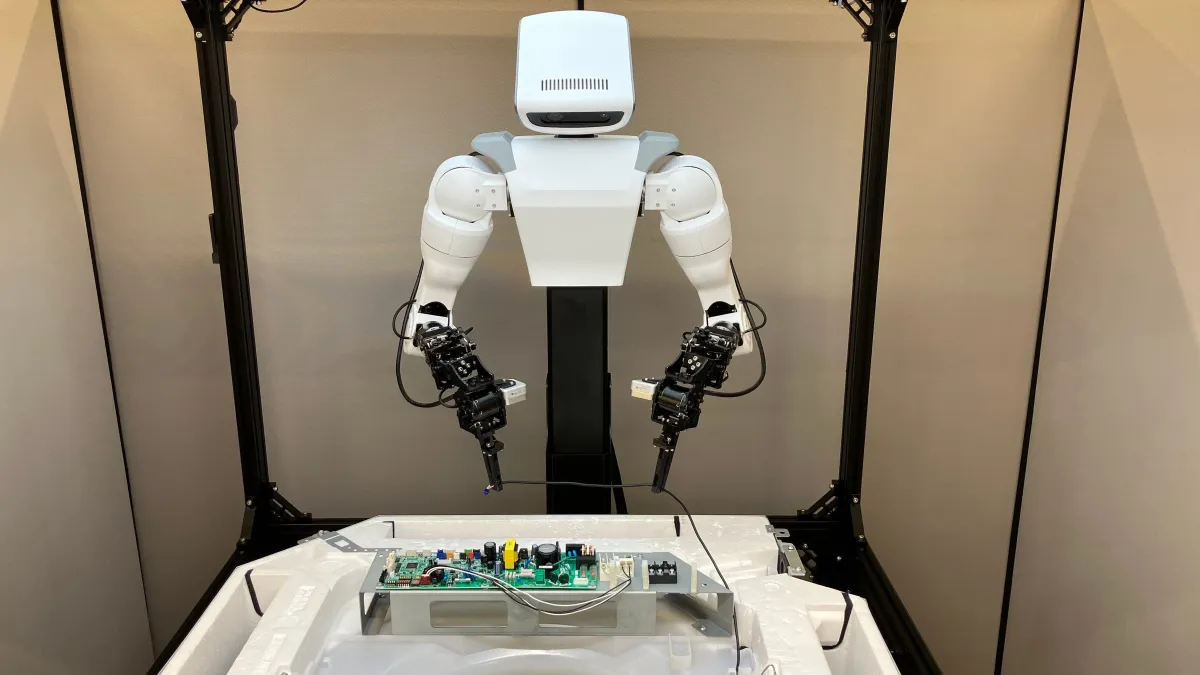
Hitachi Develops Physical AI Technology for Autonomous Learning and Complex Task Automation
Hitachi's Innovative Leap into Physical AI Technology
In a world where automation is increasingly becoming the cornerstone of productivity, Hitachi has taken a significant step forward with the development of its Physical AI technology. Under the initiative HMAX by Hitachi, the company is committed to revolutionizing social infrastructure through AI, aiming to optimize operations in industrial settings while ensuring that humans, AI systems, and robots evolve together.
The Driving Force Behind Physical AI
Hitachi's Physical AI technology is designed to autonomously learn and optimize operations, significantly enhancing both the speed and quality of work processes. The robots equipped with this technology continuously learn from the operational data and skills acquired on-site, adapting to changes in the working environment and task requirements.
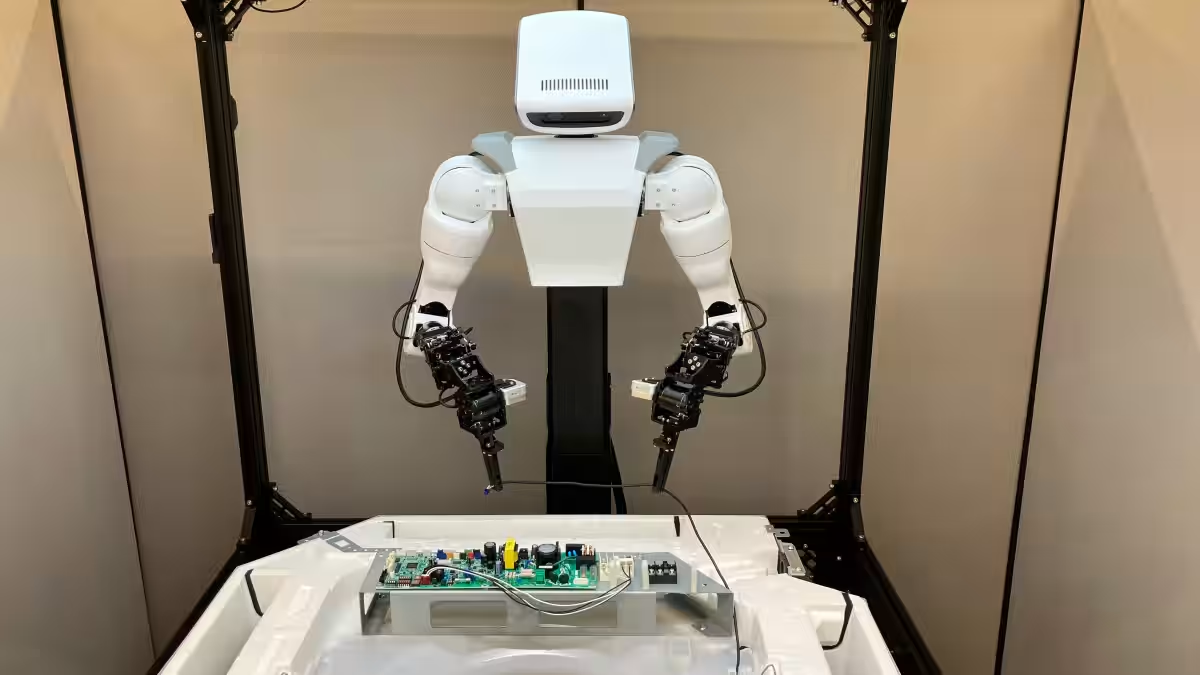
For instance, these robots can delicately handle complex tasks, such as assembling wire harnesses, by precisely controlling the strength and direction of contact based on sensory information like vision and tactile feedback.
This innovation is not limited to a specific sector; it can be broadly introduced across various industrial sectors, including manufacturing, equipment maintenance, and logistics. With this development, Hitachi aims to automate processes that were previously deemed too challenging to standardize, achieving on-site speed and quality.
Addressing Current Challenges in the Workforce
The backdrop of this development is the acute labor shortage faced by industries, compounded by the aging workforce and the urgent need for skill transferability. This challenge is particularly pronounced in environments handling diverse products, where tasks vary significantly from one process to another, requiring nuanced movements and delicate touch.
Despite advancements in automation for simpler tasks, the varied nature of equipment, parts, and procedures across different environments complicates efforts to ensure flexibility and adaptability. As a result, automation efforts often depend heavily on skilled workers, perpetuating a reliance on human labor where technology cannot efficiently solve existing problems.
Features and Advantages of the New Technology
To combat these challenges, Hitachi's Physical AI technology boasts several notable features:
1. Continuous Evolution through Self-Learning AI
The innovated AI technology not only allows for immediate deployment in work environments but also learns continuously from the operational data and tacit knowledge of skilled technicians. By incorporating this data, the AI refines its performance over time, enhancing speed and quality. Furthermore, its adaptability allows it to respond swiftly to shifts in operational conditions or new task patterns without requiring extensive retraining or system overhauls.
2. High-Speed AI Model for Quick Adaptation
Traditional robots are limited in their command speed, often executing instructions at a rate of only ten times per second. Hitachi, in partnership with Waseda University, has developed an AI model that can issue commands at a remarkable rate of one hundred times per second. This capability enables robots to perform delicate operations with speed and precision comparable to human reflexes, making it ideally suited for a diverse range of tasks.
3. Autonomous Whole-Body Coordination Learning
Taking inspiration from human development, Hitachi has designed algorithms that enable robots to learn coordinated movements across their entire body rather than just focusing on the arms and hands. This holistic approach allows robots to position themselves optimally during tasks, reducing inconsistency and minimizing the physical burden on human workers.
Future Outlook and Initiatives
Hitachi looks forward to leveraging this innovative technology as a cornerstone of the HMAX initiative, conducting demonstrations across diverse environments to optimize solutions in industrial settings. As part of this journey, Hitachi will unveil a Physical AI Experience Studio on April 1, 2026, at its Lumada Innovation Hub Tokyo. This facility is designed to deepen understanding and interest in the newly developed Physical AI technologies, showcasing robots that incorporate this cutting-edge innovation.
With its commitment to integrating AI with domain knowledge, Hitachi is positioned to significantly enhance productivity and growth for its industrial partners on a global scale, addressing pressing workforce challenges while paving the way for future advancements in automation technology.
Topics Consumer Technology)
【About Using Articles】
You can freely use the title and article content by linking to the page where the article is posted.
※ Images cannot be used.
【About Links】
Links are free to use.