



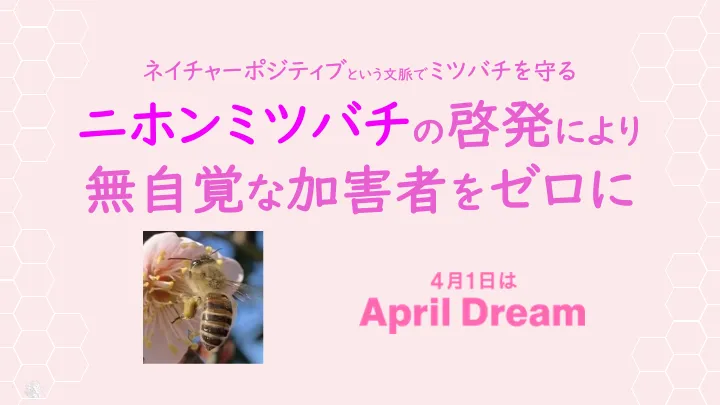
Raising Awareness for Japanese Honey Bees to Protect Our Environment and Combat Ignorance
Introduction
As we approach World Bee Day on May 20th, our mission is to protect Japanese honey bees, especially through a renewed effort in education and awareness. Many people may unknowingly become perpetrators against these bees by lacking basic knowledge about their existence and the environmental challenges they face. Thus, we are joining the April Dream initiative—encouraging dreaming and action on April 1st—to help create a digital platform dedicated to raising awareness for these crucial pollinators.
Nature Positive Philosophy
The concept of 'Nature Positive' is becoming an international benchmark for environmental health, using bees as a symbol of nature's vitality. The Japanese honey bee, a native species, is of particular concern as its numbers dwindle. Protecting this species is directly tied to preserving a healthy environment for all living beings. We believe that understanding and educating ourselves is the first step towards fostering coexistence between humans and bees.
The Role of Education
Many individuals lack knowledge about bees and their importance in our ecosystem. Our initiative aims to enlighten people about the differences between the domesticated Western honey bee and the wild Japanese honey bee. Understanding these differences is crucial, especially as it relates to the perils faced by the Japanese honey bee in today's world. We are particularly motivated to eliminate the risks of people unknowingly becoming a cause of harm to these bees. Our project stems from personal experiences where previous misunderstandings led to detrimental actions against the well-being of Japanese honey bees.
Combatting Greenwashing
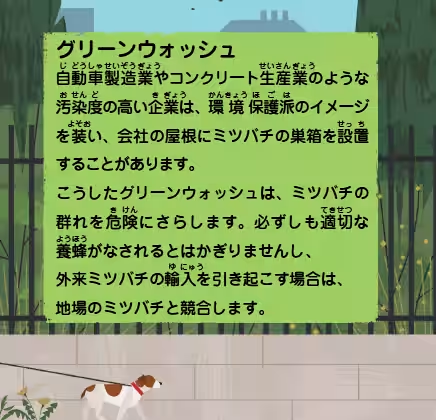
There's a growing danger in the awareness around bees being too simplistic—often it’s assumed that engaging in any bee-related activity is inherently good for the environment. This can lead to greenwashing and a lack of understanding about the true implications of certain actions. Without adequate knowledge, individuals can inadvertently contribute to the harm of the bees they aim to protect. Our initiative seeks to clarify the facts and provide educational content that fosters informed actions rather than misguided efforts.
Embracing a Positive Mindset
Rather than instilling fear or coercion in our messaging, we are focusing on creating enjoyable learning experiences. The Japanese mindset towards nature is unique and deeply rooted in our culture. We aim to nurture this perspective while working toward a 'Nature Positive' goal. We believe that showcasing positive examples of bee protection can inspire others and eventually lead to a worldwide movement.
Rigorous Fact-checking
In a landscape overwhelmed by mixed information on bees, our project prioritizes accuracy and neutrality in our educational content. We are collaborating with various experts and researchers to ensure that the information we provide is factual and reliable. Engaging with multiple viewpoints, particularly critical feedback, is welcomed as we strive to improve the quality of our outreach.
Addressing the Unconscious Perpetrators
We do not intend to target conscious wrongdoers but rather focus on raising awareness among unconscious perpetrators. Recognizing harmful agricultural practices or misleading environmental campaigns can be complex, so our mission centers around emphasizing the importance of knowledge.
Campaign Plans
Our awareness platform is set to launch by May 20, 2026, coinciding with World Bee Day. We look forward to creating a campaign that encourages individuals to take the first step towards understanding bees and their significance.
Past Efforts and Future Directions
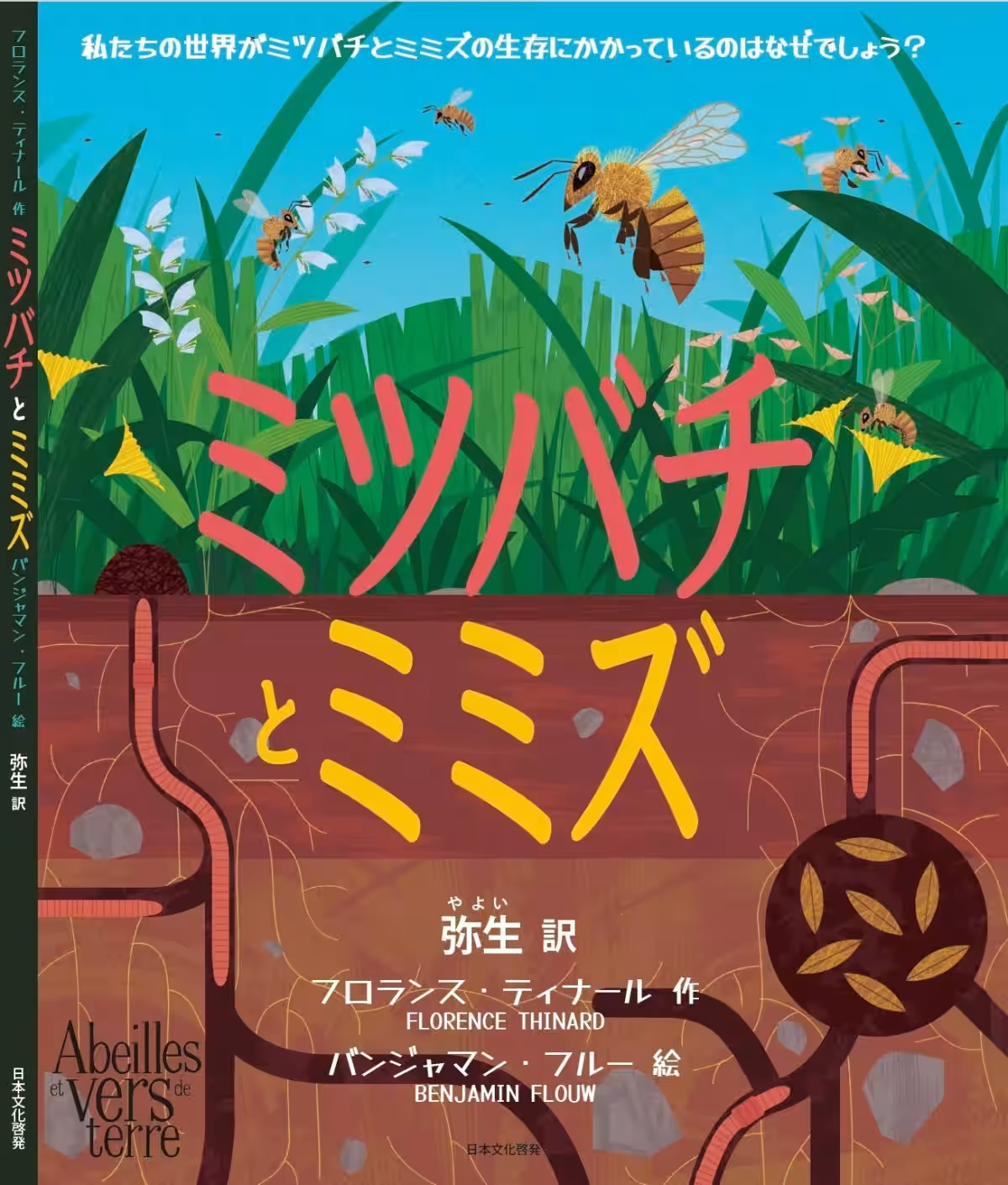
We have already published a translation of a book titled "Bees and Earthworms" and initiated educational sessions about bees in elementary schools. Feedback from teachers indicates that students are engaging deeply and expressing a desire to learn more about bees and nature.
A Call to Action
The journey toward protecting Japanese honey bees is essential, and while staying indifferent might be an option, it’s impossible to remain uninvolved in this critical issue. Our campaign seeks to fill the knowledge gap and foster a sense of responsibility that will help eliminate unintentional harm. As we continue to focus on a positive approach to nature conservation, we encourage everyone to join us in this critical effort.
For further information or inquiries, please contact us through the QR code or the URL provided.


Topics People & Culture)


【About Using Articles】
You can freely use the title and article content by linking to the page where the article is posted.
※ Images cannot be used.
【About Links】
Links are free to use.