



Understanding Disaster Preparedness: Insights from Cook Deli's Employee Survey on Food Storage
Understanding Disaster Preparedness: Insights from Cook Deli's Employee Survey on Food Storage
As the 15th anniversary of the Great East Japan Earthquake approaches, Cook Deli Co., Ltd., a company specializing in fully cooked frozen meals for elderly care facilities, has conducted an internal survey on disaster preparedness among its employees. The results unveil significant gaps between the actual emergency supplies most individuals have and what is recommended by governmental guidelines.
Key Findings from the Survey
The survey revealed that around 68% of employees reported having some form of emergency supplies at home. However, a deeper dive into the data exposed a considerable discrepancy between actual preparedness and ideal standards.
1. Insufficient Food and Water Supplies
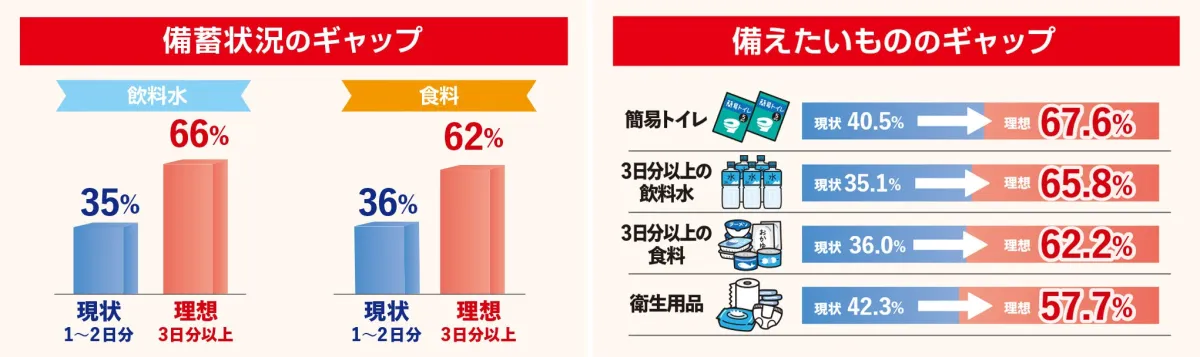
The guidelines set by the Prime Minister's Office and the Ministry of Agriculture, Forestry and Fisheries suggest a minimum of three days' worth of food and water supplies for emergencies, and ideally, a week for more severe disasters. When employees were asked about their current supply levels, the most common response was only one to two days' worth of provisions. In contrast, when prompted about what would make them feel secure, over 60% indicated they wanted at least three days' worth of supplies. This stark contrast between wish and reality highlights an alarming lack of preparedness in many households.
2. The Gap in Disaster Supplies
Further analysis comparing current stock with desired stock showed a notable gap, particularly with essential items like portable toilets, three days' worth of potable water and food, and hygiene products. While employees recognized the importance of having these vital resources, many still lacked adequate preparations. This indicates a widespread awareness of the risks but a failure to act adequately on them.
Future Initiatives Based on Employee Feedback
In response to these findings, Cook Deli is planning to introduce new initiatives to ensure that staff can incorporate emergency preparedness seamlessly into their daily routines. By leveraging its own product lines, Cook Deli aims to promote a rolling stock approach for food supplies.
Benefits of Cook Deli's Frozen Distribution
Cook Deli, known for its microwaveable frozen meals aimed at elderly care facilities, offers several advantages such as:
- - Long Shelf Life: Products can be stored over extended periods.
- - Easy Preparation: Meals can be consumed after natural thawing, making them accessible during emergencies.
- - Nutritional Balance: Carefully crafted meals are designed to meet dietary needs, making them ideal for disaster situations.
With a growing concern for food storage habits highlighted by the survey, Cook Deli is actively encouraging the use of its products as an additional day of stock, thus fostering an efficient preparedness system within everyday life.
Conclusion
Even fifteen years after the East Japan earthquake, the significance of disaster preparedness is still acknowledged. However, this survey reveals that while the necessity is understood, sufficient action is lacking. The survey results indicate that achieving the recommended three-day stock level relies not just on individual responsibility but also on collective initiatives. By responding to employee concerns, Cook Deli aims to broaden preparedness efforts that individuals can realistically maintain alongside their daily activities, ensuring that disaster readiness becomes a natural part of life.
Resources
For more information on disaster preparedness, please refer to the government resources:
- - Prime Minister’s Office on Family Preparedness
- - Ministry of Agriculture, Forestry and Fisheries Family Stock Portal
- ---
About Cook Deli Co., Ltd.
Founded in 2016, Cook Deli specializes in providing fully cooked frozen foods to elderly care facilities. With the increasing aging population and the accompanying workforce challenges, Cook Deli manages to deliver around 220,000 meals daily to approximately 7,000 facilities, ensuring safety, nutritional balance, and delightful meals that foster joy among those they serve. Their goal is to innovate the future of senior dining through quality and care.

Topics Consumer Products & Retail)









【About Using Articles】
You can freely use the title and article content by linking to the page where the article is posted.
※ Images cannot be used.
【About Links】
Links are free to use.