



Spot Work Market Report Shows Increased Demand with Average Wages Observed
Insights into the Spot Work Market
The Tuna Work Style Research Institute, part of Tuna Group Holdings, recently unveiled its latest monthly report on the spot work market. This report focuses on the market dynamics for short-term and occasional job opportunities, revealing some fascinating trends and statistics that illustrate the evolving nature of work in Japan.
Significant Job Vacancy Ratios
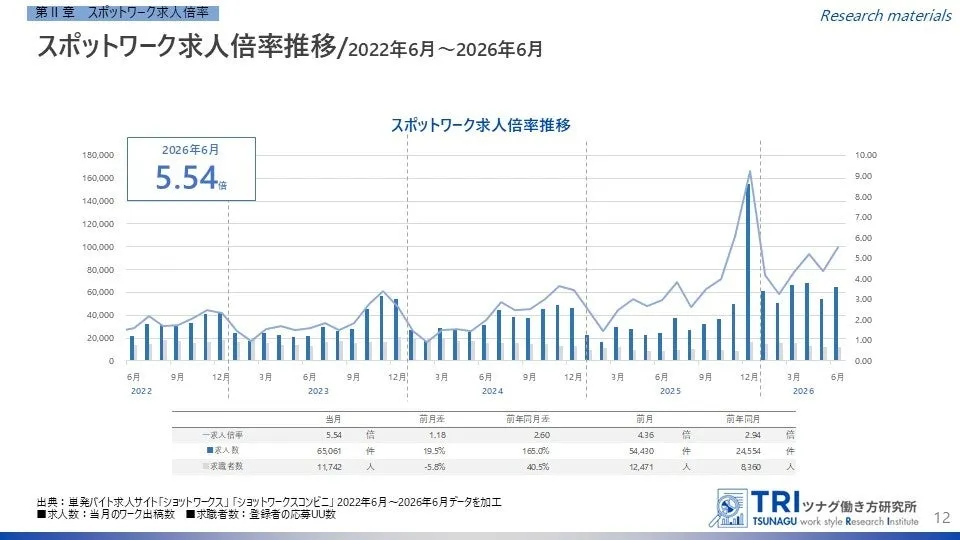
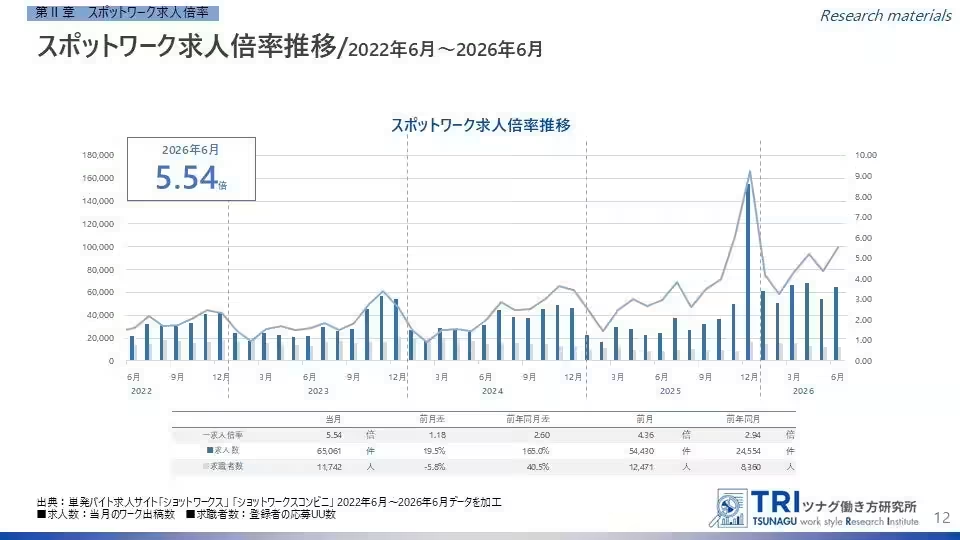
In June 2026, the job vacancy ratio for spot work reached an impressive 5.54 times, marking a substantial increase of 2.60 points compared to the same month last year. This upward trend demonstrates a notable recovery in the job market as the number of job openings surged by 19.5% from the previous month. The sustained growth reflects the ongoing shift towards flexible work arrangements, a trend that has intensified in recent years.
Growth in Job Numbers
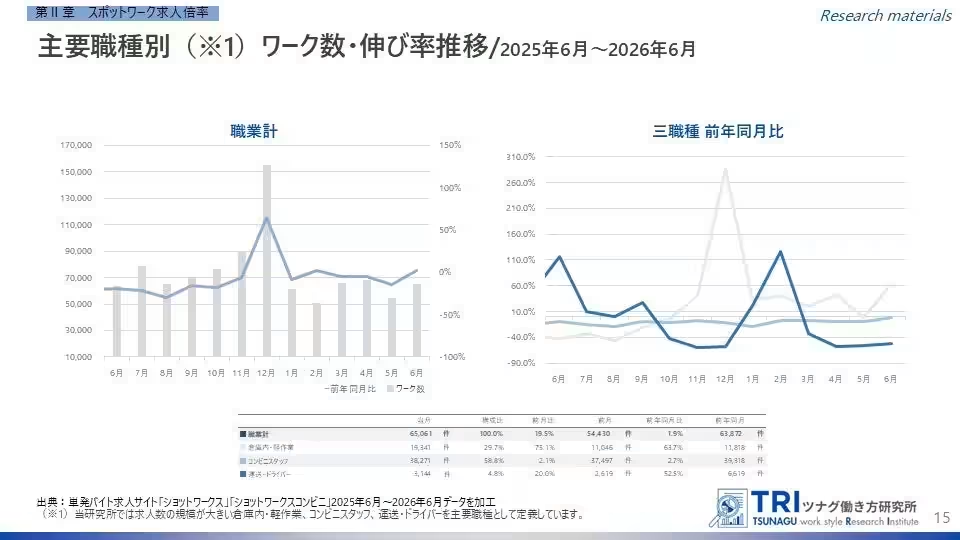
The total number of jobs for spot workers saw a robust increase, rising by 19.5% month-over-month and 1.9% compared to the same month last year. Breaking it down by job category, all three major sectors reported gains from the previous month:
- - Warehouse and Light Work: Up 75.1%
- - Transportation and Drivers: Up 20.1%
- - Convenience Store Staff: Up 2.1%
However, a detailed analysis reveals varying trends when compared to the same month last year. For instance, while jobs in warehouse operations rose by 63.7%, positions in transportation and convenience stores saw declines of 52.5% and 2.7%, respectively.
Average Wages Overview
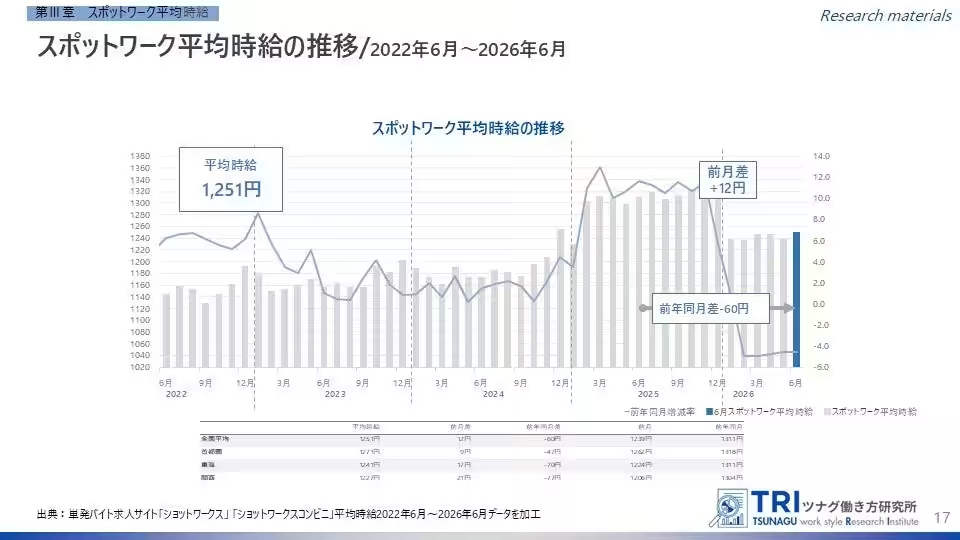
The report also indicated that the average hourly wage for spot work is currently at ¥1,251, representing a slight increase of ¥12 from the previous month. Despite this, wages have decreased by ¥60 compared to the same month last year, suggesting a normalization after the unusually high wage levels observed in 2025. Notably, wage variations were seen across different regions, with all areas reporting wages lower than the previous year—particularly in the Kansai region, where a steep drop of ¥77 was noted.
Definition of Spot Work
Spot work is defined as short-term, irregular employment that does not establish a continuous employer-employee relationship. This category includes gig work, such as rideshare drivers, and one-off part-time positions. The spot work market has rapidly expanded, especially in the wake of the COVID-19 pandemic, as individuals seek supplementary income amidst ongoing economic uncertainties.
Current Market Landscape
The demand for spot workers significantly accelerated during the pandemic. This rise is largely attributed to multiple factors:
1. Work Style Reforms: Stricter regulations on overtime prompted many workers to seek additional employment opportunities.
2. Company Needs: Businesses are optimizing labor costs by ensuring necessary staff levels during peak times without maintaining redundant payrolls.
3. Technological Advances: New platforms are emerging that match workers with job opportunities in real-time, enhancing the gig economy's efficiency.
Importance of Continuous Monitoring
The Tuna Work Style Research Institute aims to maintain a granular understanding of the employment landscape through regular monitoring. By analyzing labor statistics from government agencies, the research institute seeks to illuminate potential job growth and highlight areas where job seekers could find opportunities. This ongoing analysis serves not only to recognize current market dynamics but also contributes to a broader discourse about labor utilization and economic resilience in Japan.
About Tuna Group Holdings
Founded in 2015, Tuna Group Holdings, located in Chuo, Tokyo, specializes in recruitment solutions, consulting, and labor force management. The company operates numerous services that connect employers and the growing workforce, emphasizing the importance of flexible work arrangements in today’s economy. Their innovative initiatives aim to develop sustainable recruitment practices and cater to the demands of a changing labor market.
For those interested in the future of employment, following these trends within the spot work market will be crucial. As the fabric of work continues to evolve, being informed will empower both workers and businesses to navigate the challenges ahead effectively.

Topics Business Technology)
【About Using Articles】
You can freely use the title and article content by linking to the page where the article is posted.
※ Images cannot be used.
【About Links】
Links are free to use.