



Groundbreaking Research on Lung Cancer Immunotherapy Resistance Unveiled by Japanese Universities
Unraveling Resistance Factors in Lung Cancer Immunotherapy
A pioneering collaborative effort between Kinki University, Kyoto Prefectural University, and Okayama University has led to significant advancements in the understanding of lung cancer treatment. This groundbreaking research focuses on identifying resistance factors within the tumor microenvironment, specifically concerning the effectiveness of immune checkpoint inhibitors, a revolutionary class of cancer therapeutics.
Understanding the Tumor Microenvironment
Research into the tumor microenvironment is crucial, as it plays a vital role in determining how well immunotherapy works for patients with lung cancer. By employing an extensive analysis technique, researchers were able to establish benchmarks for predicting the therapeutic effectiveness of immune checkpoint inhibitors in patients plagued by this aggressive disease. The study importantly recognized that immunity-related factors within the tumor environment can signal whether a treatment will be successful or not.
The research team, which includes prominent figures like Assistant Professor Kousuke Isomoto from Kinki University and Associate Professor Takahiro Tsujikawa from Kyoto Prefectural University, has successfully pinpointed these resistance factors. Their findings showcase how they can affect the treatment outcomes and highlight the complex interplay between tumor cells and immune responses.
The Discovery of Resistance Factors
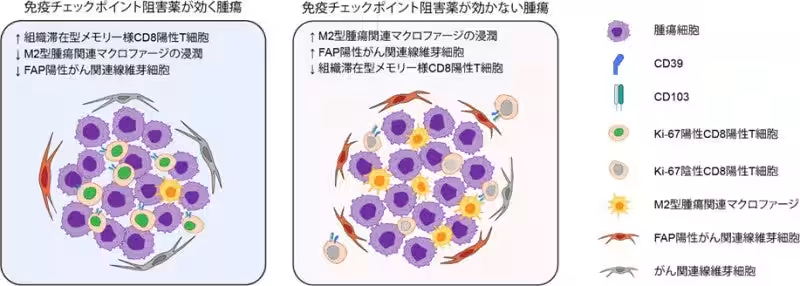
The study effectively narrowed down specific characteristics of immune checkpoint therapy-resistant tumors, providing critical insights into why some patients do not respond to such treatments. This research goes beyond identifying

Topics Health)
【About Using Articles】
You can freely use the title and article content by linking to the page where the article is posted.
※ Images cannot be used.
【About Links】
Links are free to use.