



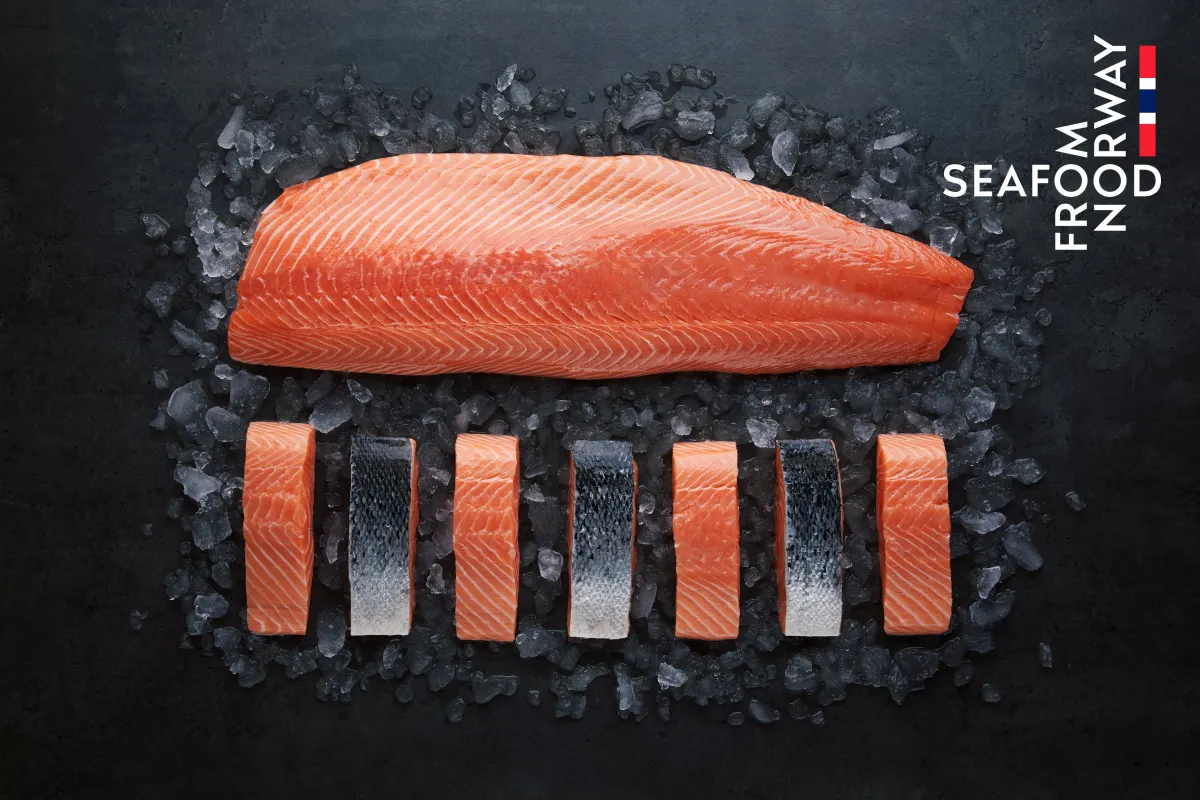
Norwegian Seafood Council Reports Record Export Statistics for 2025
Record Seafood Exports from Norway in 2025
The Norwegian Seafood Council, headquartered in Tromsø, Norway, recently announced impressive export statistics for the year 2025. Norway exported 2.8 million tons of seafood globally, achieving a remarkable export value of 181.5 billion NOK (approximately 2.56 trillion JPY). This figure represents roughly a 4% increase compared to the previous year, marking the highest level of exports recorded to date. This translates to nearly 38 million seafood meals being delivered worldwide from Norway daily.
When focusing on exports to Japan, the quantities were slightly lower than the previous year. However, the total export value to Japan in 2025 amounted to 66,823 tons, equating to 5.08 billion NOK (around 718 billion JPY). While the volume showed a decline, the export value maintained its levels from the previous year, emphasizing the stability of Norway’s seafood in the competitive Japanese market.
CEO's Insights on Supply Challenges
a
Christian Chramer, CEO of the Norwegian Seafood Council, commented on the achievements in 2025, stating, “The year was not easy for the seafood industry. Major species faced restrictions, and catch volumes were down, leading to historic price highs. Despite the downward trends in salmon prices, we saw an impressive increase in shipment volumes. It is significant that our export value reached record heights amidst these challenges.”
Furthermore, Johan Kvalheim, Seafood Counsellor at the Norwegian Embassy, highlighted the importance of the Japanese market: “Japan has remained an essential and mature market for Norwegian seafood. Although natural fish species saw a decline in import volumes due to reduced catch quotas, the value of imports has stabilized.
Salmon and fjord trout performed particularly well in terms of volume, while species like mackerel and herring faced tougher supply challenges. In Japan, there continues to be a strong emphasis on quality, safety, and reliability of supply, which allows Norwegian seafood to retain its high reputation.”
Partnership and Quality in Japan
The high standards and partnerships cultivated over many years underpin this recognition in the Japanese market. Key species such as salmon, fjord trout, mackerel, and herring have developed alongside Japan's processing and distribution sectors for decades, adapting to changing demand and increasing quality standards.
Norway’s commitment to stringent resource management has also established it as a leader in food safety and consistent year-round supply. This reliability in the essential categories essential for Japan has contributed significantly to maintaining its No.1 position as a supplier.
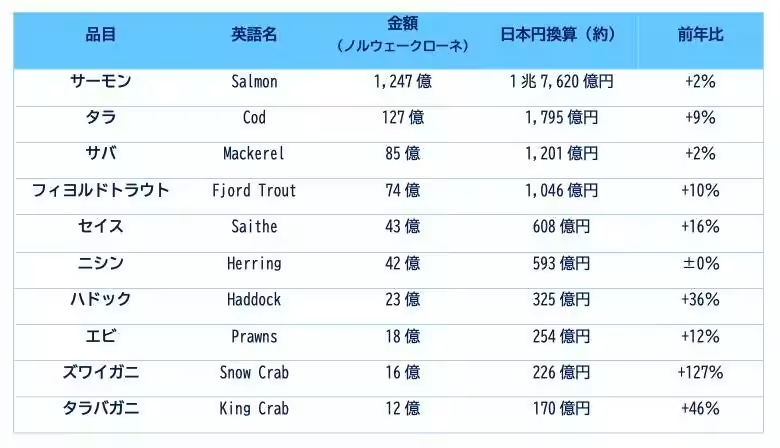
Top Export Items of Norwegian Seafood in 2025
Notably, in 2025, salmon stood out as the leading export item, generating 124.7 billion NOK (approximately 1.76 trillion JPY), making it a key driver for growth in overall Norwegian seafood exports.
Analysis of Key Imported Items in Japan
Johan Kvalheim remarked, “2026 is expected to be a critical and challenging year for Norwegian seafood in Japan. The mackerel catch quota has been reduced by over 50%, leading to a significant drop in supply volume, further anticipated to affect export quantities and raw material prices. The initial catch this year has been among the lowest in decades, with supply constraints expected to persist throughout the season. The rising prices for mackerel will likely reflect gradually in consumer markets, affecting demand trends.”
On the other hand, demand for salmon and fjord trout remains robust, supporting ongoing growth in Norwegian seafood exports. Fjord trout, a seawater aquaculture fish known for its deep red color and rich fat content, has been recognized for its unique value compared to domestically raised freshwater trout. New interest is also growing in products like
, which promise high safety and quality options suitable for both raw consumption and cooking. Norway plans to strengthen its position as a reliable supplier of high-quality seafood through consistent supply maintenance and enhanced collaboration with the Japanese market in 2026.
Seafood Exports Summary
Salmon
- - Total Export Volume (2025): Approximately 141,490 tons (+13% year-on-year)
- - Total Export Value (2025): 124.7 billion NOK (approximately 1.76 trillion JPY) (+2% year-on-year)
- - Export Volume to Japan (2025): Approximately 29,000 tons (+20% year-on-year)
- - Export Value to Japan (2025): 3.17 billion NOK (approximately 448 billion JPY) (+6% year-on-year)
Fjord Trout
- - Total Export Volume (2025): Approximately 86,900 tons (+16% year-on-year)
- - Total Export Value (2025): 7.4 billion NOK (approximately 1.04 trillion JPY) (+10% year-on-year)
- - Export Volume to Japan (2025): Approximately 3,290 tons (+17% year-on-year)
- - Export Value to Japan (2025): 360 million NOK (approximately 51 billion JPY) (+22% year-on-year)
Mackerel
- - Total Export Volume (2025): Approximately 207,900 tons (-34% year-on-year)
- - Total Export Value (2025): 8.5 billion NOK (approximately 1.20 trillion JPY) (+2% year-on-year)
- - Export Volume to Japan (2025): Approximately 27,000 tons (-49% year-on-year)
- - Export Value to Japan (2025): 1.12 billion NOK (approximately 158 billion JPY) (-20% year-on-year)
Herring
- - Total Export Volume (2025): Approximately 209,000 tons (-8% year-on-year)
- - Total Export Value (2025): 4.2 billion NOK (approximately 593 billion JPY) (±0% year-on-year)
- - Export Volume to Japan (2025): Approximately 3,064 tons (-15% year-on-year)
- - Export Value to Japan (2025): 90 million NOK (approximately 13 billion JPY) (-1% year-on-year)
About Norwegian Seafood
Norway is the world's second-largest seafood exporter, supplying seafood to approximately 150 countries. Daily, around 38 million meals of Norwegian seafood are enjoyed worldwide. Norway is a primary source for salmon and mackerel sold globally. Norwegian salmon is sustainably farmed in government-approved facilities, ensuring conservation of marine environments. The country’s coastline, characterized by over 1,700 fjords, provides optimal breeding conditions for fish. The fishes raised in Norway’s cold and clear waters are richly flavored and fatty, offering a delicious taste. To consistently provide high-quality seafood worldwide, Norway employs a blend of traditional practices and advanced technologies, all while committing to sustainable fishing methods. The label “Seafood from Norway” signifies the country’s reputation for outstanding quality seafood products. For more information about Norwegian seafood and the fishing industry, visit seafoodfromnorway.jp.
- - Website: seafoodfromnorway.jp
- - Instagram: @norwayseafoodjp
- - X: @NorwaySeafoodJP
- - Facebook: Seafood From Norway JP
Topics Consumer Products & Retail)
【About Using Articles】
You can freely use the title and article content by linking to the page where the article is posted.
※ Images cannot be used.
【About Links】
Links are free to use.