



Analyzing COVID-19 Infections and Healthcare in Okayama Prefecture: Insights as of March 2026
Analyzing COVID-19 Infections and Healthcare in Okayama Prefecture
In early 2026, Okayama University released a detailed analysis of the COVID-19 infection status and healthcare provision in Okayama Prefecture. The information is regularly updated to provide insights into the pandemic's status and local responses.
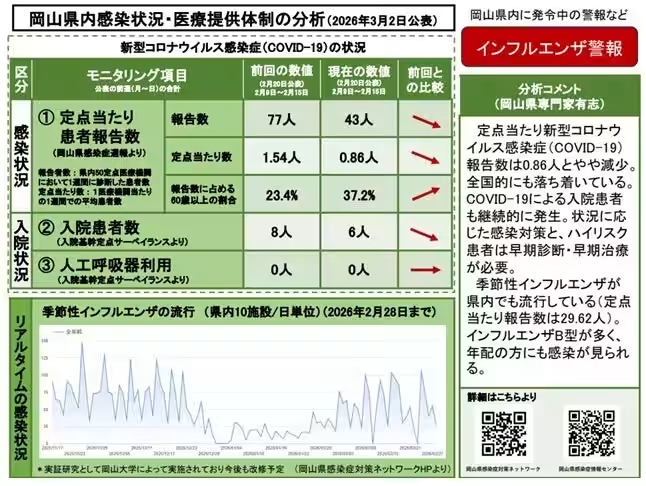
The analysis indicates that, as of March 2, 2026, the number of reported COVID-19 cases per designated reporting point has slightly decreased to 0.86. This trend is consistent with national data indicating a general reduction in infection rates across the country. However, hospitalizations due to ongoing COVID-19 cases continue to be reported. Experts stress the necessity for tailored infection control measures and emphasize the importance of early diagnosis and treatment for high-risk patients.
In addition to COVID-19, seasonal influenza is also a concern within the region, with a reported incidence of 29.62 cases per designated reporting point. Influenza B variants have been notably prevalent, affecting various age groups, including the elderly.
Expert Commentary
The report includes commentary from a group of local experts, including infection disease specialists from Okayama University and other healthcare institutions:
- - Yasunori Ichimura from the National Institute of Health Crisis Management
- - Hidetaka Hagiya from Okayama University Hospital's Infectious Diseases Department
- - Koji Fujita from Tsuyama Central Hospital
- - Harushi Yamada from Okayama City Community Hospital
- - Daisuke Yoshioka from Kawasaki Medical University
- - Takashi Yaitsu from Okayama University's Graduate School of Dentistry and Pharmaceutical Sciences, specializing in Epidemiology and Hygiene
These experts have collaborated to analyze patient data published on Okayama Prefecture's official website, adding valuable insights to better understand the ongoing health crisis.
Ongoing Initiatives
As the World Health Organization (WHO) declared the end of the pandemic, life in Japan has reverted to normalcy, yet the need for continued vigilance remains essential. The university aims to provide ongoing information to the public regarding safety and effective preventive measures to reduce the risk of infections during the transition back to everyday life.
Weekly updates are planned, ensuring that community members have access to the most current data and recommendations regarding COVID-19 and public health. The information aims to assist residents in making informed decisions for themselves and their families.
Conclusion
The pandemic has highlighted significant challenges in public health, yet the collaborative efforts of medical professionals, researchers, and institutions like Okayama University can lead to improved understanding and management of infectious diseases. The continuous monitoring of infection trends and healthcare capabilities is crucial not only in addressing COVID-19 but also in preparing for future public health challenges.
For more information and updates, the ongoing analyses and resources can be accessed on Okayama University's official website and through local health channels.
Topics Health)
【About Using Articles】
You can freely use the title and article content by linking to the page where the article is posted.
※ Images cannot be used.
【About Links】
Links are free to use.