



NEC Implements Next-Generation Thin Client Systems for Sendai Fire Department
Launching a Next-Generation Thin Client Environment
In an ambitious move to enhance public safety and operational efficiency, NEC and NEC Fielding have partnered with the Sendai Fire Department to establish a next-generation thin client environment powered by NVIDIA vGPU technology. Scheduled to become fully operational by March 2026, this innovative system promises to eliminate dependency on dedicated hardware, enabling a greater degree of flexibility and high-efficiency workflows for firefighters. Additionally, the solution aims to improve information exchange during large-scale disasters, thereby significantly contributing to the digital transformation of disaster preparedness (DX).
Background of the Initiative
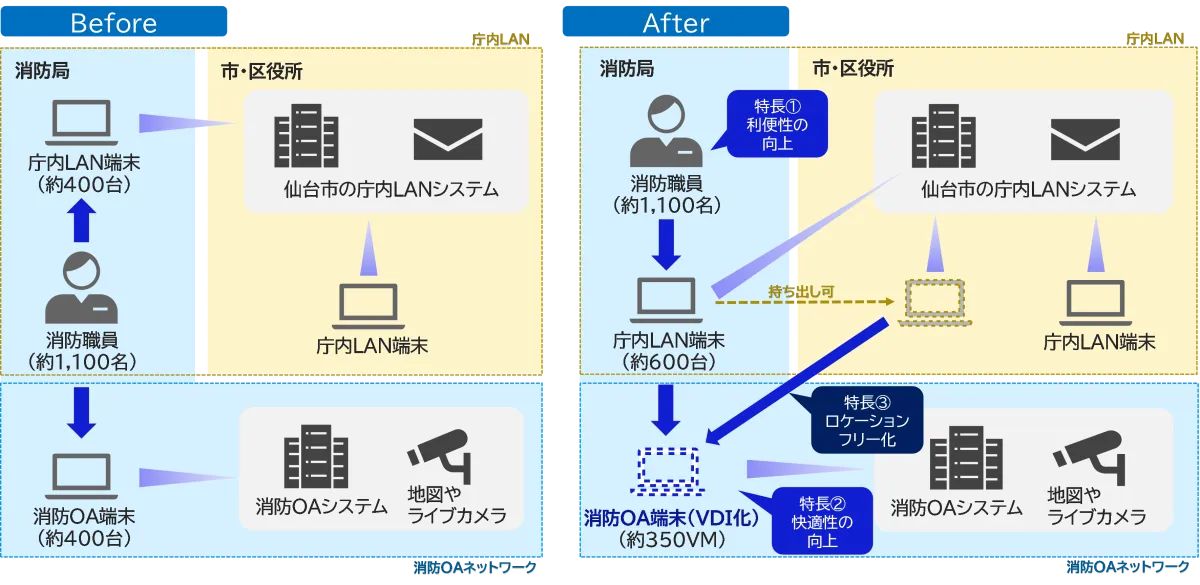
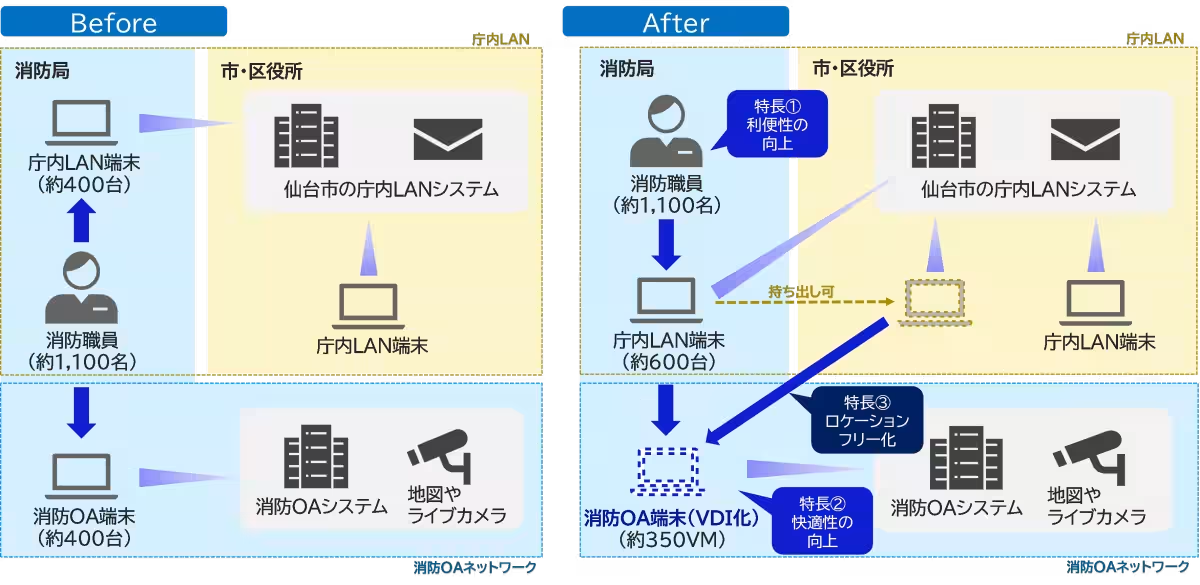
Fifteen years post the Great East Japan Earthquake, local governments are accelerating their recovery efforts while simultaneously fortifying their readiness for future disasters. The Sendai Fire Department previously faced challenges in using a dual-device setup—managing both office LAN terminals and firefighting OA terminals—resulting in inefficiencies related to device mobility and throughput when accessing critical operational tools.
To address these issues, NEC and NEC Fielding have transformed the firefighting OA terminals into a Virtual Desktop Infrastructure (VDI) accessible via office LAN terminals. This shift allows fire department personnel to seamlessly operate from a single device, enhancing operational productivity and convenience.
Key Features of the System
1. Enhanced Convenience through Device Integration
The previous dual-device reliance created complications, including limited device availability and inefficiencies in operations. By virtualizing the firefighting OA terminals, employees can now remotely access these virtual systems from their office LAN terminals, drastically improving on-site responsiveness and operational convenience.
2. Exceptional Comfort Comparable to Business Laptops
Firefighting OA tasks demand high graphic performance for activities such as zooming maps, browsing live cameras, and managing complex data visualizations. The next-generation thin client, powered by NVIDIA vGPU, addresses these requirements, ensuring performance on par with standard business laptops equipped with sufficient graphics capabilities.
3. Achieving Location Independence in Operations
The typical protocol dictates a physical separation between the core firefighting network and the municipal office network, necessitating stringent security measures for connectivity. The project, developed in collaboration with Sendai's Information Systems Department, implements a Zero Trust security model to ensure that firefighters can securely access crucial systems from various locations within the office LAN. This advancement will facilitate swift and effective communication between the disaster response headquarters and the fire department during emergencies such as large-scale disasters.
NEC’s approach to Digital Transformation encompasses a comprehensive range of services from strategic consulting to implementation, structured around three pillars: business models, technology, and talent development. This initiative also aims to transition from traditional system integrators to

Topics Other)





【About Using Articles】
You can freely use the title and article content by linking to the page where the article is posted.
※ Images cannot be used.
【About Links】
Links are free to use.