



Okayama University and Iwate University Collaborate on Helium Recycling Initiative
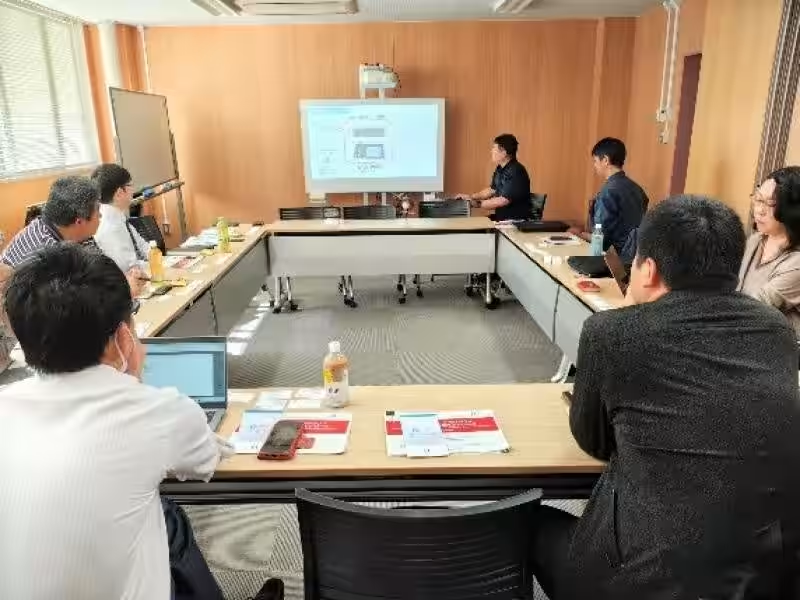
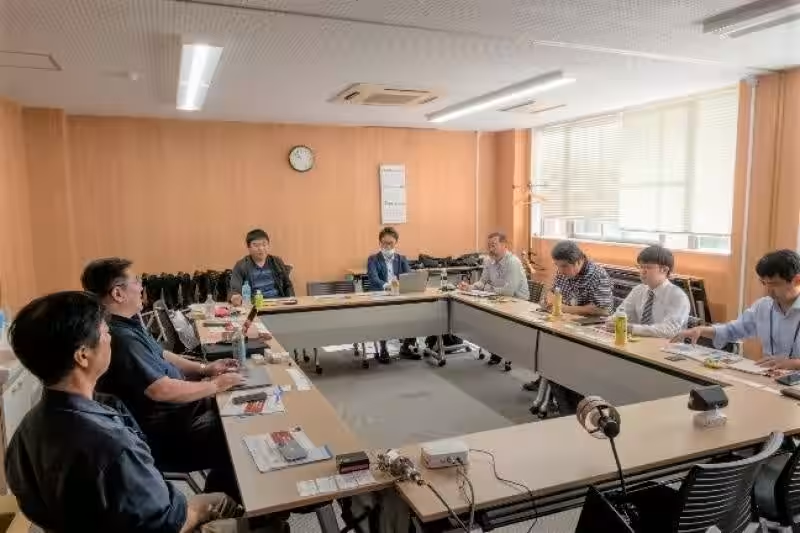
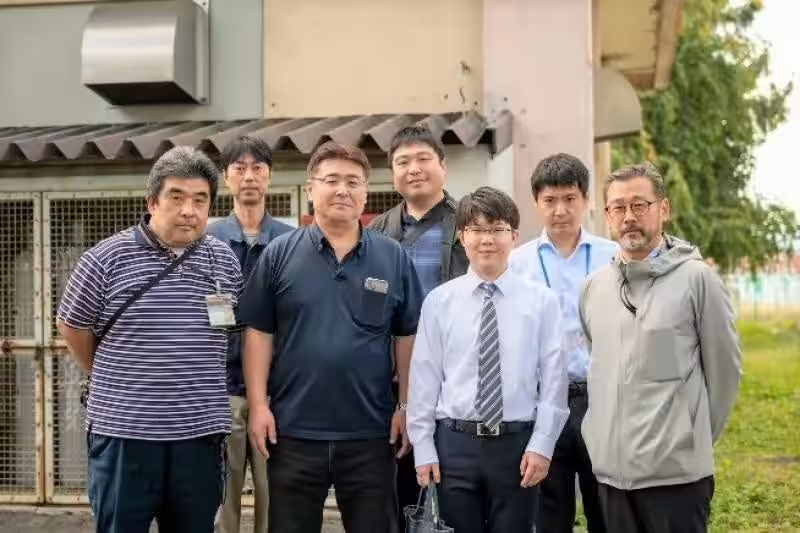
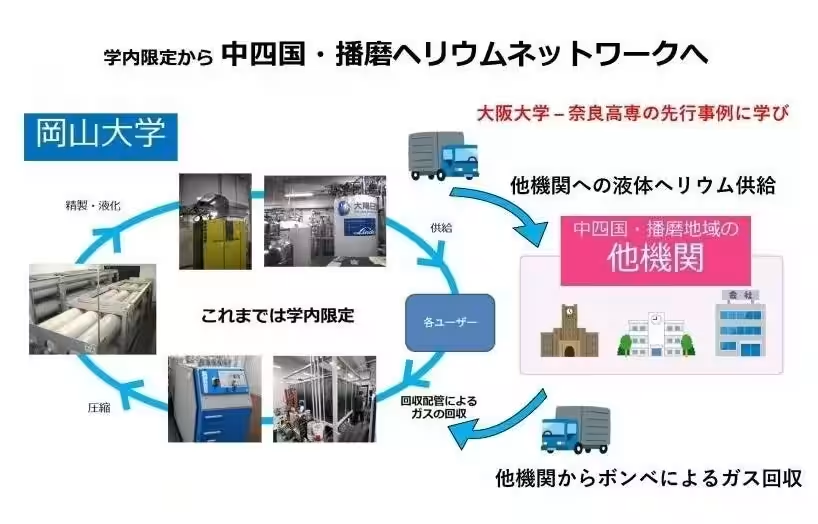
On October 17, 2025, representatives from Okayama University visited the Iwate University Ueda Campus in Morioka City to participate in discussions surrounding the helium recycling initiative, known as the "Chugoku-Shikoku-Okayama Helium Recycling Network (HeReNet)." This collaborative meeting brought together members of the task force focused on enhancing shared research equipment protocols at Okayama University, including Vice Task Force Leader Koji Hatanaka, along with technical and administrative staff.
At the meeting, Okayama's delegates were joined by strategic personnel from Iwate University, including Sho Chiba, the Head of the Technical Division, along with other technical staff and U Research Assistants (URAs). Naoya Inasaku, a technical specialist from Osaka University, also attended to provide guidance on the maintenance and management of nuclear magnetic resonance (NMR) devices.
During the discussions, the Iwate University team showcased the "WAN-WAN System," a smart speaker controller co-developed with the National Institutes of Natural Sciences. This innovative technology is capable of detecting issues such as water leaks and vibrations within scientific environments. In addition, Okayama University shared their ongoing efforts related to HeReNet, including advancements in cryo-electron microscopy, data sharing initiatives, and the ambitious OU-SPRING and OU-BRIDGE programs for next-generation researchers.
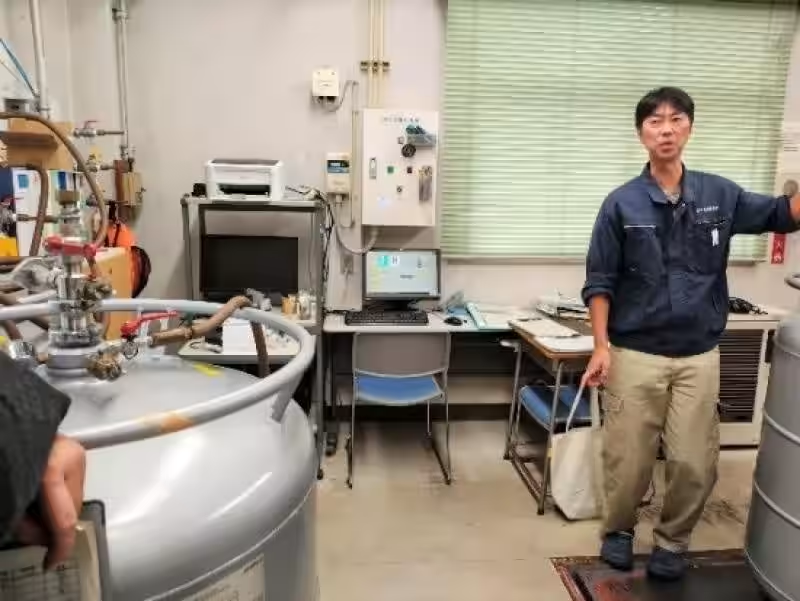
As part of the exchange, attendees toured Iwate University's cryogenics facility and inspected helium liquefaction equipment. The conversation also covered the "HeliGet" initiative, designed to recover liquid helium from decommissioned equipment. Iwate University elaborated on the current status and challenges of the helium recovery project associated with nearby universities' MRI devices.
The meeting proved to be a valuable opportunity for both universities to share successful helium recycling practices and identify pertinent challenges. The collaboration aims to establish a robust helium recycling framework that could benefit the broader research community, including local educational institutions, technical colleges, research facilities, and companies.
By facilitating helium supply through initiatives like HeReNet and HeliGet, Okayama University hopes to significantly broaden the research landscape that relies on liquid helium, ultimately contributing to innovation and enhancing Japan's research capabilities. Such collaborations represent strategic advancements for Okayama University as it continues to solidify its role as a core regional research and educational institution.
The plans for HeReNet include phased experimental trials addressing helium recovery and distribution, ensuring a systematic approach to the project and effective engagement with regional partners. These trials will be conducted in stages, replicating conditions necessary for success before implementation.
The significance of this partnership is not limited to research institutions; it serves as a catalyst for regional development and collaboration in sustainable practices. Okayama University remains committed to innovation and hopes to advance the fields of science and technology through initiatives such as these, contributing positively to society and fostering a culture of educational cooperation.
For more information on future developments, follow updates from Okayama University’s collaborative research initiatives and the Chugoku-Shikoku-Okayama Helium Recycling Network.


At the meeting, Okayama's delegates were joined by strategic personnel from Iwate University, including Sho Chiba, the Head of the Technical Division, along with other technical staff and U Research Assistants (URAs). Naoya Inasaku, a technical specialist from Osaka University, also attended to provide guidance on the maintenance and management of nuclear magnetic resonance (NMR) devices.
During the discussions, the Iwate University team showcased the "WAN-WAN System," a smart speaker controller co-developed with the National Institutes of Natural Sciences. This innovative technology is capable of detecting issues such as water leaks and vibrations within scientific environments. In addition, Okayama University shared their ongoing efforts related to HeReNet, including advancements in cryo-electron microscopy, data sharing initiatives, and the ambitious OU-SPRING and OU-BRIDGE programs for next-generation researchers.
As part of the exchange, attendees toured Iwate University's cryogenics facility and inspected helium liquefaction equipment. The conversation also covered the "HeliGet" initiative, designed to recover liquid helium from decommissioned equipment. Iwate University elaborated on the current status and challenges of the helium recovery project associated with nearby universities' MRI devices.
The meeting proved to be a valuable opportunity for both universities to share successful helium recycling practices and identify pertinent challenges. The collaboration aims to establish a robust helium recycling framework that could benefit the broader research community, including local educational institutions, technical colleges, research facilities, and companies.
By facilitating helium supply through initiatives like HeReNet and HeliGet, Okayama University hopes to significantly broaden the research landscape that relies on liquid helium, ultimately contributing to innovation and enhancing Japan's research capabilities. Such collaborations represent strategic advancements for Okayama University as it continues to solidify its role as a core regional research and educational institution.
The plans for HeReNet include phased experimental trials addressing helium recovery and distribution, ensuring a systematic approach to the project and effective engagement with regional partners. These trials will be conducted in stages, replicating conditions necessary for success before implementation.
The significance of this partnership is not limited to research institutions; it serves as a catalyst for regional development and collaboration in sustainable practices. Okayama University remains committed to innovation and hopes to advance the fields of science and technology through initiatives such as these, contributing positively to society and fostering a culture of educational cooperation.
For more information on future developments, follow updates from Okayama University’s collaborative research initiatives and the Chugoku-Shikoku-Okayama Helium Recycling Network.
Topics Other)
【About Using Articles】
You can freely use the title and article content by linking to the page where the article is posted.
※ Images cannot be used.
【About Links】
Links are free to use.