



New Clean Synthetic Method for Alcohol Production Developed from Alkenes and Water Using Copper and Light
New Clean Synthetic Method for Alcohol Production Developed from Alkenes and Water Using Copper and Light
In a recent collaborative study, researchers from Okayama University and Osaka Metropolitan University have successfully developed a clean method for synthesizing alcohol directly from alkenes and water. This innovative approach uses inexpensive copper and light energy as catalysts and has the potential to revolutionize alcohol production in the chemical industry.
The industrial demand for alcohol has been on the rise, leading to an urgent need for more efficient synthesis methods using cost-effective starting materials. Traditionally, producing alcohol from alkenes has posed significant challenges due to the necessity of activating the often low-reactivity alkenes. This research emphasizes an ecological and economically viable solution in the context of sustainable development goals.
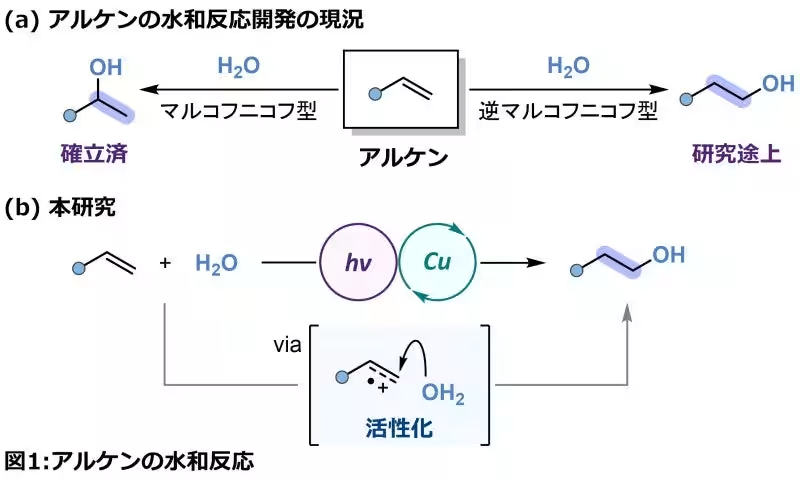
A key breakthrough in this research lies in the discovery that copper, a readily available metal, can effectively activate alkenes as a powerful photocatalyst. This marks a significant advancement in the field of catalysis and highlights the potential of copper-based technologies in chemical synthesis. The ability to facilitate the hydration of alkenes using light energy not only enhances reaction efficiency but also minimizes environmental impact, aligning perfectly with modern sustainability standards.
The team behind this research includes Assistant Professor Naoki Oku, Associate Professors Ken Yamazaki and Tomoya Miura, and graduate students from Okayama University, working alongside Associate Professor Yasunori Matsui and Professor Hiroshi Ikeda from Osaka Metropolitan University. Their findings were published on February 21, 2026, in the prestigious journal, Nature Communications. The article titled “Photooxidative Copper(II) Catalysis for Promoting anti-Markovnikov Hydration of Alkenes” presents the experimental setup, results, and implications of their findings.
The Process and Implications of the Research
The researchers began by exploring the potential for alkenes to be directly converted to alcohols through hydration, a chemical transformation that is typically complex and resource-intensive. By utilizing copper as a catalyst alongside sunlight or artificial light sources, the team was able to streamline the process, demonstrating that this method not only provides a pathway for simpler synthesis but does so with lower carbon emissions compared to conventional methods.
The method they established not only emphasizes cost-efficiency but also brings forth the possibility of producing various types of alcohols from abundant raw materials, greatly benefiting industries that rely on alcohol for production and manufacturing. This includes sectors such as pharmaceuticals, food and beverage, and biofuels, which are increasingly looking for alternative methods of production.
With this new technique, researchers believe the transition towards greener chemistry will accelerate further. The expected advancements in photocatalytic technologies could serve as a catalyst (pun intended) for further research initiatives aimed at broadening the application of such techniques throughout various chemical processes.
Naoki Oku expressed his excitement about the groundbreaking results, attributing the successful development of the method to collaborative efforts over several years. “This research originated from a discovery made during my master’s program, and it’s incredibly gratifying to see it materialize into a practical application more than seven years later,” Oku remarked.
As this research gains traction, it has the potential not only to improve alcohol production efficiencies but also to inspire future innovations in clean energy and materials science. Looking forward, the team is eager to further refine the photocatalytic processes and explore additional applications.
For those interested in the detailed outcomes of this collaborative study, the full article can be accessed through the Nature Communications journal, providing a comprehensive overview of the experimental data and methodologies employed.
In conclusion, as research into sustainable practices progresses, innovations like these represent an exciting leap towards transforming industry standards and contributing to global sustainability goals. The collaboration between Okayama University and Osaka Metropolitan University stands as a testament to the importance of shared scientific inquiry and innovation in addressing contemporary challenges.
Related Links
- - Okayama University’s Official Website
- - Nature Communications Article
- - Miura Laboratory at Okayama University



Topics Consumer Products & Retail)
【About Using Articles】
You can freely use the title and article content by linking to the page where the article is posted.
※ Images cannot be used.
【About Links】
Links are free to use.