



Development of AI for Surgeons: Revolutionizing Operating Rooms with Innovative Technology
Revolutionizing Surgery with AI
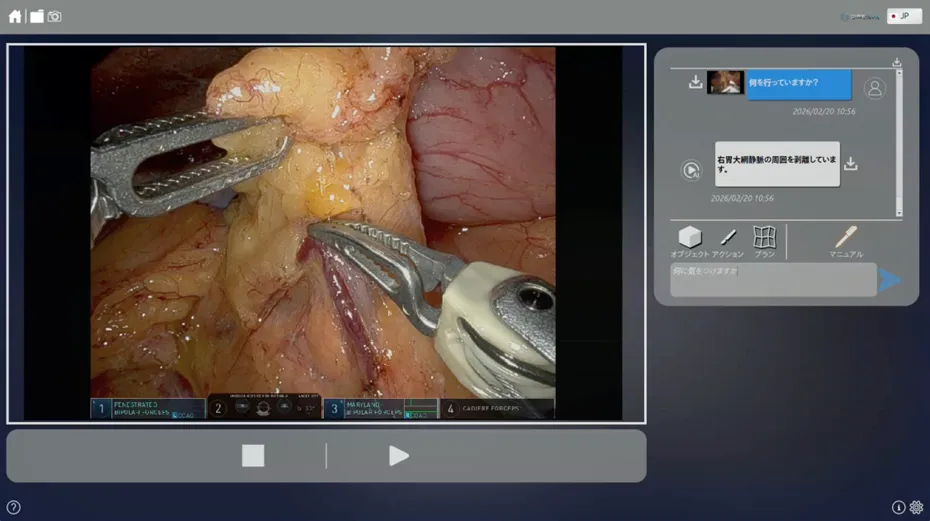
Direava Corporation has made significant strides in the evolution of surgical practices with the development of a specialized generative AI tailored for surgical assistance. As part of the GENIAC (Generative AI Accelerator Challenge) initiative, driven by NEDO and Japan's Ministry of Economy, Trade and Industry, the company recently unveiled its groundbreaking AI model that can comprehend surgical situations in real-time and communicate effectively—an unprecedented achievement in Japan.
What Sets This AI Apart?
Traditionally, generative AI utilized in the medical field has focused primarily on image recognition, aiding in the identification of organs and affected areas within patients. However, the newly introduced surgical AI—referred to as Surgical VLM—marks a shift towards a more interactive and intelligent system. Unlike its predecessors, this AI simulates the decision-making capabilities of a surgeon, almost mimicking the cognitive processes involved in surgical procedures through advanced dialogue.
Practical Application and Testing
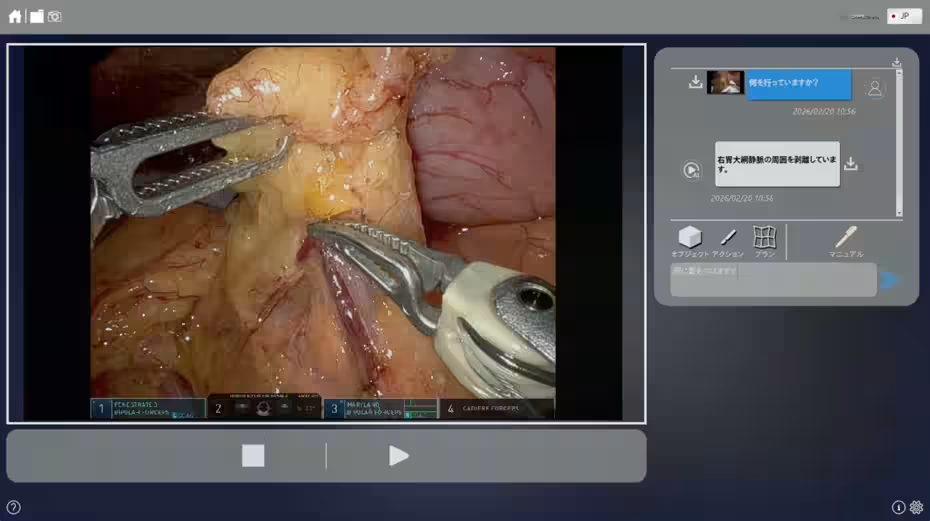
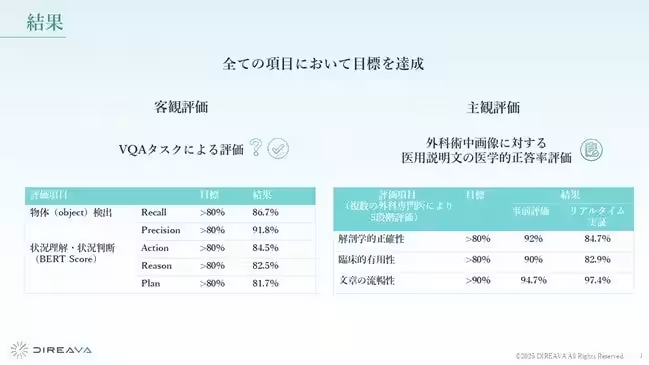
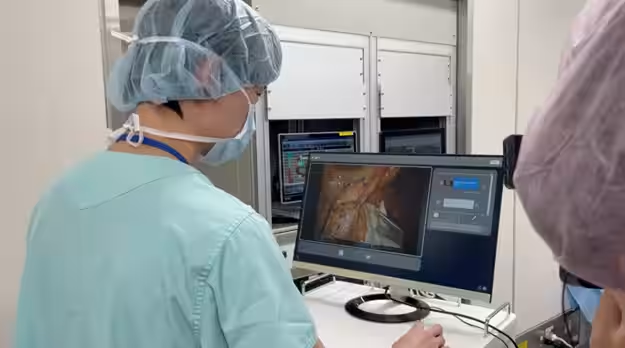
The inaugural test of this AI took place on February 20, 2026, in a real gastric cancer surgery conducted at Keio University Hospital. The AI's effectiveness was evaluated against stringent educational standards including anatomical accuracy, clinical usefulness, and fluency of responses, achieving impressive results—84.7% for anatomical precision, 82.9% for clinical relevance, and an outstanding 97.4% in response fluency. This performance affirms the AI's potential to not only assist in surgeries but also enrich medical education.
Addressing the Gap in Surgical Training
A pressing challenge within today's medical landscape is the nurturing of young professionals equipped with advanced surgical skills. As Direava gears towards full business deployment in 2026, they plan to broaden the scope of testing beyond gastric surgeries. The goal is to significantly bolster surgical training and expertise, ultimately aiming to enhance the overall quality and safety of medical care.
Background and Development Journey
The GENIAC project launched in 2024 aims to enhance Japan's capabilities in generative AI. With 53 companies engaging in various aspects of AI development by March 2026, Direava stands out as a pioneer originating from Keio University’s medical department. Their previous success in obtaining manufacturing and sales approval for the AI-supported surgical image recognition program, Kinosura, showcases their expertise in merging AI with surgical applications.
In July 2025, Direava was selected for further support under GENIAC, focusing on the surgical domain. By utilizing a vast array of intraoperative images and natural language captions, they developed Surgical VLM—an AI model able to process surgical images dynamically and generate accurate descriptions in Japanese, making it uniquely positioned in the healthcare AI landscape.
Future Prospects
Direava intends to continue its research and development towards the commercialization of its surgical AI throughout 2026. Plans are in place to expand the AI's capabilities, enhancing user experience and accessibility for a variety of surgical cases. Additionally, the AI is built using high-quality medical data certified by Japanese specialists, effectively minimizing inaccuracies characteristic of generative AI, such as hallucinations. As this Japanese-developed AI model becomes integrated into regular medical practices, it is set to play a crucial role in safeguarding medical data, advancing surgical techniques, and improving overall patient safety in the future.
By pushing these boundaries, Direava not only aims to retain Japan's prestigious surgical heritage but also aspires to revolutionize medical education and quality across healthcare channels.
Topics Health)
【About Using Articles】
You can freely use the title and article content by linking to the page where the article is posted.
※ Images cannot be used.
【About Links】
Links are free to use.